Featured
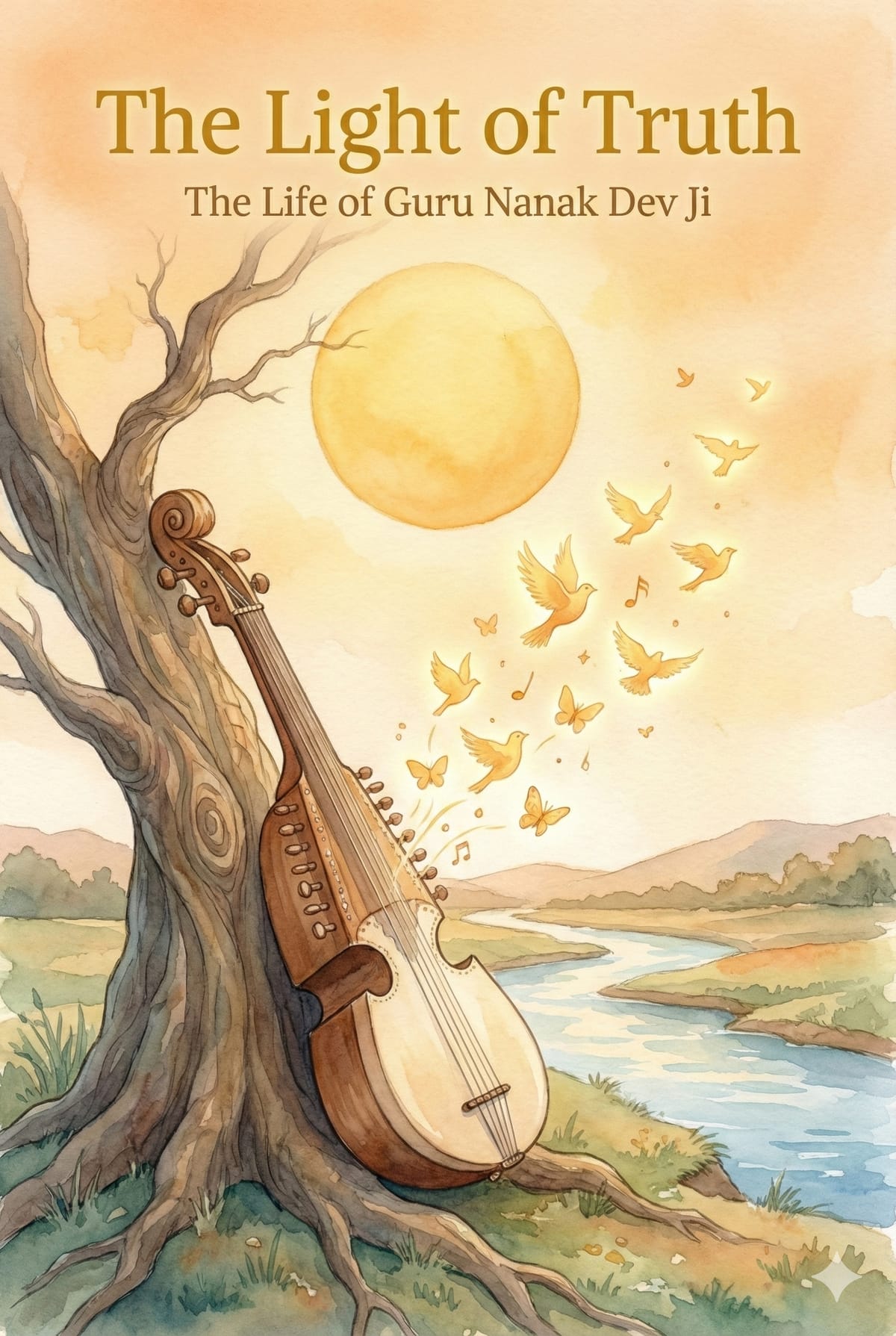
The Light of Truth: The Life of Guru Nanak Dev Ji
A children's story about Guru Nanak Dev Ji, the founder of Sikhism known for his message of one God, equality, honest living, and service to all.
Guru Nanak Dev Ji
Long, long ago, on an April morning in 1469, a baby boy was born in a small village called Talwandi. His parents, Mehta Kalu Ji and Mata Tripta Ji, named him Nanak. From his very first breath, there was something special about him.
His older sister Nanaki, whom he lovingly called Bebe Nanaki, noticed it too. When other children played and shouted, young Nanak would sit quietly, looking at the stars, the trees, and all the wonders around him. He seemed to see something that others could not.
The True Thread
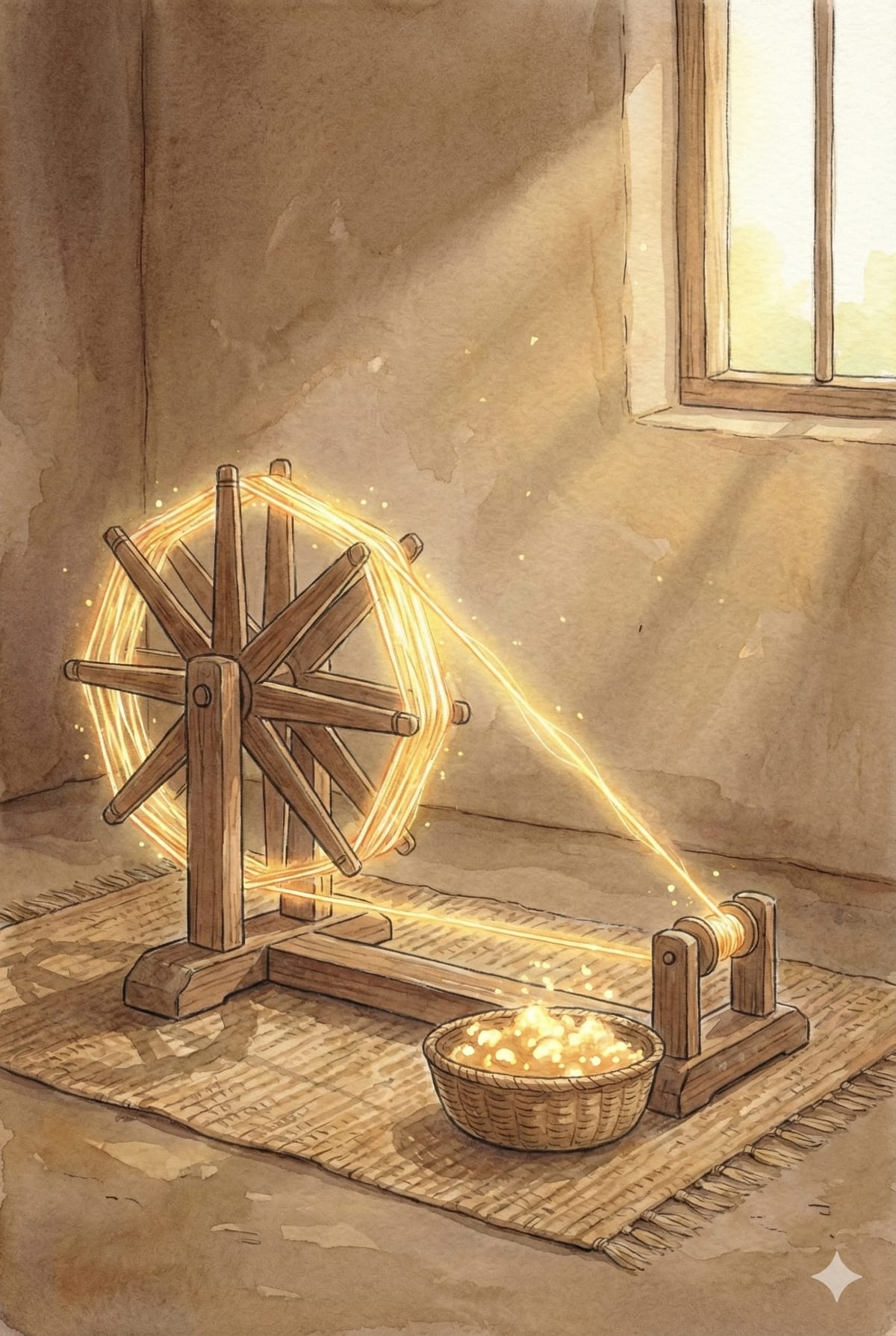
When Nanak was ten years old, a big ceremony was planned. In those days, Hindu boys wore a special cotton thread called a Janeu around their bodies. People believed this thread made them holy and important.
The family priest, Pandit Hardayal, came to put the thread on young Nanak. All the relatives gathered. But when the Pandit tried to place the thread over Nanak's shoulder, the boy gently stopped him.
"What is this thread for?" Nanak asked.
"It is sacred!" the Pandit explained. "It shows you belong to a high family. It will help you even in your next life!"
Young Nanak shook his head thoughtfully. "But Pandit Ji, this thread is just cotton. It can break. It can get dirty. It will burn when my body is no more. How can it help me?"
Everyone was amazed. A ten-year-old was asking such wise questions!
"Please give me a thread that never breaks," Nanak said. "One made of compassion and contentment. One that is spun from truth and tied with honest deeds. That thread I will gladly wear."
The crowd fell silent. Even at this young age, Nanak was teaching them: It is not what we wear that makes us good. It is what we do.
A Young Man's Life
Years passed, and Nanak grew into a kind and thoughtful young man. When he was eighteen, he married Mata Sulakhni Ji. Together, they had two sons: Sri Chand and Lakhmi Chand.
Nanak loved his family dearly. But in his heart, he felt a calling. He knew he had an important message to share with the world.
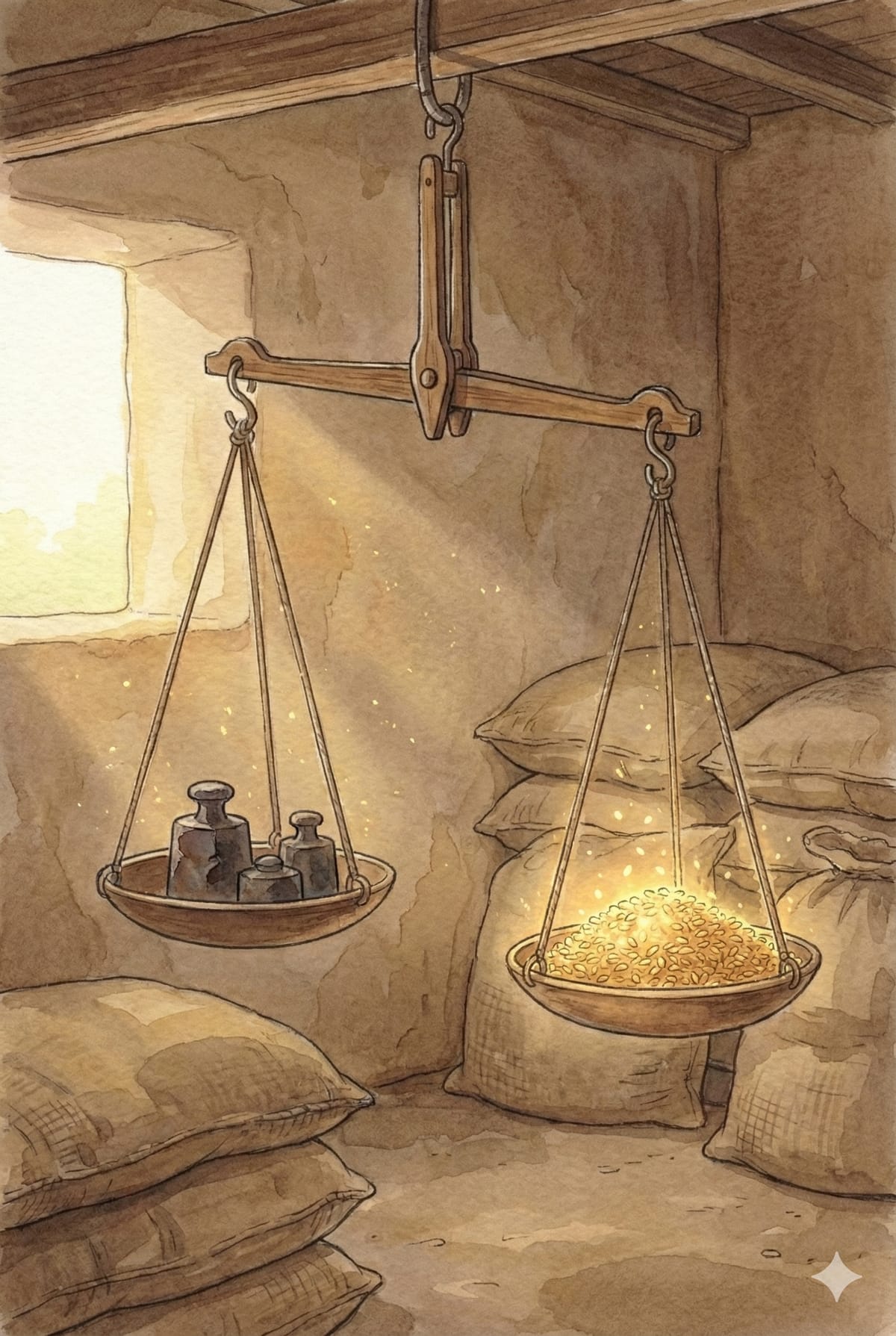
His sister Bebe Nanaki Ji understood him best. Her husband, Bhai Jai Ram Ji, helped Nanak get a job managing the grain stores of the local governor, Nawab Daulat Khan, in a town called Sultanpur. There, Nanak worked honestly, giving each customer exactly what they deserved.
Every morning before sunrise, Nanak would go to the river called Vein to bathe and pray. And it was there, one morning, that something extraordinary happened.
The River of Truth

One day, Nanak went to bathe in the river as usual. But he did not return home that day. Or the next. Three days passed, and his family and friends grew worried.
Then, on the third day, Nanak returned. There was a new light in his eyes, a deep peace in his face. People rushed to him.
"Where were you?" they asked.
Guru Nanak Dev Ji smiled peacefully and said words that would change the world:
"There is no Hindu. There is no Muslim. There is only One God, and we are all God's children."
What did he mean? He meant that God does not see us by the names we call ourselves. God does not divide us into groups. In God's eyes, we are all equal. We are all one family.
The Real Prayer
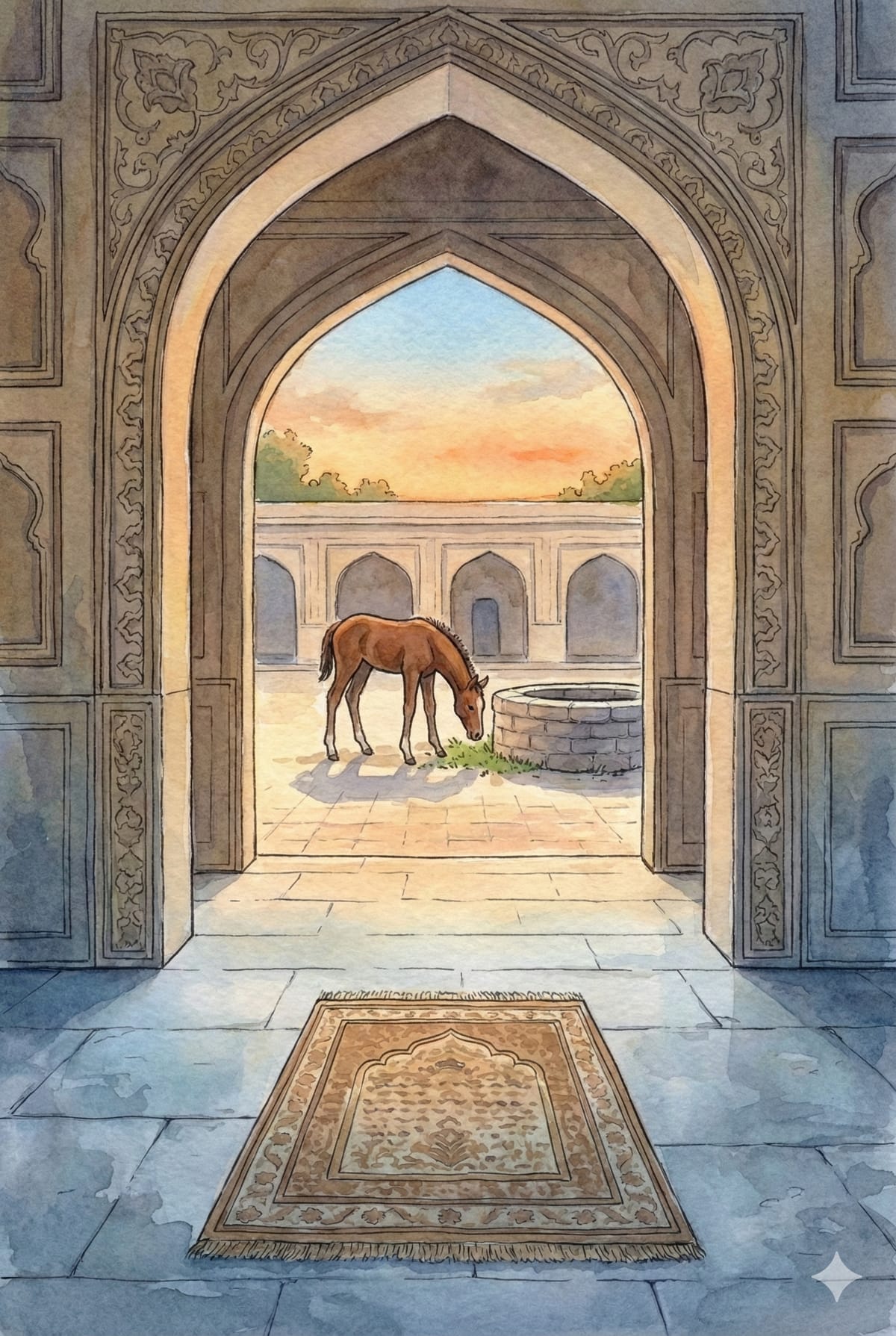
The Nawab and the town's Qazi (Muslim religious leader) heard about Guru Nanak Dev Ji's words. They were curious.
"If you truly see God everywhere," they said, "then come pray with us in the mosque."
Guru Nanak Dev Ji agreed. He went to the mosque with the Nawab and the Qazi. The prayers began. The Qazi led the congregation, bowing and reciting. But Guru Nanak Dev Ji did not join in. He simply stood there, watching quietly.
After the prayers, the Qazi was upset. "Why didn't you pray with us?"
Guru Nanak Dev Ji smiled gently. "Qazi Sahib, I watched you during the prayers. Your eyes kept wandering. Your movements were restless. You were not at peace. Tell me honestly, was your mind truly focused on God, or were you thinking of worldly matters?"
The Qazi fell silent. He realized Guru Nanak Dev Ji spoke the truth. He had been distracted, worrying about his young horse at home, fearing it might fall into the well.
Guru Nanak Dev Ji taught them: True prayer is when your mind and heart are both with God. Simply moving your lips while thinking of other things does not reach the Lord.
The Nawab and the Qazi understood. Real worship comes from inside, not just from actions we perform.
The Journeys Begin
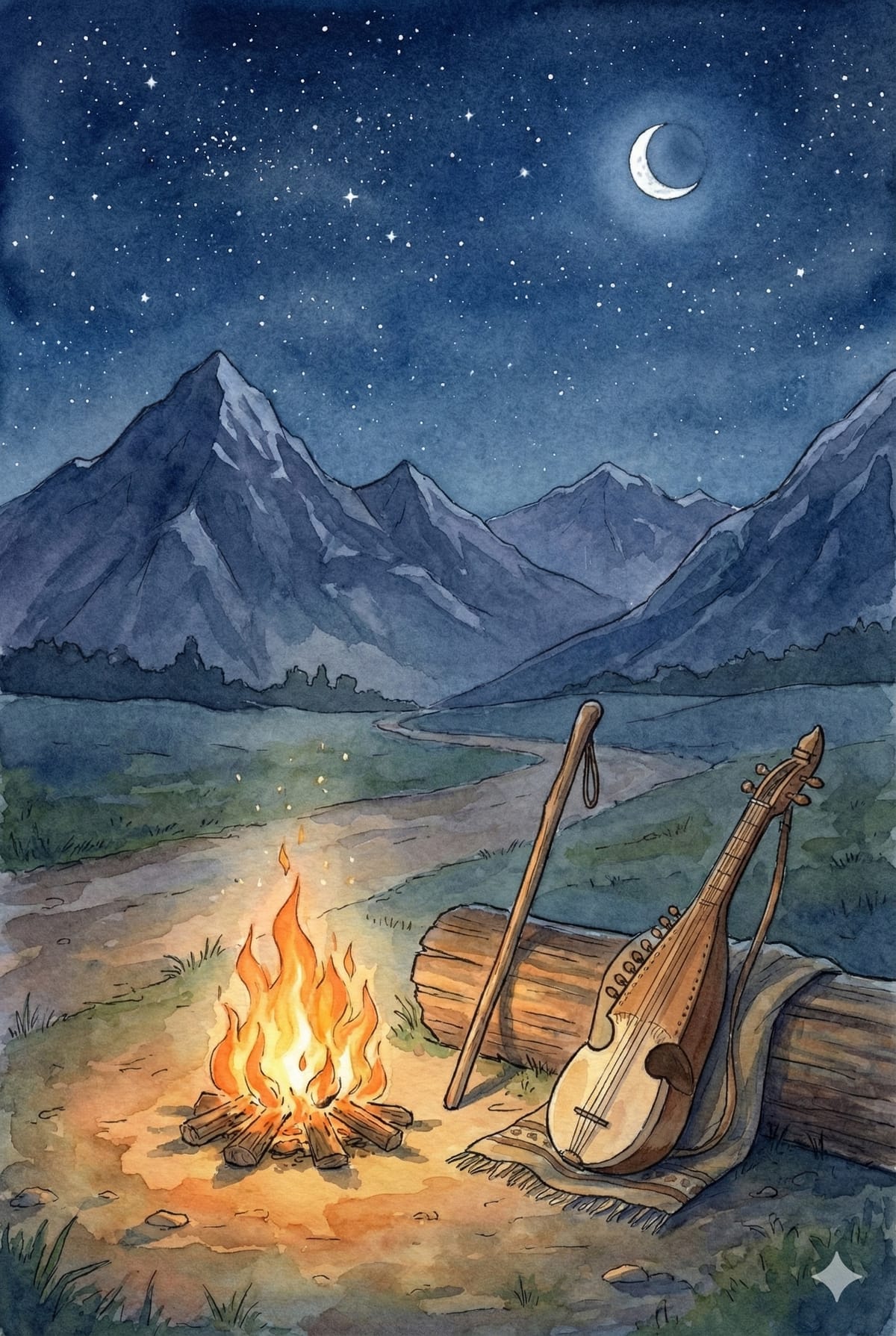
Guru Nanak Dev Ji knew his message was meant for everyone, not just the people of Sultanpur. So he left his family in the care of his father-in-law and set out on great journeys called Udasis.
He did not go alone. His dear friend Bhai Mardana Ji, a talented musician, came with him. Bhai Mardana Ji played the rabab, a stringed instrument, while Guru Nanak Dev Ji sang beautiful hymns praising God.
Together, they traveled far and wide. They walked through forests and mountains. They crossed rivers and deserts. They visited villages, towns, and great cities. Everywhere they went, Guru Nanak Dev Ji shared his message:
Worship One God. Treat everyone equally. Work honestly. Share with others.
People of all backgrounds came to listen. Hindus, Muslims, rich, poor, young, old. Guru Nanak Dev Ji turned no one away. In God's home, he taught, there is room for everyone.
Bhai Lalo's Bread
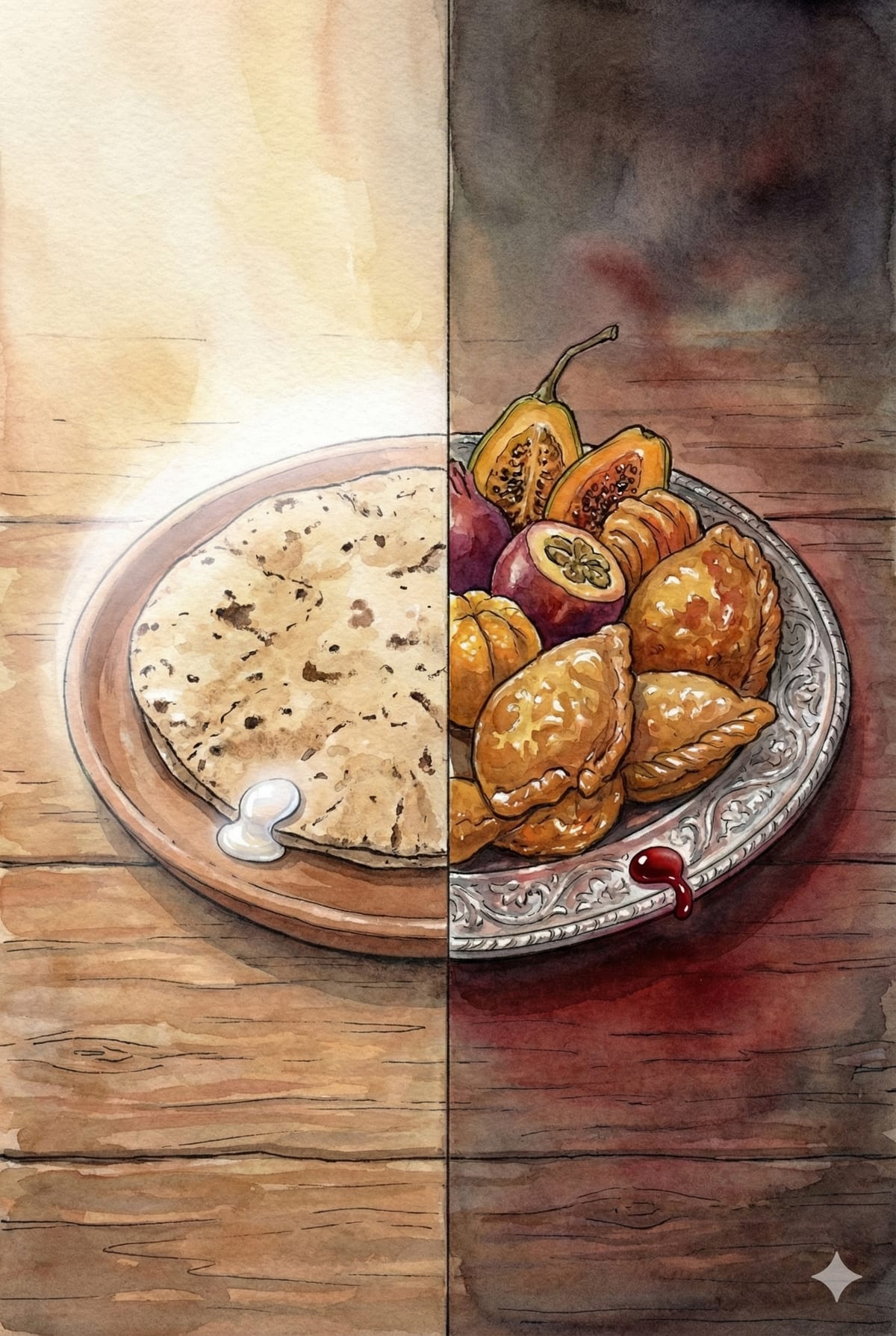
During his travels, Guru Nanak Dev Ji arrived in a town called Eminabad. There lived a humble carpenter named Bhai Lalo. He was not rich. He worked hard every day with his hands. But his heart was pure and his earnings were honest.
Bhai Lalo invited Guru Nanak Dev Ji to his simple home and served him plain bread made from his honest work.
Now, there was also a wealthy man in town named Malik Bhago. He was powerful and threw grand feasts. But his riches came from cheating poor people.
Malik Bhago was offended that Guru Nanak Dev Ji chose to stay with a poor carpenter instead of accepting his fancy invitation. He demanded that Guru Nanak Dev Ji come to his feast.
Guru Nanak Dev Ji went, but he would not eat. When Malik Bhago angrily asked why, Guru Nanak Dev Ji spoke plainly.
"Malik Bhago, look at Bhai Lalo's simple bread. It is made from honest work. When he earned the grain, no one suffered. No one wept. His bread carries the blessing of truthful labor.
"But your fine feast," Guru Nanak Dev Ji continued, "comes from the tears of the poor. You have taken what is not rightfully yours. You have squeezed the helpless to fill your own plate. No matter how delicious your food looks, it carries the weight of others' suffering. How can I eat it?"
Malik Bhago was shaken. Hearing these words, he saw himself clearly for the first time. He realized his mistake and promised to change his ways.
Guru Nanak Dev Ji taught: What we earn honestly is blessed, no matter how simple. What we take through greed or harm is never pure, no matter how rich.
The Waters of Haridwar
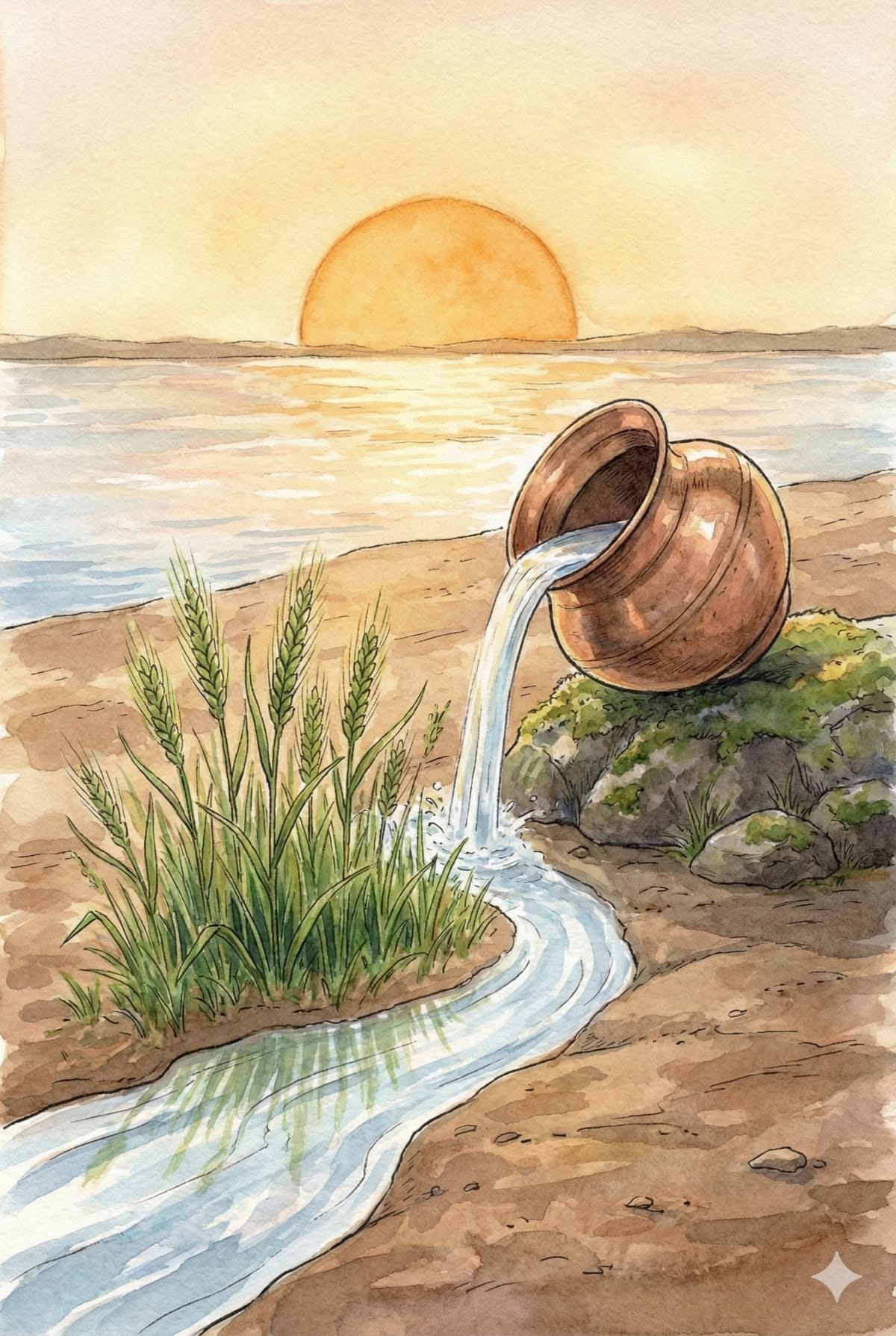
Guru Nanak Dev Ji and Bhai Mardana Ji traveled to Haridwar, a famous pilgrimage place where the holy river Ganges flowed. It was a festival day, and thousands of people had gathered. They stood in the river facing the rising sun, cupping water in their hands and throwing it toward the sky.
"What are you doing?" Guru Nanak Dev Ji asked a man nearby.
"We are sending water to our ancestors who live far away near the sun," the man explained. "This is how we honor them."
Guru Nanak Dev Ji nodded thoughtfully. Then he turned around and started throwing water in the opposite direction, toward the west!
People stopped and stared. "What are you doing?" they laughed. "That's the wrong way!"
"I am watering my fields in Talwandi," Guru Nanak Dev Ji said calmly. "They are very dry and need rain."
"That's foolish!" the crowd cried. "Your village is hundreds of miles away. The water you throw falls right back in the river. It could never reach your fields!"
Guru Nanak Dev Ji smiled. "If your water can reach your ancestors millions of miles away near the sun, surely my water can travel just a few hundred miles to my fields?"
The crowd fell silent. They understood. Guru Nanak Dev Ji was teaching them that simply performing rituals without understanding them does not please God. True devotion comes from the heart, not from empty actions.
The Real Worship

Guru Nanak Dev Ji continued his journey and arrived at Jagannath Puri, a famous temple by the sea. In the evening, the priests performed a grand ceremony called Aarti. They lit lamps on a golden plate. They burned incense and camphor. They waved the lights before the stone idol while singing and playing drums.
"Come join our Aarti," the priests invited Guru Nanak Dev Ji.
But when the ceremony began, Guru Nanak Dev Ji quietly walked outside and stood looking up at the night sky. He did not participate.
After the ceremony, the priests were confused. "Why did you not join us?"
Guru Nanak Dev Ji asked Bhai Mardana Ji to play his rabab, and then he sang a beautiful hymn:
"The sky is Your great plate, O Lord. The sun and moon are Your lamps. The stars are Your scattered pearls. The wind carries the fragrance of Your incense. All the forests are Your flowers. What a beautiful Aarti this is!"
The priests listened, amazed. Guru Nanak Dev Ji was teaching them that God does not live only in temples. The entire universe is God's temple. Nature itself performs the greatest worship.
From that day, this hymn became one of the most beloved prayers in Sikhism.
Sajjan the Thief

On the road to Multan, Guru Nanak Dev Ji and Bhai Mardana Ji stopped at an inn run by a man named Sajjan. Sajjan dressed like a holy man and welcomed travelers warmly. He fed them well and gave them comfortable beds.
But Sajjan had a terrible secret. At night, he would rob and harm his sleeping guests, taking all their belongings.
Sajjan thought Guru Nanak Dev Ji looked like a wealthy traveler. He prepared a fine meal and a soft bed, planning to rob him at midnight.
But Guru Nanak Dev Ji did not eat. He did not sleep. Instead, he asked Bhai Mardana Ji to play, and he began to sing:
"Bronze may glitter like gold, but rub it and its darkness shows. You may wash it a hundred times, but its true nature does not change..."
Sajjan listened from the next room. Every word pierced his heart. He realized Guru Nanak Dev Ji knew everything about him. He saw himself clearly for the first time, a man who pretended to be good while doing terrible things.
Sajjan rushed out and fell at Guru Nanak Dev Ji's feet, weeping. "Forgive me! I have done horrible things. Please show me the right path!"
Guru Nanak Dev Ji lifted him up gently. "It is never too late to change, dear friend. Give up your wicked ways. Return what you have taken. From now on, earn your living honestly. Meditate on God's name and serve others."
Sajjan did exactly that. He became a true sajjan, which means a good person. He used his inn to genuinely help travelers and spent the rest of his life doing good deeds.
Guru Nanak Dev Ji taught: No one is beyond saving. With true remorse and honest effort, anyone can change.
Home at Kartarpur
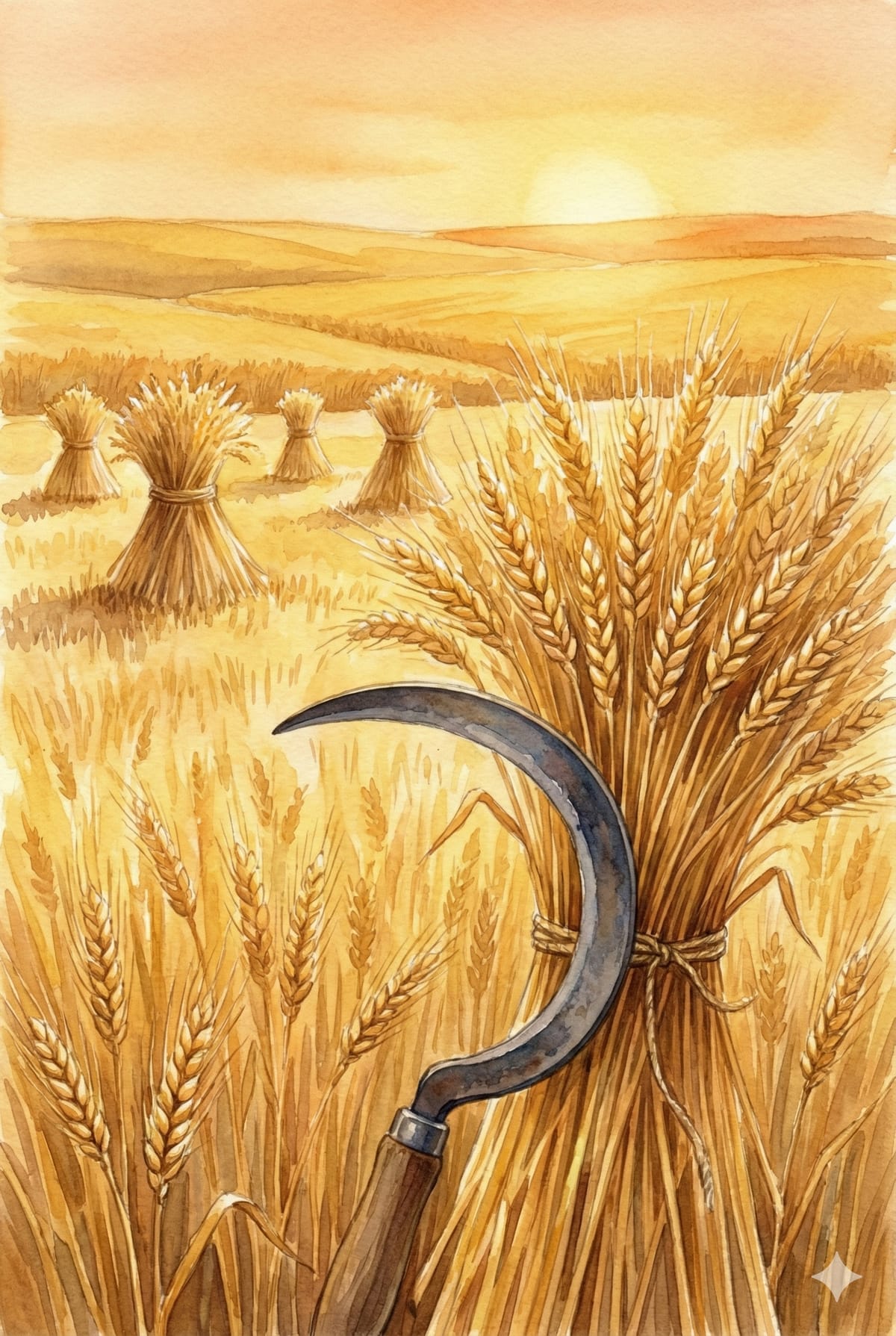
After many years of traveling, Guru Nanak Dev Ji settled down in a new town he founded called Kartarpur, meaning "City of the Creator," on the banks of the river Ravi.
Here, he showed everyone how to live the teachings he had shared. He woke before dawn to pray and sing hymns. During the day, he worked in the fields, farming like everyone else. In the evenings, the community gathered to sing, listen, and learn together.
Guru Nanak Dev Ji started a special tradition called Langar, a free kitchen where everyone sat together on the floor and ate the same food. It did not matter if you were rich or poor, king or servant. In the Langar, all were equal. All ate together as one family.
He also composed beautiful hymns that would later become part of the holy book, Sri Guru Granth Sahib Ji. These hymns taught three simple principles:
- Nam Japna: Remember God always
- Kirat Karo: Earn your living honestly
- Vand Chakko: Share with others
These three teachings became the heart of the Sikh way of life.
Passing the Light
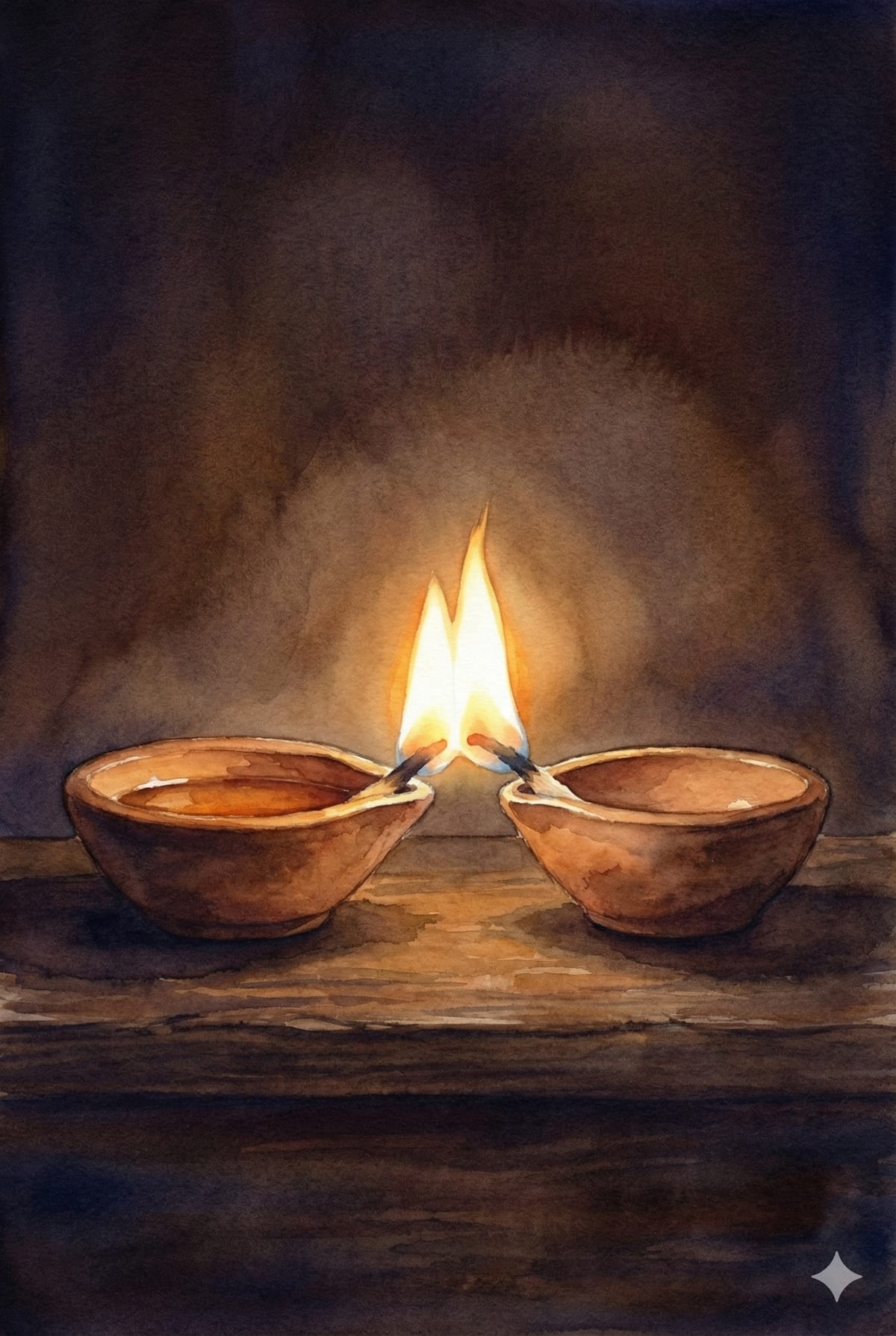
Years passed, and Guru Nanak Dev Ji grew old. A devoted follower named Bhai Lehna Ji came to Kartarpur. Unlike anyone else, Bhai Lehna Ji served with complete love and dedication. He carried heavy loads without complaint. He did whatever Guru Nanak Dev Ji asked, no matter how difficult.
Guru Nanak Dev Ji tested him many times. Once, in the middle of a cold, rainy night, Guru Nanak Dev Ji pointed to a wall that had fallen and asked who would rebuild it. Everyone made excuses. But Bhai Lehna Ji got up and worked through the night until it was done.
When Guru Nanak Dev Ji looked into Bhai Lehna Ji's heart, he saw a perfect mirror of his own devotion to God.
Guru Nanak Dev Ji knew it was time. He called a gathering and, in front of everyone, placed five coins and a coconut before Bhai Lehna Ji. He bowed to him, touched his forehead to Bhai Lehna Ji's feet, and gave him a new name: Angad, meaning "part of my own body."
"The light that came to me will now shine through you," Guru Nanak Dev Ji said.
And so, Guru Angad became the second Guru of the Sikhs, carrying forward the message of truth.
The Eternal Light
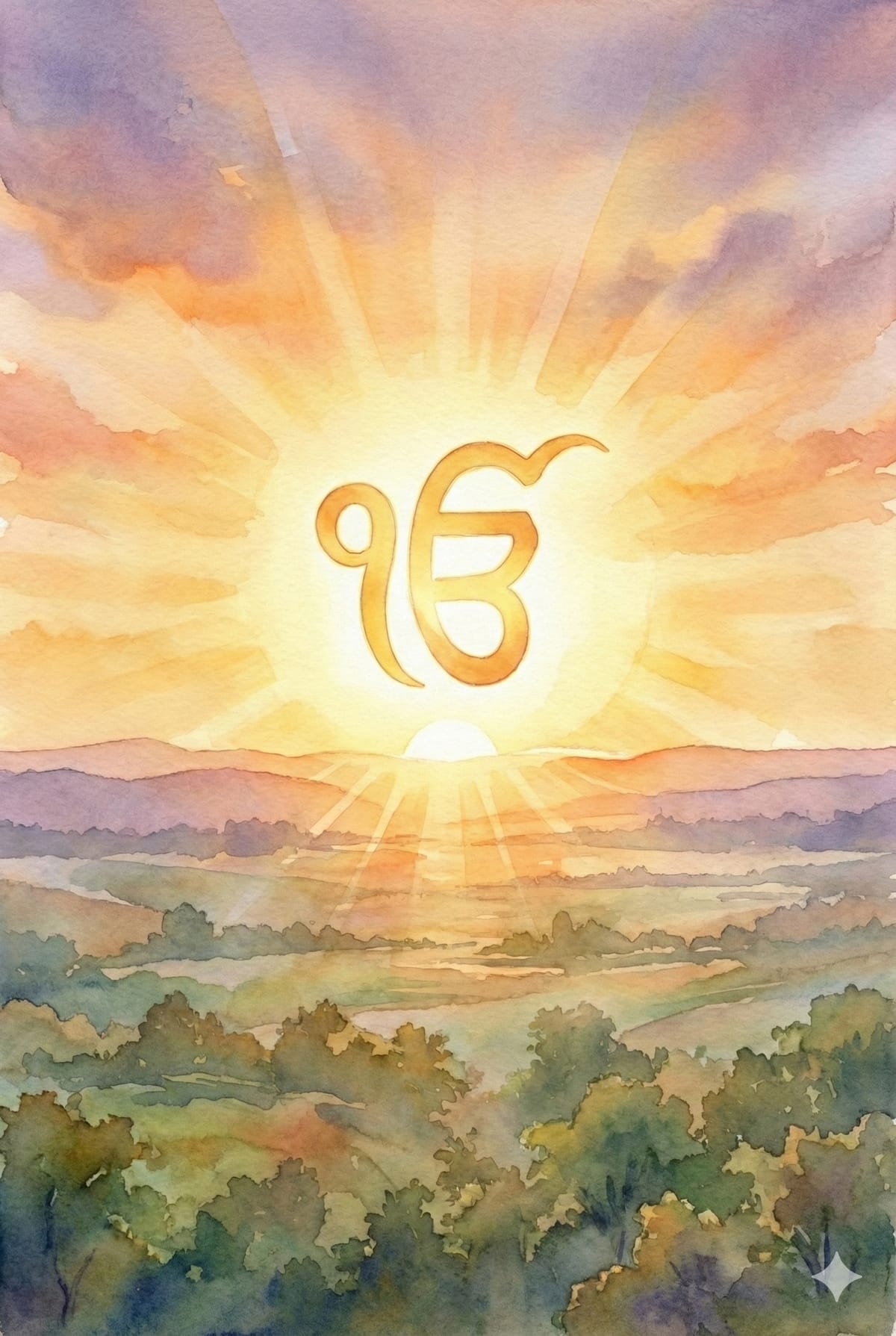
In September 1539, Guru Nanak Dev Ji prepared to leave this world. His followers gathered around him, some weeping.
His Hindu followers said, "We will cremate him as our tradition demands." His Muslim followers said, "We will bury him as our tradition demands."
Guru Nanak Dev Ji looked at them with love. "Do not argue," he said gently. "I have spent my whole life teaching that we are all one family under One God. Do not divide yourselves over my body. Remember my teachings, not my remains. Live in truth, work honestly, share with others, and remember God always. That is how you honor me."
His followers understood. After Guru Nanak Dev Ji peacefully departed, they came together in love and unity, honoring him not with arguments but with devotion to his teachings.
The light he brought to the world did not fade. It passed from Guru to Guru for over two hundred years and now lives forever in the sacred words of Sri Guru Granth Sahib Ji, guiding millions to this day.
Reflection
Think about Guru Nanak Dev Ji's message. He taught us that what matters is not what religion we follow or what clothes we wear or what family we come from. What matters is how we live.
Do we tell the truth? Do we work honestly? Do we share what we have? Do we treat everyone with kindness and respect?
You can carry Guru Nanak Dev Ji's light in your own heart. Every time you help someone, every time you share, every time you choose truth over lies, you are keeping his message alive.
Quick Facts
| Fact | Detail |
|---|---|
| Birth | April 15, 1469 |
| Birthplace | Rai Bhoe Ki Talwandi (now Nankana Sahib, Pakistan) |
| Parents | Mehta Kalu Ji and Mata Tripta Ji |
| Sister | Bebe Nanaki (5 years older) |
| Marriage | 1487 to Mata Sulakhni Ji |
| Sons | Baba Sri Chand and Baba Lakhmi Chand |
| Companion | Bhai Mardana Ji |
| Town Founded | Kartarpur (1519) |
| Known for | Founding Sikhism, message of One God, equality, and truthful living |
| Successor | Guru Angad Dev Ji |
| Left for Sachkhand | September 22, 1539 |
Vocabulary
Udasi: A spiritual journey. Guru Nanak Dev Ji made several long journeys to spread his message of truth and love.
Janeu: A sacred thread worn by some Hindus. Guru Nanak Dev Ji taught that true holiness comes from good deeds, not from wearing any special thread.
Sangat: A gathering of people who come together to worship, learn, and support each other on the spiritual path.
Langar: A free community kitchen where everyone sits together and eats the same food, regardless of their background. Guru Nanak Dev Ji started this tradition to show that all people are equal.
Dasvandh: Giving one-tenth of what you earn to help others. This practice of sharing is central to Sikh life.
Kirtan: The singing of hymns in praise of God, often accompanied by musical instruments.
Gurbani: The sacred words and hymns composed by the Sikh Gurus, now preserved in Sri Guru Granth Sahib Ji.
Waheguru: A name for God meaning "Wonderful Teacher" or "Wonderful Lord."
Sachkhand: The realm of truth; the divine home where the soul rests with God.
Discussion Points
- Guru Nanak Dev Ji refused the sacred thread when he was only ten years old. What gave him the courage to question something that everyone else accepted?
- Why did Guru Nanak Dev Ji choose to eat Bhai Lalo's simple bread instead of Malik Bhago's fancy feast? What does this teach us about the food we eat and the money we use?
- When Guru Nanak Dev Ji said "There is no Hindu, there is no Muslim," what do you think he meant? Does God see us by our religion?
- Guru Nanak Dev Ji started the Langar tradition where everyone sits together and eats the same food. Why is this important? How does sharing a meal bring people together?
- Sajjan was doing terrible things, but Guru Nanak Dev Ji did not give up on him. What does this teach us about how we should treat people who make mistakes?
- What are the three teachings that Guru Nanak Dev Ji gave us? (Nam Japna, Kirat Karo, Vand Chakko) How can you practice them in your own life?
About This Story
This story comes from the life of Guru Nanak Dev Ji, the founder of Sikhism and the first of the ten Sikh Gurus. He lived from 1469 to 1539 and spent his life traveling, teaching, and singing praises of the One God.
Guru Nanak Dev Ji's message is revolutionary: All human beings are equal in God's eyes. No one is high or low because of their birth. What matters is how we live, work with honesty, share with those in need, and remember God always.
His three core teachings remain the foundation of Sikh life today:
- Nam Japna: Remember and meditate on God
- Kirat Karo: Earn an honest living through hard work
- Vand Chakko: Share what you have with others
The hymns Guru Nanak Dev Ji composed are treasured in Sri Guru Granth Sahib Ji, the holy scripture of the Sikhs, and continue to inspire millions around the world.
Thank You
This book would not have been possible without the love, support, and encouragement of many wonderful people.
To My Family
Thank you to my family for your constant love, support, and encouragement. Special thanks to my daughter Japji Kaur, who reviewed multiple drafts and provided valuable insights from a young reader's perspective.
To Our Readers
Finally, thank you to the parents, teachers, librarians, and children who will share this story. May it spark meaningful conversations about truth, equality, honest living, and the boundless love of the One Creator.
Explore More
- The Thread That Never Breaks — A story from Guru Nanak's childhood about the sacred thread ceremony
- The Missing Bowl — A story about honesty and the power of good deeds
- Why Do We Bow in Gurdwara? — A guide explaining the meaning behind bowing to Guru Granth Sahib Ji
- Raising Children with the Wisdom of Japji Sahib — Parenting principles from Guru Nanak's Japji Sahib
Join the Discussion
Have thoughts about this book? Share your feedback or discuss with others on X.
Discuss on X