Featured
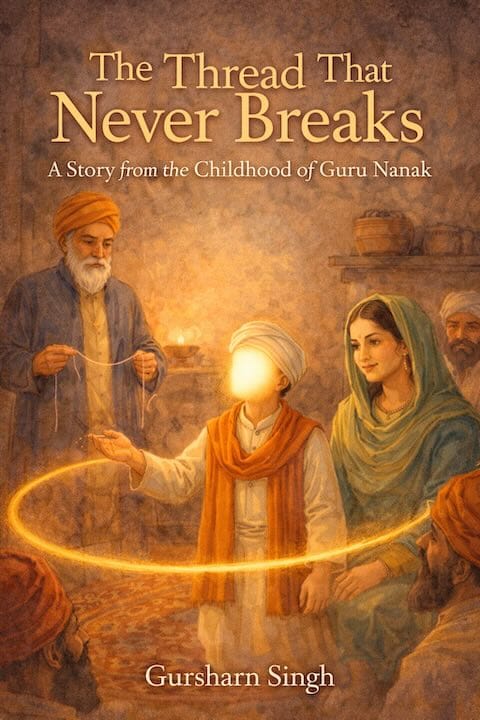
The Thread That Never Breaks: A Story from the Childhood of Guru Nanak
Available on Amazon
Bring this inspiring story into your home. Every copy sold helps us create more resources for Sikh children.
A free illustrated children's book about young Guru Nanak's refusal to wear the sacred thread (janeu). Ages 4–8. A story of equality and inner goodness.
Long, long ago, in a small village called Talwandi, there lived a boy named Nanak who was kind, curious, and always thinking big thoughts. "The Thread That Never Breaks" brings one of the most significant moments from his childhood to life for young readers.
This beautifully illustrated children's book tells the story of ten-year-old Nanak's refusal to wear the sacred thread (janeu), a Hindu ritual given only to boys of high-caste families. Through profound questions about his sister and friend, young Nanak teaches an important lesson: true spiritual worth comes from compassion, contentment, modesty, and truth—not from what we wear on the outside.
What Makes This Story Special
- Based on Historical Events: This story comes from Guru Nanak's actual childhood ceremony, documented in his hymns found in Sri Guru Granth Sahib Ji
- Revolutionary Message: Young Nanak's challenge to gender inequality and the caste system, presented in age-appropriate language for children ages 4-8
- Timeless Wisdom: The hymn about the "thread of the soul" is preserved in the holy scripture and remains relevant today
- Discussion Questions Included: Perfect for family conversations and classroom discussions about equality, fairness, and moral character
- Free and Open: Making this important story freely available for families, schools, and libraries worldwide
The Complete Story
The Thread That Never Breaks
A Story from the Childhood of Guru Nanak
A Special Boy
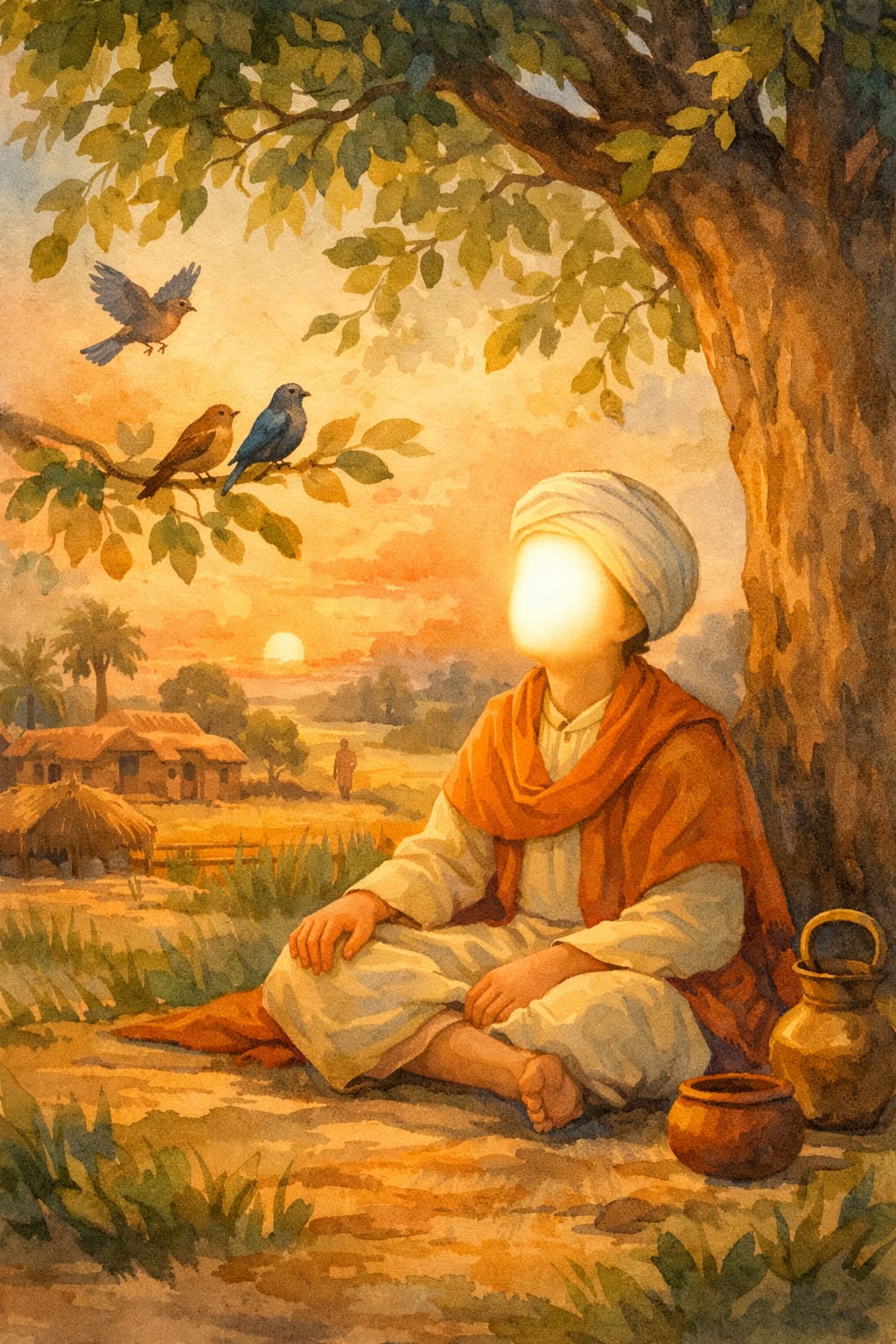
Long, long ago, in a small village called Talwandi, there lived a boy named Nanak. He was kind, curious, and always thinking big thoughts. Even as a child, he asked questions that made grown-ups stop and think.
Nanak lived with his father Mehta Kalu, his mother Mata Tripta, and his beloved older sister, Bebe Nanaki. Bebe Nanaki loved her little brother very much. She could see that he was no ordinary boy.
The Big Ceremony
When Nanak was ten years old, his father called him inside. "Nanak, tomorrow is a very special day," said Mehta Kalu with a proud smile. "You are going to wear the sacred thread. It is called the janeu."
"What is the janeu?" asked Nanak.
"It is a thin cotton thread worn around your body," explained his father. "The family priest, Pandit Hardayal, will put it on you. All the important people in our family wore one. It will show everyone that you are special."
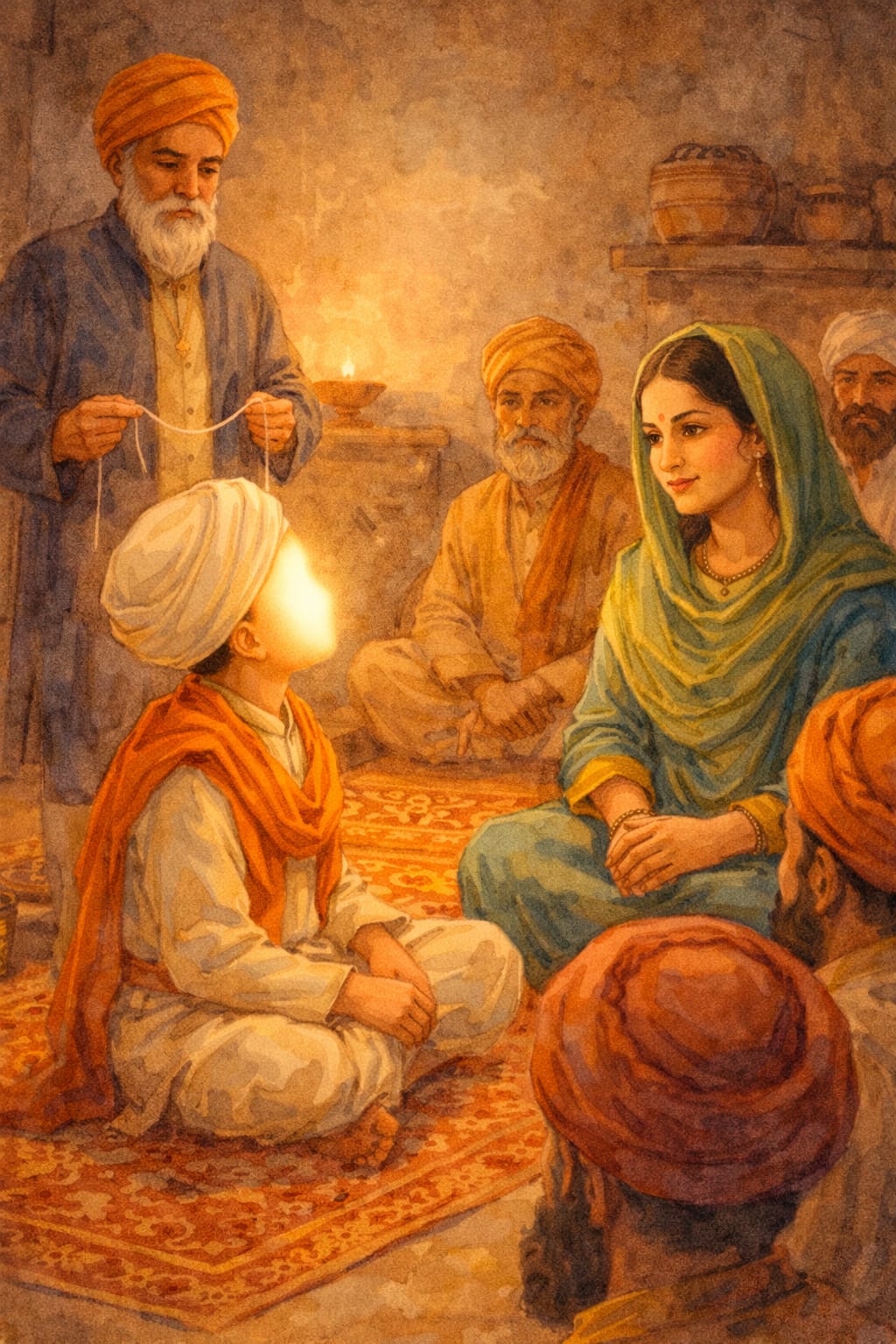
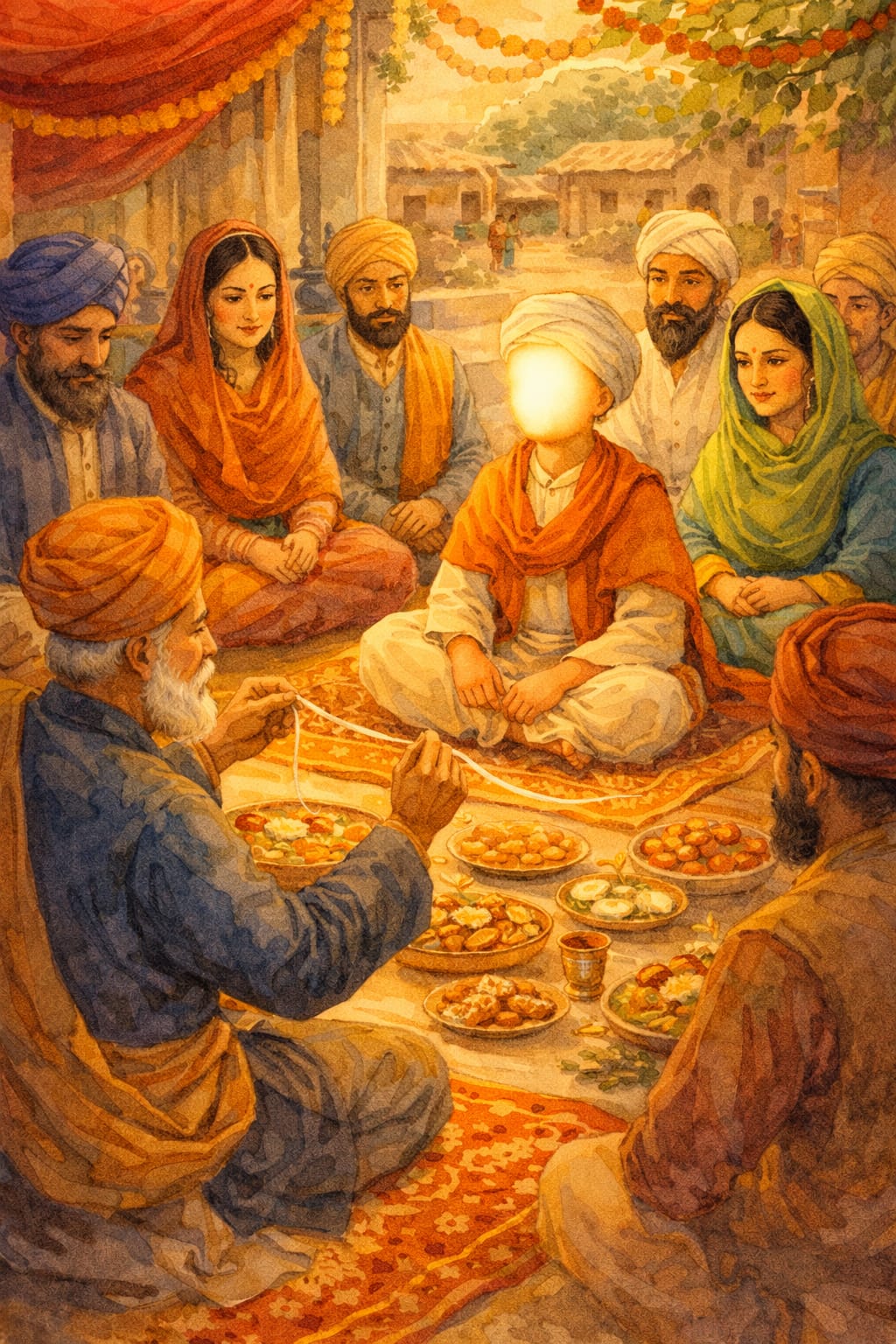
The next day, many relatives and friends came to the house. There was food and music and excitement in the air. Everyone sat in a big circle. In the middle sat young Nanak. Beside him stood Pandit Hardayal, the family priest, holding a thin cotton thread.
Nanak's First Question
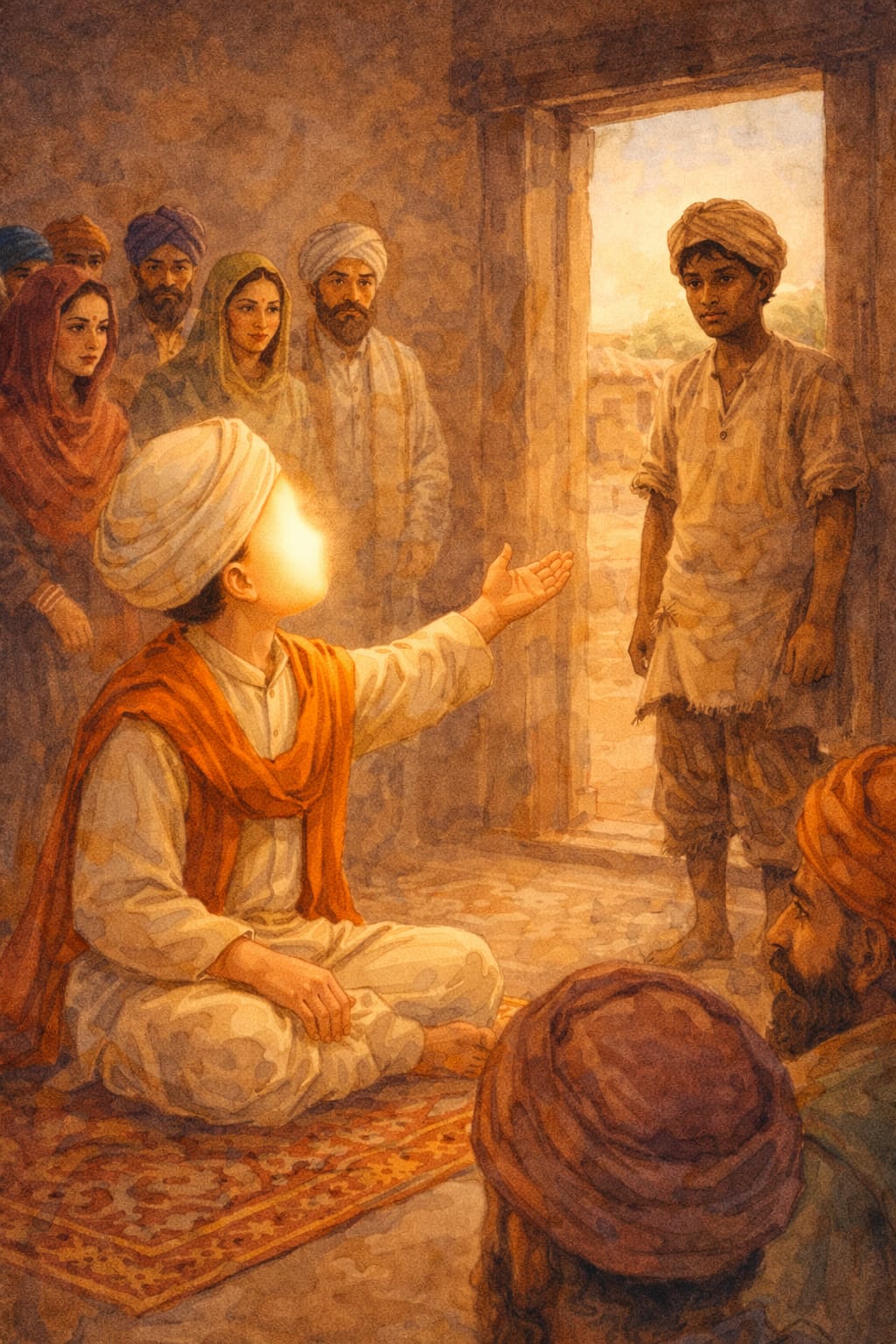
Before the priest could begin, Nanak looked around the room. He spotted his big sister, Bebe Nanaki, sitting nearby. She always understood him best.
"Bebe Nanaki," Nanak called out. "Do you have a janeu?"
Bebe Nanaki smiled gently and shook her head. "No, little brother. I do not have one."
Nanak turned to the priest. "Pandit ji, why doesn't my sister have a janeu? She is kind and good. She helps everyone. She prays every day."
Pandit Hardayal cleared his throat. "The janeu is not for girls," he said firmly. "It is only for boys. That is the rule."
Nanak's eyes grew wide. "But why? My sister is just as good as me. She is even better! Why can't she have one too?"
The priest shook his head. "That is just the way it is. Now, let us begin."
But Nanak was not finished asking questions.
Nanak's Second Question
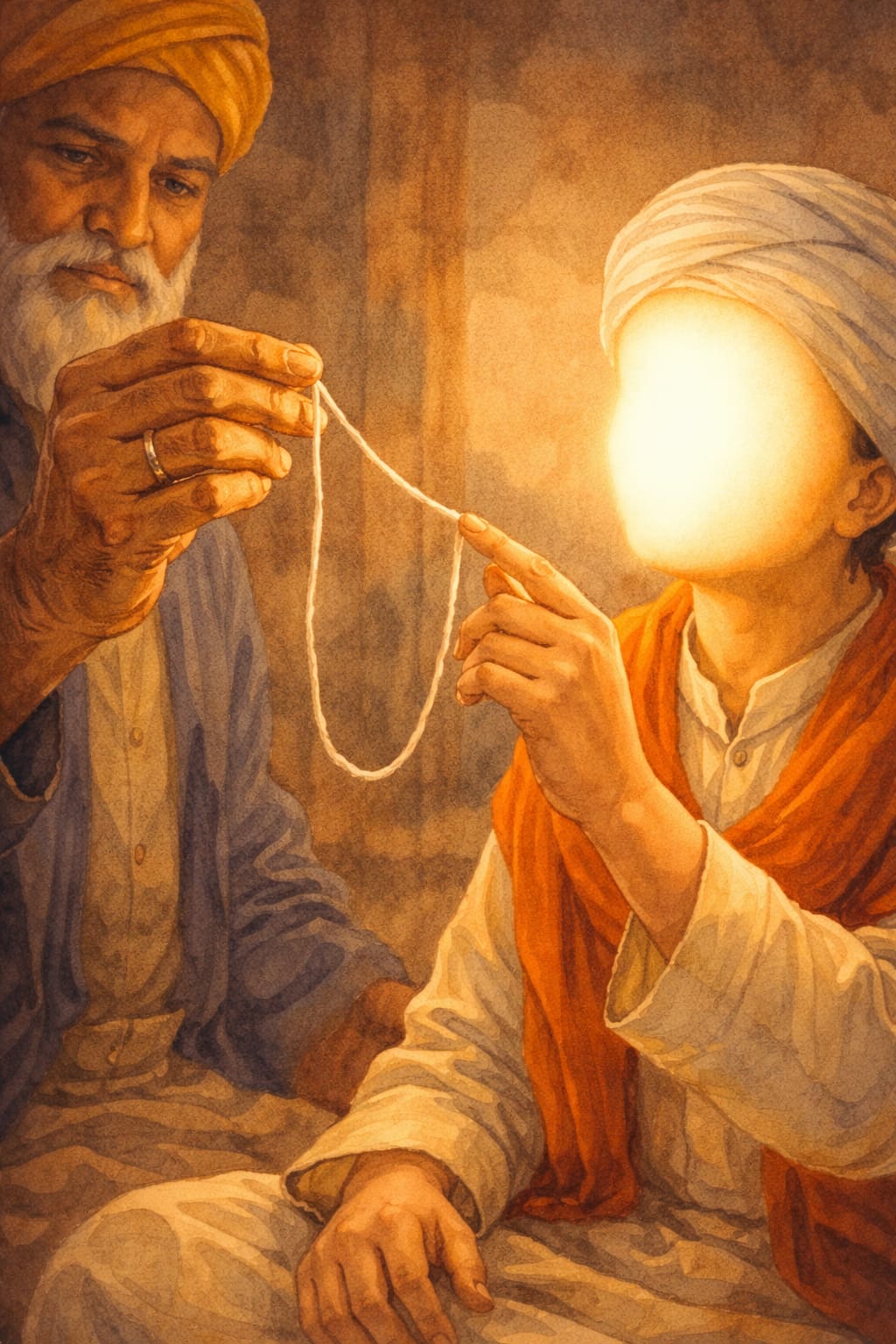
Nanak looked toward the back of the crowd. There, standing quietly near the door, was one of his friends. This boy was from a poor family. Other people called his family "low caste." But to Nanak, he was simply his friend.
"Come here, my friend!" Nanak called to him with a wave. "Do you have a janeu?"
The boy looked down at his feet. He seemed embarrassed. "No, Nanak," he said quietly. "I don't."
Nanak turned to the priest again. "Pandit ji, why doesn't my friend have a janeu?"
Pandit Hardayal frowned. "He cannot have one. His family is from a lower caste. The janeu is only for people of high caste. That is the rule."
Now Nanak looked very serious. "So my sister cannot have one because she is a girl. And my friend cannot have one because of his family. But they are both good people. How can a thread know who is good and who is not?"
The room went very quiet. No one knew what to say.
The Thin Cotton Thread
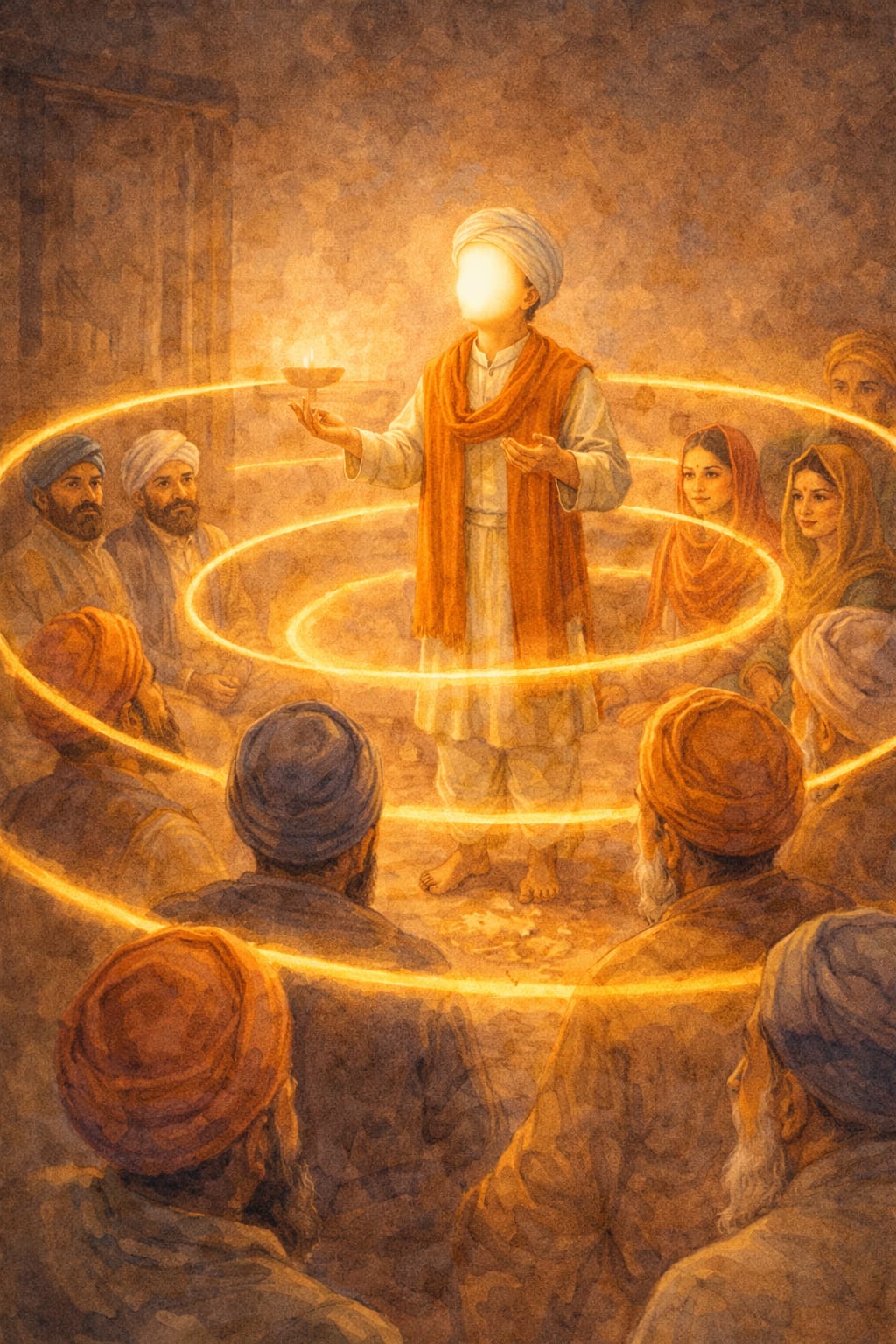
Pandit Hardayal lifted the janeu high so everyone could see it. "Come now, Nanak. This is a sacred thread. It will protect you and bring you closer to God."
Nanak reached out and touched the thread gently. He looked at it carefully.
"Pandit ji," said Nanak, "this thread is made of cotton. If I pull it hard, what will happen?"
"Well… it would break," said the priest.
"And if it falls into a fire?"
"It would burn."
"And if it gets dirty?"
"It would get soiled."
Nanak looked at the priest kindly. "Then how can something that breaks, burns, and gets dirty make me holy? How can it protect me?"
Pandit Hardayal opened his mouth, but no words came out. He had never thought about it this way before.
The Thread That Never Breaks
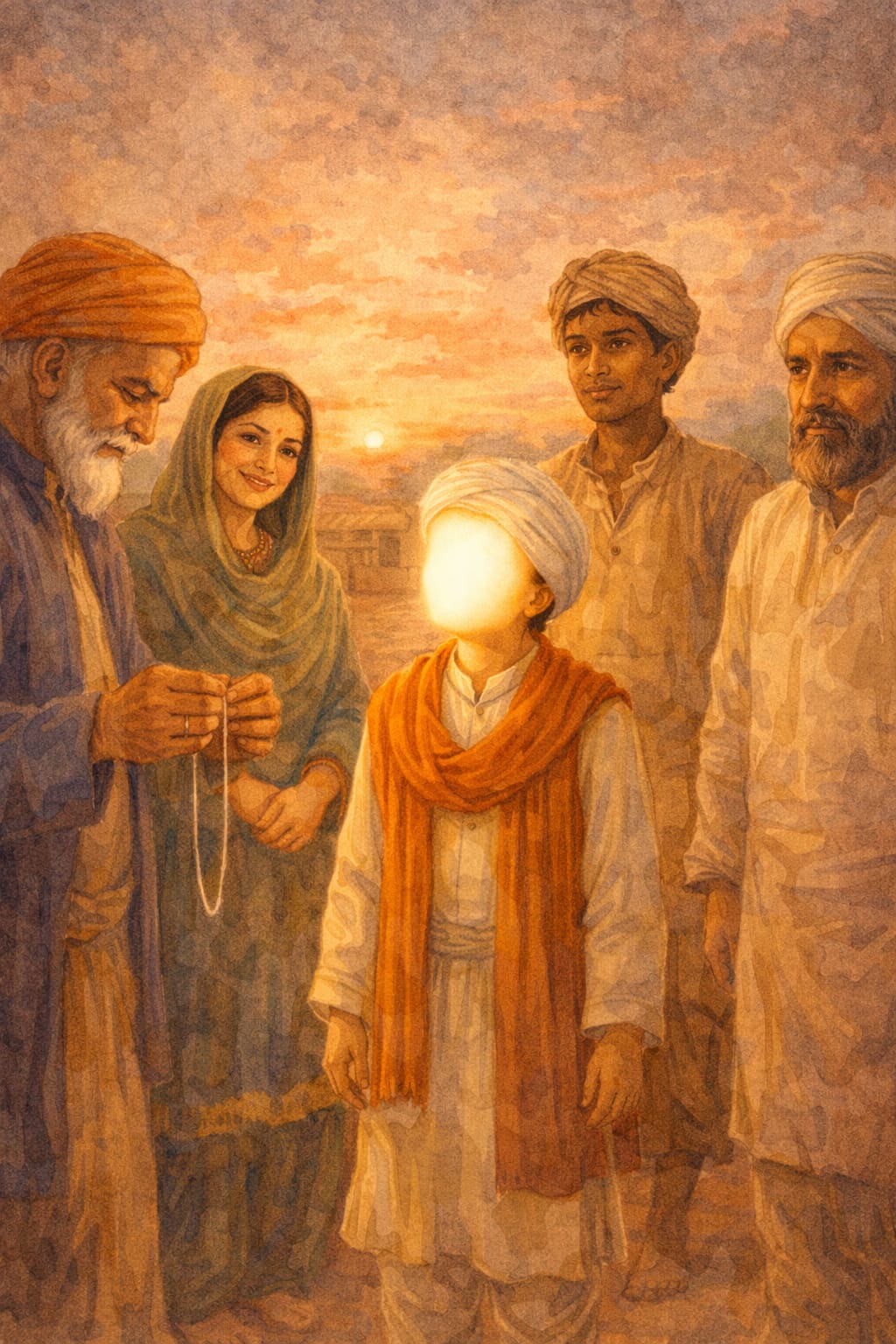
Everyone in the room leaned forward. What would this ten-year-old boy say next?
Nanak stood up. Even though he was small, his voice was clear and strong. He spoke words that would be remembered forever:
"Make compassion your cotton.
Make contentment your thread.
Make modesty its knot,
and truth its twist."
He paused and smiled. "This is the sacred thread of the soul. If you have a thread like this, Pandit ji, then put it on me. This thread will never break. It will never burn. It will never get dirty. And it belongs to everyone—boys and girls, rich and poor."
A New Understanding
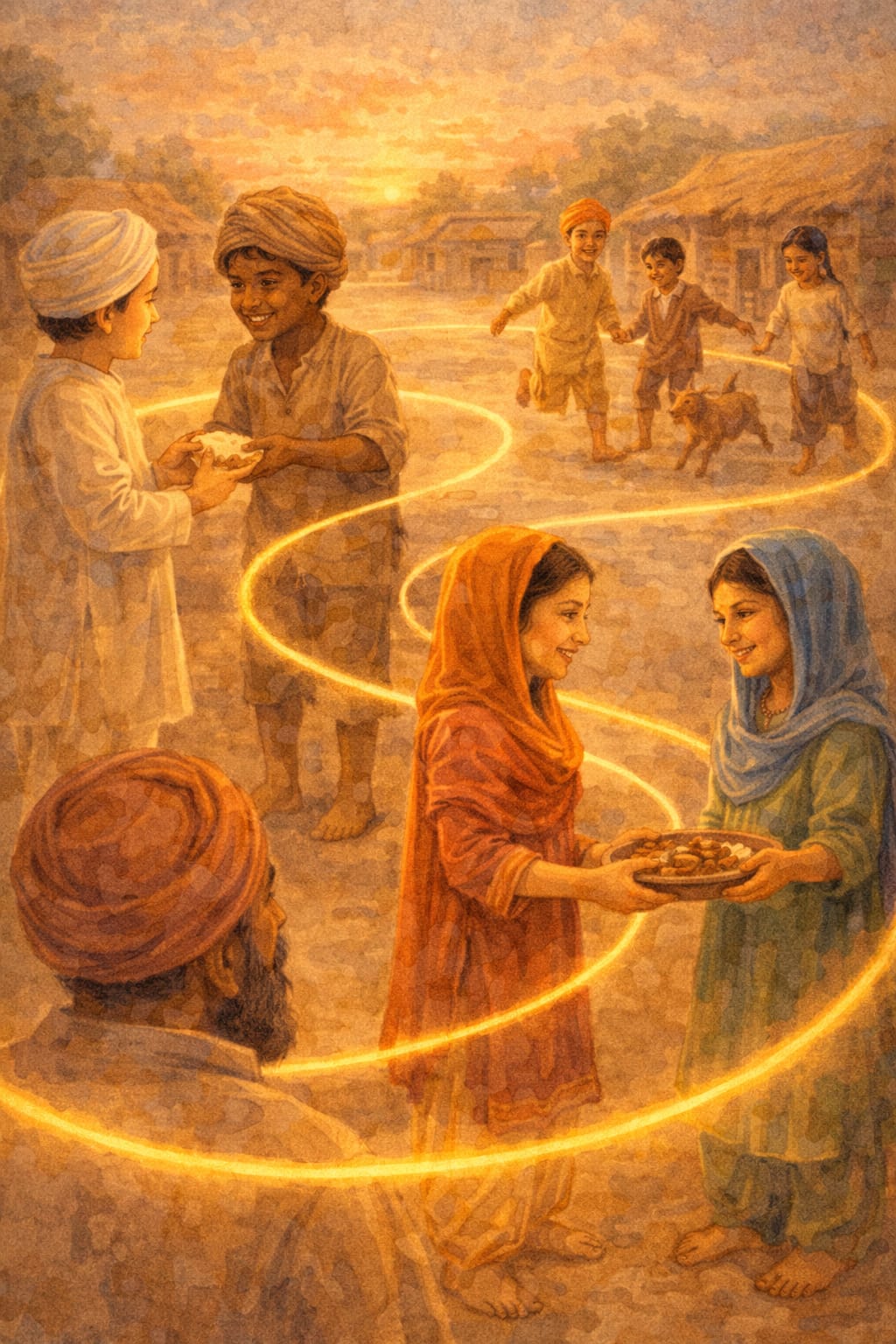
The room was completely silent. Then, slowly, Bebe Nanaki began to smile. She always knew her little brother would change the world.
Mehta Kalu stared at his son. He did not fully understand, but he felt something powerful in Nanak's words.
Pandit Hardayal put the cotton thread down. For the first time, he looked at Nanak not as a child, but as a teacher.
"You are right," the priest said softly. "A thread on the body means nothing if there is no goodness in the heart."
Little Nanak's friend stood a bit taller. Bebe Nanaki's eyes shone with pride. And everyone who was there that day carried Nanak's words in their hearts forever.
The Real Lesson
Guru Nanak taught us something beautiful that day. It doesn't matter if you are a boy or a girl. It doesn't matter if your family is rich or poor. What makes a person truly special is what is inside their heart.
Be kind. Be truthful. Be fair to everyone. That is the thread that never breaks.
Discussion Questions for Families and Educators
- Why do you think Nanak asked about his sister and his friend before talking about the thread?
- What did Nanak mean when he said "make compassion your cotton"?
- Have you ever seen someone treated unfairly because of who they are? How did it make you feel?
- What are some ways we can wear a "thread of kindness" every day?
- Why is it important to treat boys and girls equally?
About This Story
This story is based on the janeu ceremony from Guru Nanak's childhood. The janeu, or sacred thread, is a Hindu ritual given to boys of high-caste families. Guru Nanak's refusal to wear it was one of the first recorded moments where he challenged the unfair divisions of caste and gender in society.
The hymn that Guru Nanak spoke that day is preserved in Sri Guru Granth Sahib Ji, the holy scripture of the Sikhs. It begins: "Daya kapah santokh soot, jat gandhi sat vat"—Make compassion the cotton, contentment the thread, modesty the knot, and truth the twist.
Guru Nanak's message was simple but revolutionary: True spiritual worth cannot be shown by what we wear on the outside. It is shown by how we treat others and the goodness we carry in our hearts. This message is just as important today as it was over five hundred years ago.
Explore More
- The Light of Truth: The Life of Guru Nanak Dev Ji — The complete story of Guru Nanak's life for young readers
- The Missing Bowl — A story about honesty and the power of good deeds
- Why Sikhi Matters More Than Ever — A guide for parents on teaching Sikh values to children
Available on Amazon
Bring this inspiring story into your home. Every copy sold helps us create more resources for Sikh children.