Back to Guides

Jaito Da Morcha

February 22, 2026

A concise, fact-based account of the Jaito struggle (1923–1925) — a story of unwavering devotion to the Guru that united the Khalsa Panth across the world.

Jaito MorchaGurdwara Reform Movementnon-violencereligious freedomSikh historyKhalsa Panth
Jaito Da Morcha

The Jaito Da Morcha (1923–1925) is one of the greatest chapters in Sikh history — a story of unwavering devotion to the Guru that united the Khalsa Panth — from the villages of Punjab to the shores of Canada, Hong Kong, and Shanghai. When the sanctity of Gurbani was violated, the Panth rose as one. Here's what happened.

The Background

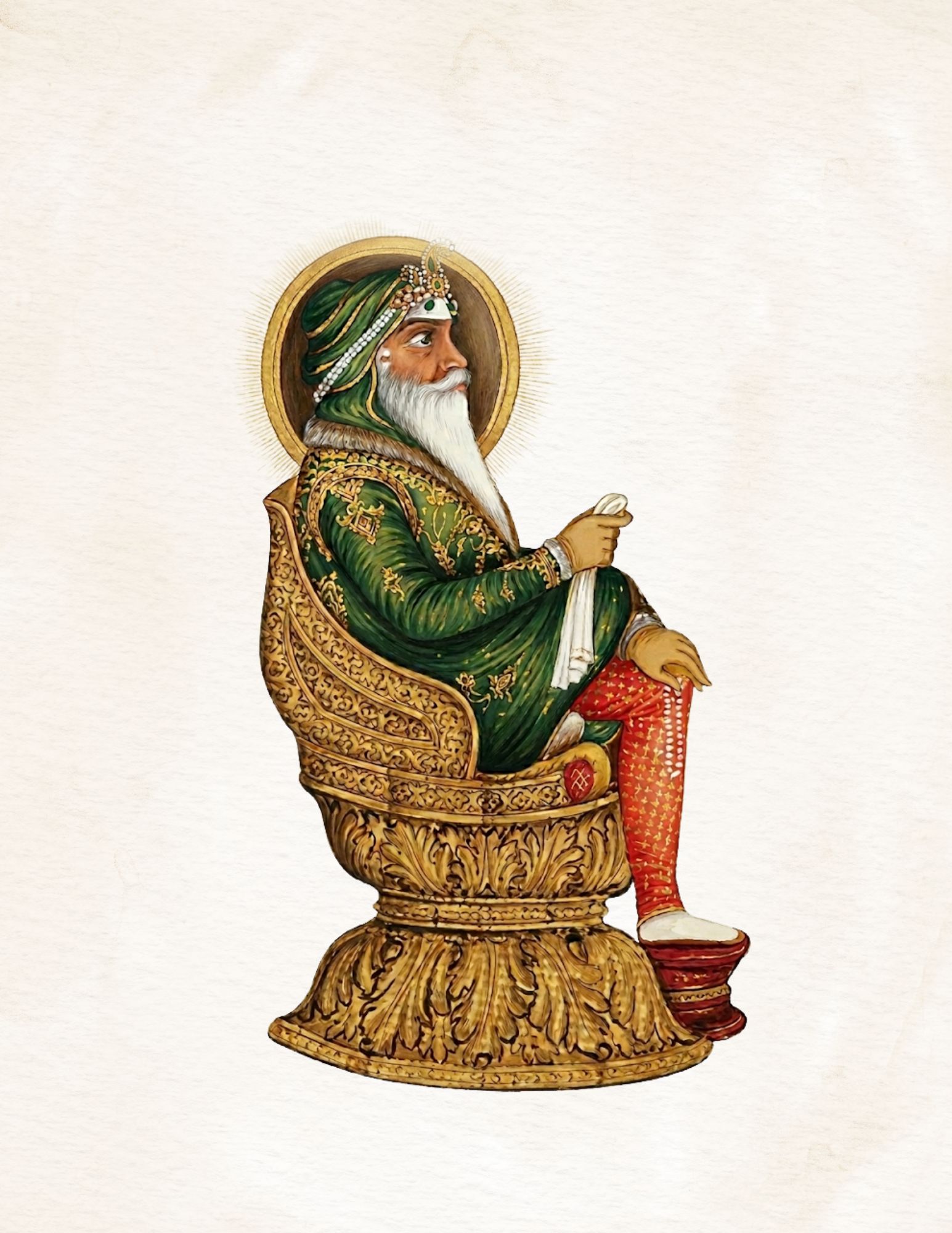
Maharaja Ripudman Singh of Nabha was a devout Sikh from the lineage of Bhai Phul — whose family had received Amrit from Sri Guru Gobind Singh Ji. Raised under the guidance of Gursikh scholars, his Sikh spirit ran deep. He fearlessly championed Panthic causes: he fought for the Anand Marriage Act, challenged British monopoly over government positions, opposed laws restricting freedom of assembly, and was the only Sikh ruler to officially honour the shaheeds of Nankana Sahib (1921).

The British Government found him inconvenient. In 1923, using a dispute between Nabha and Patiala as a pretext, they conspired with his own ministers to force his abdication. The Maharaja later wrote to the Governor General that he had been drugged to weaken his mental power, that his officers had been bought off, and that his signatures were obtained under threat of imprisonment. He was expelled from his own state and replaced by a British administrator, William Johnston.

The Trigger

On August 25–27, 1923, the Sangat at Gurdwara Gangsar Jaito held gatherings in support of the Maharaja. An Akhand Path of Sri Guru Granth Sahib Ji was started. On September 9, processions were held across Punjab.

On September 14, 1923, while the Sangat was listening to the Akhand Path inside the Gurdwara, armed soldiers entered. The Singh reading at the Tabia was grabbed by the arm, dragged away, and arrested along with all listeners and sevaadars. The Akhand Path was forcefully interrupted.

This transformed the issue. What the British called a political matter was now a religious one. The question became simple: did Sikhs have the right to gather and worship freely in their own Gurdwara?

The Response

The SGPC resolved to restart the interrupted Akhand Path and complete 101 continuous Akhand Paths at Gurdwara Gangsar — without conditions.

Starting September 15, 1923, a Jatha of twenty-five Sikhs departed daily from Sri Akal Takht Sahib on foot. Each Jatha took a vow of non-violence in thought, word, and deed. Upon reaching Jaito, they were arrested, often held without food or water for days, then transported hundreds of miles away and released. They walked back to Amritsar and rejoined the Jathas.

On October 13, 1923, the British declared the SGPC and Akali Dal illegal. Over 110 Panthic leaders were arrested, including S.B. Mehtab Singh (President SGPC), Jathedar Teja Singh Akarpuri, Master Tara Singh, Professor Sahib Singh, and many others. They were charged with conspiracy against the Crown.

The daily Jathas of twenty-five continued without interruption.

The Shahidi Jathas

In February 1924, the Panth decided to send Shahidi Jathas of five hundred. The first departed from Sri Akal Takht Sahib on February 9, 1924 — Basant Panchmi. For twelve days they walked through Punjab, welcomed by thousands at every stop. In areas where the government banned service to the Jatha, villagers climbed over walls to bring them food. In the village of Phul, local leaders who served the Jatha were tortured to death afterward — iron rods pressed on their necks until they died one by one.

On the morning of February 21, 1924, the Jatha approached Gurdwara Gangsar. Machine guns were mounted on the fort. The army stood with rifles aimed. Administrator Johnston was present. When the Jatha was 150 yards from Gurdwara Tibbi Sahib, a European officer warned them they would be fired upon.

The Jatha continued forward.

Firing began from three sides. Bullets rained for five minutes. The Jatha walked on — calmly, without raising a hand. Balbir Kaur, a mother in the Jatha, was struck by a bullet — her baby in her arms was killed by the firing — yet she kept walking until her last breath. The palki of Sri Guru Granth Sahib Ji was protected from the firing at all costs. By the time the shooting stopped, the Sangat had reached Tibbi Sahib. Approximately one hundred Sikhs were martyred and three hundred wounded. No medical aid was provided for twenty-four hours. Many wounded died of thirst.

The Aftermath

Mohan Das Karamchand Gandhi sent a telegram urging the SGPC not to send a second Jatha. The SGPC disagreed. Where Gandhi saw the sacrifice as "wasteful death," the Khalsa did not consider a life given on the Guru's path to be wasted.

The second Shahidi Jatha of five hundred departed on February 28. One mother, whose eldest son had been martyred in the first Jatha, garlanded her second son and said: "I will be very fortunate if my second son is also sacrificed for the Guru." Several Sikhs submitted written wills to the Jathedar of Sri Akal Takht Sahib: "If I am martyred, all my property shall belong to the Guru-Panth."

Sixteen Shahidi Jathas followed between February 1924 and April 1925. Sikhs came from Bengal, Canada, Hong Kong, and Shanghai. In every city they passed through, Hindus, Muslims, and Sikhs welcomed them. Congress leaders accompanied multiple Jathas. Mr. Panikkar, Secretary of the Congress-established "Akali Sahayak Bureau," wrote: "Whatever the government says, the entire rural Sikh population is with the Akalis. This is not a movement of one faction."

The Bhujangis

With the sixth Jatha came twenty-two boys aged twelve to sixteen. At Jaito they were separated from adults and taken to the Kar Khas in Nabha. For seven days they were beaten, starved, and interrogated for their home addresses. Not one boy gave in. Released far away, they recovered, returned, and were arrested again. They escaped a moving train by jumping out at a station, hid in the jungle overnight, and walked to the Gurdwara. Three times captured, three times returned. Their only words: "We will go to the Gurdwara and perform the Akhand Path."

The Jails

Akali prisoners across multiple jails faced systematic torture. Bhai Santokh Singh, who went with Jathas to both Jaito and Bhai Pheru, recorded what he witnessed in Multan Jail: prisoners kept standing six hours with arms raised and legs apart, beaten with belts at any slackness; the Danda Beri (iron bar between the feet) applied day and night; daily quotas of grinding ten seers of grams in solitary confinement; two seers of water provided for both drinking and sanitation. Two Akalis who protested a guard beating a Sikh child were hung upside down from a tree and whipped — one died on the spot.

The jail doctor reportedly said: "I am from Chandu's family and must take revenge for my ancestor from the Sikhs." A prison officer said: "My great-grandfather was executed during Sikh rule; I have the chance to take revenge."

In the Bhai Pheru struggle alone, five thousand Sikhs were imprisoned in 1924.

The Victory

On July 21, 1925, the British Government lifted all restrictions on Gurdwara Gangsar. The army withdrew. The first of 101 Akhand Paths began that day. The vow made before Sri Akal Takht Sahib nearly two years earlier was fulfilled.

The struggle lasted one year and ten months. Thousands were imprisoned, hundreds martyred, many disabled for life. Properties were confiscated, families expelled from their states. C.F. Andrews summed it up: "I consider their religion to be the basis of this. Every man among them had the conviction that he was surrendering himself to Waheguru."

Key Dates

DateEvent
January 24, 1912Maharaja Ripudman Singh ascends the throne of Nabha
June 1923British force Maharaja's abdication
September 14, 1923Armed soldiers interrupt the Akhand Path at Gurdwara Gangsar
September 15, 1923Daily Jathas of 25 begin from Sri Akal Takht Sahib
October 13, 1923SGPC and Akali Dal declared illegal; 110+ leaders arrested
February 9, 1924First Shahidi Jatha of 500 departs
February 21, 1924Massacre at Jaito — ~100 martyred, ~300 wounded
February 28, 1924Second Shahidi Jatha departs
July 21, 1925All restrictions lifted; first of 101 Akhand Paths begins

Sources

  • Morcha Gangsar Jaito — Sikh Missionary College Ludhiana
  • The Struggle for Freedom of Religious Worship at Jaito — Sikh Itihas Research Board, SGPC, first published 1924, reprinted 1998

Share this guide