Look Into Their Eyes: The Gift of Being Present for Your Child
A gentle reminder for busy parents on the importance of being present for their children, exploring 'technoference' through Gurbani and modern research.
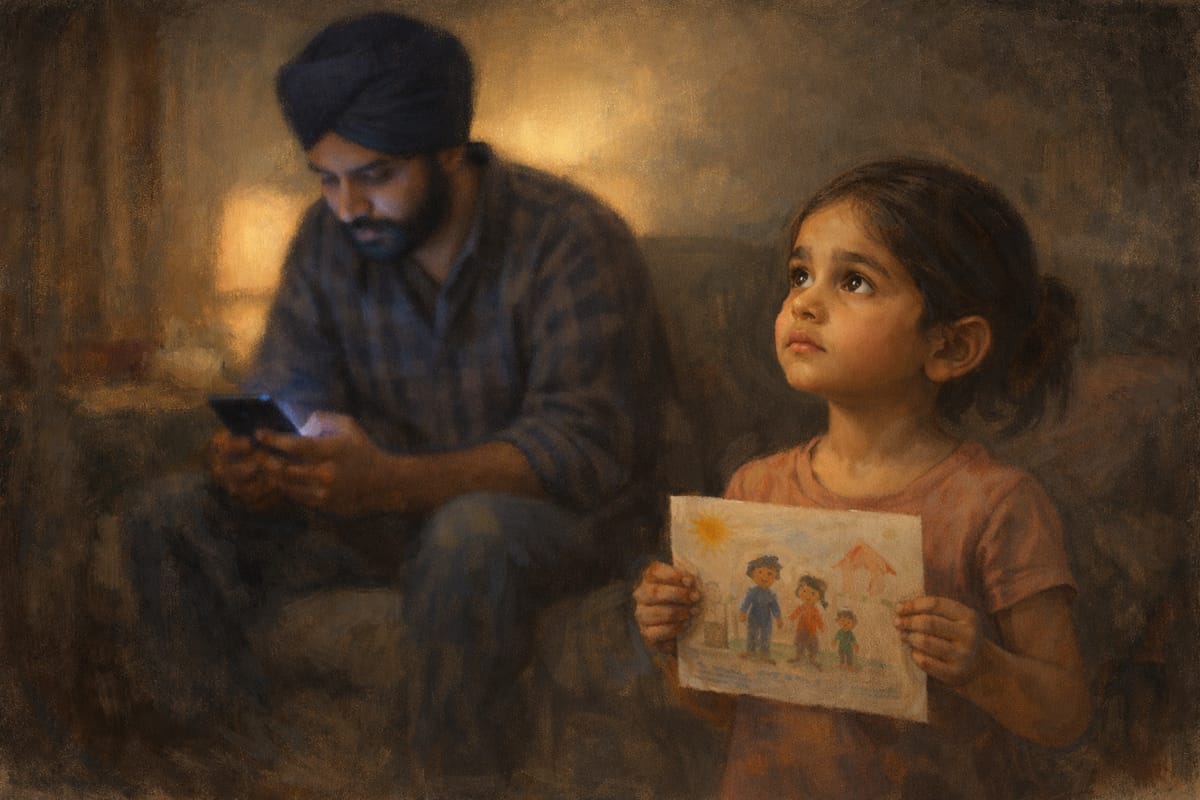
There is a moment that happens in every home, every single day. Your child walks up to you. Maybe they want to show you a drawing. Maybe they have a question about their homework. Maybe they just want to tell you something funny that happened at school.
But you are busy. Your phone is in your hand. Your eyes are on the screen. You say "hmm" or "just a second" — without looking up.
Your child stands there. Waiting. Then, quietly, they walk away.
It seems like nothing. A tiny, forgettable moment. But to your child, it is everything.
The Invisible Wound
We don't mean to hurt our children. No parent ever sits down and thinks, "Today, I will ignore my child." Yet, this is exactly what is happening in homes around the world — not out of cruelty, but out of habit.
Smartphones, tablets, social media feeds, work emails, news alerts — they pull our attention away in tiny, constant sips. Each glance at the screen lasts only a few seconds. But those few seconds add up. And over weeks, months, and years, they leave a mark on the people who need our attention the most — our children.
Researchers have given this phenomenon a name: technoference — the everyday interruptions in family interactions caused by digital devices. Studies show that parents spend significant amounts of their daily time on smartphones, often while in the same room as their children. The devices are always within arm's reach. We scroll during mealtimes. We check notifications during bedtime stories. We glance at messages while our child is mid-sentence.
And our children notice. They always notice.
What Your Child Sees When You Don't Look Up
In the 1970s, a developmental psychologist named Dr. Edward Tronick conducted what became known as the Still Face Experiment. A mother was asked to interact warmly with her baby — smiling, talking, making eye contact. Then, she was asked to suddenly go still — to hold a blank, expressionless face and stop responding.
Within seconds, the baby became visibly distressed. The infant tried everything to get the mother's attention — smiling, pointing, reaching out, making sounds. When nothing worked, the baby turned away, slumped over, and began to cry.
This experiment has since been replicated and studied extensively, and its findings remain deeply relevant today. Children — from infants through to adolescents — are wired to seek connection through the faces of their parents. When that connection is broken, even briefly, the child's emotional world shakes.
Now consider the modern version of the still face. It's not a blank stare in a laboratory. It's a parent looking at a phone instead of looking at their child. The effect is remarkably similar. Recent research has drawn clear parallels between parental device use and the still face effect — when parents focus on phones instead of their children, they display reduced facial expressivity, delayed responses, and diminished emotional engagement.
Children respond to this the same way the babies in Tronick's lab did — they try harder to get attention, and when that fails, they either act out in frustration or withdraw quietly into themselves.
The Dinner Table That Went Silent
Think about your family's dinner table. Twenty years ago, mealtime was one of the most natural places for conversation. Children shared their day. Parents listened. Stories were told, lessons were passed down, and bonds were quietly strengthened — one meal at a time.
Today, many dinner tables look different. Phones sit beside plates. Parents scroll between bites. Children, seeing no one is really listening, stop talking — or they pick up their own devices and disappear into their own screens.
It's not just dinner. This pattern spreads quietly into every corner of daily life — homework time, car rides, bedtime, walks in the park. The spaces that once belonged to connection now belong to distraction. And when children grow up in an environment where screens are prioritized over eye contact, they learn a painful lesson: I am not as interesting as whatever is on that screen.
Research on technoference during mealtimes paints a clear picture. When parents are absorbed in devices during meals, verbal interactions decrease significantly, and children — particularly young ones — often escalate their behaviour to try to reclaim their parents' attention. They act silly, raise their voices, or become impulsive. When that doesn't work either, some children simply give up trying.
This isn't defiance. It's heartbreak.
What Gurbani Teaches Us About Presence
The Sri Guru Granth Sahib Ji, our eternal Guru, speaks deeply about the power of undivided attention, of being fully present, and of truly seeing those before us. While these teachings are addressed to the soul's relationship with the Divine, they carry profound lessons for how we should be present in our closest human relationships — especially with our children.
The Gift of Full Attention
Guru Amar Das Ji teaches us the value of undivided, wholehearted attention:
ਏ ਮਨ ਹਰਿ ਜੀ ਧਿਆਇ ਤੂ; ਇਕ ਮਨਿ ਇਕ ਚਿਤਿ ਭਾਇ ॥
O my soul, lovingly remember the Beloved Lord single-mindedly and with rapt attention.
— Guru Amar Das Ji | Ang 653
The words ਇਕ ਮਨਿ ਇਕ ਚਿਤਿ — with one mind, one consciousness — are a call to be completely present. Gurbani asks us to give our full, undivided attention when engaging with what truly matters. If the Guru demands this quality of presence in our spiritual life, how can we offer anything less to our children — the trusts that Waheguru has placed in our care?
When your child speaks to you and your mind is somewhere else — on your phone, on your worries, on the next notification — you are not giving them ik man, ik chit. You are giving them a fraction of yourself. And children can feel the difference.
The World Asleep in Distraction
Guru Amar Das Ji also offers us a powerful wake-up call about the state of being "asleep" while appearing to be awake:
ਇਕੋ ਸਤਿਗੁਰੁ ਜਾਗਤਾ; ਹੋਰੁ ਜਗੁ ਸੂਤਾ. ਮੋਹਿ ਪਿਆਸਿ ॥
The True Guru alone is awake. The rest of the world is asleep in worldly love and desire.
— Guru Amar Das Ji | Ang 592
We may be physically present in the room with our children, but if our minds are lost in the endless scroll of social media, we are, in Gurbani's language, asleep. We are sitting right next to our child, yet we are not truly there. Our bodies are in the room, but our consciousness has wandered. This is the modern form of being ਸੂਤਾ (asleep) — eyes open, but seeing nothing that matters.
Life Is Passing, Moment by Moment
Guru Tegh Bahadur Ji reminds us with urgency that time does not wait:
ਚੇਤਨਾ ਹੈ. ਤਉ ਚੇਤ ਲੈ; ਨਿਸਿ ਦਿਨਿ ਮੈ. ਪ੍ਰਾਨੀ ॥ਛਿਨੁ ਛਿਨੁ ਅਉਧ ਬਿਹਾਤੁ ਹੈ; ਫੂਟੈ ਘਟ ਜਿਉ ਪਾਨੀ ॥
O mortal, if you have any understanding, then remember your Lord, night and day.Every moment, life is passing away — like water from a cracked pitcher.
— Guru Tegh Bahadur Ji | Ang 726
ਛਿਨੁ ਛਿਨੁ — moment by moment — life is dripping away. Your child is five years old, then ten, then fifteen. The window in which they want to come to you, want to show you things, want to sit beside you and talk — that window is not permanent. It is closing a little more each day.
Every moment spent looking at a screen instead of into your child's eyes is water through the crack. You cannot pour it back.
How God Parents Us — The Model of Perfect Presence
Guru Arjan Dev Ji gives us a beautiful image of how Waheguru cares for us — and in doing so, shows us what parenting should look like:
ਖੇਲਿ ਖਿਲਾਇ; ਲਾਡ ਲਾਡਾਵੈ; ਸਦਾ ਸਦਾ ਅਨਦਾਈ ॥ਪ੍ਰਤਿਪਾਲੈ ਬਾਰਿਕ ਕੀ ਨਿਆਈ; ਜੈਸੇ ਮਾਤ ਪਿਤਾਈ ॥
He plays with me, fondles me, and blesses me with eternal bliss.He sustains me as mother and father sustain their child.
— Guru Arjan Dev Ji | Ang 1213
Look at the words: ਖੇਲਿ ਖਿਲਾਇ — plays and delights. ਲਾਡ ਲਾਡਾਵੈ — fondles with affection. This is not distant caregiving. This is not providing food and shelter and calling it done. This is the image of a parent who is fully present — playing, laughing, delighting in their child. Gurbani uses this as the highest metaphor for God's love. That tells us something about how sacred that parent-child engagement truly is.
The Parent Who Truly Sees Their Child
Guru Ram Das Ji paints a vivid picture of the joy parents feel when a child is born:
ਬਾਹਰਿ ਜਨਮੁ ਭਇਆ. ਮੁਖਿ ਲਾਗਾ; ਸਰਸੇ ਪਿਤਾ ਮਾਤ ਥੀਵਿਆ ॥
The child is born and begins to nurse; the father and mother are delighted to see the child's face.
— Guru Ram Das Ji | Ang 76
ਮੁਖਿ ਲਾਗਾ — the child is attached to the face. ਸਰਸੇ — the parents are overjoyed, delighted. This is the natural, God-given bond: a child looking into a parent's face, and the parent looking back with love and joy.
Somewhere between that first gaze of pure delight and the busy routines of daily life, many of us stop looking. Not because the love is gone, but because the distractions have become too many. Gurbani reminds us: the delight of seeing your child's face is not just a one-time event at birth. It is a daily practice. It is a daily gift.
The Teacher and the School — A Lesson in Guidance
There is a remarkable verse by Guru Ram Das Ji that speaks directly to the role of teacher and parent:
ਆਪੇ ਚਾਟਸਾਲ. ਆਪਿ ਹੈ ਪਾਧਾ; ਆਪੇ ਚਾਟੜੇ ਪੜਣ ਕਉ ਆਣੇ ॥ਆਪੇ ਪਿਤਾ. ਮਾਤਾ ਹੈ ਆਪੇ; ਆਪੇ ਬਾਲਕ ਕਰੇ ਸਿਆਣੇ ॥
The Lord Himself is the school, Himself the teacher, and Himself He brings the pupils to learn.He Himself is the Father, Himself the Mother, and Himself He makes the children wise.
— Guru Ram Das Ji | Ang 552
ਬਾਲਕ ਕਰੇ ਸਿਆਣੇ — He makes the children wise. This is not passive parenting. This is active, deliberate, present engagement. God doesn't just create children and leave them. He teaches. He guides. He stays present in the process of making them wise.
As parents, we are the earthly instruments of that process. And we cannot make our children wise from behind a screen.
The Silent Damage — What the Research Tells Us
You don't need to read academic papers to know this is true. You can feel it. But it helps to know that science confirms what your heart already suspects.
Studies on technoference show that when parents are frequently distracted by devices during family time, children are more likely to show increased frustration, hyperactivity, whining, and tantrums — behaviours researchers describe as children escalating in order to win back their parents' attention. Longitudinal research has found that these patterns are not just momentary — they can predict behavioural difficulties months later.
But it's not just the acting-out that we should worry about. Some children don't escalate. They go quiet. They withdraw. They stop asking for attention because they've learned it won't come. These are the children whose pain is invisible, and often, by the time we notice, the emotional distance has already taken root.
Research also shows that this isn't just about children. Parents who are frequently on their phones report feeling less connected to their children, evaluate their own parenting more negatively, and experience greater stress — creating a cycle where the phone becomes both the problem and the escape.
It's Not About Guilt — It's About Waking Up
If you're reading this and feeling a knot in your stomach, that's okay. This article is not written to make you feel like a bad parent. You are not a bad parent. You are a busy, tired, overwhelmed human being navigating a world that is deliberately designed to steal your attention.
Social media companies spend billions of dollars engineering their apps to be addictive. Every notification, every autoplay video, every infinite scroll is designed to keep your eyes on the screen for just a few more seconds. You are not weak for getting pulled in. You are human.
But as Guru Tegh Bahadur Ji says — ਅਜਹੂ ਕਛੁ ਬਿਗਰਿਓ ਨਹੀ — no harm has yet been done that cannot be mended, if even now you wake up.
The damage is not permanent. The door is not closed. But the time to act is now.
Small Changes, Big Impact — A Path Forward
You don't need to throw your phone away. You don't need to become a perfect parent (there is no such thing). What you need is to become a present parent — even for small, sacred pockets of time each day. Here are some practical steps:
Look into their eyes first. When your child comes to you, make it a practice to put down whatever is in your hand, turn your body towards them, and make eye contact before you respond. This takes three seconds. It changes everything.
Create phone-free zones. The dinner table, the car, and bedtime — protect these spaces. No phones. No exceptions. These are the spaces where family bonds are built, one conversation at a time.
Be the first face, not the first screen. In the morning, greet your child before you check your phone. At pickup time, look at their face before you look at your notifications. These small moments tell your child: You come first.
Narrate your availability. If you genuinely need to take a call or finish an email, tell your child: "I need five minutes to finish this, and then I am all yours." This teaches them that they are not being ignored — they are being respected, and their turn is coming.
Put the phone to sleep before bedtime. The last thirty minutes before your child's bedtime should be yours and theirs alone. Read together, talk about their day, or simply sit together in quiet. This is where the deepest connections happen.
Model what you want to see. Children learn from what we do, not what we say. If we want our children to be present, to listen, to make eye contact, to put their devices down — we must do it first. The mirror will follow.
A Final Reflection
Guru Arjan Dev Ji writes about the longing of a soul that has been separated from the Beloved:
ਨੇਤ੍ਰ ਸੰਤੋਖੇ; ਦਰਸੁ ਪੇਖਿ ॥
Seeing the Lord's Vision, my eyes are satisfied.
— Guru Arjan Dev Ji | Ang 1181
Our eyes find peace when they rest upon what truly matters.
Your child's face is one of the most sacred sights you will ever behold in this life. It is a gift from Waheguru — a trust, a blessing, a living miracle sitting right in front of you, asking for nothing more than your gaze, your attention, your presence.
Don't let a screen steal that from you.
Look up. Look into their eyes. Be there — ik man, ik chit — with one mind and one heart.
The notifications can wait. Your child cannot.
All Gurbani references are from Sri Guru Granth Sahib Ji. Translations are approximate and intended for educational reflection.