Your Birthday Through the Eyes of Gurbani
What does Gurbani say about birthdays? Explore the spiritual significance of human birth and the profound questions we should reflect upon as another year passes.
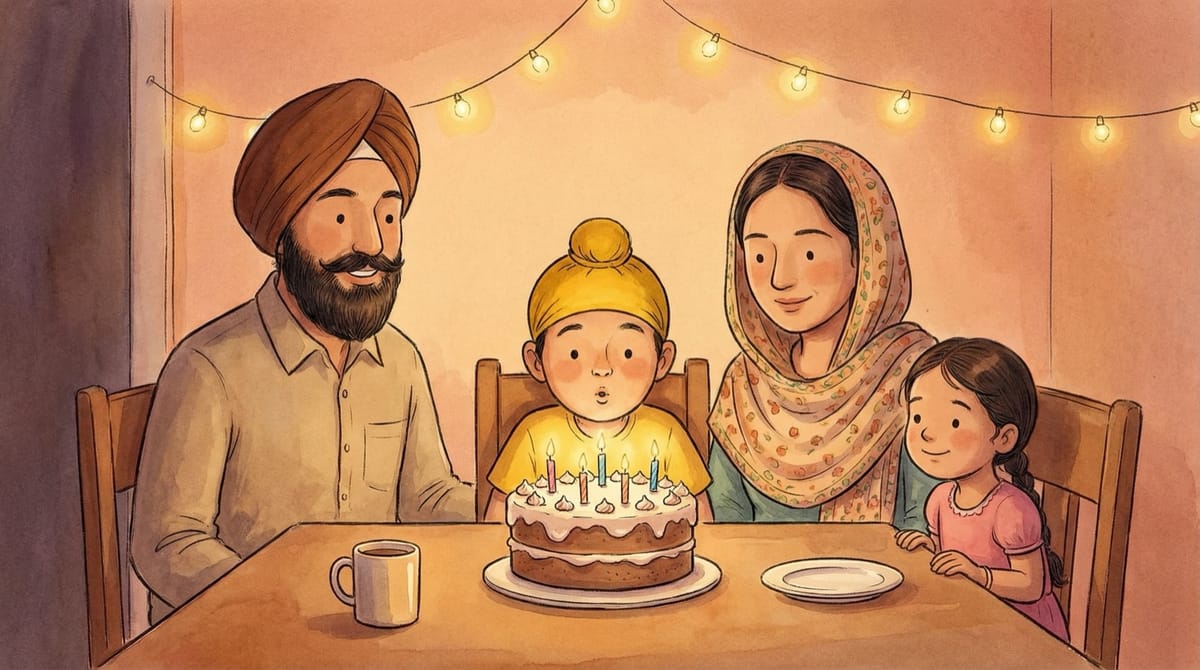
Every year, as your birthday or your child's birthday approaches, there is a familiar whirlwind of planning: the cake, the decorations, the guest list, the gifts. These are joyful traditions. But for a Sikh family, a birthday offers something far deeper — a once-a-year pause to ask the most important questions Gurbani places before us: Who am I, really? Why was I given this precious human life? And am I using my time wisely?
This guide explores what Gurbani teaches about the rarity and purpose of human birth, and the profound reflections a birthday should inspire. It is not about guilt or rigid rules. It is about understanding the spiritual depth beneath the celebration — so that whether you are five or fifty, your birthday becomes a moment of gratitude, self-assessment, and renewed commitment to the path.
The Preciousness of Human Birth: Gurbani's View
In Gurbani, human birth is not treated as an ordinary event. It is described as a rare and precious gift — an opportunity that the soul has waited countless lifetimes to receive. Guru Sahib makes it clear that this life is not random; it is purposeful. The very first question a birthday should prompt is: Do I truly understand how extraordinary this life is?
The Rarity of Human Life
Bhagat Kabir Ji puts this with striking clarity in Sri Guru Granth Sahib:
ਕਬੀਰ ਮਾਨਸ ਜਨਮੁ ਦੁਲੰਭੁ ਹੈ ਹੋਇ ਨ ਬਾਰੈ ਬਾਰ ॥ ਜਿਉ ਬਨ ਫਲ ਪਾਕੇ ਭੁਇ ਗਿਰਹਿ ਬਹੁਰਿ ਨ ਲਾਗਹਿ ਡਾਰ ॥
Kabeer, human birth is difficult to obtain; it does not come again and again. Just as a ripe fruit, having fallen to the ground, cannot be re-attached to the branch.
— Bhagat Kabir Ji, Sri Guru Granth Sahib Ji, Ang 1366
This is among the most powerful metaphors in all of Gurbani. A ripe fruit that falls from a tree does not climb back up. Similarly, this human life, once gone, is gone. The image is not meant to frighten us. It is meant to wake us up — to cherish every single day, and especially the day that marks the anniversary of our arrival in this world.
The Purpose of This Birth
If human birth is rare, then surely it was given for a reason. Guru Arjan Dev Ji states the purpose with unmistakable directness in Rehraas Sahib:
ਭਈ ਪਰਾਪਤਿ ਮਾਨੁਖ ਦੇਹੁਰੀਆ ॥ ਗੋਬਿੰਦ ਮਿਲਣ ਕੀ ਇਹ ਤੇਰੀ ਬਰੀਆ ॥
You have been blessed with this human body. This is your opportunity to meet the Lord of the Universe.
— Guru Arjan Dev Ji, Sri Guru Granth Sahib Ji, Ang 12
The word "bariya" means "turn" or "opportunity." Think of it like this: after waiting in an impossibly long line, your turn has finally come. This human life is your turn to connect with Waheguru. A birthday, then, is a powerful annual reminder that another year of your turn has passed. How did you use it?
The Light Within: Who Is Really Being Born?
Gurbani teaches us that the body is a temporary vessel. What truly matters is the divine light (Jot) that resides within. On a birthday, Gurbani asks us to look beyond the physical body and recognise the sacred presence within:
ਏ ਸਰੀਰਾ ਮੇਰਿਆ ਹਰਿ ਤੁਮ ਮਹਿ ਜੋਤਿ ਰਖੀ ਤਾ ਤੂ ਜਗ ਮਹਿ ਆਇਆ ॥
O my body, the Lord placed His Light within you, and then you came into the world.
— Guru Amar Das Ji, Sri Guru Granth Sahib Ji, Ang 921
And further, Guru Ji reminds us of the true nature of our mind and soul:
ਮਨ ਤੂੰ ਜੋਤਿ ਸਰੂਪੁ ਹੈ ਆਪਣਾ ਮੂਲੁ ਪਛਾਣੁ ॥
O my mind, you are the embodiment of the Divine Light — recognise your own origin.
— Guru Amar Das Ji, Sri Guru Granth Sahib Ji, Ang 441
So who is really being "born" on your birthday? It is not merely a body that came into the world. It is a spark of the Divine that entered this life with a purpose. A birthday is an invitation to remember that spark and to ask: Am I living in a way that honours this light within me?
How to Live in This World: Gurbani's Guidance
Gurbani does not ask us to renounce the world. It asks us to live in it with awareness, like a lotus flower that remains beautiful and untouched even while growing in muddy water. As Guru Nanak Dev Ji teaches:
ਜੈਸੇ ਜਲ ਮਹਿ ਕਮਲੁ ਨਿਰਾਲਮੁ ਮੁਰਗਾਈ ਨੈ ਸਾਣੇ ॥
Like the lotus that remains untouched and detached in the water, and like a duck that swims through the stream without getting wet.
— Guru Nanak Dev Ji, Sri Guru Granth Sahib Ji, Ang 938
This is the model for how a Sikh should live: fully engaged with family, work, and community, yet anchored in Naam and remembrance of Waheguru. Your birthday is a checkpoint on this journey. It is a day to honestly ask: Am I living like the lotus, or have I become entangled in the mud?
The Urgency of Time
Gurbani is remarkably honest about the passage of time. Bhagat Kabir Ji, whose wisdom resonates across centuries, warns:
ਦਿਨ ਤੇ ਪਹਰ ਪਹਰ ਤੇ ਘਰੀਆਂ ਆਵ ਘਟੈ ਤਨੁ ਛੀਜੈ ॥ ਕਾਲੁ ਅਹੇਰੀ ਫਿਰੈ ਬਧਿਕ ਜਿਉ ਕਹਹੁ ਕਵਨ ਬਿਧਿ ਕੀਜੈ ॥
Day by day, hour by hour, momenty moment, life diminishes and the body wastes away. Death, the hunter, prowls like a predator — tell me, what can be done?
— Bhagat Kabir Ji, Sri Guru Granth Sahib Ji, Ang 692
This is not meant to cast gloom over a birthday celebration. Rather, it is Gurbani's way of saying: do not sleepwalk through your years. Be intentional. Be present. Use your time for what truly matters — connection with Waheguru, service to others, and spiritual growth.
The Path: Naam Japo, Kirat Karo, Vand Chhako
Guru Nanak Dev Ji gave us a clear, practical formula for a well-lived life: Naam Japo (meditate on the Divine Name), Kirat Karo (earn an honest living), and Vand Chhako (share with others). A birthday is the perfect day to assess yourself against these three pillars:
- Naam Japo — Have I deepened my relationship with Waheguru this past year? Have I been regular in my Nitnem and Simran?
- Kirat Karo — Have I been honest, ethical, and industrious in my work and daily life?
- Vand Chhako — Have I shared my blessings — my time, money, skills, and love — with those in need?
On Your Birthday, What Should You Reflect Upon?
A birthday is a natural moment for reflection. Gurbani provides us with a profound framework for this inner audit. Here are the key questions to sit with on your birthday.
Gratitude: Recognising Waheguru's Blessings
Before anything else, a birthday should begin with deep, sincere gratitude. Not just for the obvious blessings — health, family, home — but for the gift of breath itself, for the opportunity to walk this earth, and for the Guru's presence in your life.
Gratitude transforms a birthday from a celebration of self into a celebration of Waheguru's love. It shifts the focus from "what I want" to "what I have been given."
Self-Assessment: Am I Closer to Waheguru?
A birthday marks the passage of time. In Gurbani's framework, the honest question is not "How much have I achieved?" but "How much closer am I to my Source?"
Take time on your birthday to sit quietly with yourself. Take Hukamnama from the Guru Granth Sahib Ji. Let the Guru speak directly to you on this day. What is the Guru telling you about the year ahead?
Haumai (Ego): The Birthday Trap
There is a subtle danger in birthdays that Gurbani warns us about: the inflation of haumai (ego). "It's MY day," we think. "I deserve attention, gifts, and praise." Gurbani gently but firmly redirects this:
ਹਉਮੈ ਦੀਰਘ ਰੋਗੁ ਹੈ ਦਾਰੂ ਭੀ ਇਸੁ ਮਾਹਿ ॥
Haumai (ego) is a deep-rooted disease, but within it lies its own cure as well.
— Guru Angad Dev Ji, Sri Guru Granth Sahib Ji, Ang 466
The cure for haumai is remembering that this life itself is a gift from Waheguru. You did not earn your own birth. You were given it. A birthday grounded in this understanding becomes an act of humility rather than pride.
Happy Birthday — may Waheguru bless you with another year of love, growth, and closeness to the divine.
ਵਾਹਿਗੁਰੂ ਜੀ ਕਾ ਖ਼ਾਲਸਾ, ਵਾਹਿਗੁਰੂ ਜੀ ਕੀ ਫ਼ਤਹਿ ॥
Related Resources
- Raising Children with the Wisdom of Japji Sahib — Practical parenting wisdom rooted in Gurbani
- Why Do We Bow in Gurdwara? — Understanding the meaning behind Sikh practices