Why Daily Paath Matters — Japji Sahib, Rehras Sahib, Kirtan Sohila, and the Rhythm of a Sikh Day
What Nitnem is, what each daily Bani contains, and why Sikhi places such importance on engaging with Gurbani every morning and evening.
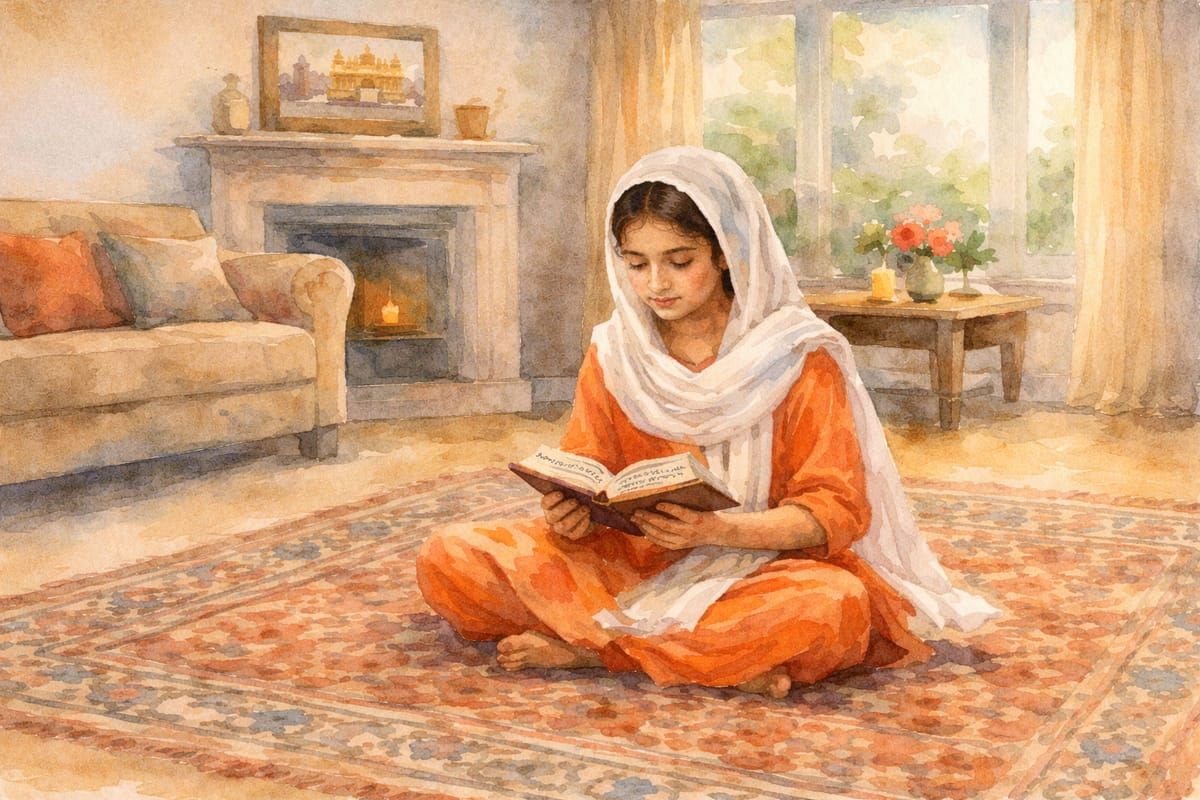
The short answer: Nitnem (daily spiritual practice) is the habit of engaging with Gurbani — the Guru's Word — every morning and evening. Sikhi treats this not as a ritual obligation but as a way to train the mind: to start the day grounded in awareness of the Creator, and to close it with gratitude and surrender. The Banis chosen for Nitnem are not arbitrary — each one addresses a specific dimension of how to live.
What Is Nitnem?
Nitnem literally means "daily discipline." In Sikh practice, it refers to a set of Banis — compositions from Sri Guru Granth Sahib Ji and the writings of Guru Gobind Singh Ji — recited at specific times of day. It is not a checklist to complete or a transaction with the divine. It is closer to training: the same way an athlete practises daily to build strength, a Sikh engages with Gurbani daily to build clarity, steadiness, and connection to something larger than the self.
The Sikh Rehat Maryada (the code of conduct) outlines which Banis form Nitnem, but the underlying principle is older than any code: Guru Nanak Dev Ji, in Japji Sahib itself, points directly to the value of early-morning practice.
ਅੰਮ੍ਰਿਤ ਵੇਲਾ ਸਚੁ ਨਾਉ; ਵਡਿਆਈ ਵੀਚਾਰੁ ॥
Early in the morning utter the True Name and reflect upon God's greatness.
Guru Nanak Dev Ji — Japji Sahib, Ang 2, Sri Guru Granth Sahib Ji
This is not a command issued from above. It is guidance from a teacher who understood how the mind works — that the first thing you engage with in the morning shapes the rest of your day.
The Morning: Japji Sahib and Mool Mantar
Mool Mantar is the opening verse of Sri Guru Granth Sahib Ji. In a single line, it defines the Creator: one, true, self-existent, beyond fear, beyond enmity, timeless, unborn, self-illumined. It is the foundational statement of Sikh belief — everything else in Sri Guru Granth Sahib Ji is an expansion of what Mool Mantar establishes. For children especially, it is often the first piece of Gurbani they learn, and its brevity makes it an accessible entry point into daily practice.
Japji Sahib, composed by Guru Nanak Dev Ji, follows immediately after Mool Mantar. Across 38 pauris (stanzas), it asks and answers fundamental questions: How do we connect with the Creator? What is the nature of the universe? How should we live? It covers Hukam (the natural order), the power of deep listening, the limits of intellect alone, and the process of spiritual growth — compared in its final pauri to a goldsmith refining raw metal into something pure.
Reciting Japji Sahib in the early morning hours — what Sikhi calls Amrit Vela (the ambrosial hours before dawn) — is not about performing a duty. It is about starting the day with perspective. Before the noise begins, before the phone lights up, before the demands of the world arrive, you sit with the Guru's words and remind yourself what matters.
The Evening: Rehras Sahib and Kirtan Sohila
Rehras Sahib is recited at sunset. It is a compilation that includes compositions by Guru Nanak Dev Ji, Guru Amar Das Ji, Guru Ram Das Ji, Guru Arjan Dev Ji, and Guru Gobind Singh Ji. Its central themes are gratitude and recognition of the Creator's vastness. After a full day of work, decisions, and interactions, Rehras Sahib recalibrates. It asks the reciter to step back from the day's events and recognise the larger order they exist within — to move from "I did this" to "this was given to me."
Kirtan Sohila is recited at bedtime. It contains five hymns by Guru Nanak Dev Ji, Guru Ram Das Ji, and Guru Arjan Dev Ji. Its themes are surrender, impermanence, and union with the Creator. Where Japji Sahib opens the day with awareness, Kirtan Sohila closes it with release. The day is done. Whatever happened — good or difficult — is placed down. The mind is handed over to the Creator before sleep.
Together, the morning and evening Banis create a frame around the day. The morning practice sets intention. The evening practice offers closure. What happens in between is life — but the frame holds it.
The Gurmat Reasoning
Why daily? Why not weekly, or whenever the mood strikes?
Guru Arjan Dev Ji addresses this directly:
ਝਾਲਾਘੇ. ਉਠਿ ਨਾਮੁ ਜਪਿ; ਨਿਸਿ ਬਾਸੁਰ ਆਰਾਧਿ ॥ ਕਾਰ੍ਹਾ ਤੁਝੈ. ਨ ਬਿਆਪਈ; ਨਾਨਕ. ਮਿਟੈ ਉਪਾਧਿ ॥੧॥
Rise early in the morning, repeat the Name, and night and day meditate on the Lord. No anxiety shall befall thee and thy calamity shall vanish.
Guru Arjan Dev Ji — Ang 255, Sri Guru Granth Sahib Ji
The logic is not mystical — it is practical. A mind that regularly engages with ideas bigger than its own worries becomes less consumed by those worries. A person who starts the day reflecting on the nature of the universe and ends it by surrendering the day's weight is, over time, less reactive, less anxious, and more grounded. Gurbani does not promise that life will be free of difficulty. It offers a way to meet difficulty without being destroyed by it.
Daily practice also builds identity. For children growing up in the diaspora — surrounded by competing influences and often disconnected from Punjabi language and culture — Nitnem becomes an anchor. It is not the only anchor, but it is a consistent one. The words themselves become familiar. The rhythm becomes home. Over years, what began as repetition becomes understanding.
Common Misconceptions
"It's just mindless repetition." If the words pass through without engagement, yes, it can become that. But the same is true of any practice — exercise, music, study. The value lies in showing up with attention. Gurbani itself repeatedly emphasises understanding over rote recitation. The goal is not to finish — it is to be present while you recite.
"You have to understand every word for it to count." Understanding deepens the experience, and working toward comprehension is worthwhile. But meaning also builds over time. A child who recites Mool Mantar daily at age six will understand it differently at sixteen — and differently again at thirty. The familiarity creates a foundation that meaning fills gradually.
"Missing a day means you've failed." Nitnem is a practice, not a test. Missing a day does not undo what came before. The point is to return to it — not out of guilt, but because it is valuable. Sikhi does not use fear or shame as motivation. The Gurus framed daily practice as something worth doing, not something you will be punished for skipping.
"It's only for Amritdhari Sikhs." The Banis of Nitnem are compositions within Sri Guru Granth Sahib Ji, which is for all of humanity. Engaging with Gurbani daily is not restricted to those who have taken Amrit — it is open to anyone who finds value in it.
Gursharn Singh is a volunteer Sikhi teacher and the founder of Maastarji.com, a free English-language Sikhi resource for diaspora children and families.
Related Resources
- Raising Children with the Wisdom of Japji Sahib — Ten practical principles from Japji Sahib for parents
- Why Sikhi Matters More Than Ever — Connecting children with Sikh values in the diaspora
- Why Do We Bow in Gurdwara? — Explaining the meaning behind bowing to Sri Guru Granth Sahib Ji