
Celebrate Sikh Heritage Month
Every April, Canada honours the vital contributions of Sikh Canadians. Explore interactive quizzes, printable activities, children's books, and family guides — crafted to make Sikh history and values come alive for kids.

What is Sikh Heritage Month?
Sikh Heritage Month is celebrated every April in Canada, recognizing the contributions Sikh Canadians have made to the country's social, economic, political, and cultural fabric. It was officially designated by the Canadian Parliament in 2019.
From the first Sikh settler Kesur Singh arriving in 1897, to the Komagata Maru of 1914 — a turning point for civil rights in Canada that highlighted the community's resilience and struggle for equality — to Baltej Singh Dhillon becoming the first RCMP officer to wear a Dastar (turban) — an article of faith representing equality, royalty, and a commitment to being recognizable to help anyone in need — April is a time to recognize, celebrate, and educate.
For kids growing up in the diaspora, Sikh Heritage Month is an opportunity to see their heritage reflected in the wider world — and to share it proudly with classmates, friends, and neighbours. At its heart is the Sikh prayer of Sarbatt da Bhalla — the well-being of all — a value that resonates deeply with the Canadian spirit of multiculturalism and inclusivity.
Recognize
Honour the Sikh trailblazers who shaped Canadian history — from pioneers and soldiers to community builders and advocates.
Celebrate
Join Nagar Kirtans, share Langar, attend community events, and celebrate the rich culture Sikhs bring to Canada.
Educate
Teach the next generation about Sikh values — Seva, equality, courage — through stories, activities, and shared learning.
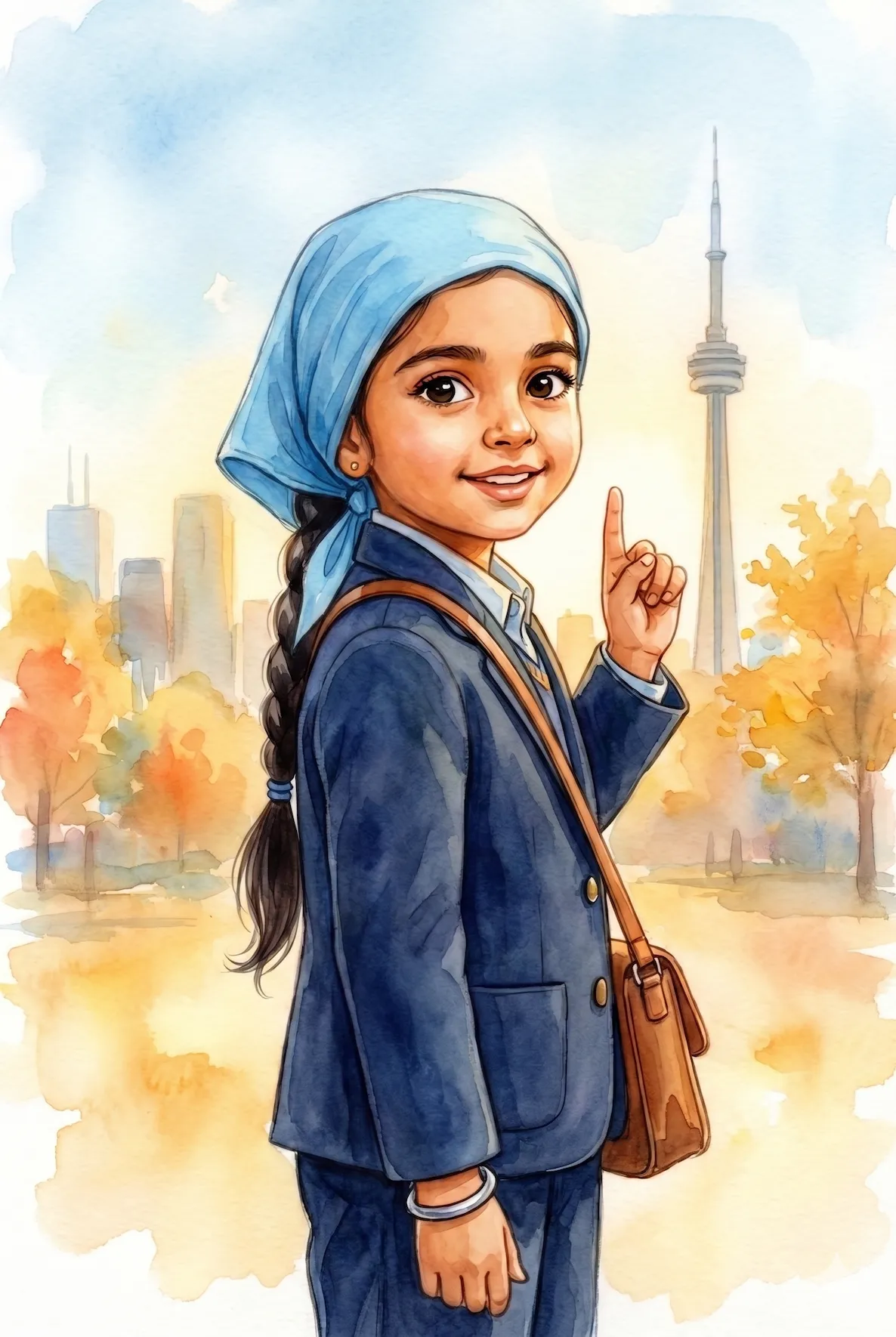
Meet Simran Kaur — Your SHM Guide
Simran is six years old and lives in Toronto. She counts everything — steps, streetlights, ducks — and carries her faith quietly in the everyday. She wears her kara and notices things other people miss.
She's the perfect Sikh Heritage Month motif: a Canadian-born Sikh girl whose stories explore the Five Kakars — the five articles of faith of the Khalsa. Through Simran, kids see themselves reflected in both their heritage and their home.
Read the Five Kakars SeriesActivities & Printables
Hands-on ways to celebrate Sikh Heritage Month
SHM Quiz
Test your knowledge of Sikh heritage in Canada — trailblazers, history, and values.
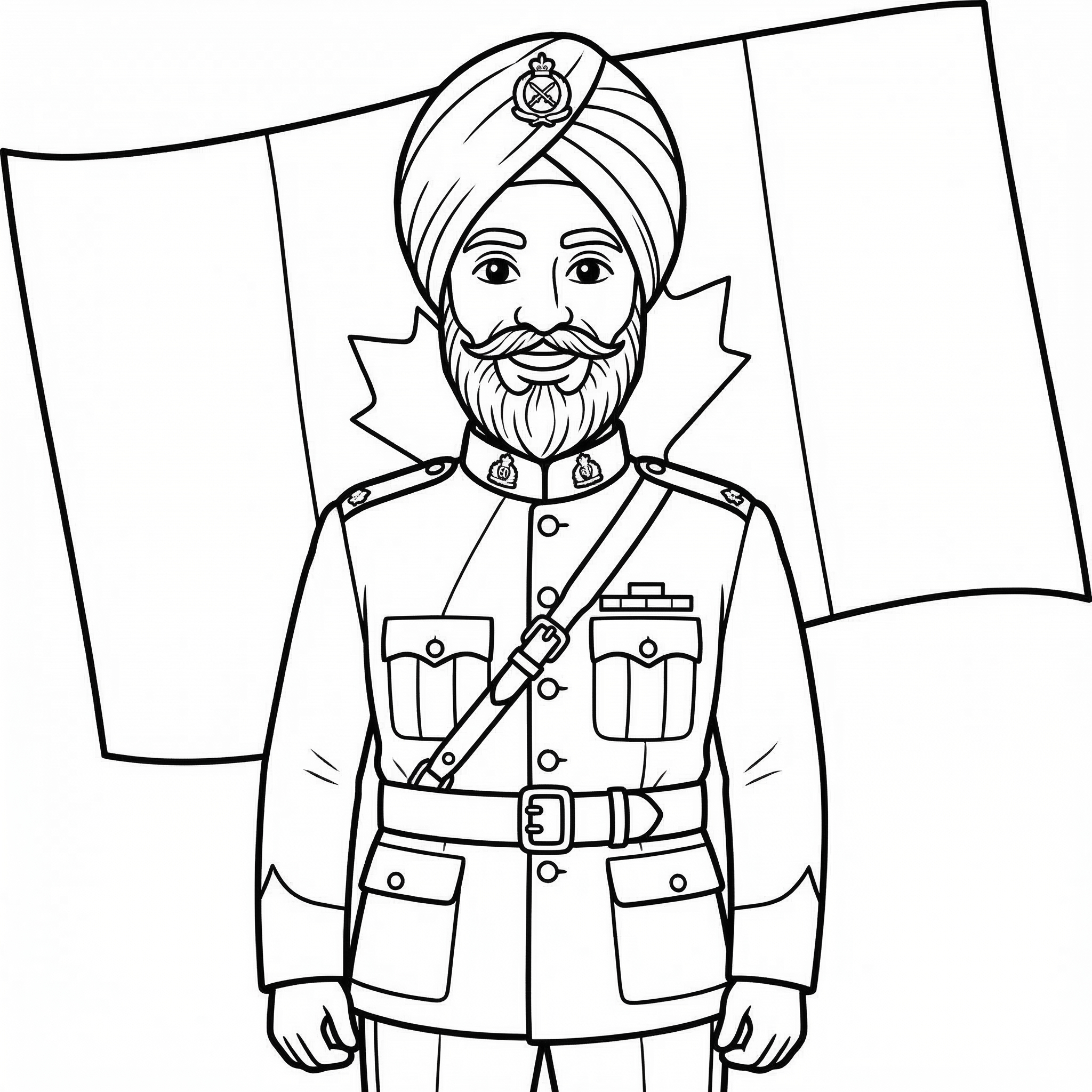
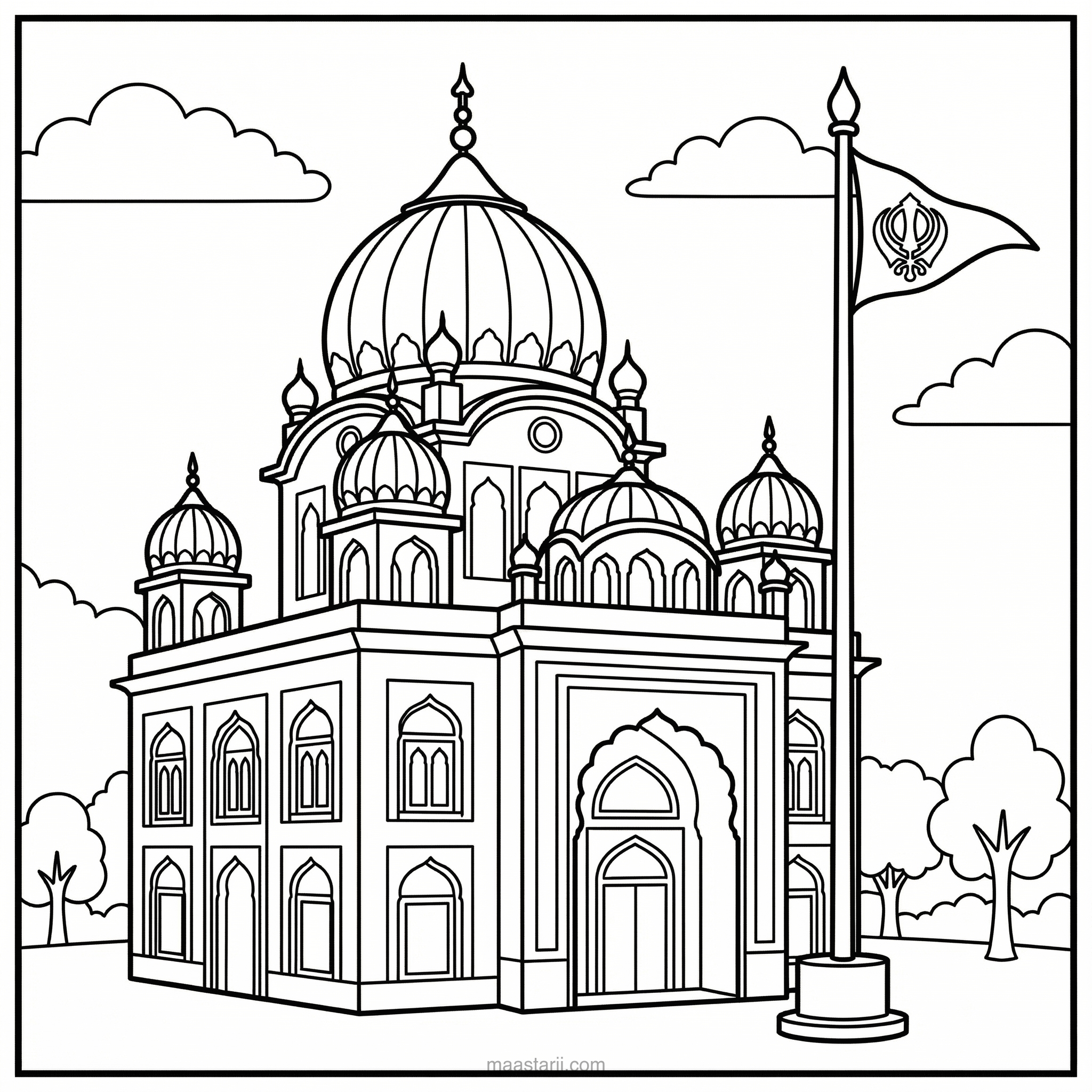
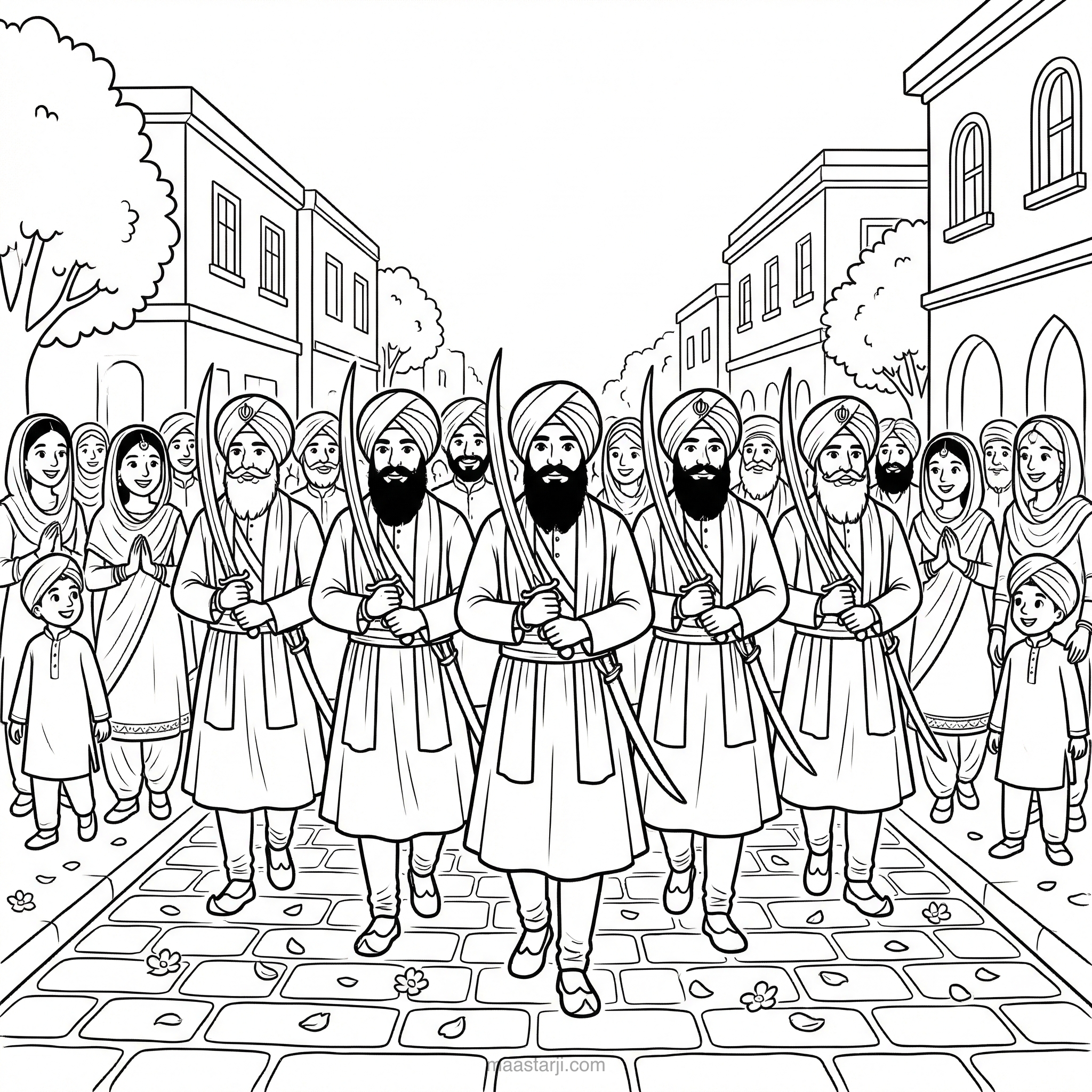
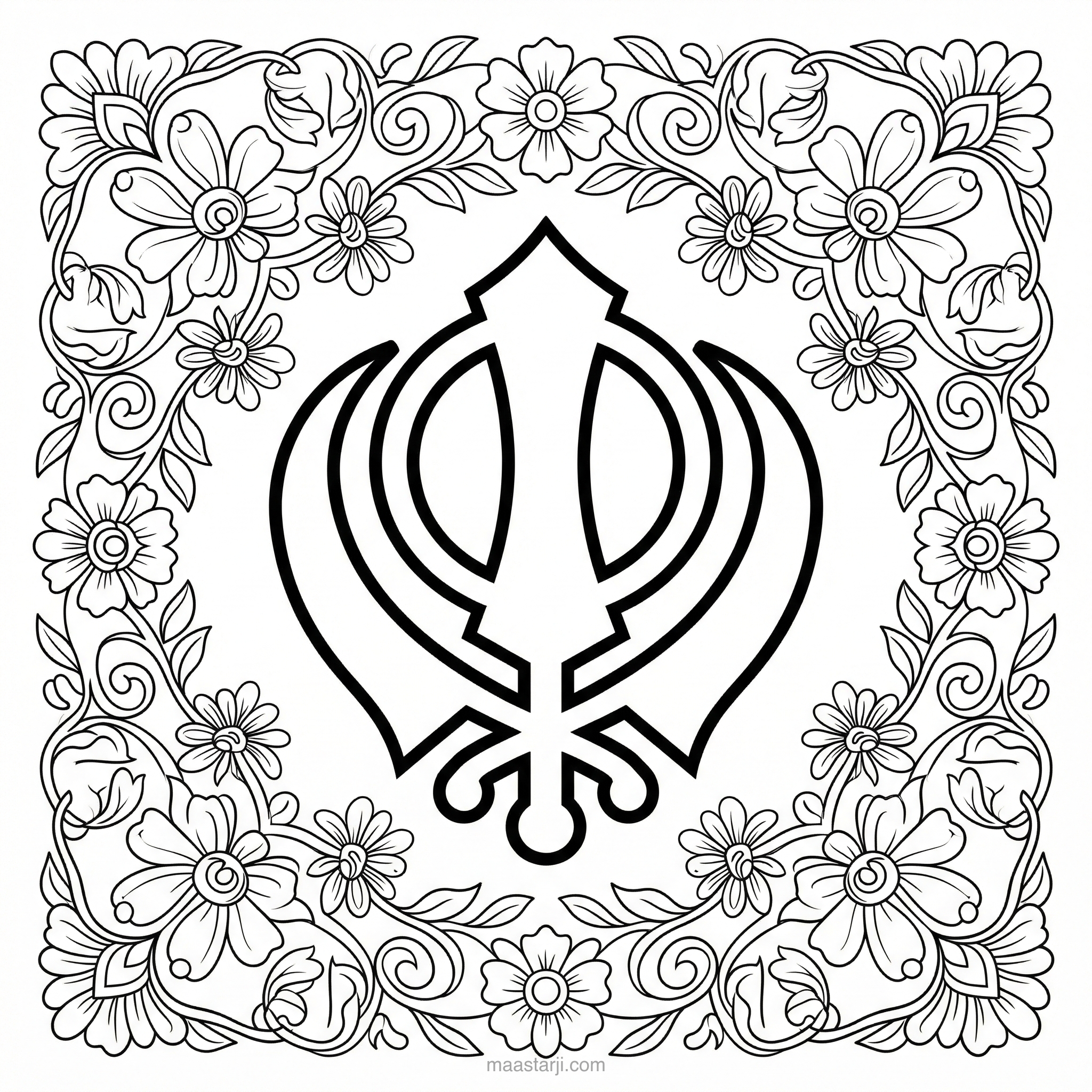
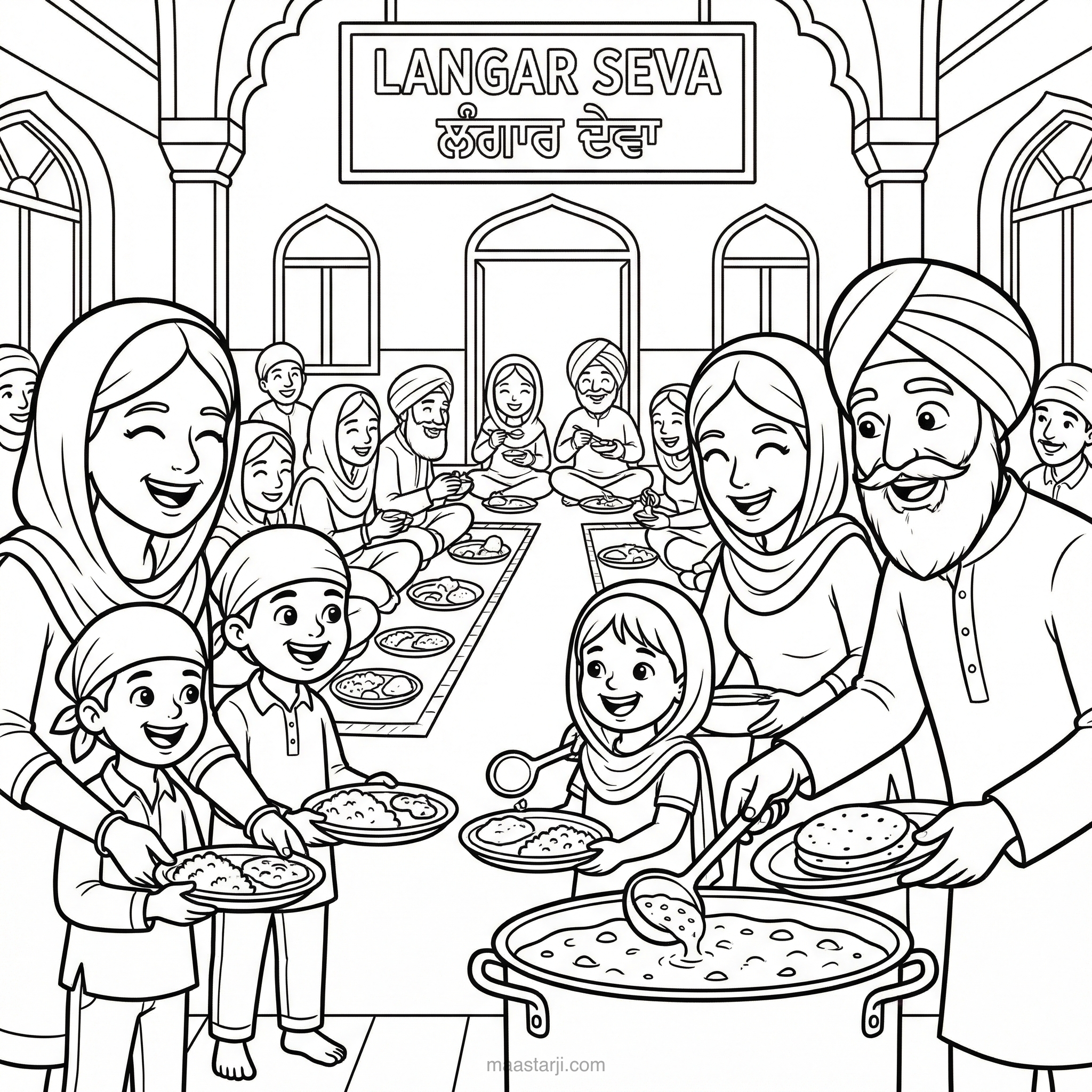
SHM Coloring Pages
6 printable sheets — Sikh trailblazer, Nishan Sahib, Nagar Kirtan, Khanda, and more.
Gurmukhi Worksheets
Practice writing Gurmukhi letters with printable tracing and writing worksheets.
Simran Kaur Coloring
Color Simran's adventures through the Five Kakars — perfect for young Sikh kids.
Quizzes to Try
Interactive quizzes for the whole family
Sikh Heritage Month Quiz
Sikh trailblazers in Canada, key events, and the values that define our heritage.
Vaisakhi & Khalsa Sajna Diwas
The historic Vaisakhi of 1699, the Panj Pyare, and the birth of the Khalsa.
Bhagat Puran Singh & Pingalwara
The life of Bhagat Puran Singh — founder of Pingalwara and champion of the forgotten.
Sikh Calendar Basics
The Nanakshahi calendar, the twelve Sikh months, and the Barah Maha.
Nagar Kirtans Across Canada
Sacred Sikh processions take place across the country each spring. Everyone is welcome.

Vancouver
BCSaturday, April 12
Ross Street Gurdwara, 11 AM – 5 PM. Up to 300,000 attendees.
One of the earliest Vaisakhi processions in Canada, featuring Gatka demonstrations, live Kirtan, and community Langar open to everyone.
DetailsSurrey
BCSaturday, April 18
Gurdwara Dashmesh Darbar, 9 AM – 5 PM. World's largest Vaisakhi parade.
Draws over 500,000 attendees. Sri Guru Granth Sahib Ji leads the procession through Surrey's streets in a celebration open to people of all faiths and backgrounds.
DetailsCalgary
ABSaturday, May 9
Dashmesh Culture Centre, 10 AM – 5 PM.
Alberta's largest Nagar Kirtan, featuring Gurbani Kirtan, Gatka demonstrations, and community Langar open to everyone.
DetailsEdmonton
ABSunday, May 17
Gurdwara Millwoods to Gurdwara Sri Guru Singh Sabha.
The procession winds through Edmonton's streets connecting the city's two main Gurdwaras, with live Kirtan and Langar Seva along the route.
DetailsWinnipeg
MBLate August (TBD)
Annual late-summer procession through downtown Winnipeg. Check Sikh Heritage Manitoba for the 2026 date.
Manitoba's largest Sikh celebration includes Shabad Kirtan, Gatka, and community Langar open to everyone.
DetailsAttending for the First Time?
- 1 Cover your head — a head-covering is required as a sign of respect. Coverings are often provided, or bring a bandana or scarf.
- 2 Remove shoes near the float carrying Sri Guru Granth Sahib Ji, the Living Word and Eternal Guru, as a sign of reverence.
- 3 Sit together for Langar — everyone sits on the floor to share a meal as equals, regardless of background, caste, or faith.
Organizations Leading Sikh Heritage Month
These organizations work year-round to celebrate and preserve Sikh heritage across Canada.
World Sikh Organization of Canada
NationalAdvocated for the Sikh Heritage Month Act (2019). Organizes SHM events across the country.
VisitSikh Heritage Month Foundation
NationalCentral coordinating body for SHM — art exhibitions, panels, workshops, and a national events calendar.
VisitSikh Heritage Society BC
BCStudent-founded volunteer non-profit. SHM events, scholarships, and educational programming.
VisitCanadian Sikh Heritage
BCHome of the Gur Sikh Temple (1911) — the oldest existing Sikh temple in North America and a National Historic Site.
VisitOntario Sikhs & Gurdwara Council
ONOrganizes Toronto's Khalsa Day parade and SHM celebrations across Ontario.
VisitSikh Heritage Month Ottawa
ONYouth-led organization. Raised the Nishaan Sahib at Ottawa City Hall in 2016 — a historic first.
VisitSikh Heritage Manitoba
MBCreates accessible platforms within mainstream spaces to connect the community with Sikhi.
VisitHeritage Calgary — Sikh History Project
ABDocuments stories of early Sikh settlers in Alberta and produces SHM historical resources.
VisitGuides & Deep Dives
Go deeper into Sikh Heritage Month with these guides for families and educators.

Sikh Trailblazers
9 inspiring Sikh Canadians who made history — from the first Sikh settler to Canada's first turbaned Supreme Court justice.
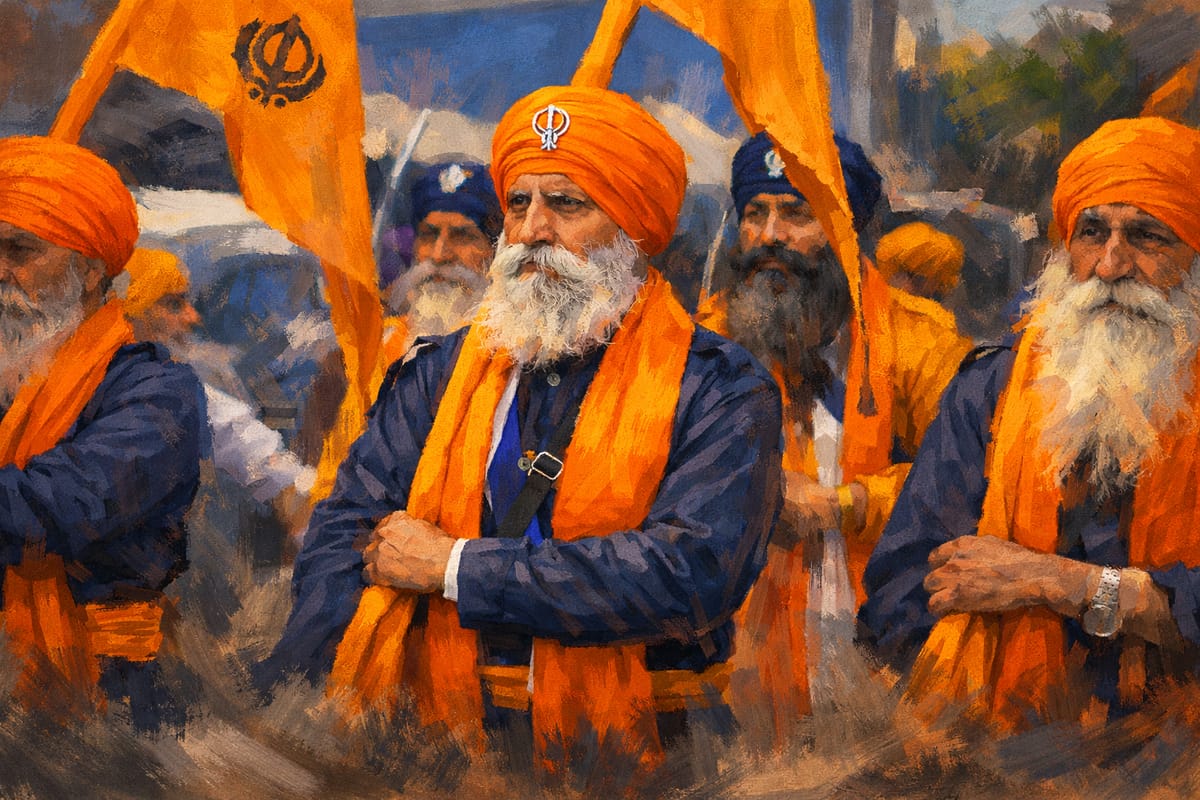
Your First Nagar Kirtan
A warm, practical guide for families attending a Nagar Kirtan for the first time — what to wear, what to expect, and how to explain it to children.
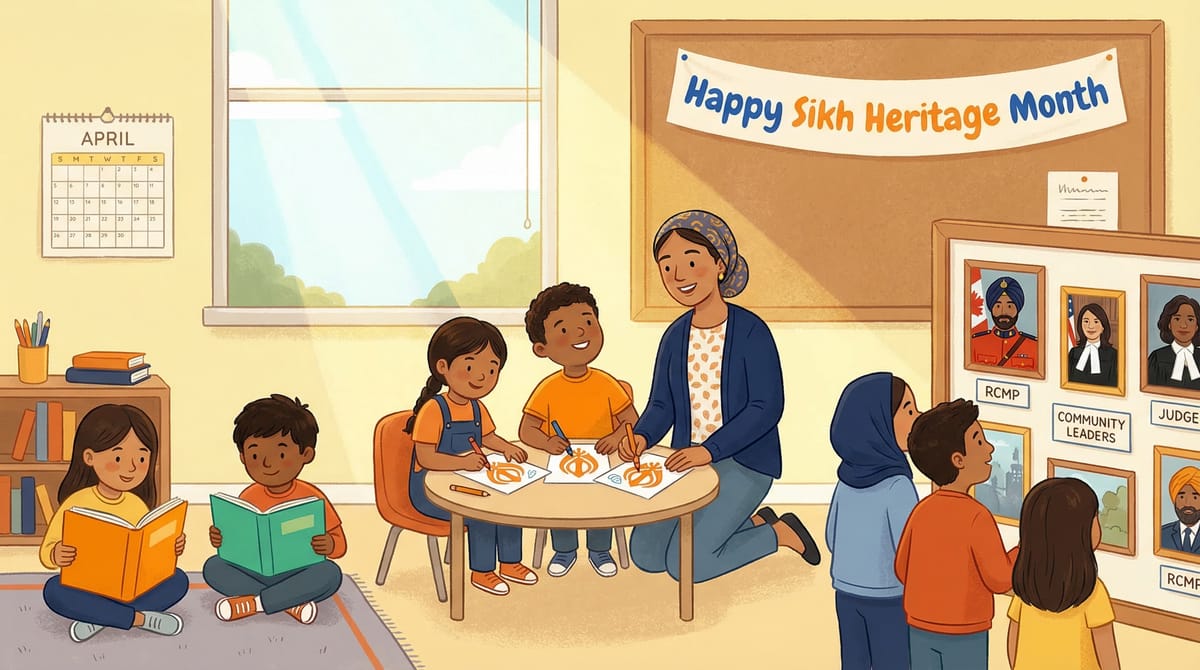
SHM in the Classroom
A week-by-week plan for educators (K-8) to bring Sikh Heritage Month into the classroom with activities, discussions, and curriculum connections.
SHM Resource Hub for Educators
Everything you need to bring Sikh Heritage Month into the classroom — trailblazer posters, curriculum connections, discussion prompts, and age-appropriate activities.
- Sikh Trailblazer Posters
- Curriculum Connections (Grades 1-8)
- Classroom Activities & Discussion Prompts