

How to Build a Winter Sangat for Your Kids
A practical guide to building a small, repeating community of families through the diaspora winter — so your kids have somewhere to belong when the days get short.
For parents & educators
Practical guides and references to help you talk to kids about Sikhi, Gurmat etiquette, and Gurmukhi. Written and reviewed by Sikh parents and educators.
Free to read No ads No login Made by Sikh parents and educators
34 guides for Sikh families
A practical guide to building a small, repeating community of families through the diaspora winter — so your kids have somewhere to belong when the days get short.
What the Mool Mantar means, word by word — Ik Onkar, Sat Naam, Karta Purakh and more — and why this single verse is the foundation of Sikh belief.
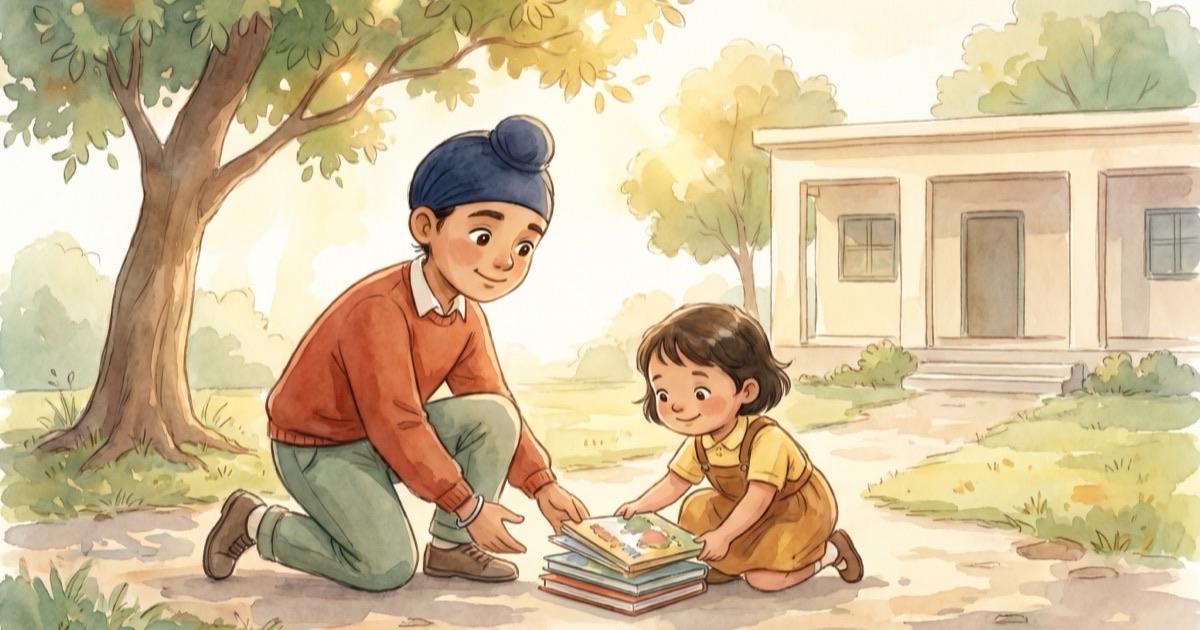
Empathy is built, not born. What perspective-taking and modelling research really says — plus Seva and Ik Onkar — for raising genuinely kind children.
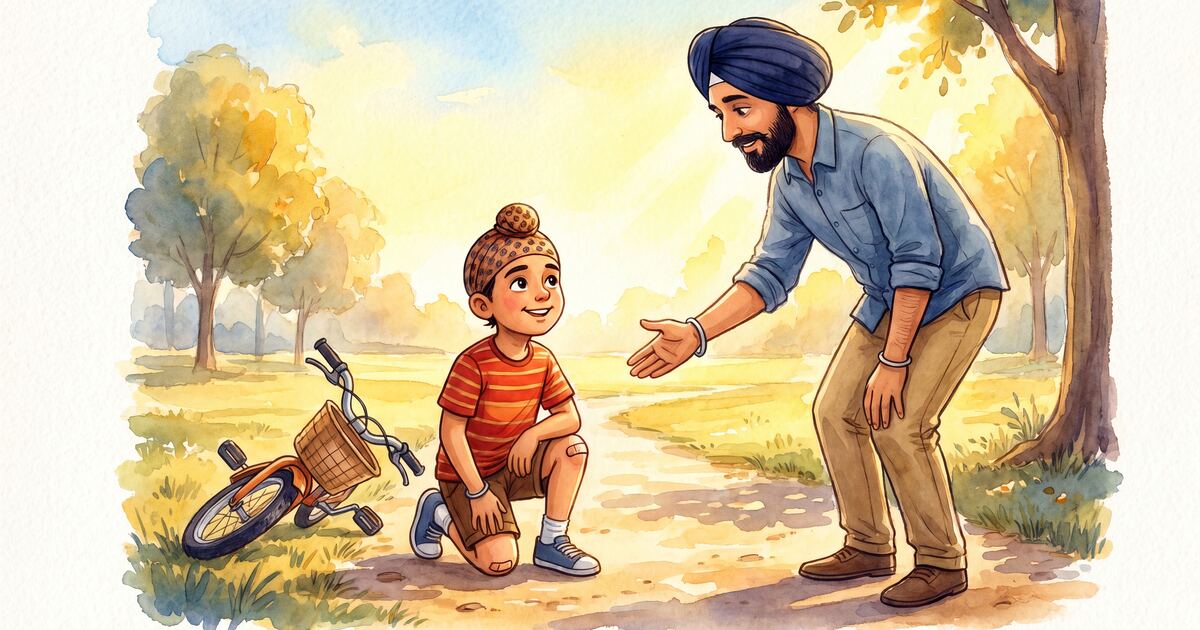
What the science of resilience really says — it's built, not born — plus Chardi Kala and Sangat: a Sikh parent's guide to raising children who bounce back.
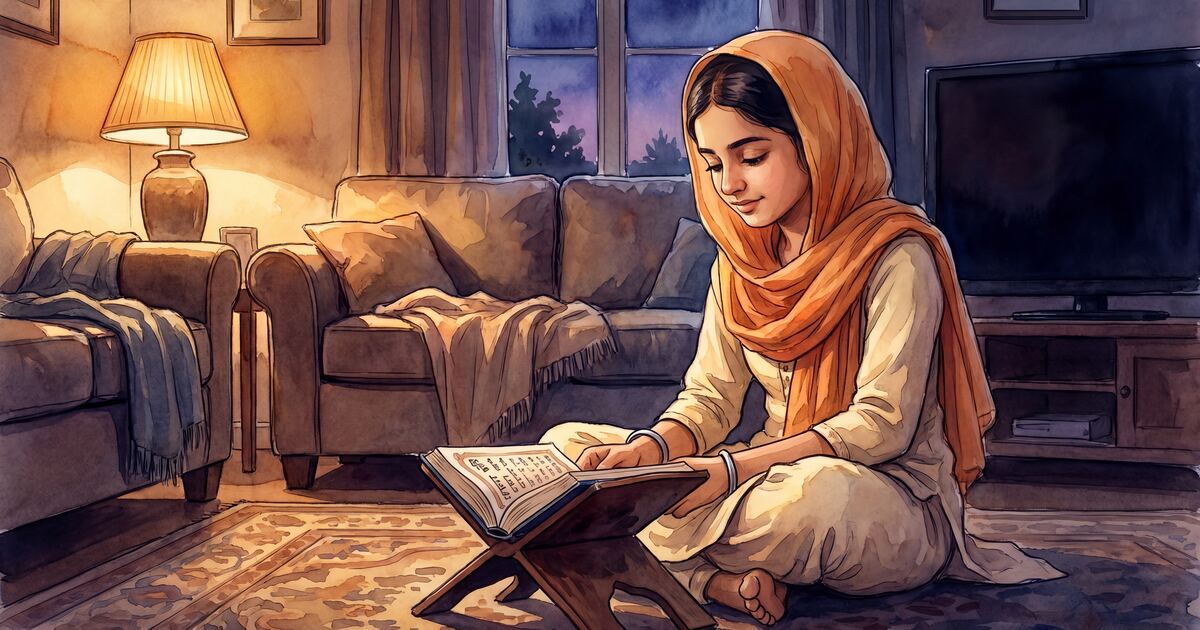
How children develop a moral compass, why spiritual practice protects young people, and how Seva, Ik Onkar, and Guru Nanak's spirit grow empathy.
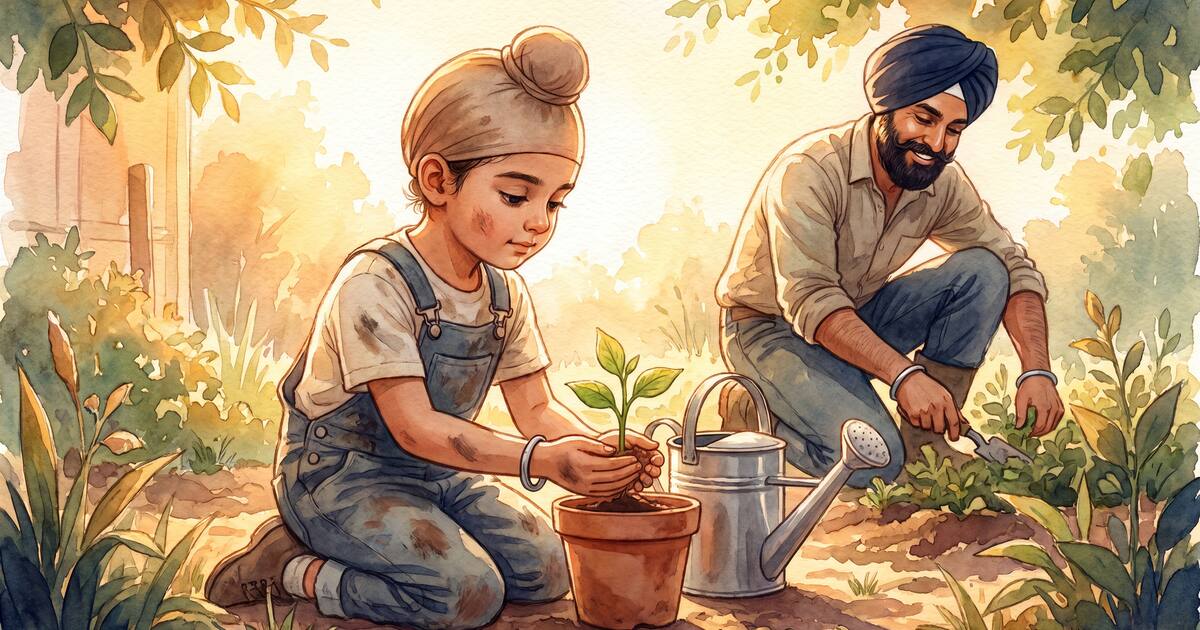
What growth mindset means, how to praise effort the right way, and how Chardi Kala frames failure as a beginning, not a verdict on a child's worth.
A research-grounded look at gentle and positive discipline — what works, what's hype, and how Sikhi pairs soft speech with real structure and boundaries.
Two languages help, not harm. What actually works to raise a bilingual child — and why Punjabi at home is the doorway to Gurbani, elders, and identity.
What really builds girls' self-esteem — competence and belonging, not empty praise — woven with Sikhi's equality and role models like Mai Bhago.
What reading aloud does to a child's brain, why dialogic reading matters most, and how the Sikh tradition of katha, sakhis, and Suniai got there first.
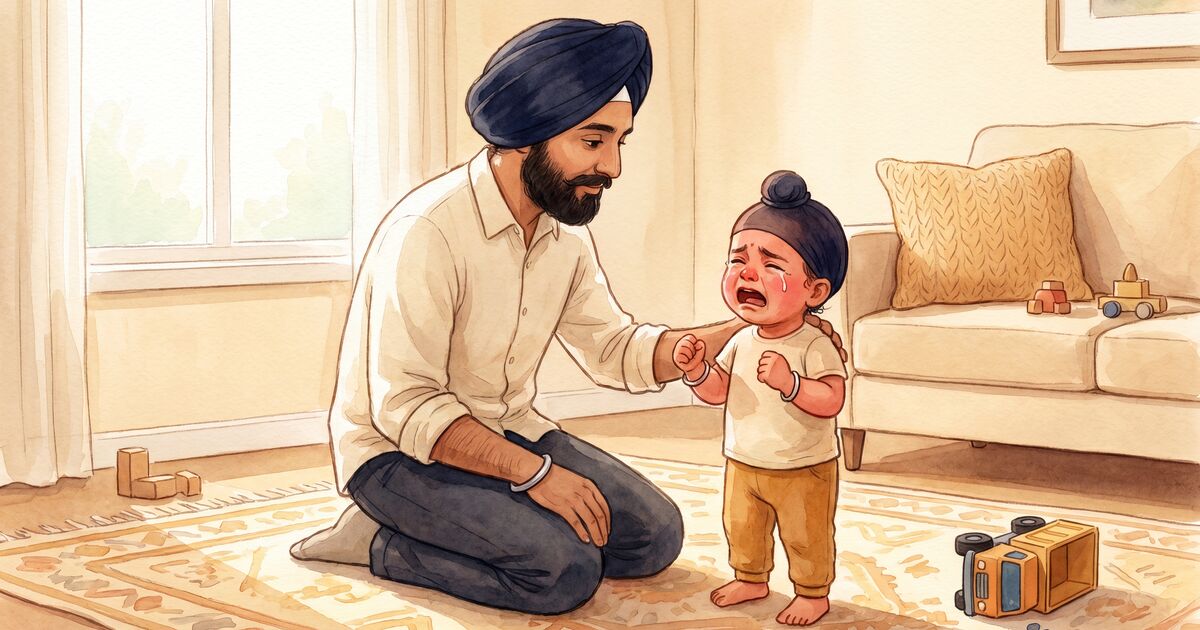
Why tantrums happen, what brain science says about emotional regulation in children, and how a parent's own calm — Sikhi's Sehaj — helps a child settle.
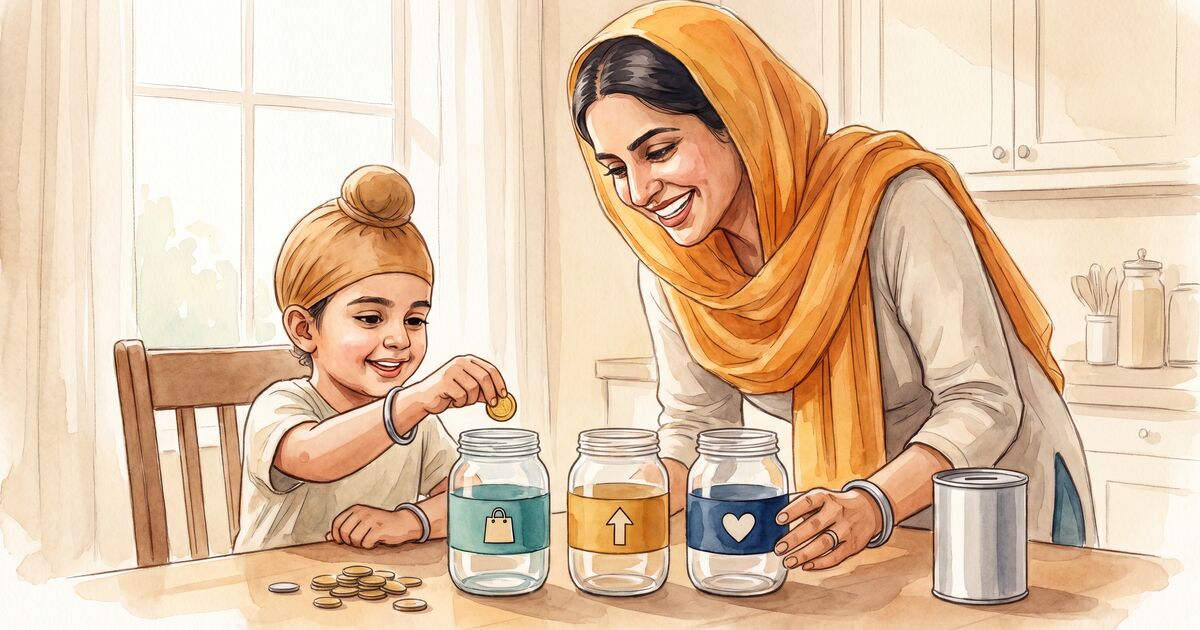
Money habits are largely set by age 7. How to teach kids to earn, save, and share — and how Dasvandh, Kirat Karo, and Vand Chhako turn it into character.
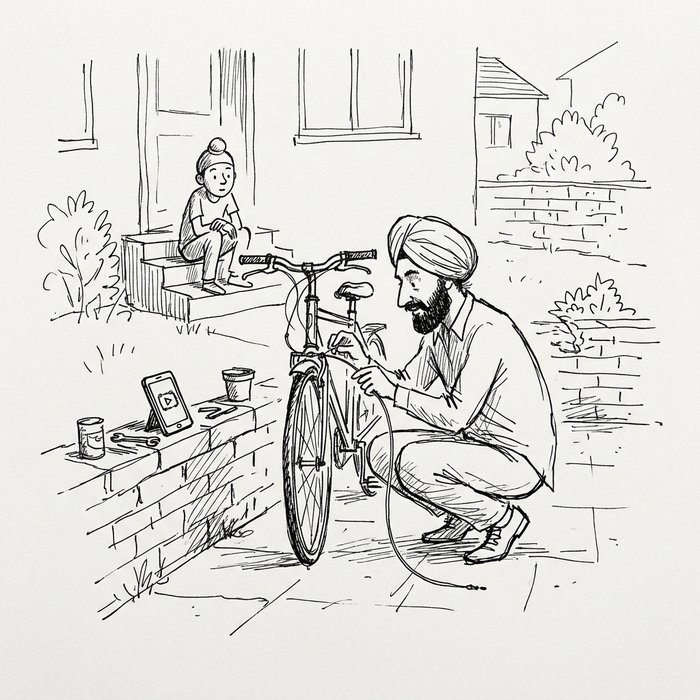
A Sikh parent's guide to teaching kids honest work — what Kirat Karni means for a child, wisdom from Gurbani, and gentle activities to try at home.

Meet the Panj Pyare — the Five Beloved Ones who stood up at Vaisakhi 1699 — their names and virtues, with a free crossword, quiz and family Q&As.
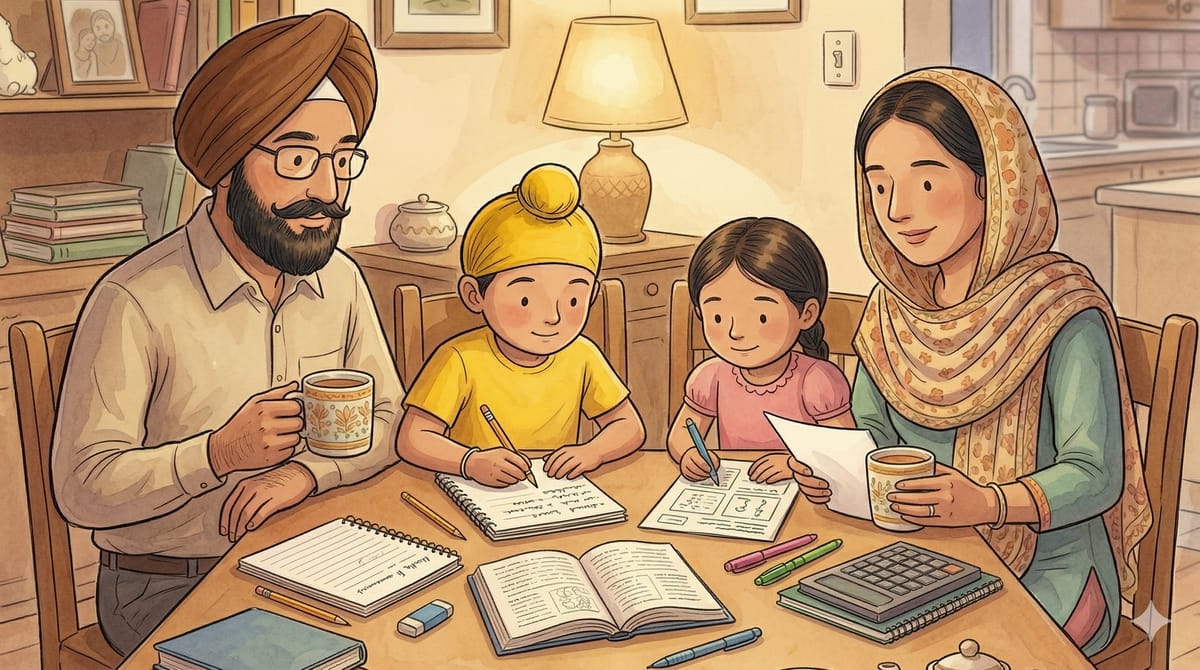
A heartfelt guide for parents navigating identity, bullying, and assimilation — and why Sikhi matters for raising resilient children in the diaspora.
Everyday questions children ask — about feelings, identity, nature, and faith — each answered through a verse from Sri Guru Granth Sahib Ji.
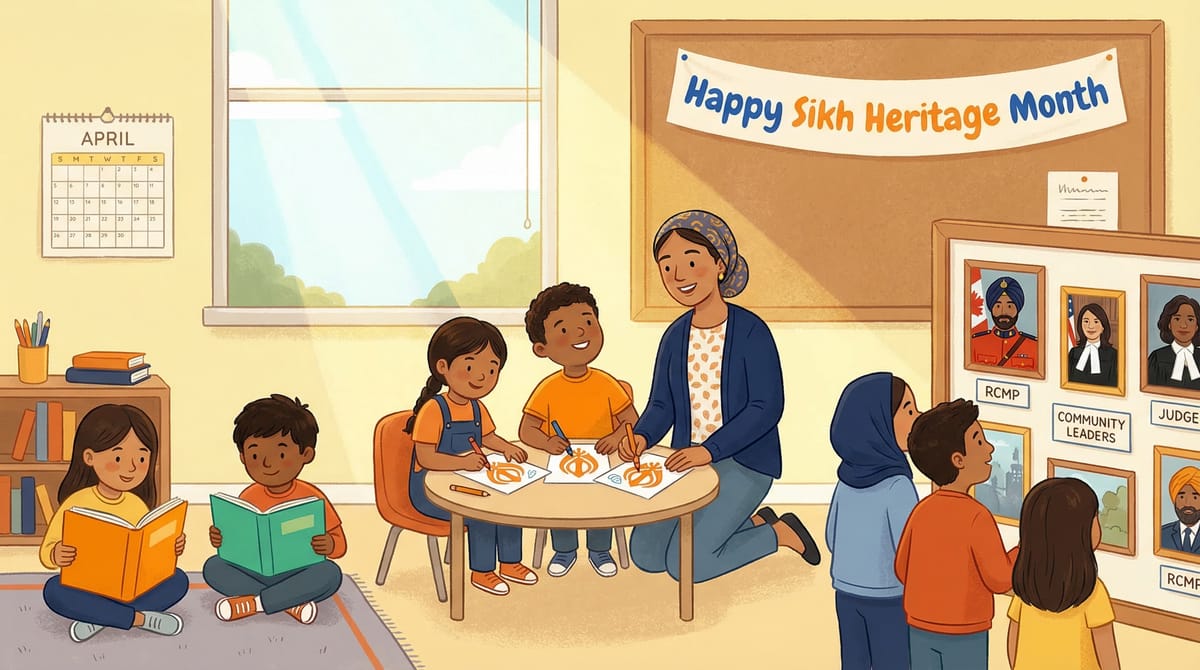
A practical, week-by-week guide for K-8 educators to bring Sikh Heritage Month into the classroom with activities, prompts, and curated resources.

A guide for kids and families on notable Sikh Canadians — from the first Sikh settler in 1897 to the leaders shaping Canada today and the marks they left.

A family guide to the 12 Sikh months of the Nanakshahi calendar — from Chet to Phagun — with start dates, meanings, and the Gurbani verse for each month.

Meet the extraordinary Sikh women — Kaurs — shaping communities, breaking barriers, and inspiring the next generation this International Women's Day.

Teach your kids the 5 Ks (Kesh, Kangha, Kara, Kachera, Kirpan) — with a free crossword, coloring sheets and family discussion questions for ages 5–12.
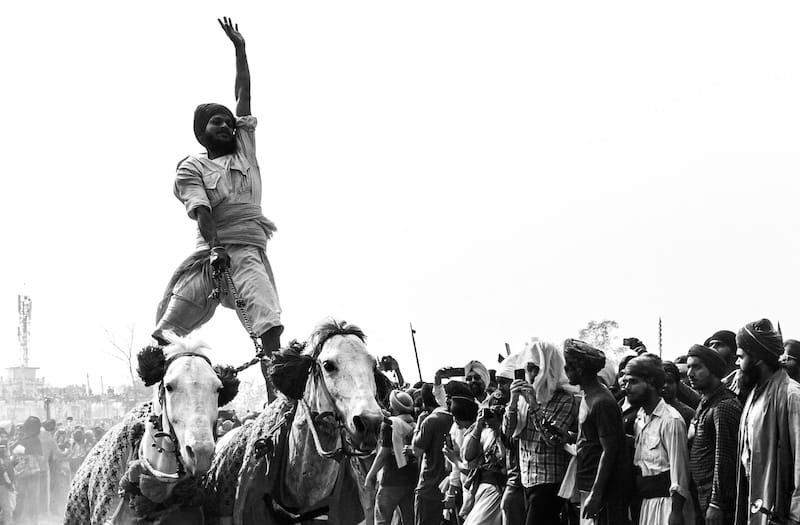
What Hola Mohalla is, why Guru Gobind Singh Ji established it, how it's celebrated at Anandpur Sahib, and how it differs from Holi.
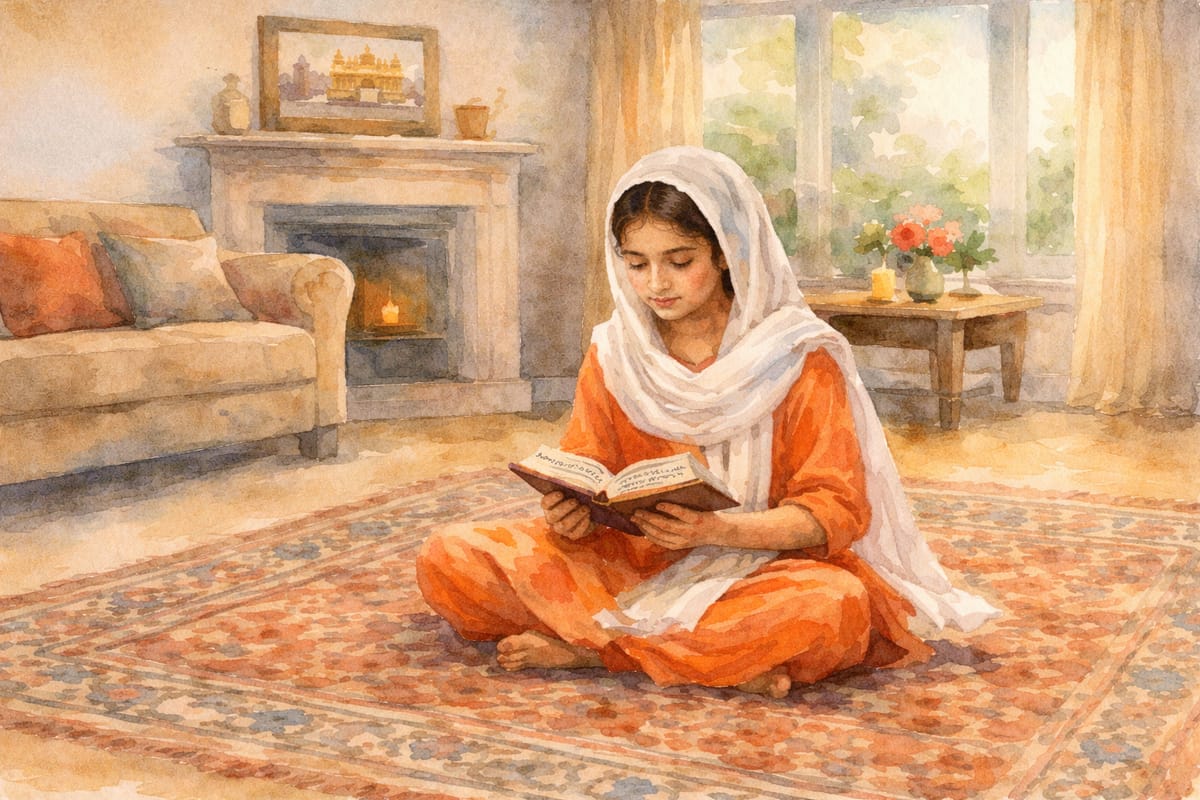
What Nitnem is, what each daily Bani contains, and why Sikhi places such importance on engaging with Gurbani every morning and evening.
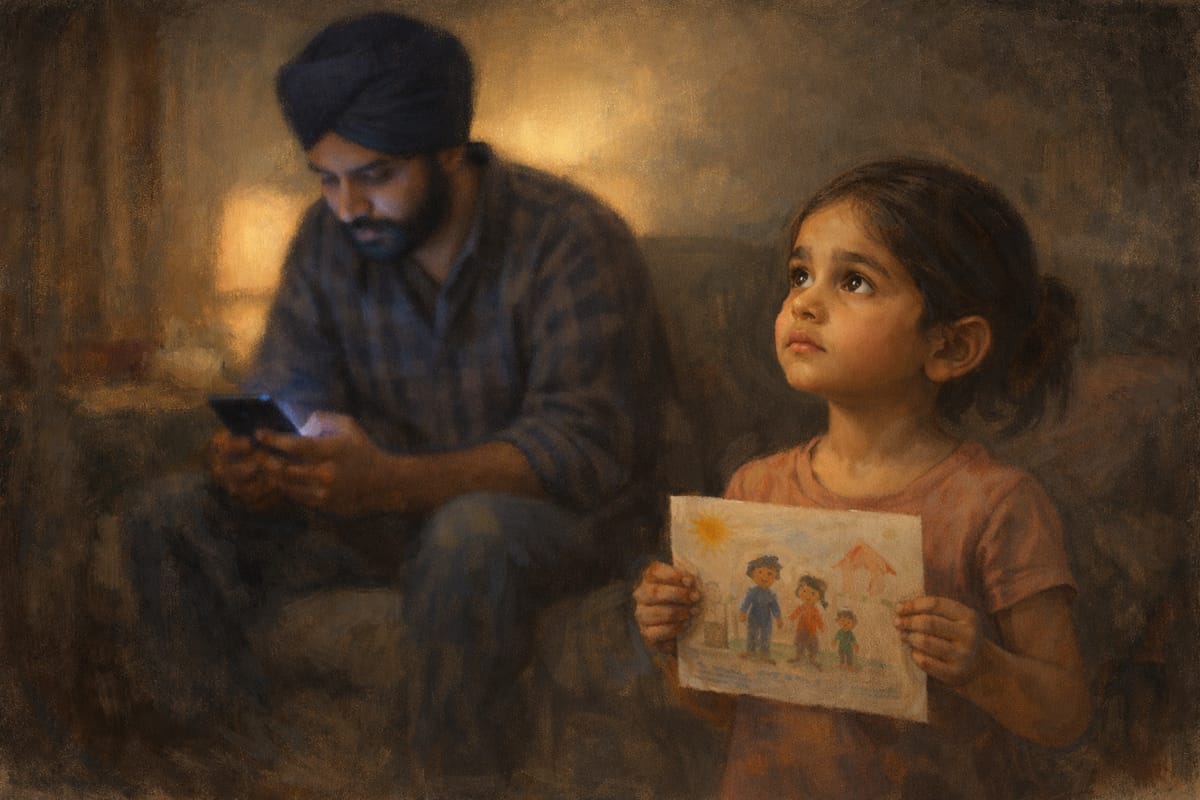
A gentle reminder for busy parents on the importance of being present for their children, exploring 'technoference' through Gurbani and modern research.
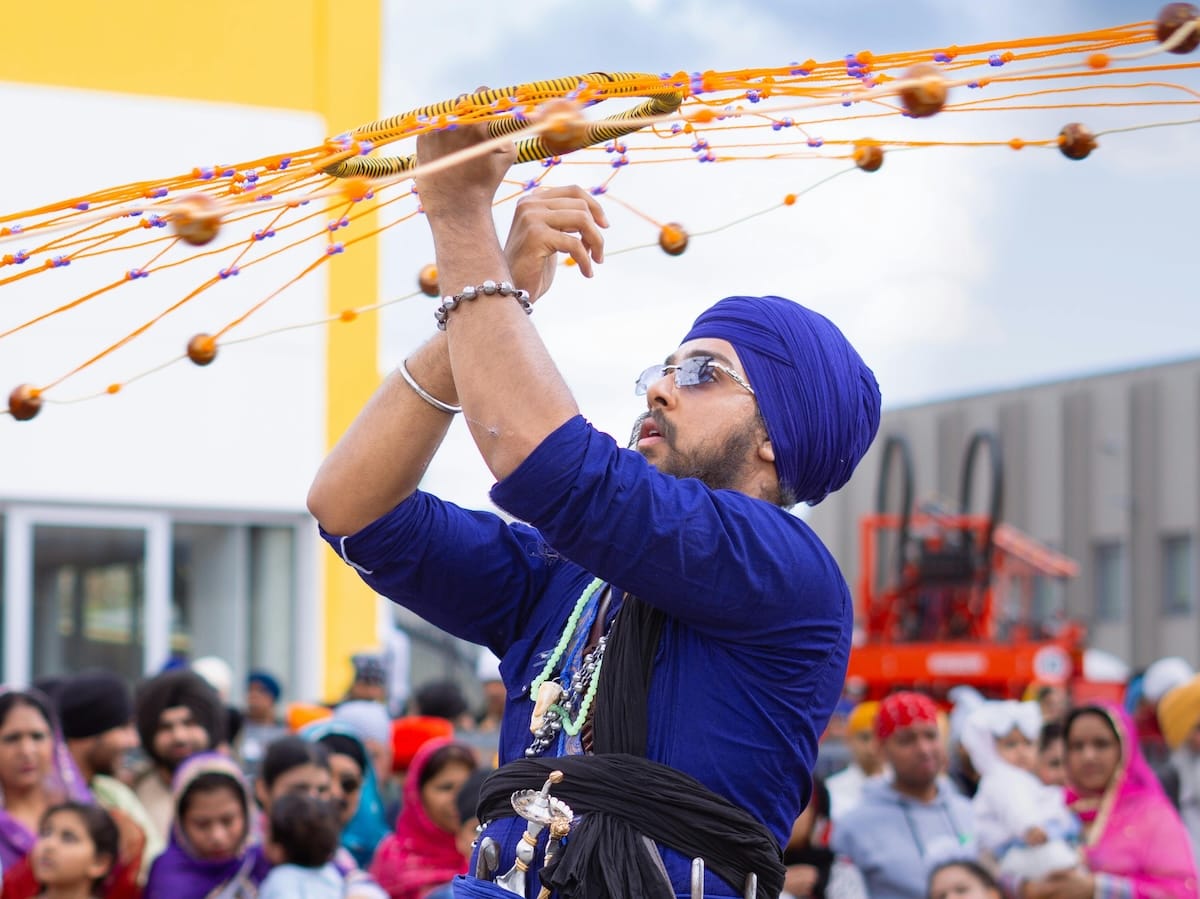
Celebrate Vaisakhi 1699 with your family — free coloring sheets, a Vaisakhi quiz, and Q&As about the Khalsa and Panj Pyare for ages 5–12.
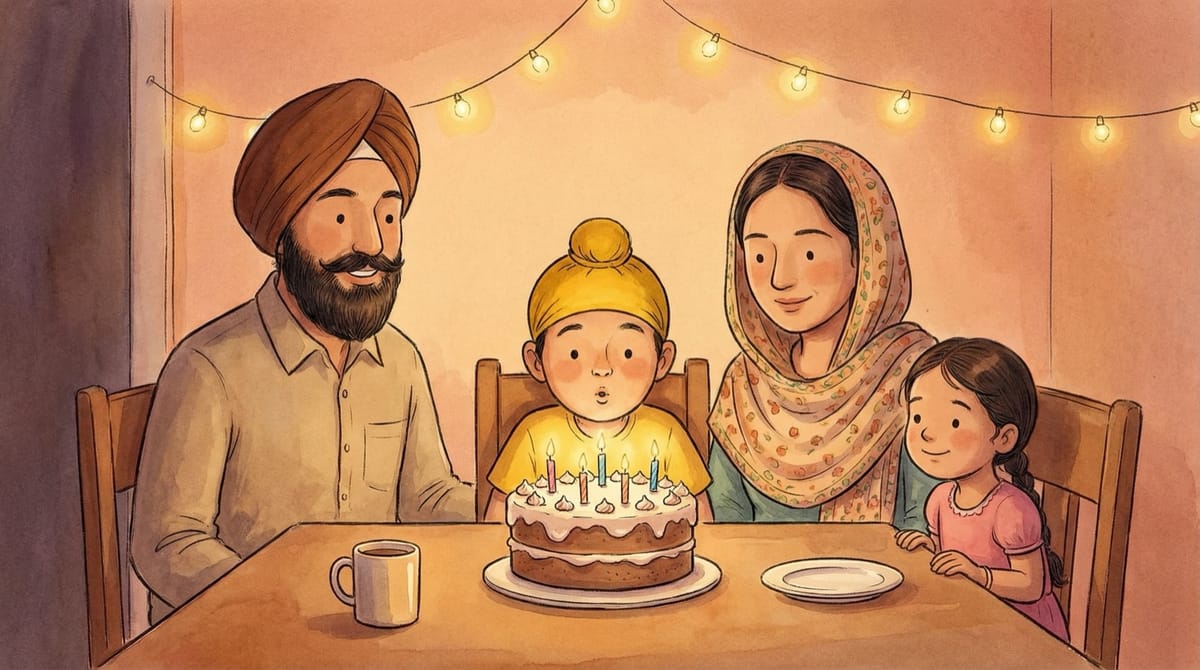
What does Gurbani say about birthdays? Explore the spiritual meaning of human birth and the questions worth reflecting on as another year of life passes.
This Valentine's Day, explore what true love means through Gurbani — how Sri Guru Granth Sahib Ji teaches divine love for Waheguru, humanity, and family.
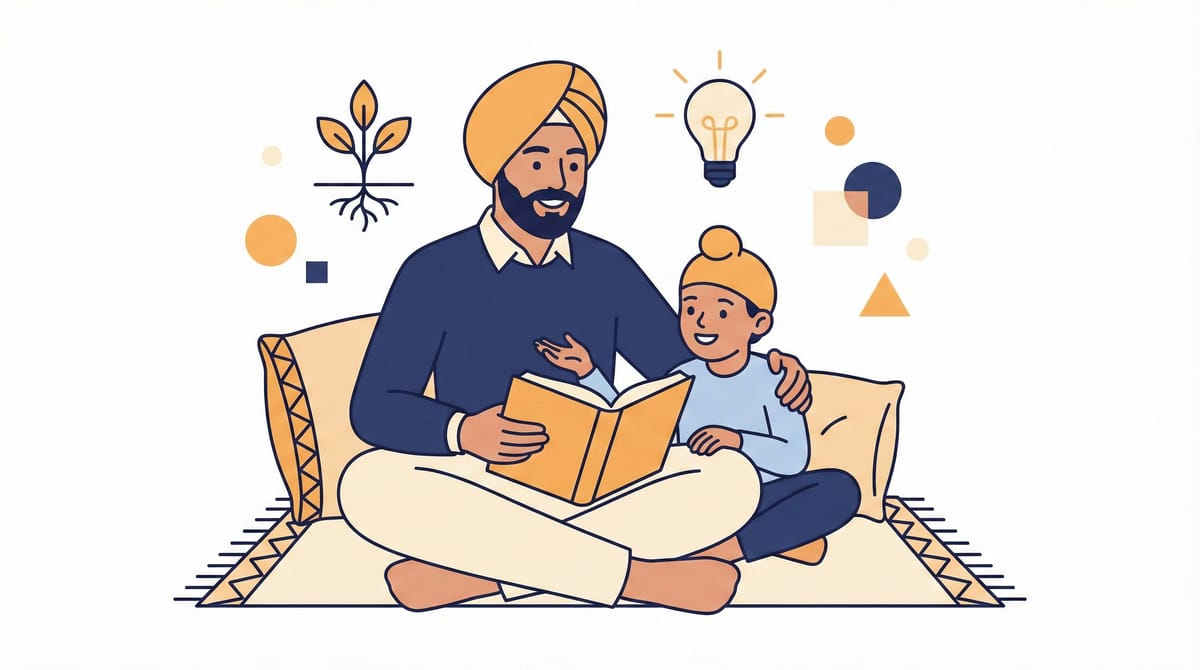
A practical guide for busy parents drawn from Guru Nanak Dev Ji's Japji Sahib — ten principles to help you raise clear, grounded, and spiritual children.

A heartfelt guide for young Sikhs on approaching seva with the right mindset — how volunteering is a privilege, a chance to grow, and a way to touch lives.
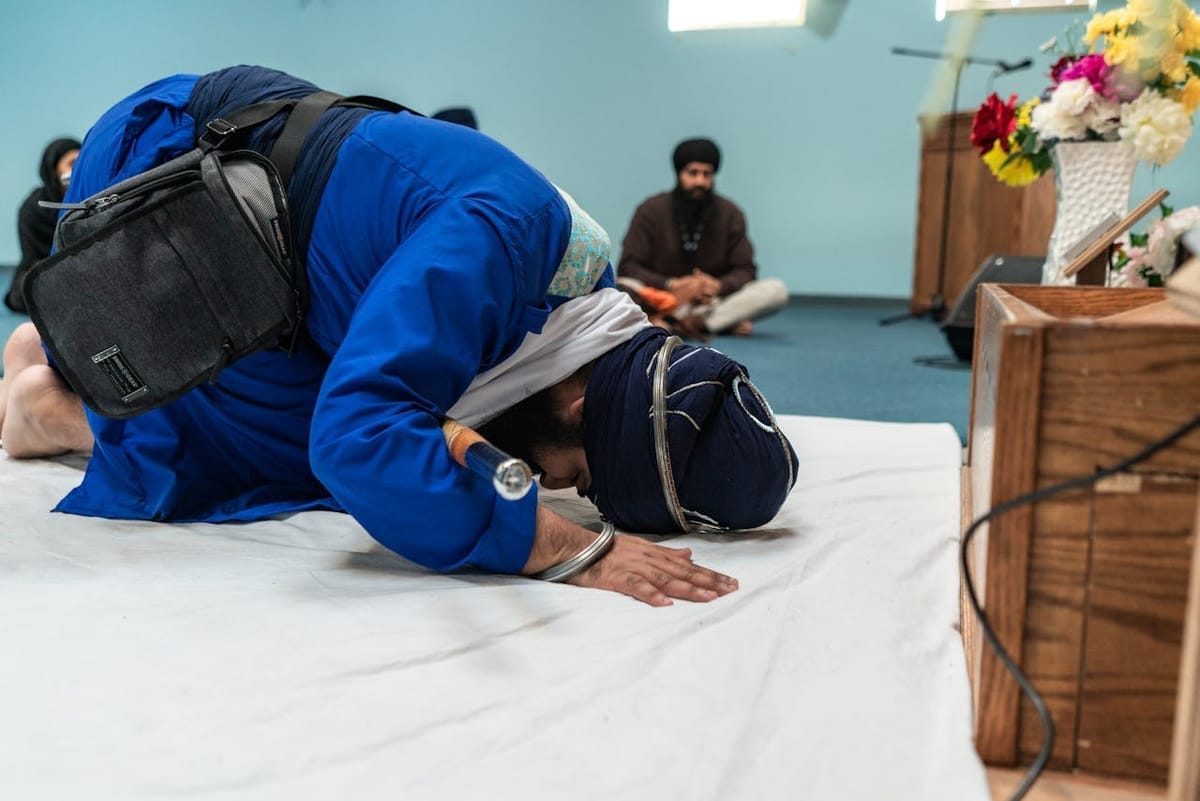
Why do we bow in Gurdwara? A guide for Sikh families on bowing to Guru Granth Sahib Ji — the Living Guru, the Shabad, and the idea of Sachcha Patshah.
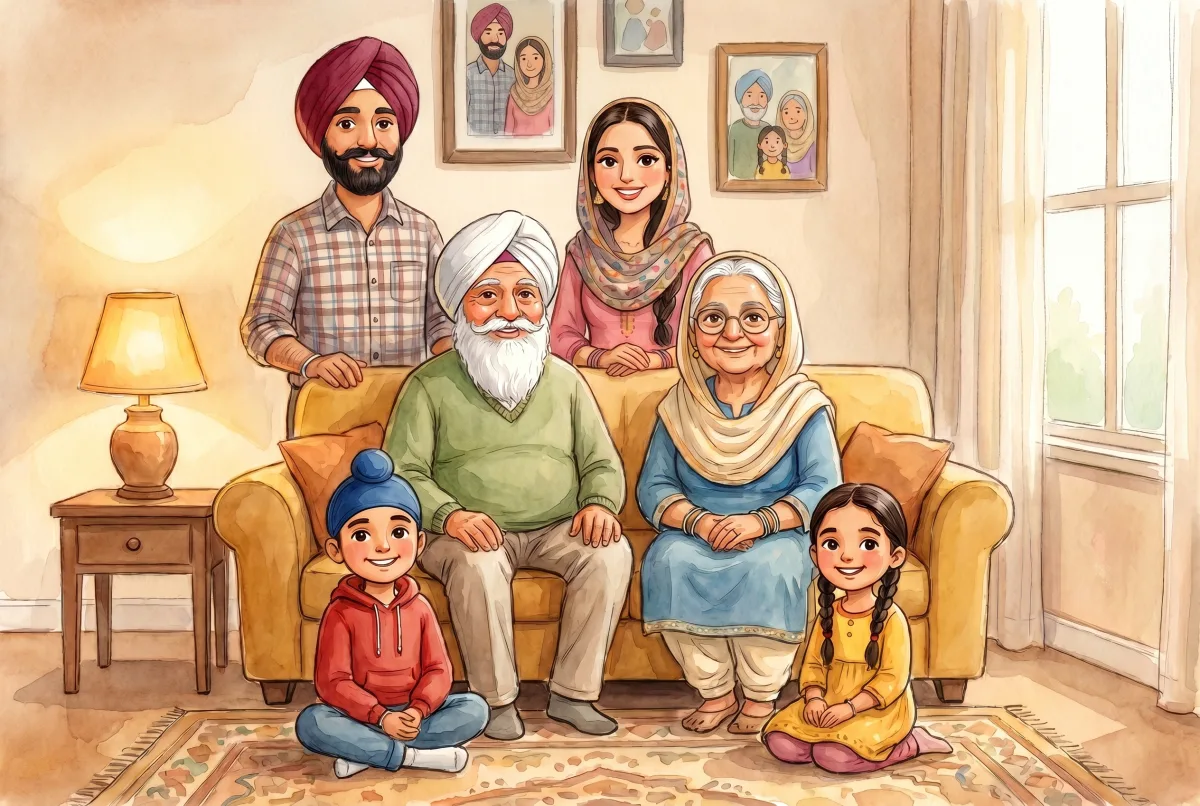
Complete guide to Punjabi family names — Chacha, Massi, Nana, Bhua and 30+ more with Gurmukhi spellings and native audio pronunciation. Tap any word to hear it spoken aloud, plus a free printable family tree worksheet.

A digital toolkit for educators and students to explore, preserve, and share Sikh history — lessons, activities, and resources for Sikh Heritage Month.
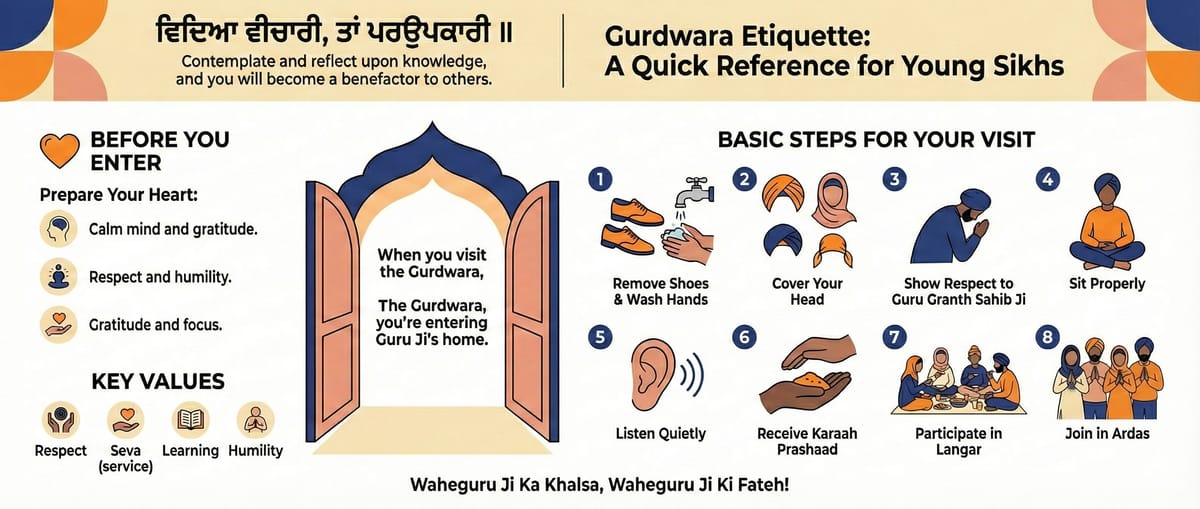
Gurdwara rules and etiquette explained: remove shoes, cover your head, bow to Sri Guru Granth Sahib Ji, sit on the floor. A guide for first-time visitors.

A practical guide for busy diaspora parents on teaching Sikhi to children — real challenges like bullying and identity, common blind spots, and daily tips.