
Raising a Kind Child: Building Empathy the Sikh Way
Empathy is built, not born. What perspective-taking and modelling research really says — plus Seva and Ik Onkar — for raising genuinely kind children.
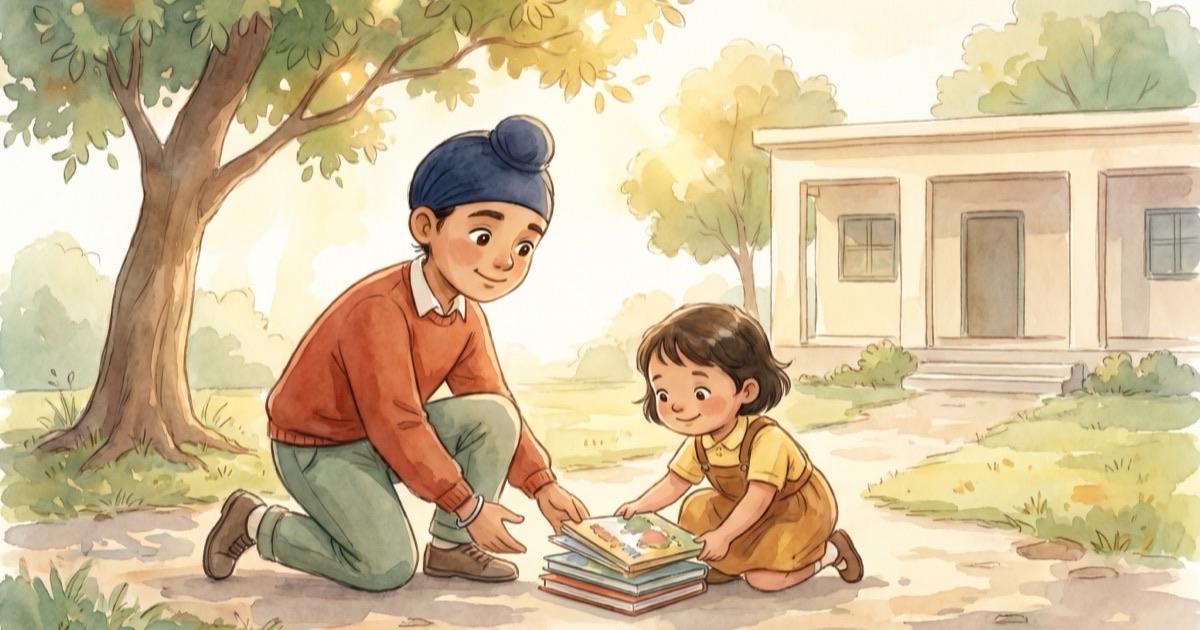
The short answer: Empathy is built, not born. Children grow into kindness in stages — the roots appear in toddlerhood, real perspective-taking arrives around ages 4 to 5, and deeper understanding keeps developing through age 12. The two things that build it most are modelling (children copy how we treat others) and practice at perspective-taking (imagining how someone else feels). Sikhi names the same path Seva — selfless service — and roots it in a simple, powerful idea: the one Light, Ik Onkar, lives in everyone, so no one is really a stranger.
Every parent hopes to raise a kind child — one who notices when a friend is left out, who shares without being forced, who is gentle with those who have less. It can be tempting to think children are simply born warm-hearted or not. The science tells a more hopeful story: empathy is a skill that grows, and the everyday things we do help build it. And it lines up almost exactly with a value Sikhs have lived for centuries.
Empathy is built in stages, not switched on
A toddler who snatches a toy isn’t a cruel child — they are a child whose empathy is still under construction. Researchers describe empathy unfolding over years. Even before age two, its roots show: an 18-to-20-month-old will try to comfort someone who is upset — offering a hug, a word, a favourite toy — usually copying what they have seen caring adults do.
Around ages 4 and 5, something important clicks. Children become able to understand another person’s thoughts and feelings more reliably — to grasp that someone else can want, know, and feel something different from them. Then between roughly 7 and 12, that perspective-taking deepens, and children begin to recognise more subtle emotions like embarrassment, guilt, and pride.
That single shift changes everything for a parent. If kindness were inborn, there would be nothing to do but hope. Because empathy is built, every ordinary day is a chance to help build it.
Sikhi has never treated compassion as luck of the draw, either. It is something we cultivate — through good company, through how we treat the people around us, through service. The Sikh word for that compassion-in-action is Seva: selfless service, given freely and without expecting anything back.
Children learn empathy by watching you
If there is a headline from the research, it is this: children absorb kindness from what we do, far more than from what we say. Studies find that the way adults behave toward others — including strangers, people who are struggling, and animals — directly shapes children’s own beliefs and behaviour toward those same people. Your child is always watching how you treat the cashier, the neighbour, the relative who is hard work, the dog on the street.
This is both a sobering and a freeing finding. Sobering, because our off-guard moments teach too. Freeing, because it means we don’t need a special curriculum — our ordinary conduct is the lesson.
Sikhi places exactly this kind of lived example at its centre. Seva is not a sermon about kindness; it is kindness performed — in the Langar (the free community kitchen where everyone, of any background, sits together and is fed), in quietly helping a neighbour, in standing up for someone who is being treated unfairly. A child who grows up seeing service treated as normal and joyful learns that caring for others is simply what people do.
Perspective-taking: the skill at the heart of empathy
Empathy depends on a quiet mental move — stepping out of your own head to imagine what someone else is feeling. The encouraging news is that this move can be practised. Structured lessons in perspective-taking have been shown to measurably improve young children’s empathic skills. You don’t need a programme to do this; you need ordinary moments.
The everyday version is simply naming feelings and inviting your child to wonder about them. “Look at his face — how do you think he’s feeling?” “She didn’t get a turn. What might that feel like?” Over time, these small invitations train a child to look past their own viewpoint and consider someone else’s — the engine of kindness.
From feeling to doing: when kindness becomes Seva
Empathy that stays inside is only half the journey. The aim is a child who not only feels for others but acts — who moves from “I notice you’re sad” to “let me help.” This is precisely the leap Sikhi calls Seva.
Guru Arjan Dev Ji links inner steadiness directly to compassion for every living being:
ਮਨਿ ਸੰਤੋਖੁ; ਸਰਬ ਜੀਅ ਦਇਆ ॥
Be content in mind, and show kindness to all living beings.
Guru Arjan Dev Ji — Ang 299, Sri Guru Granth Sahib JiNotice the order. A settled, content heart overflows outward as daya — compassion — toward all beings, not just the people who are easy to love. For a child, this looks small and concrete at first: sharing a snack, comforting a crying friend, being gentle with a pet, helping clear up in the Langar. Each of these is empathy completing itself in action. Each is Seva in miniature.
The worldview that powers empathy: no one is a stranger
Why be kind to people who aren’t our family, our friends, our “kind”? Here Sikhi offers a child something rare and steadying — a reason that reaches everyone. The foundational Sikh idea, Ik Onkar (One Creator), means the same divine Light lives in every person. From there, kindness isn’t a favour to outsiders; it is simply recognising the One in all.
Guru Arjan Dev Ji puts the lived experience of this beautifully:
ਨਾ ਕੋ ਬੈਰੀ ਨਹੀ ਬਿਗਾਨਾ; ਸਗਲ ਸੰਗਿ ਹਮ ਕਉ ਬਨਿ ਆਈ ॥
No one is my enemy, and no one is a stranger; I get along with everyone.
Guru Arjan Dev Ji — Ang 1299, Sri Guru Granth Sahib JiRead in full, the hymn explains where this comes from: in good company, the heart lets go of jealousy and comes to see the One Creator present in all. For a diaspora child working out where they belong — and how to treat the classmate who looks different, prays differently, or eats different food — this is a quietly powerful inheritance. It reframes difference not as a threat but as another face of the same Light. A child who truly believes no one is a stranger has empathy’s deepest foundation already in place.
Practical scaffolding: what to do and what to avoid
You build kindness the way you build anything sturdy — with steady scaffolding and patience.
Do:
- Model it. Treat strangers, those who are struggling, and animals with the kindness you hope your child will copy — they are watching.
- Name feelings out loud, in your child and in others, so emotions become something a child can notice and read.
- Invite perspective-taking with gentle “I wonder how they feel” questions in everyday moments.
- Give empathy a job — real, age-sized chances to help, including Seva in the Langar or wider community.
- Notice kindness when it happens, describing it simply (“you saw he was sad and sat with him”) rather than over-praising.
Avoid:
- Forcing apologies or sharing as a performance — empathy can’t be ordered; it has to be grown.
- Shaming a child as “selfish.” Self-focus is a normal stage, not a character flaw; labels stick and don’t teach.
- Lecturing about kindness while modelling impatience — children believe what we do.
- Expecting adult-level empathy from a young child — the skills are still developing well into the school years.
A final word
Raising a kind child isn’t a single talk you give or a rule you enforce once. It is something built together — one watched act of service, one “I wonder how they feel,” one chance to help at a time. The protective habit of caring, stacked a little higher each ordinary day.
The science and the wisdom point the same way. Let your child see you be kind. Help them imagine how others feel. Give their compassion something to do. And offer them the steady worldview Sikhi has always prized — that the same Light lives in everyone, so no one is ever truly a stranger. That is Seva: empathy with its sleeves rolled up, and one of the warmest gifts a family can pass on.
If your child shows a persistent, marked lack of concern for others alongside other worries, it’s worth speaking with your doctor — but for most children, kindness simply needs time, practice, and your example to take root.
Sources
- How Children Develop Empathy — Psychology Today — perspective-taking (“theory of mind”) as the precursor to empathy, and how it matures from toddlerhood through ages 4–7.
- The Development of Empathy: How, When, and Why — McDonald & Messinger (University of Miami) — early helping behaviours in toddlers (18–20 months) guided by adult modelling.
- Empathy Milestones — neuro.now — advanced perspective-taking and recognition of nuanced emotions between ages 7 and 12.
- Rethinking Empathy Development in Childhood and Adolescence — Frontiers in Psychology (2025) — parental modelling toward different targets shapes children’s beliefs and behaviour; structured perspective-taking lessons enhance empathic skills.
- How Empathizing Develops and Affects Well-being Throughout Childhood — UNICEF Innocenti (2021) — overview of empathy’s developmental arc and its links to wellbeing.
Related guides
- Children’s Spirituality and Moral Development — how kids grow from rules to empathy to principled kindness, with Seva and Ik Onkar at the centre.
- How to Be a Volunteer: The Art of Selfless Service — Seva as a privilege, not an obligation — empathy put into action.
- How to Build Resilience in Children — the supportive relationships that help kindness and coping grow together.
🎥 Prefer to watch?

Uses YouTube's privacy-enhanced mode — no cookies set until you press play.
Frequently asked questions
Conversation starters for parents and kids.
- At what age do children develop empathy?
- Empathy unfolds in stages rather than switching on at one age. Babies and toddlers show its earliest roots — a toddler of 18–20 months will try to comfort someone in distress, copying the responses they have seen from caring adults. Between ages 4 and 5 children start to understand another person's thoughts and feelings more reliably, and between 7 and 12 they develop more advanced perspective-taking, grasping nuanced emotions like embarrassment, guilt, or pride. So a young child who seems self-centred usually isn't unkind — their empathy is still being built.
- Can empathy be taught, or are some children just born kind?
- It can be taught. While children differ in temperament, research shows that structured lessons in perspective-taking measurably improve children's empathic skills, and that the example adults set strongly shapes how kindly children treat others. Empathy is a capacity you help build through everyday modelling and practice — not a fixed trait a child either has or lacks.
- What is the best way to teach my child empathy?
- Modelling matters most. Studies find that the way adults treat others — including strangers, people in need, and animals — shapes children's own beliefs and behaviour toward those same people. Children absorb what we do far more than what we tell them. Naming feelings ('he looks left out'), gently inviting your child to imagine another's view, and giving real chances to help all build on that foundation. In Sikhi this lived example is the heart of Seva — selfless service shown, not just spoken.
- How does Sikhi connect kindness and empathy to Seva?
- Seva (selfless service) is empathy turned into action. Sikhi teaches kindness to all living beings (sarab jeea daya) and that the same divine Light, Ik Onkar, lives in everyone — so no one is truly a stranger. When a child helps in the Langar (the free community kitchen where everyone is welcome) or stands up for a classmate, they are practising the move from feeling someone's need to doing something about it, which is exactly what Seva means.
- My child seems selfish or uncaring — should I worry?
- Usually not. Young children are still developing the perspective-taking skills that empathy depends on, and it is normal for a five-year-old to focus on their own wants. Empathy grows with maturity, modelling, and practice. Keep showing kindness yourself, name feelings out loud, and offer small chances to help. If an older child shows a persistent, marked lack of concern for others alongside other worries, it is worth a conversation with your doctor — but for most children, kindness simply needs time and example to take root.