
Children's Spirituality & Moral Development
How children develop a moral compass, why spiritual practice protects young people, and how Seva, Ik Onkar, and Guru Nanak's spirit grow empathy.
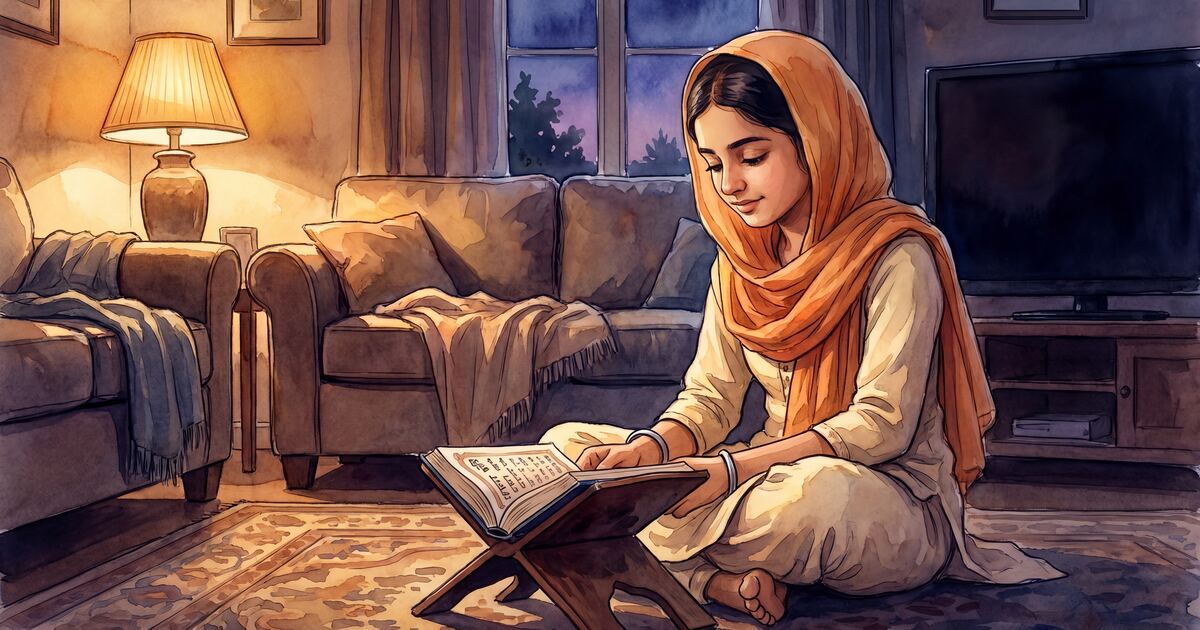
The short answer: Children develop morality in stages — from following rules, to caring how others feel, to reasoning from their own principles — and the engine throughout is empathy, built by relationship, example, and practice rather than lectures. A growing research literature links spiritual practice with real protective effects for young people. Sikhi adds three powerful levers: Ik Onkar (one human family, so everyone matters), Seva (compassion made into a daily habit), and Guru Nanak Dev Ji’s questioning spirit (principled curiosity over blind obedience).
How a moral compass actually forms
Children are not born knowing right from wrong, and they don’t acquire it in one piece. The psychologist Lawrence Kohlberg mapped a recognisable progression: very young children behave to avoid punishment and gain reward; school-age children begin to value being “good” in the eyes of others and following shared rules; and, over time, some reason from internal principles — fairness, dignity, conscience — even when no one is watching.
Later researchers added what Kohlberg under-weighted: empathy, the felt recognition of another person’s experience, which is the emotional fuel of moral behaviour. A child who can imagine how a left-out classmate feels has the raw material of ethics. This is why moral development is so resistant to lecturing — you cannot install empathy by instruction. It grows through warm relationships, repeated example, and chances to practise.
Why spirituality is a protective factor
For a faith-based family, one finding is worth knowing: spiritual and religious practice in childhood and adolescence is increasingly studied as a protective factor. A large Harvard study led by Ying Chen and Tyler VanderWeele (American Journal of Epidemiology, 2018), following thousands of young people for up to 14 years, found that those who attended religious services or practised prayer or meditation regularly in their youth reported greater life satisfaction in their twenties and were less likely to develop depressive symptoms or to smoke or use illicit drugs. Researchers continue to debate why — the effects of belonging to a community, of having a framework of meaning, of stable routine and ritual, of a sense of something larger than the self — but the association is robust enough to take seriously.
For Sikh families this reframes faith from “tradition we hope sticks” to something with developmental weight behind it. The Gurdwara, the Sangat, the rhythm of practice — these are not only spiritual goods; they are, in the language of psychology, sources of resilience.
Ik Onkar: the root of empathy
If empathy is the engine of morality, Sikhi installs it at the foundation. Ik Onkar — One Creator — means one human family. If the same light is in everyone, then no person is a stranger, and prejudice isn’t merely unkind; it is mistaken.
ਏਕੁ ਪਿਤਾ ਏਕਸ ਕੇ ਹਮ ਬਾਰਿਕ; ਤੂ ਮੇਰਾ ਗੁਰ ਹਾਈ ॥
One is our Father, and we are all the children of the One; You alone are my guide.
Guru Arjan Dev Ji — Ang 611, Sri Guru Granth Sahib JiA child raised inside that single idea — we are all children of the One — has a moral starting point that secular character education has to argue its way toward. It makes equality and compassion not rules imposed from outside, but the obvious shape of reality.
Seva: morality you do with your hands
Where many traditions teach ethics as belief, Sikhi insists on practice. Seva — selfless service — is morality made physical: serving langar, cleaning shoes at the Gurdwara, helping someone with no expectation of return. This matters developmentally because, as the research on raising kind children shows, children become compassionate by doing compassionate things, not by being told to feel compassion.
Seva gives a child the repeated, embodied experience of putting another person first. It converts the abstract — “be kind” — into something the hands remember.
Guru Nanak’s questioning spirit
There is a misconception that raising a moral child means raising an obedient one. Sikhi suggests the opposite. Guru Nanak Dev Ji’s life was a series of questions put to empty ritual and inherited assumption — most famously when, told to throw sacred water toward the sun for dead ancestors, he threw water westward “to water his fields in Punjab,” exposing the logic of the practice rather than simply refusing it.
A child encouraged to ask why a thing is right — rather than to obey because they were told — is being formed in exactly that spirit. The goal of moral development, in both the research and in Gurmat, is not compliance but internalised values: principles a young person holds because they understand and believe them, and will keep when no adult is in the room.
Talking about the big questions
Children ask enormous questions — about fairness, suffering, death, and meaning — usually at inconvenient moments. The instinct to deflect is understandable, but these moments are where moral and spiritual development actually happen. Meeting a child’s question at their level, honestly and without pretending to certainty you don’t have, treats them as a developing moral thinker rather than a rule-follower. It is, quietly, the most important curriculum a family teaches.
Sources
- Lawrence Kohlberg — stages of moral development; and the empathy-based critiques and extensions that followed.
- Chen, Y., & VanderWeele, T. J. (2018). Associations of Religious Upbringing With Subsequent Health and Well-Being From Adolescence to Young Adulthood: An Outcome-Wide Analysis. American Journal of Epidemiology — study.
- Developmental research on raising prosocial, compassionate children (modelling, service, perspective-taking, narrative).
- Sri Guru Granth Sahib Ji — Ang 611 (Guru Arjan Dev Ji). Sourced via the Gurbani RAG.
Related guides
- Teaching Kids About Money — Dasvandh and Vand Chhako: generosity made into a daily habit.
- Raising Confident Daughters — equal dignity, the name Kaur, and worth that is given, not earned.
- Reading Aloud and Early Literacy — sakhis and katha as the moral imagination at work.
🎥 Prefer to watch?

Uses YouTube's privacy-enhanced mode — no cookies set until you press play.
Frequently asked questions
Conversation starters for parents and kids.
- How does a child develop a sense of right and wrong?
- Gradually, and in stages. Young children start by following rules to avoid consequences; over time they grow into caring what others feel, and eventually into reasoning from principles they hold themselves. Psychologist Lawrence Kohlberg described this arc decades ago, and later research added the central role of empathy — the felt sense of another person's experience. Moral development isn't installed by lectures; it grows through relationships, example, and practice.
- Does religion or spirituality actually help children?
- A growing body of research links spiritual or religious practice in childhood and adolescence with measurable protective effects — including better mental health and lower rates of risky behaviour. Researchers debate the mechanisms (community, meaning, routine, belonging), but the association is consistent enough that it gives faith-based upbringing genuine evidence behind it, not just sentiment.
- What's the best way to raise a compassionate child?
- The research points to four levers: modelling kindness yourself, giving children real opportunities to serve others, helping them practise seeing things from another's view, and telling stories that carry moral weight. Children become kind by doing kind things and watching the adults they love do them — far more than by being told to be kind.
- How does Sikhi understand moral development?
- Sikhi grounds morality in Ik Onkar — One Creator, and therefore one human family, which makes every person worthy of respect and makes prejudice incoherent. It makes Seva (selfless service) a daily, hands-on practice rather than an idea. And it holds up Guru Nanak Dev Ji's questioning spirit as a model: a child encouraged to ask why empty ritual matters is doing exactly what the first Guru did.