
Mool Mantar Meaning in English: A Word-by-Word Guide
What the Mool Mantar means, word by word — Ik Onkar, Sat Naam, Karta Purakh and more — and why this single verse is the foundation of Sikh belief.
The short answer: The Mool Mantar is the opening verse of Sri Guru Granth Sahib Ji and the foundation of Sikh belief. In a single line it describes the Creator: One (Ik Onkar), whose Name is true (Sat Naam), present in all creation (Karta Purakh), without fear (Nirbhau), without hatred (Nirvair), timeless (Akal Moorat), unborn (Ajooni) and self-existent (Saibhan) — realised through the Guru’s grace (Gur Prasad). Everything else in Gurbani unfolds from these words.
Guru Nanak Dev Ji placed this verse at the very start of Sikhi’s scripture — before Japji Sahib, before any instruction on how to live. The order is deliberate. Before you are told anything to do, you are told who the Creator is. The word Mool means “root” and Mantar means “sacred words” or “formula,” so the Mool Mantar is the “root verse” — the seed from which the rest of the Guru Granth Sahib Ji grows.
ੴ ਸਤਿ ਨਾਮੁ ਕਰਤਾ ਪੁਰਖੁ ਨਿਰਭਉ ਨਿਰਵੈਰੁ ਅਕਾਲ ਮੂਰਤਿ ਅਜੂਨੀ ਸੈਭੰ ਗੁਰ ਪ੍ਰਸਾਦਿ ॥
There is but one God. True is His Name, creative His personality and immortal His form. He is without fear, sans enmity, unborn and self-illumined. By the Guru's grace He is obtained.
Guru Nanak Dev Ji — Ang 1, Sri Guru Granth Sahib JiThe Mool Mantar, word by word
Each phrase adds one idea. Read in sequence, they build a complete picture.
ੴ — Ik Onkar (One Creator). The opening symbol is not a word but a figure: the numeral Ik (one) joined to Onkar (the One expressing itself as all that exists). There is One Creator, undivided and whole, who flows through everything. It is written as a single unbroken stroke precisely because oneness cannot be split into parts.
ਸਤਿ ਨਾਮੁ — Sat Naam (the Name is true). Sat means that which truly exists — real, here, now. The Creator’s Naam (presence, the divine essence) is true and unchanging while everything else comes and goes. Naam here is far more than a label; it points to the living reality the name stands for.
ਕਰਤਾ ਪੁਰਖੁ — Karta Purakh (the Creator, present in all). Karta is “the Doer” — not a maker who builds the world and steps away, but a creative presence active in every moment. Purakh (from the Sanskrit purusha) means “being,” the One that dwells within all of creation. Together they describe a Creator who is both behind creation and present inside it.
ਨਿਰਭਉ — Nirbhau (without fear). Nir (without) and bhau (fear). Fear needs something greater or other to fear. Because there is only One, with nothing outside it, the Creator is utterly without fear — and the Sikh who remembers this draws fearlessness from the same source.
ਨਿਰਵੈਰੁ — Nirvair (without enmity). Without hatred or an enemy. Hatred needs an “other” to hate. The One that contains everything has no other, and so no enmity. This is why Sikhi holds that there is no people, faith or person the Creator stands against.
ਅਕਾਲ ਮੂਰਤਿ — Akal Moorat (timeless form). Kal means time and death; A-kal means beyond both. Moorat means form. The Creator’s “form” is one that time cannot age and death cannot end — present in the past, the present and the future alike.
ਅਜੂਨੀ — Ajooni (unborn). Beyond birth. The Creator is not born and does not take physical incarnation. This is a clear point of Sikh belief: the Divine is not a person who appears on earth, but the formless reality behind all forms.
ਸੈਭੰ — Saibhan (self-existent). Self-created and self-illumined — depending on nothing else to exist or to shine. Because the Creator is complete in itself, it needs no offering, bribe or appeasement.
ਗੁਰ ਪ੍ਰਸਾਦਿ — Gur Prasad (by the Guru’s grace). The verse ends not with a command but with grace. All of the above is realised not by clever effort or ritual but Gur Prasad — through the Guru’s grace, the Enlightener who turns the concept into living understanding.
Why one verse carries the whole of Sikhi
Notice what the Mool Mantar does not say. It gives no rules, no rituals, no list of do’s and don’ts. It describes a reality and lets the seeker draw the conclusions. If the Creator is one and present in all (Ik Onkar, Karta Purakh), then every person carries the same divine light — the ground of Sikhi’s teaching that everyone is equal. If the Creator is without fear and without hatred (Nirbhau, Nirvair), then a life lived in tune with that Creator moves away from fear and enmity too.
The closing words of Japji Sahib’s own opening point to this same order — that the universe runs by Hukam (the natural order, the way things are), and our part is to live in step with it rather than to bend it to our wants.
ਸਭ ਜੋਤਿ ਤੇਰੀ, ਜੋਤੀ ਵਿਚਿ ਕਰਤੇ; ਸਭੁ ਸਚੁ, ਤੇਰਾ ਪਾਸਾਰਾ ॥
O my Luminous Creator, Thy light shines within all the beings, and true is all Thine expanse.
Guru Ram Das Ji — Ang 1314, Sri Guru Granth Sahib JiThis is the Mool Mantar’s claim restated across the scripture: the same light in all, the whole expanse the Creator’s own. The Mool Mantar states it; the rest of the Guru Granth Sahib Ji explains, illustrates and sings it.
”Mantar” without the magic
It is worth being clear about one common misunderstanding. Although it is called a mantar, the Mool Mantar is not a magic chant whose syllables produce a result. Sikhi consistently rejects the idea that words, ritual or repetition have power in themselves. The Mool Mantar is recited to remember — to hold the reality of the One in mind so that fear, division and ego loosen their grip. The reciting matters because of the awareness it builds, not because the sounds compel anything.
For most Sikhs the Mool Mantar is the first verse learned and the first recited each day, because it carries the entire belief in a single breath. To understand it is to understand where Sikhi starts.
Key terms
| Phrase | Pronunciation | Meaning |
|---|---|---|
| ੴ | Ik Onkar | One Creator, present in all |
| ਸਤਿ ਨਾਮੁ | Sat Naam | The Name is true and eternal |
| ਕਰਤਾ ਪੁਰਖੁ | Karta Purakh | The Creator, present in everything |
| ਨਿਰਭਉ | Nirbhau | Without fear |
| ਨਿਰਵੈਰੁ | Nirvair | Without hatred or enmity |
| ਅਕਾਲ ਮੂਰਤਿ | Akal Moorat | Timeless form, beyond death |
| ਅਜੂਨੀ | Ajooni | Unborn; takes no incarnation |
| ਸੈਭੰ | Saibhan | Self-existent, self-illumined |
| ਗੁਰ ਪ੍ਰਸਾਦਿ | Gur Prasad | Realised by the Guru’s grace |
Color the Mool Mantar
A gentle way for younger children to sit with the verse: a free printable coloring sheet with the Mool Mantar in outlined Gurmukhi letters, transliteration and a simple English meaning, framed by a floral border.
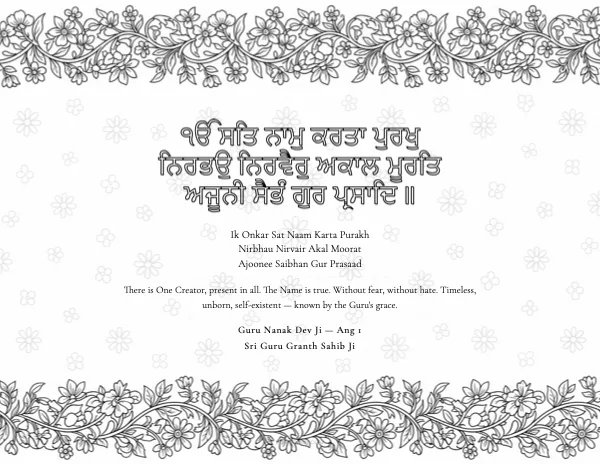 Mool Mantar Coloring SheetFree printable · US Letter PDF · Gurmukhi outlines to color inDownload PDF →
See more free Gurbani coloring sheets for kids.
Test what you know
Ready to check your understanding? The Japji Sahib quiz: Mool Mantar & Pauri 1 walks through the meaning of each phrase you’ve just read — a quick, kid-friendly way for the whole family to review the root verse together.
For a child-friendly, verse-by-verse walkthrough with simple meanings to share at home, see the Japji Sahib learning hub.
Frequently asked questions
Conversation starters for parents and kids.
- What does the Mool Mantar mean?
- The Mool Mantar is the opening verse of Sri Guru Granth Sahib Ji. Word by word it means: there is One Creator (Ik Onkar), whose Name is true and eternal (Sat Naam), the Creator present in all things (Karta Purakh), without fear (Nirbhau), without hatred (Nirvair), a timeless form beyond death (Akal Moorat), never born (Ajooni), self-existent (Saibhan), realised through the Guru's grace (Gur Prasad). In one sentence it describes who the Creator is, before any prayer begins.
- What does Ik Onkar mean?
- Ik Onkar (ੴ) is the first symbol of the Mool Mantar and the foundational statement of Sikhi. 'Ik' is the numeral one — there is One Creator, undivided and complete. 'Onkar' is the One expressing itself as all of creation. Together they mean there is One Creator who flows through everything that exists. It is written as a single figure — the numeral 1 joined to an open curve — to show oneness, not a word that can be broken apart.
- Is the Mool Mantar a prayer or a mantra?
- Neither in the ritual sense. 'Mool' means root and 'Mantar' means sacred words or formula, so Mool Mantar is the 'root verse' — a statement of belief rather than a magic chant. Sikhi teaches that no combination of words has power in itself. The Mool Mantar is recited to remember and reflect on who the Creator is, not to compel an outcome. It is the definition the rest of Gurbani goes on to explain.
- Where does the Mool Mantar appear?
- The Mool Mantar opens Sri Guru Granth Sahib Ji on Ang (page) 1, immediately before Japji Sahib composed by Guru Nanak Dev Ji. The same opening line is repeated in shorter forms at the start of many sections throughout the scripture, marking each new beginning with the same statement of who the Creator is.
- When do Sikhs recite the Mool Mantar?
- The Mool Mantar opens Japji Sahib, the first prayer of the daily Nitnem (daily spiritual practice), so most Sikhs recite it every morning. It is also commonly repeated on its own as a focus for Simran (remembering the Creator) and is one of the first verses Sikh children learn, because it contains the whole of Sikh belief in a single line.