
Little Shabad Stories
Gurbani, one gentle line at a time.
ਨਿੱਕੀਆਂ ਸ਼ਬਦ ਕਹਾਣੀਆਂ
Little bilingual books for the very young — each one grows from a single line of Gurbani, in Punjabi and English, to read together and grow up with.
Free No ads Made by Sikh parents
-
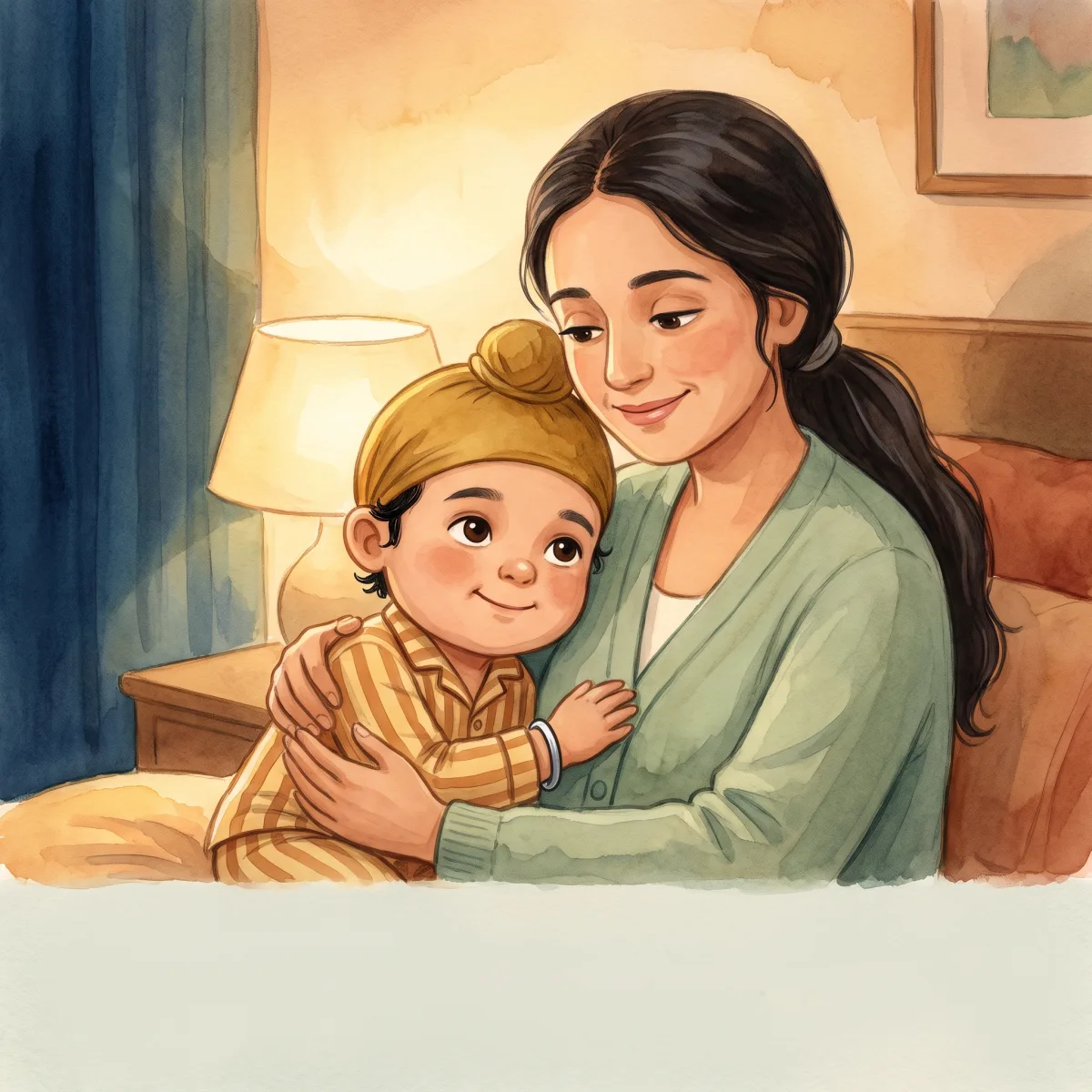
ਮਾਤ ਪਿਤਾ ਬੰਧਪ ਤੂਹੈ ਤੂ ਸਰਬ ਨਿਵਾਸੁ ॥
You are my mother, my father, and my family — and You live inside everyone.
Guru Arjan Dev Ji · Ang 818
The One Who Holds On ਜੋ ਹਮੇਸ਼ਾ ਗਲ ਨਾਲ ਲਾਈ ਰੱਖਦਾ ਹੈ -
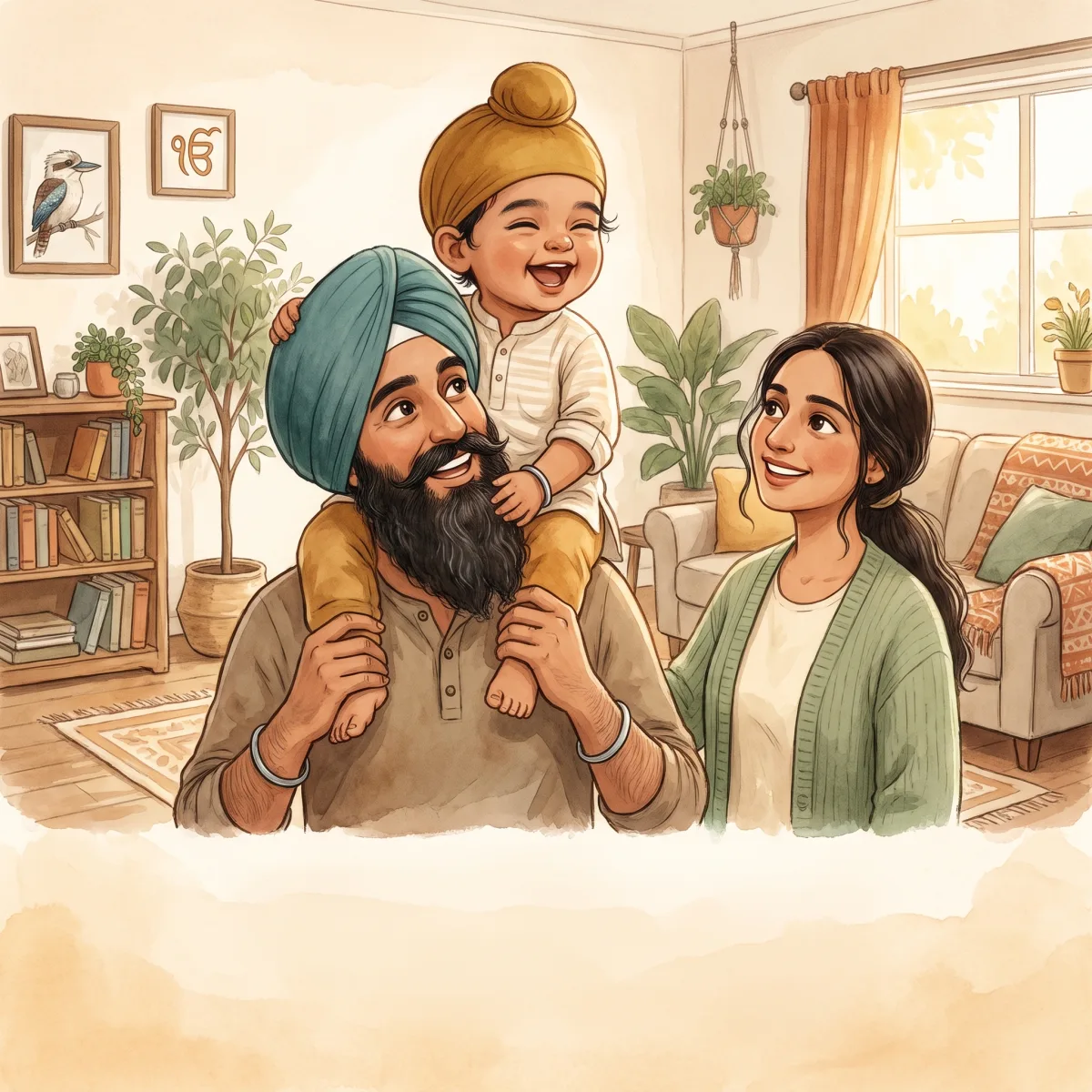
ਜੋ ਮਾਗਹਿ ਠਾਕੁਰ ਅਪੁਨੇ ਤੇ ਸੋਈ ਸੋਈ ਦੇਵੈ ॥
Whatever we ask from Waheguru, that is what He gives us.
Guru Arjan Dev Ji · Ang 681
The One We Can Always Ask ਜਿਸ ਕੋਲੋਂ ਅਸੀਂ ਹਮੇਸ਼ਾ ਮੰਗ ਸਕਦੇ ਹਾਂ -
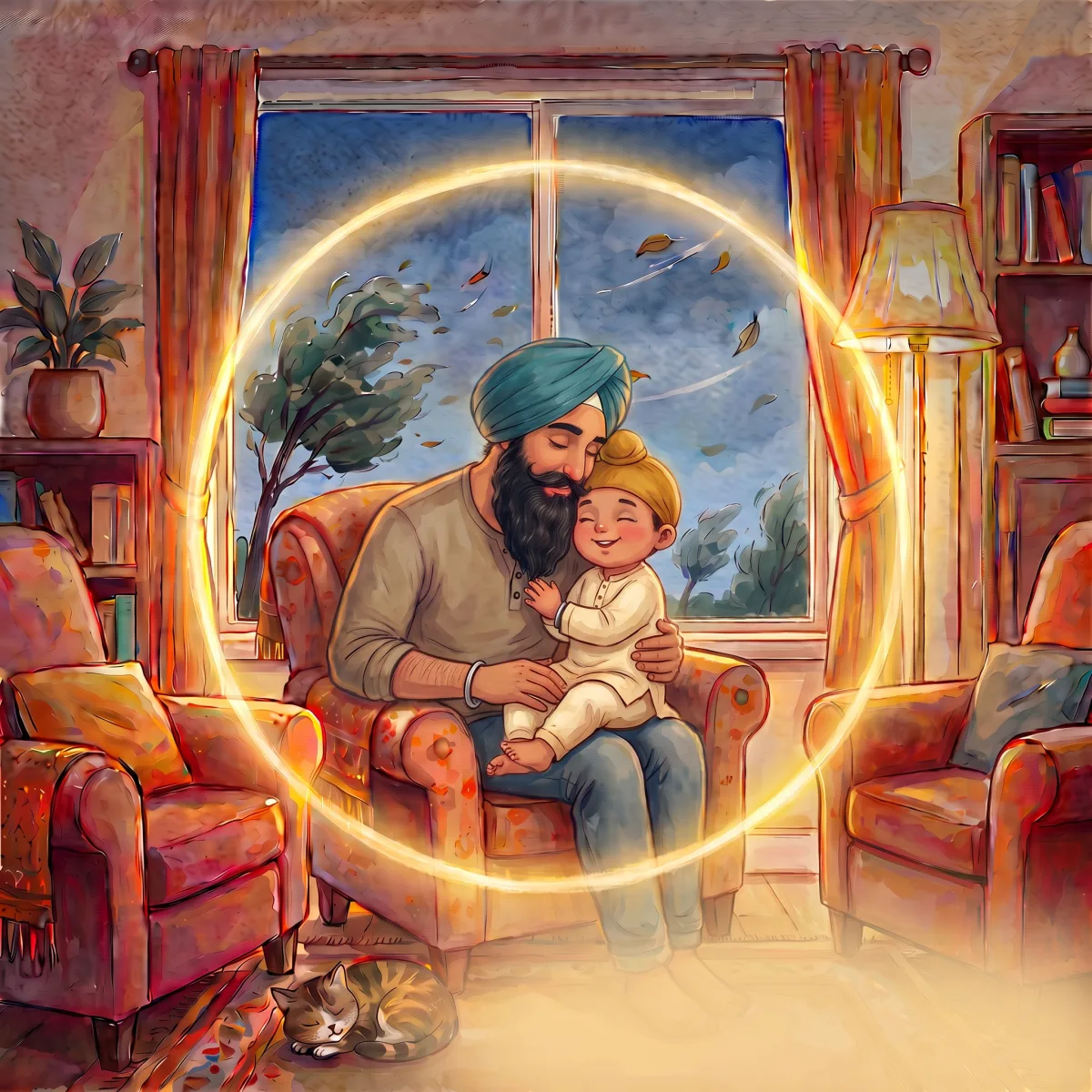
ਤਾਤੀ ਵਾਉ ਨ ਲਗਈ ਪਾਰਬ੍ਰਹਮ ਸਰਣਾਈ ॥
Not even a hot wind can touch us when we are kept safe in the care of Waheguru.
Guru Arjan Dev Ji · Ang 819
The One Who Keeps Us Safe ਜੋ ਸਾਡੀ ਰਾਖੀ ਕਰਦਾ ਹੈ -
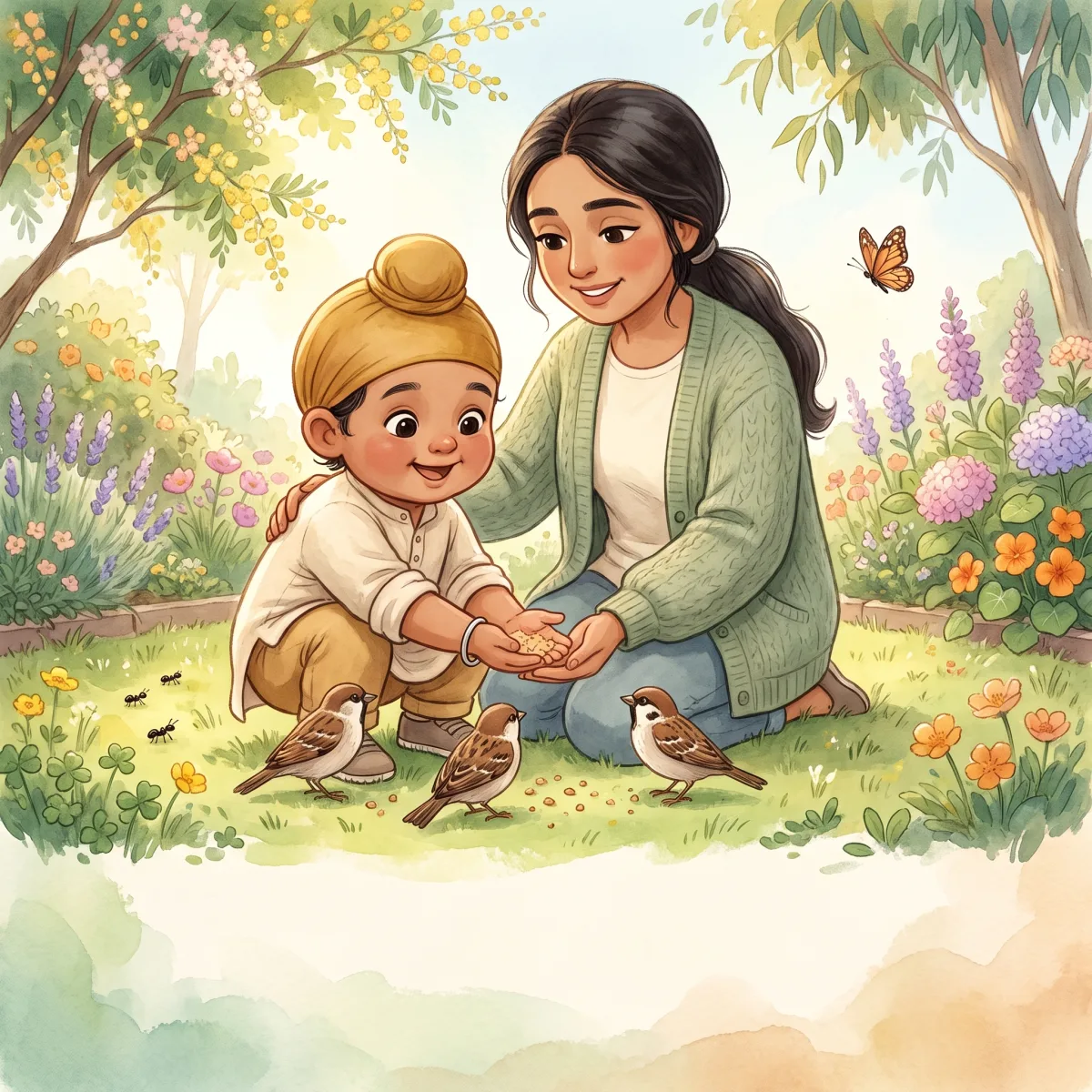
ਤੂੰ ਦਾਤਾ ਜੀਆ ਸਭਨਾ ਕਾ ਬਸਹੁ ਮੇਰੇ ਮਨ ਮਾਹੀ ॥
You are the Giver to every living being — please come and live in my heart.
Guru Arjan Dev Ji · Ang 499
The One Who Gives to All ਜੋ ਸਭ ਨੂੰ ਦਿੰਦਾ ਹੈ -
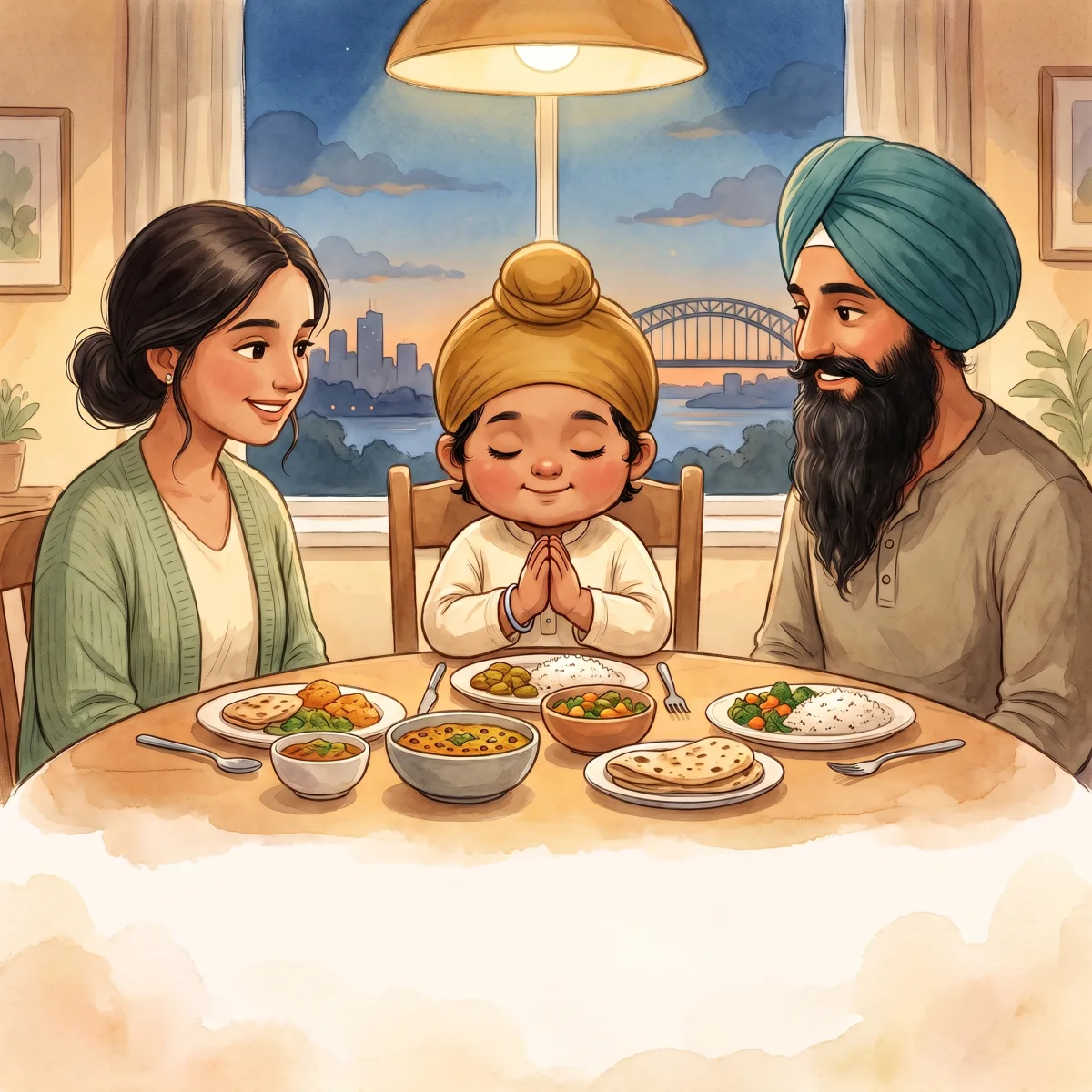
ਤੂ ਦਾਤਾ ਦਾਤਾਰੁ ਤੇਰਾ ਦਿਤਾ ਖਾਵਣਾ ॥
You are the Giver, the Great Giver; we eat whatever You give us.
Guru Raam Daas Ji · Ang 652
Even This Is a Gift ਇਹ ਵੀ ਇੱਕ ਦਾਤ ਹੈ
One line of Gurbani, one small story
The shabad is the heart of every book.
Gurbani can feel vast to a small child. A shabad story offers a first, gentle way in: each book takes just one line of a shabad from Sri Guru Granth Sahib Ji and wraps it in a familiar, everyday moment — a bedtime, a worry, a cuddle — so a young child feels what the line means long before they can explain it.
Every page is bilingual. The Gurmukhi comes first, then the English underneath, so a family learning Punjabi — or learning kirtan together — can read side by side. The shabad line sits at the heart of the book, said and sung, so it stays with your child as they grow into it.
Frequently Asked Questions
- What is a shabad story?
- A shabad story is a very short, gentle picture story built around a single line of Gurbani — a shabad from Sri Guru Granth Sahib Ji. Instead of explaining the shabad, the story lets a young child feel what it means through a small, relatable moment. Each book carries the Gurmukhi line, its English meaning, and the story in both Punjabi and English.
- Are these shabad stories free to read?
- Yes — every shabad story on Maastarji is free to read online, in full, with no sign-up. You can print the pages from your browser for bedtime reading.
- What age are they for?
- They are written for the very young — roughly ages 3 to 6. The sentences are short and repetitive, so a toddler enjoys them read aloud and an early reader can join in. Because each one carries a real line of Gurbani, children keep growing into them as they get older.
- Do I need to read Punjabi to share these with my child?
- No. Every line appears in Gurmukhi and in English. A parent who is just beginning with Punjabi — or learning kirtan alongside their child — can read the English and attempt the Gurmukhi together. The English toggle lets you hide or show the translation as your child grows more confident.
- How should we read a shabad story together?
- Read it slowly, one line at a time. A grown-up reads the Gurmukhi line, then everyone reads the English — or you share both, one voice at a time. Linger on the shabad line at the heart of the book; saying it together a few times is how it starts to stay. If you are learning the shabad in kirtan, singing that line as you reach it makes the moment special.