
Ardas for Kids — the Sikh Prayer, Line by Line
The Sikh prayer that opens and closes every service, taught line by line.
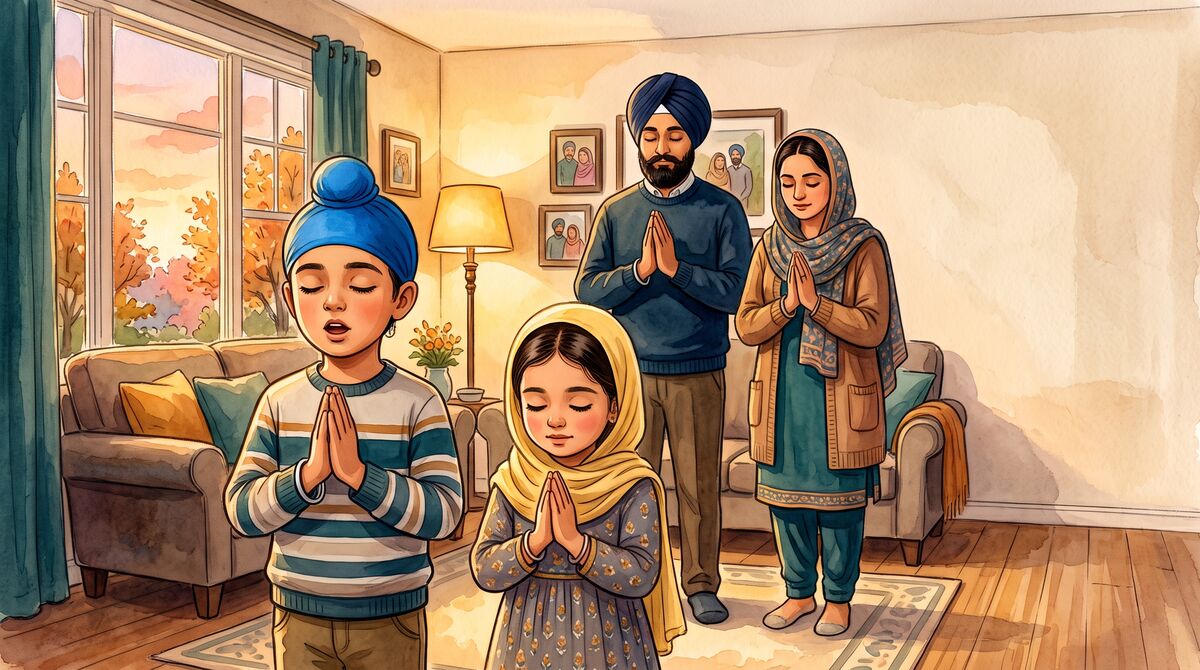
Listen and read along
Your child does not need to read Gurmukhi to start Ardas. They can follow the words as they hear them.
- Press Listen and follow along — each word lights up exactly as it is recited.
- Tap ▶ beside any line to hear just that line, as many times as you like.
- Turn the transliteration or the meaning on and off, and make the Gurmukhi bigger or smaller.
Invocation
Turning first to the Guru before every prayer — the ten Gurus, and Guru Granth Sahib as their living light.
ੴ ਵਾਹਿਗੁਰੂ ਜੀ ਕੀ ਫ਼ਤਹਿ॥
Ik Oankaar, Waheguru ji ki Fateh.
There is One Creator. Victory belongs to Waheguru.
ਸ੍ਰੀ ਭਗੌਤੀ ਜੀ ਸਹਾਇ॥
Sri Bhagauti ji sahaai.
May the Almighty's own power help us.
ਵਾਰ ਸ੍ਰੀ ਭਗੌਤੀ ਜੀ ਕੀ ਪਾਤਸ਼ਾਹੀ ਦਸਵੀਂ॥
Vaar Sri Bhagauti ji ki, Paatshaahi Dasveen.
A ballad of the Almighty's power, composed by the Tenth Guru.
ਪ੍ਰਿਥਮ ਭਗੌਤੀ ਸਿਮਰਿ ਕੈ ਗੁਰ ਨਾਨਕ ਲਈਂ ਧਿਆਇ॥
Pritham Bhagauti simar kai, Gur Naanak la-eeñ dhi-aa-ay.
First remembering the Almighty, I turn my thoughts to Guru Nanak.
ਫਿਰ ਅੰਗਦ ਗੁਰ ਤੇ ਅਮਰਦਾਸੁ ਰਾਮਦਾਸੈ ਹੋਈਂ ਸਹਾਇ॥
Fir Angad Gur tay Amar Daas, Raam Daasai ho-eeñ sahaa-ay.
Then Guru Angad, Guru Amar Das, and Guru Ram Das — may they help me.
ਅਰਜਨ ਹਰਗੋਬਿੰਦ ਨੋ ਸਿਮਰੌ ਸ੍ਰੀ ਹਰਿਰਾਇ॥
Arjan Har Gobind no simrou, Sri Har Raa-ay.
I remember Guru Arjan, Guru Hargobind, and Guru Har Rai.
ਸ੍ਰੀ ਹਰਿਕ੍ਰਿਸ਼ਨ ਧਿਆਇਐ ਜਿਸ ਡਿਠੈ ਸਭਿ ਦੁਖ ਜਾਇ॥
Sri Har Krishan dhi-aa-i-ai, jis dithai sabh dukh jaa-ay.
I think of Guru Har Krishan — just seeing him takes every sorrow away.
ਤੇਗ ਬਹਾਦਰ ਸਿਮਰਿਐ ਘਰ ਨਉ ਨਿਧਿ ਆਵੈ ਧਾਇ॥ ਸਭ ਥਾਂਈ ਹੋਇ ਸਹਾਇ॥
Tayg Bahaadar simri-ai, ghar nau nidh aavai dhaa-ay. Sabh thaañ-ee ho-ay sahaa-ay.
Remembering Guru Tegh Bahadar, every treasure comes running home. May he help me everywhere.
ਦਸਵਾਂ ਪਾਤਸ਼ਾਹ ਸ੍ਰੀ ਗੁਰੂ ਗੋਬਿੰਦ ਸਿੰਘ ਸਾਹਿਬ ਜੀ! ਸਭ ਥਾਂਈ ਹੋਇ ਸਹਾਇ॥
Dasvaañ Paatshaah Sri Guru Gobind Singh Saahib ji! Sabh thaañ-ee ho-ay sahaa-ay.
The Tenth King, Guru Gobind Singh Sahib Ji — may he help me everywhere.
ਦਸਾਂ ਪਾਤਸ਼ਾਹੀਆਂ ਦੀ ਜੋਤ ਸ੍ਰੀ ਗੁਰੂ ਗ੍ਰੰਥ ਸਾਹਿਬ ਜੀ ਦੇ ਪਾਠ ਦੀਦਾਰ ਦਾ ਧਿਆਨ ਧਰ ਕੇ ਬੋਲੋ ਜੀ ਵਾਹਿਗੁਰੂ!
Dasaañ Paatshaahee-aañ dee jot, Sri Guru Granth Saahib ji day paath deedaar daa dhi-aan dhar kay, bolo ji Waheguru!
Now think of Sri Guru Granth Sahib Ji, the light of all ten Gurus, and say: Waheguru!
✦ The Gurmukhi shown is the original Gurbani. The transliteration and English meaning are a simple, kid-friendly rendering for learning — under review, not a replacement for the original bani.
Remembering the Faithful
Remembering the Panj Piyare, the Sahibzade, and every Sikh who lived and died for their faith.
ਪੰਜਾਂ ਪਿਆਰਿਆਂ, ਚੌਹਾਂ ਸਾਹਿਬਜ਼ਾਦਿਆਂ, ਚਾਲ੍ਹੀਆਂ ਮੁਕਤਿਆਂ, ਹਠੀਆਂ ਜਪੀਆਂ, ਤਪੀਆਂ, ਜਿਹਨਾਂ ਨਾਮ ਜਪਿਆ, ਵੰਡ ਛਕਿਆ, ਦੇਗ ਚਲਾਈ, ਤੇਗ ਵਾਹੀ, ਦੇਖ ਕੇ ਅਣਡਿੱਠ ਕੀਤਾ, ਤਿਨ੍ਹਾਂ ਪਿਆਰਿਆਂ, ਸਚਿਆਰਿਆਂ ਦੀ ਕਮਾਈ ਦਾ ਧਿਆਨ ਧਰ ਕੇ, ਖਾਲਸਾ ਜੀ! ਬੋਲੋ ਜੀ ਵਾਹਿਗੁਰੂ!
Panjaañ Pi-aari-aañ, chauhaañ Saahibzaadi-aañ, chaalhee-aañ Mukti-aañ, hathee-aañ japee-aañ, tapee-aañ, jinhaañ Naam japi-aa, vand chhaki-aa, deg chalaa-ee, tayg vaahee, daykh kay andith kee-taa, tinhaañ pi-aari-aañ, sachi-aari-aañ dee kamaa-ee daa dhi-aan dhar kay, Khaalsaa ji! Bolo ji Waheguru!
Thinking of the Panj Piyare, the four Sahibzade, the Forty Liberated Ones, and every steadfast devotee who remembered God's Name, shared their food, ran a free kitchen, fought for what was right, and looked past others' faults — the true and loving ones — say, O Khalsa: Waheguru!
ਜਿਨ੍ਹਾਂ ਸਿੰਘਾਂ ਸਿੰਘਣੀਆਂ ਨੇ ਧਰਮ ਹੇਤ ਸੀਸ ਦਿੱਤੇ, ਬੰਦ ਬੰਦ ਕਟਾਏ, ਖੋਪਰੀਆਂ ਲੁਹਾਈਆਂ, ਚਰਖੀਆਂ ਤੇ ਚੜੇ, ਆਰਿਆਂ ਨਾਲ ਚਿਰਾਏ ਗਏ, ਗੁਰਦਵਾਰਿਆਂ ਦੀ ਸੇਵਾ ਲਈ ਕੁਰਬਾਨੀਆਂ ਕੀਤੀਆਂ, ਧਰਮ ਨਹੀਂ ਹਾਰਿਆ, ਸਿੱਖੀ ਕੇਸਾਂ ਸੁਆਸਾਂ ਨਾਲ ਨਿਬਾਹੀ, ਤਿਨ੍ਹਾਂ ਦੀ ਕਮਾਈ ਦਾ ਧਿਆਨ ਧਰ ਕੇ ਖਾਲਸਾ ਜੀ! ਬੋਲੋ ਜੀ ਵਾਹਿਗੁਰੂ!
Jinhaañ Singhaañ Singhnee-aañ nay dharam hayt sees ditay, band band kataa-ay, khoparee-aañ luhaa-ee-aañ, charkhee-aañ tay charhay, aari-aañ naal chiraa-ay ga-ay, gurdwaari-aañ dee sayvaa la-ee kurbaanee-aañ kee-tee-aañ, dharam naheeñ haari-aa, Sikhee kaysaañ su-aasaañ naal nibaahee, tinhaañ dee kamaa-ee daa dhi-aan dhar kay Khaalsaa ji! Bolo ji Waheguru!
Sikh men and women who gave their lives for their faith rather than give it up, who were tortured and executed, who gave everything in service to the Gurdwaras, and who kept their faith and their unshorn hair to their very last breath — thinking of what they gave, say, O Khalsa: Waheguru!
✦ The Gurmukhi shown is the original Gurbani. The transliteration and English meaning are a simple, kid-friendly rendering for learning — under review, not a replacement for the original bani.
The Sarbat Khalsa's Prayer
The heart of the prayer — asking Waheguru's help and protection for the whole Khalsa, everywhere.
ਪੰਜਾਂ ਤਖਤਾਂ, ਸਰਬੱਤ ਗੁਰਦੁਆਰਿਆਂ ਦਾ ਧਿਆਨ ਧਰ ਕੇ ਬੋਲੋ ਜੀ ਵਾਹਿਗੁਰੂ!
Panjaañ Takhtaañ, sarbat Gurdwaari-aañ daa dhi-aan dhar kay, bolo ji Waheguru!
Thinking of the Five Takhts and every Gurdwara everywhere, say: Waheguru!
ਪ੍ਰਿਥਮੇ ਸਰਬੱਤ ਖਾਲਸਾ ਜੀ ਕੀ ਅਰਦਾਸ ਹੈ ਜੀ, ਸਰਬੱਤ ਖਾਲਸਾ ਜੀ ਕੋ ਵਾਹਿਗੁਰੂ, ਵਾਹਿਗੁਰੂ, ਵਾਹਿਗੁਰੂ ਚਿਤ ਆਵੇ, ਚਿੱਤ ਆਵਨ ਕਾ ਸਦਕਾ ਸਰਬ ਸੁਖ ਹੋਵੇ।
Prithmay sarbat Khaalsaa ji kee ardaas hai ji, sarbat Khaalsaa ji ko Waheguru, Waheguru, Waheguru chit aavay, chit aavan kaa sadkaa sarab sukh hovay.
This, first of all, is the prayer of the whole Khalsa: may Waheguru come to mind for every one of us — and because of that remembering, may everyone find peace.
ਜਹਾਂ ਜਹਾਂ ਖਾਲਸਾ ਜੀ ਸਾਹਿਬ, ਤਹਾਂ ਤਹਾਂ ਰਛਿਆ ਰਿਆਇਤ, ਦੇਗ ਤੇਗ ਫ਼ਤਹ, ਬਿਰਦ ਕੀ ਪੈਜ, ਪੰਥ ਕੀ ਜੀਤ, ਸ੍ਰੀ ਸਾਹਿਬ ਜੀ ਸਹਾਇ, ਖਾਲਸੇ ਜੀ ਕੇ ਬੋਲ ਬਾਲੇ, ਬੋਲੋ ਜੀ ਵਾਹਿਗੁਰੂ!
Jahaañ jahaañ Khaalsaa ji Saahib, tahaañ tahaañ rachhi-aa ri-aa-yat, dayg tayg fateh, birad kee paij, panth kee jeet, Sri Saahib ji sahaa-ay, Khaalsay ji kay bol baalay, bolo ji Waheguru!
Wherever the Khalsa is, may there be protection and grace — victory for the free kitchen and the sword, honour kept, the Panth's triumph, the Guru's own help, and the last word for the Khalsa. Say: Waheguru!
ਸਿੱਖਾਂ ਨੂੰ ਸਿੱਖੀ ਦਾਨ, ਕੇਸ ਦਾਨ, ਰਹਿਤ ਦਾਨ, ਬਿਬੇਕ ਦਾਨ, ਵਿਸਾਹ ਦਾਨ, ਭਰੋਸਾ ਦਾਨ, ਦਾਨਾਂ ਸਿਰ ਦਾਨ ਨਾਮ ਦਾਨ, ਸ੍ਰੀ ਅੰਮ੍ਰਿਤਸਰ ਜੀ ਦੇ ਇਸ਼ਨਾਨ, ਚੌਕੀਆਂ, ਝੰਡੇ, ਬੁੰਗੇ, ਜੁਗੋ ਜੁਗ ਅਟੱਲ, ਧਰਮ ਕਾ ਜੈਕਾਰ, ਬੋਲੋ ਜੀ ਵਾਹਿਗੁਰੂ!
Sikhaañ noo Sikhee daan, kays daan, rahit daan, bibayk daan, visaah daan, bharosaa daan, daanaañ sir daan Naam daan, Sri Amritsar ji day ishnaan, chaukee-aañ, jhanday, bungay, jugo jug atal, dharam kaa jaikaar, bolo ji Waheguru!
Grant the Sikhs the gift of Sikhi itself — the gift of unshorn hair, of good conduct, of clear judgment, of trust, of faith, and above every gift, the gift of the Divine Name and a bath in the pool at Amritsar. May the watch-posts, the flags and the resting-places of the Guru stand forever, and may righteousness be victorious. Say: Waheguru!
ਸਿੱਖਾਂ ਦਾ ਮਨ ਨੀਵਾਂ, ਮਤ ਉੱਚੀ ਮਤ ਦਾ ਰਾਖਾ ਆਪਿ ਵਾਹਿਗੁਰੂ।
Sikhaañ daa man neevaañ, mat uchee, mat daa raakhaa aap Waheguru.
May Sikhs stay humble in heart and high in wisdom — and may Waheguru himself watch over that wisdom.
✦ The Gurmukhi shown is the original Gurbani. The transliteration and English meaning are a simple, kid-friendly rendering for learning — under review, not a replacement for the original bani.
Nankana Sahib
Praying for open access to the Gurdwaras the Panth has been separated from.
ਹੇ ਅਕਾਲ ਪੁਰਖ ਆਪਣੇ ਪੰਥ ਦੇ ਸਦਾ ਸਹਾਈ ਦਾਤਾਰ ਜੀਓ! ਸ੍ਰੀ ਨਨਕਾਣਾ ਸਾਹਿਬ ਤੇ ਹੋਰ ਗੁਰਦੁਆਰਿਆਂ ਗੁਰਧਾਮਾਂ ਦੇ, ਜਿਨ੍ਹਾਂ ਤੋਂ ਪੰਥ ਨੂੰ ਵਿਛੋੜਿਆ ਗਿਆ ਹੈ, ਖੁਲ੍ਹੇ ਦਰਸ਼ਨ ਦੀਦਾਰ ਤੇ ਸੇਵਾ ਸੰਭਾਲ ਦਾ ਦਾਨ ਖ਼ਾਲਸਾ ਜੀ ਨੂੰ ਬਖਸ਼ੋ।
Hay Akaal Purakh, aapnay panth day sadaa sahaa-ee daataar jee-o! Sri Nankaanaa Saahib tay hor Gurdwaari-aañ Gurdhaamaañ day, jinhaañ toñ panth noo vichhori-aa gi-aa hai, khulhay darshan deedaar tay sayvaa sambhaal daa daan Khaalsaa ji noo bakhsho.
O Timeless Being, the ever-present helper of Your Panth, please grant the Khalsa the gift of open access to Sri Nankana Sahib and every other Gurdwara the Panth has been separated from — the freedom to visit them and to care for them.
✦ The Gurmukhi shown is the original Gurbani. The transliteration and English meaning are a simple, kid-friendly rendering for learning — under review, not a replacement for the original bani.
Naming the Occasion
Naming what just happened and asking forgiveness for any mistakes made.
ਹੇ ਨਿਮਾਣਿਆਂ ਦੇ ਮਾਣ, ਨਿਤਾਣਿਆਂ ਦੇ ਤਾਣ, ਨਿਓਟਿਆਂ ਦੀ ਓਟ, ਸੱਚੇ ਪਿਤਾ, ਵਾਹਿਗੁਰੂ! ਆਪ ਦੇ ਹਜ਼ੂਰ ____ ਦੀ ਅਰਦਾਸ ਹੈ ਜੀ।
Hay nimaani-aañ day maan, nitaani-aañ day taan, ni-oti-aañ dee ot, sachay Pitaa, Waheguru! Aap day hazoor ____ dee ardaas hai ji.
O pride of the humble, strength of the weak, shelter of the shelterless, true Father, Waheguru! This is a prayer before You for ____.
ਅੱਖਰ ਵਾਧਾ ਘਾਟਾ ਭੁੱਲ ਚੁੱਕ ਮਾਫ ਕਰਨੀ। ਸਰਬੱਤ ਦੇ ਕਾਰਜ ਰਾਸ ਕਰਨੇ।
Akkhar vaadhaa ghaataa bhull chuk maaf karnee. Sarbat day kaaraj raas karnay.
Please forgive any letter added or left out, any mistake made. And please see every task — for everyone — through to completion.
✦ The Gurmukhi shown is the original Gurbani. The transliteration and English meaning are a simple, kid-friendly rendering for learning — under review, not a replacement for the original bani.
Chardi Kala
The line every Sikh prayer ends on — Chardi Kala, and the good of all.
ਸੇਈ ਪਿਆਰੇ ਮੇਲ, ਜਿਨ੍ਹਾਂ ਮਿਲਿਆਂ ਤੇਰਾ ਨਾਮ ਚਿਤ ਆਵੇ।
Say-ee pi-aaray mayl, jinhaañ mili-aañ tayraa Naam chit aavay.
Bring us together with those loving ones whose company reminds us of Your Name.
ਨਾਨਕ ਨਾਮ ਚੜ੍ਹਦੀ ਕਲਾ, ਤੇਰੇ ਭਾਣੇ ਸਰਬੱਤ ਦਾ ਭਲਾ।
Naanak Naam charhdee kalaa, tayray bhaanay sarbat daa bhalaa.
Nanak prays: may Your Name bring us ever-rising spirit, and in Your will, may everyone's good be assured.
✦ The Gurmukhi shown is the original Gurbani. The transliteration and English meaning are a simple, kid-friendly rendering for learning — under review, not a replacement for the original bani.
Waheguru ji ka Khalsa
The Khalsa's own greeting, said together to close the prayer.
ਵਾਹਿਗੁਰੂ ਜੀ ਕਾ ਖ਼ਾਲਸਾ, ਵਾਹਿਗੁਰੂ ਜੀ ਕੀ ਫਤਹਿ॥
Waheguru ji kaa Khaalsaa, Waheguru ji kee Fateh.
The Khalsa belongs to Waheguru; victory too belongs to Waheguru.
✦ The Gurmukhi shown is the original Gurbani. The transliteration and English meaning are a simple, kid-friendly rendering for learning — under review, not a replacement for the original bani.
Words to know
13 words from this stanza
ਵਾਹਿਗੁਰੂ
Waheguru
Wondrous Guru — the name Sikhs use for the Divine
ਫ਼ਤਹਿ
Fateh
Victory
ਭਗੌਤੀ
Bhagauti
The Almighty's own power
ਜੋਤ
Jot
Light; the same divine spirit carried by each Guru
ਪੰਜਾਂ ਪਿਆਰਿਆਂ
Panj Piyare
The Five Beloved Ones — the first five to join the Khalsa
ਸਾਹਿਬਜ਼ਾਦਿਆਂ
Sahibzade
The Guru's own sons
ਖਾਲਸਾ
Khalsa
The Guru's community, initiated through Amrit
ਤਖ਼ਤ
Takht
Seat of Sikh spiritual and temporal authority
ਪੰਥ
Panth
The Sikh community, as a whole
ਸਰਬੱਤ
Sarbat
Everyone; all
ਅਕਾਲ ਪੁਰਖ
Akaal Purakh
The Timeless Being
ਚੜ੍ਹਦੀ ਕਲਾ
Chardi Kala
Ever-rising spirit; relentless optimism
ਭਾਣਾ
Bhana
The Divine will
Frequently asked questions
- What is Ardas?
- Ardas is the Sikh congregational prayer — a formal petition said standing, usually facing Sri Guru Granth Sahib Ji. It isn't a bani from the Guru Granth Sahib itself; it's the Panth's own prayer, and its standard form is set out in the Sikh Rehat Maryada.
- When is Ardas said?
- Ardas closes the morning and evening Nitnem, and is offered at the start and close of almost every Sikh occasion — a Gurdwara service, a reading of Guru Granth Sahib, a wedding, a naming ceremony, offering Karhah Prashad, or simply before starting an important task.
- Why does Ardas mention historical events?
- The middle of Ardas remembers the Panj Piyare, the Guru's sons, and the Sikhs who gave their lives for their faith — not as a history lesson, but so that every time the Panth prays together, it prays in their memory too.
- What does the blank line in Ardas mean?
- Most of Ardas is fixed and never changes. One line is the exception — it names either the bani that was just read (Japji Sahib, Sukhmani Sahib, an Akhand Path) or the karaj: the task or occasion the sangat has gathered for, like a birthday, an Anand Karaj, or a house move. Whoever leads the Ardas fills that part in out loud.
- Why do people stand for Ardas?
- The Sikh Rehat Maryada asks the whole congregation to stand with hands folded while Ardas is said, facing Guru Granth Sahib where it is present. The person leading it stands facing the Guru Granth Sahib too — or in any direction, if it isn't there.
- Can a child learn to say Ardas?
- Yes — many Sikh children learn Ardas by hearing it said daily and joining in on the parts they know, long before they can read the whole thing. This page breaks it into short sections with audio, so a child can follow along a piece at a time.
- Is the text on this page accurate?
- The Gurmukhi follows the standard Ardas text set out in the Sikh Rehat Maryada. The transliteration and English meaning are a simple, kid-friendly rendering for learning — a learning aid alongside, not a replacement for, the original prayer.
One line of Ardas a week
I write a weekly letter for Sikh parents whose kids don't live their day in Punjabi — what to say at bedtime, what to do this week, and new free printables as they land. No spam, no paywall.
Get them by emailFor parents & teachers · unsubscribe anytime
Keep learning
Japji Sahib for Kids
Guru Nanak Dev Ji's morning bani, taught the same way — one stanza at a time.
Anand Sahib for Kids
The bani of joy Sikhs recite every day, right before Ardas in most services.
Why daily paath matters
A gentle parent guide to building a daily Nitnem habit at home, without pressure.