
How to Teach Your Child Honest Work (Kirat Karni)
A Sikh parent's guide to teaching kids honest work — what Kirat Karni means for a child, wisdom from Gurbani, and gentle activities to try at home.
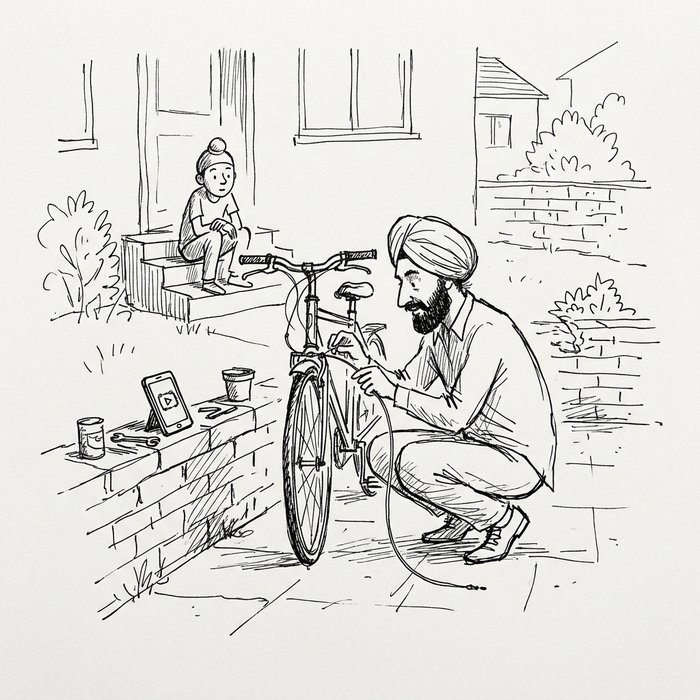
Honest work — Kirat Karni — is one of the three pillars of Sikhi, alongside remembering the Divine (Naam Japna) and sharing with others (Vand Chakna). It sounds like an adult idea: earning an honest living. But the value takes root long before a child ever earns a penny — in how they do their homework, build their Lego, or own up when they’ve cut a corner.
This guide is for parents and teachers who want to pass on that value without lecturing. It blends what we know about how children actually learn with the wisdom of Sri Guru Granth Sahib Ji — and points you to a free story, Fateh Singh and the Shortcut, that lets the lesson land on its own.
What “Honest Work” Means to a Child
A seven-year-old doesn’t have a job. So what is their “Kirat”?
It’s their effort. Their work is the maths sheet they’d rather rush, the model they’re building, the part in the school play they have to practise. Honest work, for a child, means doing that work themselves — and doing it honestly — rather than copying a friend, getting a parent to do it, or passing off someone else’s idea as their own.
Guru Nanak Dev Ji captured the whole value in two lines:
ਘਾਲਿ ਖਾਇ ਕਿਛੁ ਹਥਹੁ ਦੇਇ ॥ ਨਾਨਕ ਰਾਹੁ ਪਛਾਣਹਿ ਸੇਇ ॥
One who earns through honest labour, eats from what they earn, and gives something away from their own hand — O Nanak, they alone know the true way of life.
Guru Nanak Dev Ji — Ang 1245, Sri Guru Granth Sahib JiNotice there are two halves: earning honestly and giving from your own hand. Honest work isn’t just about effort — it’s effort that produces something real enough to share. That’s the version of Kirat Karni a child can live today.
1. Model it — children copy what you do, not what you say
Long before a child understands a value, they absorb it by watching you. If they hear you say “always be honest” but see you fudge an excuse on the phone, they learn that honesty is what you say. If they watch you fix a wobbly shelf yourself on a Saturday rather than ignoring it, they learn what honest effort looks like.
You don’t need a speech. You need to let them catch you doing your own work, carefully, including the boring parts — and to hear you admit when you got something wrong. Children trust actions far more than instructions.
2. Praise the effort, not just the result
This is one of the most robust findings in child psychology: children praised for effort (“you worked really hard on that”) keep trying harder things, while children praised only for results or talent (“you’re so clever”) tend to play it safe and crumble when something gets difficult. They start protecting the label instead of doing the work.
Kirat Karni points the same way. Gurbani tells us a person becomes what they repeatedly do:
ਜੈਸਾ ਕਰੈ ਕਹਾਵੈ ਤੈਸਾ ॥
As a person acts, so do they become known.
Guru Angad Dev Ji — Ang 1245, Sri Guru Granth Sahib JiA child who is honoured for how they worked — not just whether they won — learns that the trying is the point. That’s exactly what protects them later, when the easy shortcut appears.
3. Let them do their own work — even when it’s slower
It is genuinely hard to watch a child struggle with a shoelace, a sum, or a science project when you could finish it in ten seconds. But every time we rescue too quickly, we quietly tell them: the result matters more than your effort, and I don’t think you can do this.
Knowing the right answer isn’t the same as living it. Guru Nanak Dev Ji places living the truth above merely knowing it:
ਸਚਹੁ ਓਰੈ ਸਭੁ ਕੋ ਉਪਰਿ ਸਚੁ ਆਚਾਰੁ ॥
Truth is above all things; but higher still is truthful living.
Guru Nanak Dev Ji — Ang 62, Sri Guru Granth Sahib JiProductive struggle is where learning actually happens. A turbine a child builds, breaks, and rebuilds teaches more than a perfect one they copied. Let the work be a little messy and a little theirs.
4. Name the shortcut gently — what isn’t earned isn’t really yours
Children will meet shortcuts: copying an answer, claiming a friend’s idea, downloading a finished project. The instinct isn’t bad — they want to succeed and avoid failing. Our job is to help them feel the difference between a result that’s theirs and one that only looks like it.
Guru Nanak Dev Ji speaks plainly about taking what belongs to someone else:
ਹਕੁ ਪਰਾਇਆ ਨਾਨਕਾ ਉਸੁ ਸੂਅਰੁ ਉਸੁ ਗਾਇ ॥
To take what rightfully belongs to another, O Nanak, is as forbidden as pork is to a Muslim or beef to a Hindu.
Guru Nanak Dev Ji — Ang 141, Sri Guru Granth Sahib JiFor a child, “what belongs to another” includes someone else’s work and someone else’s ideas. The point isn’t to shame them — it’s to help them notice that a copied win feels hollow, and an earned one, however imperfect, feels solid.
5. Connect honest work to sharing
Kirat Karni rarely stands alone. We earn honestly so that we have something good and clean to give — which is Vand Chakna, the sharing pillar. Guru Nanak Dev Ji lists honest earning right between truthfulness and charity:
ਪਹਿਲਾ ਸਚੁ ਹਲਾਲ ਦੁਇ ਤੀਜਾ ਖੈਰ ਖੁਦਾਇ ॥
First is truthfulness, second is honest earning, and third is giving in the Name of God.
Guru Nanak Dev Ji — Ang 141, Sri Guru Granth Sahib JiWhen children see that honest effort leads naturally to generosity — baking something to share, saving pocket money for langar or a cause — work stops feeling like a chore and starts feeling like it has a purpose beyond themselves.
6. Teach it through a story, not a sermon
Children resist being lectured at and remember what they feel. A good story lets them arrive at the lesson themselves — which is why we wrote Fateh Singh and the Shortcut.
In it, Fateh’s team copies a winning wind-turbine design from a video. It spins perfectly — until the teacher asks why it works, and they have nothing to say. Meanwhile, his dad spends a whole weekend fixing a bicycle by hand instead of buying a new one. When Fateh asks why it matters if nobody can tell the difference, his dad says simply: “I would know.” His grandmother then shares the sakhi of Bhai Lalo and Malik Bhago, and Fateh quietly decides to start his project over — and build something that’s truly his.
The story never preaches. It just lets a child sit with the difference between a perfect shortcut and honest work — and that’s far stickier than being told.
What to do and what to avoid
A quick reference you can keep in mind:
Do:
- Praise effort, persistence, and honesty — out loud and specifically.
- Let your child do their own work, even when it’s slower or messier.
- Model honest work yourself, including the boring and the imperfect parts.
- Treat a shortcut as a teachable moment, not a character flaw.
- Connect earning to giving, so work feels purposeful.
Avoid:
- Praising only results, grades, or “being clever” (it teaches them to play it safe).
- Quietly redoing or finishing your child’s work to make it look better.
- Shaming or labelling (“you’re a cheat”) — it makes children hide, not improve.
- Rewarding the shortcut by celebrating a win you know wasn’t truly theirs.
- Turning the value into a lecture; let stories and example do the work.
Try it at home this week
Pick one or two — small and consistent beats big and occasional:
- Read the story together → Fateh Singh and the Shortcut, then talk about the “I would know” moment.
- Test what they remember → the free story comprehension quiz.
- Play with the vocabulary of honest work → the Kirat Karni crossword.
- Slow down and reflect → print the coloring pages, including a Gurbani practice sheet.
- Fix something together instead of replacing it — a bike, a toy, a torn book — and let your child feel the patience it takes.
- Finish a hard project the honest way — when they’re tempted to copy or quit, help them take the next small step themselves.
- Run a small “honest earning” jar — earn a little through real effort, then give part of it away.
A final word
You can’t hand a child a value like Kirat Karni in a single conversation. You build it the way Fateh’s dad fixes a bicycle — patiently, by hand, one honest turn at a time, accepting the small imperfections along the way.
Praise the effort. Let them struggle a little. Model the patience. Tell the stories. And trust that a child who learns the quiet pride of work that’s truly their own is learning something that will hold them steady for the rest of their life.
Related Resources
- Fateh Singh and the Shortcut — A free illustrated story (ages 4–12) about honest work, with a quiz, crossword, and coloring pages
- The Light of Truth: The Life of Guru Nanak Dev Ji — The full life of Guru Nanak, including the sakhi of Bhai Lalo and Malik Bhago
- Raising Children with the Wisdom of Japji Sahib — Ten practical principles for parents, including Kirat Karni
- How to Be a Volunteer: The Art of Selfless Service — A guide to Seva, the spirit of giving that honest work makes possible
Frequently asked questions
Conversation starters for parents and kids.
- What is Kirat Karni in simple words for kids?
- Kirat Karni means earning what you have through your own honest effort. For a grown-up that's an honest job; for a child it's doing their own work — their homework, their chores, their project — with care, instead of copying, cheating, or taking a shortcut. The simplest way to say it: do the work yourself, and do it honestly.
- At what age should I start teaching honest work?
- You can start as young as 3 or 4 with tiny age-appropriate jobs (tidying toys, helping lay the table) and lots of praise for the effort. Between 7 and 12, children can grasp the deeper idea — that the value is in doing it yourself, not just in the finished result. The story and activities here are written for ages 4 to 12.
- How is Kirat Karni different from just telling my child to do their chores?
- Chores teach responsibility; Kirat Karni adds the why. It's not only that the job gets done, but that it's done honestly and by your own hand — and that what you earn this way is something to be proud of. It also connects to sharing (Vand Chakna): we earn honestly so we have something good to give.
- My child copied homework or took a shortcut — how do I respond without shaming them?
- Stay calm and curious, not accusing. Ask what happened and why the shortcut felt tempting — usually it's pressure or fear of failing, not bad character. Separate the child from the choice: "You're not in trouble, but let's make this honest." Then help them redo it themselves. The goal is for them to feel the quiet pride of work that's truly their own, not to feel like a bad person.
- What is the story of Bhai Lalo and Malik Bhago?
- It's a well-known sakhi from the life of Guru Nanak Dev Ji. Guru Ji chose the simple roti of Bhai Lalo, a poor carpenter who earned honestly, over the lavish feast of the wealthy Malik Bhago, whose riches came from exploiting others — teaching that honest work is worth more than dishonest wealth. You can read the full account in our children's book, The Light of Truth: The Life of Guru Nanak Dev Ji.
- Are there activities to teach Kirat Karni at home?
- Yes. The free story Fateh Singh and the Shortcut explores honest work without preaching, and it comes with a comprehension quiz, a Kirat Karni crossword, and printable coloring pages. This guide also lists simple do-at-home activities — fix something together, finish a hard project, or run a small honest 'earning' jar.