
Vaisakhi & Khalsa Sajna Diwas for Kids: Free Activities
Celebrate Vaisakhi 1699 with your family — free coloring sheets, a Vaisakhi quiz, and Q&As about the Khalsa and Panj Pyare for ages 5–12.
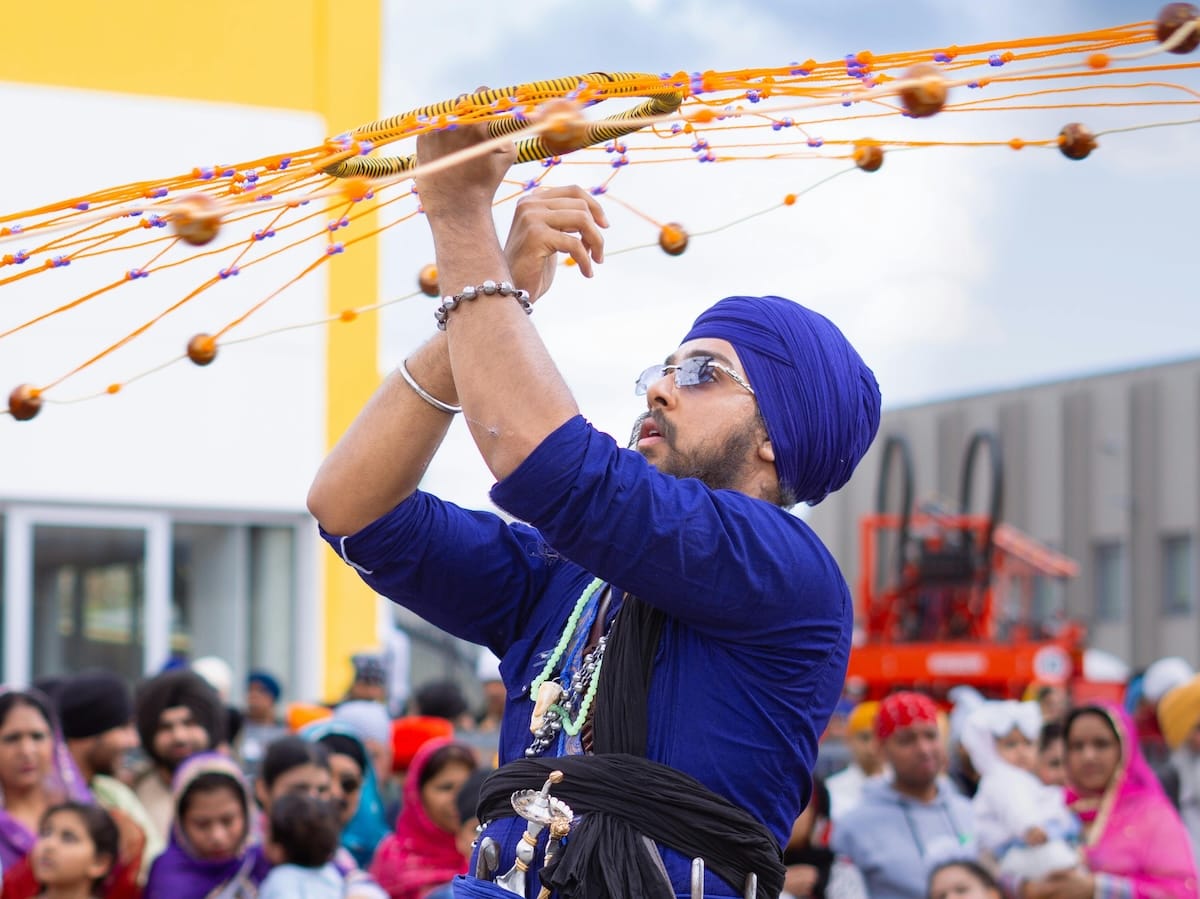
Vaisakhi (also spelled Baisakhi) is the day Sikh families celebrate the birth of the Khalsa in 1699 — and this guide is everything you need to share it with your kids.
Try the activities
Print, play and learn together:
- Vaisakhi Coloring Pages — 8 printable sheets, one for each day of April, with kid-friendly Vaisakhi scenes you can color in together.
- Take the Vaisakhi & Khalsa Sajna Diwas Quiz → — a 10-question family quiz on Vaisakhi 1699, the Panj Pyare and the Five Kakaars.
- Read The Secret of True Cleanliness — a Maastarji story set during Vaisakhi that introduces the festival and its deeper meaning.
What is Vaisakhi & Khalsa Sajna Diwas?
On April 14 every year, Sikhs celebrate two things at once:
- A harvest festival — Vaisakhi has marked the spring wheat harvest in Punjab for centuries. Families thank the land, share food and celebrate.
- Khalsa Sajna Diwas — the day Guru Gobind Singh Ji founded the Khalsa in 1699 at Anandpur Sahib, initiating the first five Sikhs (the Panj Pyare) and giving the Khalsa its distinct identity through the Five Kakaars.
In gurdwaras around the world, the day is marked with Nagar Kirtan processions, special kirtan programs, and langar (the community meal).
The story of Vaisakhi 1699
In the spring of 1699, the tenth Sikh Guru — Guru Gobind Singh Ji — called Sikhs from across the land to gather at Anandpur Sahib for the annual Vaisakhi celebration. Tens of thousands answered the call.
Standing before the massive congregation, the Guru drew his sword and asked a profound question: “Is there anyone here willing to give their head for their faith?”
The crowd fell silent. Many were shocked. But one by one, five brave Sikhs stepped forward — each willing to offer the ultimate sacrifice. Guru Ji took each volunteer into a tent, and after all five had entered, he emerged with all five alive, dressed in saffron robes and turbans.
These five became known as the Panj Pyare — the Five Beloved Ones. They were the first to be initiated into the Khalsa through the Amrit Sanchar ceremony.
In a remarkable act of humility, Guru Gobind Singh Ji then asked the Panj Pyare to initiate him — demonstrating that in the Khalsa, the Guru and the Sikh are equals in devotion.
The Five Beloved Ones (Panj Pyare)
The Panj Pyare came from five different regions of Hindustan and from different castes — a deliberate declaration that the Khalsa transcends all social divisions:
- Bhai Daya Singh — from Lahore (present-day Pakistan)
- Bhai Dharam Singh — from Hastinapur (present-day Uttar Pradesh)
- Bhai Himmat Singh — from Jagannath Puri (present-day Odisha)
- Bhai Mohkam Singh — from Dwarka (present-day Gujarat)
- Bhai Sahib Singh — from Bidar (present-day Karnataka)
For children, the lesson is simple and powerful: in the Khalsa, everyone is equal regardless of where they come from or what family they were born into.
The Khalsa identity: the Five Kakaars
When the Khalsa was established, Guru Gobind Singh Ji gave every initiated Sikh a distinct identity through the Five Kakaars (the 5Ks):
| Kakaar | What It Is | What It Represents |
|---|---|---|
| Kesh | Uncut hair | Living in harmony with God’s will |
| Kangha | Wooden comb | Cleanliness and discipline |
| Kara | Steel bracelet | A reminder of one’s bond with Waheguru |
| Kachera | Cotton undergarment | Self-respect and moral strength |
| Kirpan | Small sword, carried as an article of faith | The duty to stand up for justice |
For children, the 5Ks can be introduced as special gifts from the Guru — each one carrying a reminder to live with courage, cleanliness and kindness.
Vaisakhi as a harvest festival
Long before 1699, Vaisakhi was already celebrated as a harvest festival across Punjab. It marks the time when the winter wheat crop is ready for harvest — a season of abundance, gratitude and celebration.
Farmers give thanks for a successful harvest, and communities come together with music, dance and shared meals. This agricultural dimension adds a layer of joy and thanksgiving to the spiritual significance of the day.
For families, this is a great opportunity to talk about gratitude, the cycles of nature and the importance of community.
How families celebrate today
Vaisakhi is celebrated by Sikhs around the world with a mix of spiritual devotion and community festivity:
- Gurdwara visits — Special services, kirtan (devotional music) and langar (community meals)
- Nagar Kirtan — Public processions through city streets, led by the Panj Pyare, with kirtan, gatka (martial arts demonstrations) and free food for everyone
- Family gatherings — Sharing meals, wearing festive clothing and spending time together
- Community service — Many families use Vaisakhi as an opportunity to do seva (selfless service)
Explaining Vaisakhi to young children
Here are some age-appropriate talking points:
For ages 3–5:
- “Vaisakhi is a special day when we celebrate being Sikh.”
- “A long time ago, our Guru asked who was brave, and five people raised their hands.”
- “We go to the Gurdwara, eat yummy food, and celebrate together.”
For ages 6–9:
- Share the story of the Panj Pyare in simple terms
- Explain each of the 5Ks and what they mean
- Talk about Nagar Kirtan and what happens during the procession
For ages 10+:
- Discuss the historical context — why Guru Gobind Singh Ji created the Khalsa
- Explore the significance of the Panj Pyare coming from different backgrounds
- Talk about what it means to stand up for what’s right, even when it’s hard
Related resources
- Vaisakhi Celebration Hub — Activities, quiz, videos, and more for the whole family
- Vaisakhi Coloring Pages — 8 printable coloring sheets
- Sikh Heritage Month Resource Hub — Educational posters and resources for schools
- Learn Punjabi for Kids — Resources for learning Gurmukhi script
Frequently asked questions
Conversation starters for parents and kids.
- What is Khalsa Sajna Diwas?
- Khalsa Sajna Diwas is the day Sikhs remember the birth of the Khalsa — when Guru Gobind Singh Ji initiated five Sikhs (the Panj Pyare) on Vaisakhi day in 1699 at Anandpur Sahib. "Sajna" means "creation" or "coming into being," so the name literally means "the day the Khalsa was born." Most Sikhs celebrate it on the same day as Vaisakhi every April.
- Are Vaisakhi and Khalsa Sajna Diwas the same day?
- Yes — they are the same date but two different meanings layered together. Vaisakhi has been celebrated for centuries as a Punjabi harvest festival in mid-April. In 1699, Guru Gobind Singh Ji chose that same Vaisakhi gathering to create the Khalsa, so the day is now also remembered as Khalsa Sajna Diwas. Sikh families honor both: the joy of harvest and the birth of the Khalsa.
- Who were the Panj Pyare?
- The Panj Pyare ("Five Beloved Ones") were the first five Sikhs to be initiated into the Khalsa on Vaisakhi 1699: Bhai Daya Singh (from Lahore), Bhai Dharam Singh (Hastinapur), Bhai Himmat Singh (Jagannath Puri), Bhai Mohkam Singh (Dwarka) and Bhai Sahib Singh (Bidar). They came from five different regions and five different castes — a powerful message for children that in the Khalsa, everyone is equal.
- Why is 1699 important in Sikh history?
- 1699 is the year the Khalsa was founded. Guru Gobind Singh Ji used that Vaisakhi gathering to give Sikhs a distinct identity — the Five Kakaars (Kesh, Kangha, Kara, Kachera, Kirpan) — and a shared family name (Singh for men, Kaur for women). It transformed the Sikh community into a body of saint-soldiers committed to standing up for justice.
- How can families celebrate Khalsa Sajna Diwas with kids?
- Start small and make it visual. Print a coloring sheet, read the story of 1699 aloud, join a Nagar Kirtan procession in your city, do Japji Sahib paath and prepare karah parshad at home, and take the family quiz. For older kids, talk about why Guru Gobind Singh Ji asked the Panj Pyare to initiate him — what that says about humility and equality.