
Punjabi Family Relationship Names — Chacha, Massi, Nana & Audio
Punjabi Family Relationship Names
The easiest way to teach these is to start with the people closest to your child and work outward — immediate family first, then grandparents, then the wider circle of aunts and uncles. Every title below has the Gurmukhi spelling, pronunciation, and a native audio recording — tap any word (🔊) to hear it spoken aloud.
Immediate Family (Maa, Pita, Veer, Bhen)
The words your child hears and uses every day — Mother, Father, brothers, sisters, and children.
Mother
/
/
maa / mah-tah jee
The heart of the home. Many children also say Mummy or Bebe Ji.
Father
/
/
pee-tah jee / bah-poo jee
The protector and provider. Everyday names include Papa, Daddy, or Bapu Ji.
Elder Brother
/
/
veer jee / pah-jee
A protector and guide. Adding Ji shows the respect owed to an elder.
Elder Sister
/
/
bhen jee / dee-dee
A figure of nurturing and respect.
Younger Brother
cho-tah veer
Younger brother.
Younger Sister
cho-tee bhen
Younger sister.
Son
/
/
putt-ar
Son.
Daughter
/
/
dhee / putt-ree
Daughter.
Grandparents & Grandchildren (Dada, Dadi, Nana, Nani)
Punjabi keeps the two sides of the family distinct: your father’s parents are Dada-Dadi, your mother’s parents are Nana-Nani.
Father's Parents (Paternal)
/
/
dah-dah jee / dah-dee jee
The pillars of the lineage (Vadda Ghar).
Mother's Parents (Maternal)
/
/
nah-nah jee / nah-nee jee
Often associated with the warmth and pampering of the Nanka (maternal home).
And from the other direction — what your grandparents call you:
Son's Children (Paternal Grandchild)
/
/
po-tah / po-tee
To your Dada-Dadi, you are their Pota (grandson) or Poti (granddaughter).
Daughter's Children (Maternal Grandchild)
/
/
doh-tah / doh-tee
To your Nana-Nani, you are their Dohta (grandson) or Dohti (granddaughter).
Aunts & Uncles (Chacha, Mama, Massi, Bhua)
This is where Punjabi is wonderfully precise: every aunt and uncle has a distinct title depending on which side of the family they come from, and (for your father’s brothers) whether they are older or younger than him.
Father’s Side (Paternal Aunts & Uncles)
Father's Older Brother / Wife
/
/
tah-yah jee / tah-ee jee
Taya implies authority — the Head of the Clan figure, often accorded the highest respect next to the grandfather.
Father's Younger Brother / Wife
/
/
cha-cha jee / cha-chee jee
Chacha is often the fun dad — a playful, affectionate second father figure.
Father's Sister / Husband
/
/
boo-ah jee / foo-farr jee
Bhua is the cherished daughter of the paternal home. She is often treated with special care when she visits.
Mother’s Side (Maternal Aunts & Uncles)
Mother's Brother / Wife
/
/
mah-mah jee / mah-mee jee
Mama is the protector. In folklore, the maternal uncle indulges the children and offers a safe haven.
Mother's Sister / Husband
/
/
mah-see jee / mah-sarr jee
Massi means Maa-Si — like mother. She is the second mother, offering the same comfort and love.
Nieces & Nephews (Bhatija, Bhanja)
Brother's Children
/
/
bha-tee-jah / bha-tee-jee
Nephew / Niece (Brother's side).
Sister's Children
/
/
bhaan-jah / bhaan-jee
Nephew / Niece (Sister's side).
Common Mix-Ups
Bhanja vs Bhatija
Bhatija (ਭਤੀਜਾ) is your brother’s son; Bhanja (ਭਾਣਜਾ) is your sister’s son. The niece forms follow the same split: Bhatiji (ਭਤੀਜੀ) is your brother’s daughter, Bhanji (ਭਾਣਜੀ) is your sister’s daughter.
Taya vs Chacha
Taya Ji (ਤਾਇਆ ਜੀ) is your father’s older brother; Chacha Ji (ਚਾਚਾ ਜੀ) is his younger brother. Taya carries the authority of the head of the paternal clan; Chacha is traditionally the playful second-father figure.
Massi vs Bhua
Massi Ji (ਮਾਸੀ ਜੀ) is your mother’s sister — from Maa-Si, “like a mother.” Bhua Ji (ਭੂਆ ਜੀ) is your father’s sister. Massi’s husband is Massar Ji (ਮਾਸੜ ਜੀ); Bhua’s husband is Phuphar Ji (ਫੁੱਫੜ ਜੀ).
Nana vs Dada
Dada Ji (ਦਾਦਾ ਜੀ) is your father’s father — your paternal grandfather. Nana Ji (ਨਾਨਾ ਜੀ) is your mother’s father — your maternal grandfather. The grandmothers follow the same split: Dadi Ji (ਦਾਦੀ ਜੀ) is paternal, Nani Ji (ਨਾਨੀ ਜੀ) is maternal.
The family map
Every name tells you which side, and how close
In Punjabi there's no single word for “uncle” or “aunt.” The name itself tells you which side of the family a person is on — and, for your father's brothers, whether they're older or younger than him.
In Punjabi, every relative has their own precise name. Your father’s older brother is Taya Ji, his younger brother is Chacha Ji, your mother’s brother is Mama Ji, and her sister is Massi Ji — each title tells you exactly which side of the family a person belongs to.
Free Printables
Learn by doing
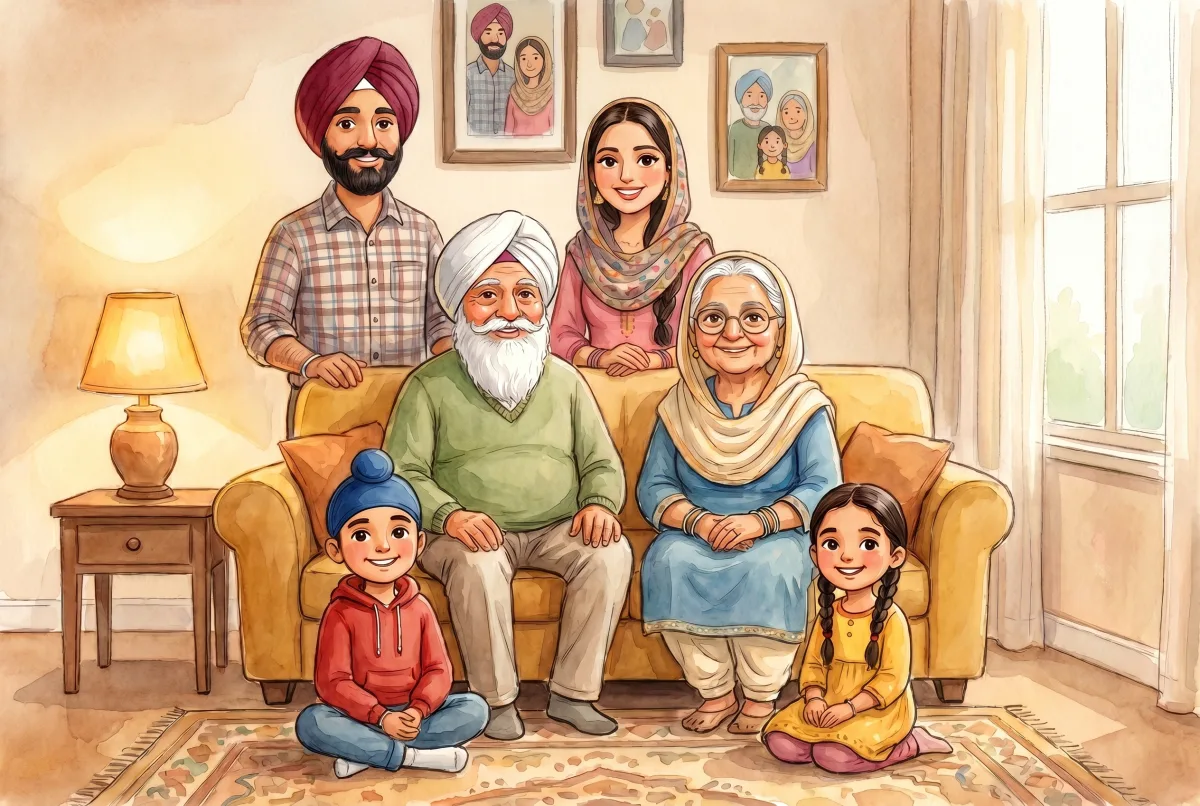
Help your child connect these Punjabi family titles to their own family — colour together, trace the words in Gurmukhi, and fill in the family tree with Dada Ji, Nani Ji, Massi Ji and more.
Free Printable
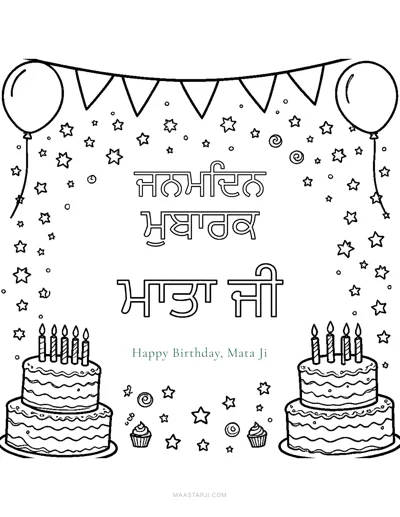
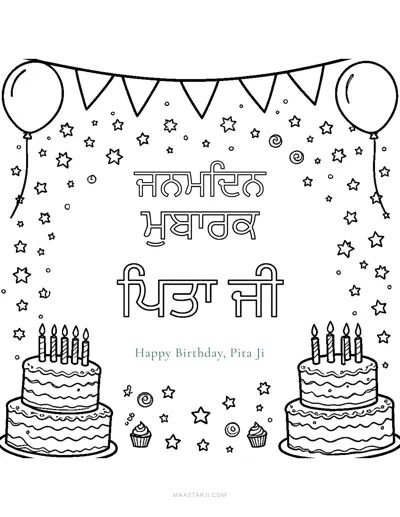
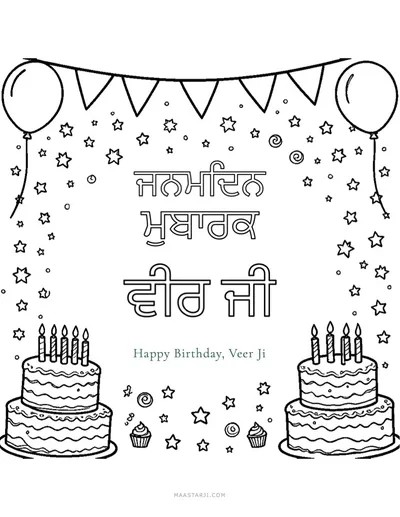
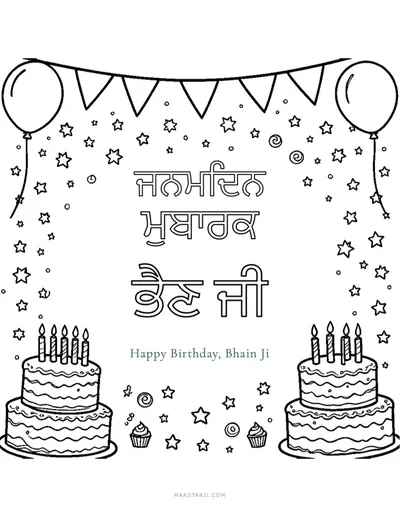
Punjabi Birthday Cards to Colour
Colour-in “Janam Din Mubarak” (ਜਨਮ ਦਿਨ ਮੁਬਾਰਕ) cards — one for every relation.
Try the Activities
Bring the words to life with our free, no-sign-up activities:
Family Names Crossword
GameFill the grid with Punjabi relationship words — a playful way to make them stick.
Family Relationships Quiz
QuizTen quick questions to check which relative is which.
A Note on “Ji” (ਜੀ)
You will notice that almost every title above is followed by “Ji”. In Sikh culture, “Ji” is not just a suffix; it is the spirit of the relationship. It is an honorific that signifies respect, soul, and dignity.
When we add “Ji” to a name (e.g., Chacha Ji), we are elevating that person from a simple relative to a figure of honor. It teaches children that every family member is worthy of reverence.
Why So Many Punjabi Family Names?
In the West, family trees are often pruned into broad, generic categories. A father’s brother and a mother’s brother are both just “Uncle.” But in the Sikh tradition, every relationship has a unique coordinate.
This system of naming is not accidental; it is the reflection of a community-oriented culture. Unlike individualistic societies where extended family is often peripheral, our heritage places the family at the center. These names reinforce a structure built on mutual respect, clear roles, and collective responsibility. They tell a story of who belongs to whom, strengthening bonds across generations.
When a child says “Bhua Ji”, they aren’t just saying “Aunt”; they are acknowledging “the sister of my father, who carries the honour of my paternal home.” When they say “Massi Ji”, they are saying “the sister of my mother, who shares her soul.”
Bringing it to Life: Simple Sentences
Knowing the words is the first step. Using them is the second. Here are simple ways to help your children practice these titles in daily life:
- Greeting: “Say ‘Sat Sri Akal’ to Mama ji.”
- Announcing: “Look! Bhua ji is calling on the phone.”
- Gratitude: “This gift is from Dadi ji. Did you say thank you?”
- Respect: “Please go ask Taya ji if he needs water.”
Spiritual Weaving: Relationships in Gurbani
The Guru Granth Sahib Ji acknowledges human relationships as a reflection of the Divine.
The Ultimate Parent
ਤੂੰ ਮੇਰਾ ਪਿਤਾ ਤੂੰ ਹੈ ਮੇਰਾ ਮਾਤਾ ॥ ਤੂੰ ਮੇਰਾ ਬੰਧਪੁ ਤੂੰ ਮੇਰਾ ਭਰਾਤਾ ॥
Tu mera pita tu hai mera mata. Tu mera bandhap tu mera bharata.
Meaning: “You are my Father, and You are my Mother. You are my Relative, and You are my Brother.”
(Guru Arjan Dev Ji, Ang 103)
By seeing the Divine in all our relations, our love and respect for them deepens, turning family life into a form of spiritual practice.
Test What You’ve Learned
Related Resources
- Punjabi Birthday Cards — Free colour-in “Janam Din Mubarak” cards for every relation
- Why Sikhi Matters More Than Ever — A guide for diaspora parents on connecting children with their heritage
- Learn Punjabi for Kids — Explore our full collection of Punjabi language learning resources
Frequently asked questions
Conversation starters for parents and kids.
- Why do Punjabi families have so many different words for aunts and uncles?
- Unlike English, which uses a single word for both sides of the family, Punjabi has distinct titles for every relationship. This reflects a community-centred culture where extended family plays a central role. Knowing which side a relative comes from — paternal (Dad's) or maternal (Mum's) — shapes their role, their level of authority, and how a child relates to them.
- What does 'Ji' mean in Punjabi?
- Ji (ਜੀ) is an honorific suffix added to relationship titles — such as Chacha Ji or Nani Ji. It expresses respect, dignity, and warmth. When a child says "Chacha Ji" instead of just "Chacha," they are acknowledging that person as a figure of honour worthy of reverence. Teaching children to add Ji is one of the simplest ways to instil Sikh values of respect.
- What is the Punjabi word for maternal grandmother?
- Nani Ji (ਨਾਨੀ ਜੀ) is your mother's mother. The maternal grandfather is Nana Ji (ਨਾਨਾ ਜੀ). Together they represent the Nanka — the warm, nurturing maternal home, often associated with pampering and unconditional love.
- What is the difference between Taya and Chacha in Punjabi?
- Both are your father's brothers, but the distinction matters. Taya Ji (ਤਾਇਆ ਜੀ) is your father's older brother — he is accorded the highest respect next to the grandfather and carries the authority of the paternal lineage. Chacha Ji (ਚਾਚਾ ਜੀ) is your father's younger brother, traditionally seen as the playful, affectionate second-father figure.
- What is the difference between Bhanja and Bhatija in Punjabi?
- Bhatija (ਭਤੀਜਾ) is your brother's son — your nephew through your brother. Bhanja (ਭਾਣਜਾ) is your sister's son — your nephew through your sister. The same split applies to nieces: Bhatiji (ਭਤੀਜੀ) is your brother's daughter, Bhanji (ਭਾਣਜੀ) is your sister's daughter. As with aunts and uncles, Punjabi always tells you which side of the family a child belongs to.
- What is the difference between Massi and Bhua in Punjabi?
- Massi Ji (ਮਾਸੀ ਜੀ) is your mother's sister — the word comes from Maa-Si, "like a mother." Bhua Ji (ਭੂਆ ਜੀ) is your father's sister. Massi's husband is Massar Ji (ਮਾਸੜ ਜੀ); Bhua's husband is Phuphar Ji (ਫੁੱਫੜ ਜੀ). Both aunts are cherished, but one is your mother's side and the other your father's — Punjabi never leaves that ambiguous.
- What is the difference between Nana and Dada in Punjabi?
- Dada Ji (ਦਾਦਾ ਜੀ) is your father's father — your paternal grandfather. Nana Ji (ਨਾਨਾ ਜੀ) is your mother's father — your maternal grandfather. The grandmothers follow the same pattern: Dadi Ji (ਦਾਦੀ ਜੀ) is paternal, Nani Ji (ਨਾਨੀ ਜੀ) is maternal. Children often experience the two homes differently — the Dada-Dadi home carries the family name, while the Nana-Nani home (the Nanka) is associated with extra warmth and pampering.
- What do Tayi Ji, Veera, and Didi mean in Punjabi?
- Tayi Ji (ਤਾਈ ਜੀ) is the wife of your Taya Ji — your father's older brother's wife. Veera (ਵੀਰਾ) is an affectionate form of Veer Ji, used for a brother or a close boy the family treats like a brother. Didi (ਦੀਦੀ) is a warm, everyday way to address an older sister, often used instead of the more formal Bhen Ji.
- What is the Punjabi word for father's sister?
- Bhua Ji (ਭੂਆ ਜੀ) is your father's sister. Her husband is called Phuphar Ji (ਫੁੱਫੜ ਜੀ). Bhua is considered the cherished daughter of the paternal home and is typically treated with special warmth when she visits.
- What does Massi mean in Punjabi?
- Massi Ji (ਮਾਸੀ ਜੀ) is your mother's sister. The word comes from Maa-Si — meaning "like a mother." She is considered a second mother, offering the same comfort and love. Her husband is Massar Ji (ਮਾਸੜ ਜੀ).
- How do I teach my child Punjabi family relationship words?
- Work from the inside out. Begin with the immediate-family words your child already uses every day — Maa, Pita Ji, Veer Ji, Bhen Ji — then add grandparents (Dada, Dadi, Nana, Nani), and finally extend outward to Chacha, Mama, Massi, and Bhua. Use them consistently in daily conversation: "Say Sat Sri Akal to Chacha Ji." Reinforce with our free printable Family Tree Worksheet, where kids fill in the Punjabi titles next to their own family members' names.
- What is 'uncle' in Punjabi?
- Punjabi has no single word for "uncle" — the word depends on exactly how the person is related to you. Chacha Ji (ਚਾਚਾ ਜੀ) is your father's younger brother and Taya Ji (ਤਾਇਆ ਜੀ) is his older brother. Mama Ji (ਮਾਮਾ ਜੀ) is your mother's brother. Your father's sister's husband is Phuphar Ji (ਫੁੱਫੜ ਜੀ) and your mother's sister's husband is Massar Ji (ਮਾਸੜ ਜੀ). Adding "Ji" shows respect.
- What is 'nephew' in Punjabi?
- Bhatija (ਭਤੀਜਾ) is your brother's son, and Bhanja (ਭਾਣਜਾ) is your sister's son. For a niece, use Bhatiji (ਭਤੀਜੀ) — your brother's daughter — or Bhanji (ਭਾਣਜੀ) — your sister's daughter.
- What is the Punjabi word for family?
- The everyday word for family is Parivar (ਪਰਿਵਾਰ). Many Punjabi speakers also warmly say Tabbar (ਟੱਬਰ) when they mean the whole household — everyone under one roof.
- Can I hear how each relationship name is pronounced?
- Yes — every relationship title on this page, in both Roman and Gurmukhi script, has a native audio recording. Tap or click any word (look for the 🔊 icon) to hear it spoken aloud, so your child learns the correct pronunciation instead of guessing from the spelling alone.
Join the Discussion
Have thoughts or questions about this guide? Share your feedback or discuss with others on X.
Discuss on X