
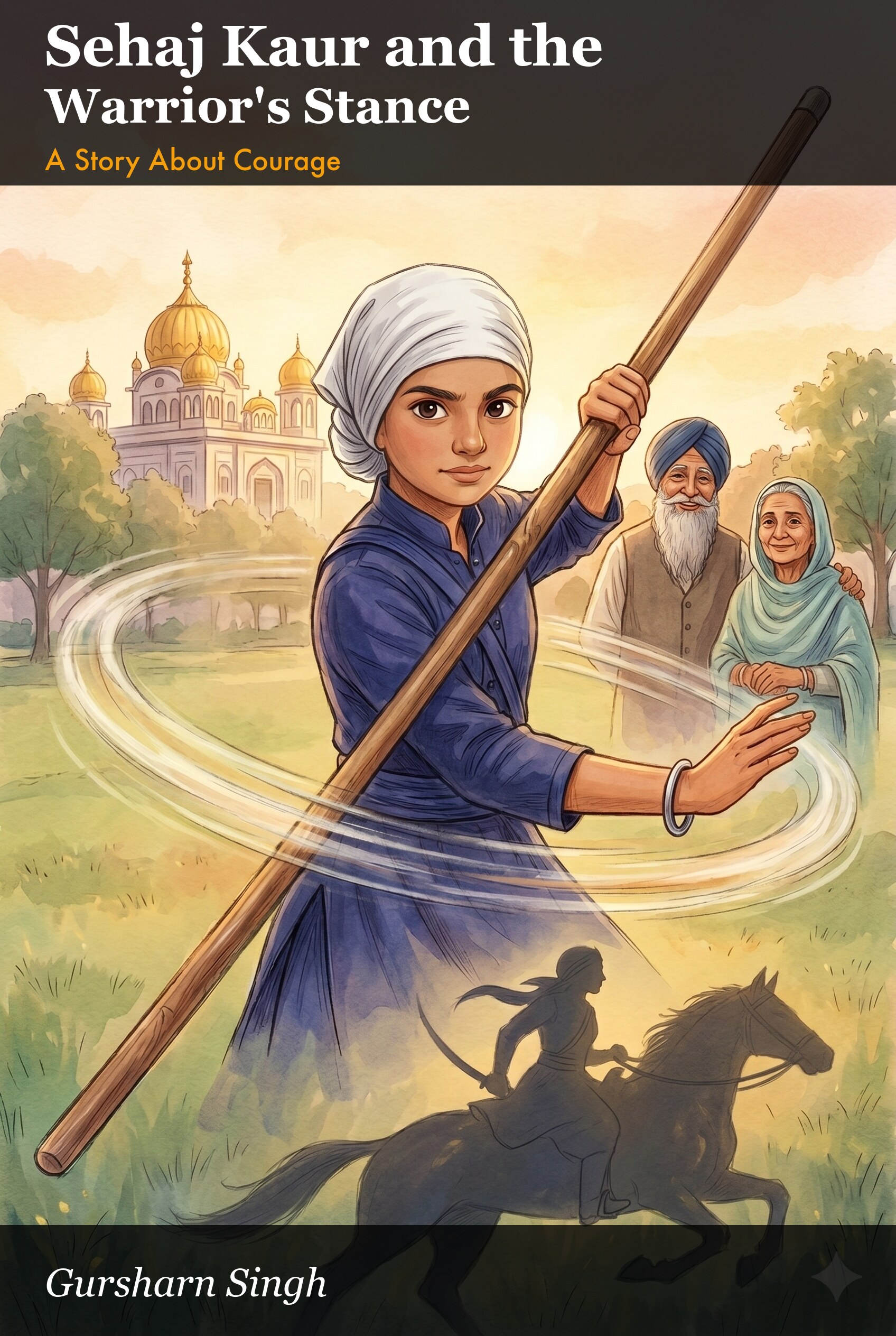
Sehaj Kaur and the Warrior’s Stance is a free illustrated Sikh story for ages 4–12 about Chardi Kala, rising courage. Sehaj is brave at karate but shrinks at school, where a new teacher can’t say her name and a boy says girls aren’t strong enough. Then she discovers gatka, the Sikh martial art, and Dadi ji tells her the sakhi of Mai Bhago.
The Register
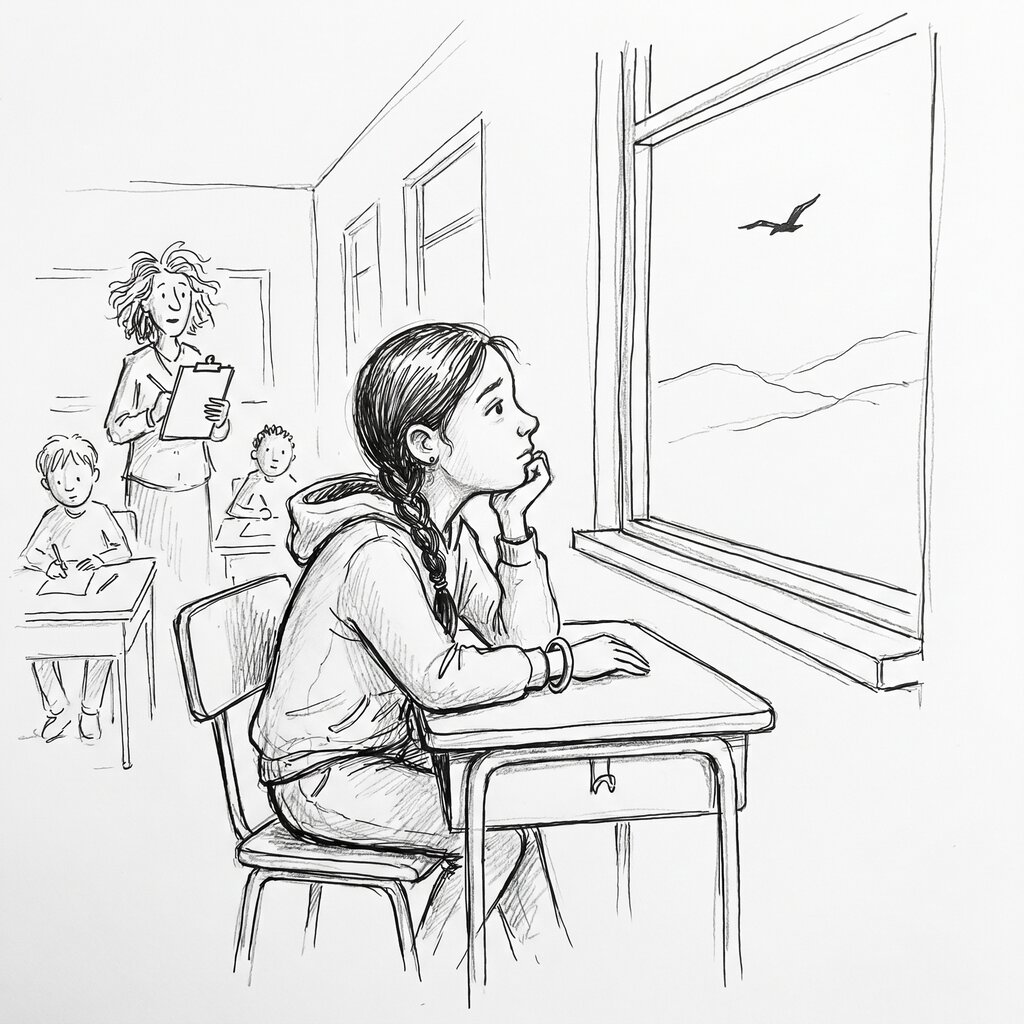
There were three ways to get Sehaj’s name wrong, and the new teacher found all of them before recess.
“See-haj?” said Ms. Bradley, frowning at the attendance sheet. “Suh-hash? Is it… See-jah?”
It was a Monday in late spring, the kind of San Jose morning that started cool and turned golden by ten. Through the classroom window, Sehaj could see the brown hills behind the school, and a single hawk turning slow circles over the parking lot. She had been watching the hawk so she wouldn’t have to watch the room.
“It’s Sehaj,” she said quietly. “Say-haj.”
“Say… haj?”
“Sehaj.”
Ms. Bradley tried twice more. Each time it came out a little more broken, like a word dropped on the floor. Somewhere near the back, Dylan made a small snorting noise into his sleeve, and a ripple of laughing went around the room — not loud, not mean exactly, just the kind of laugh that finds you and sits on you.
“Lovely,” said Ms. Bradley, giving up. “I’ll work on it.”
Sehaj slid down in her chair until her chin was almost level with the desk. She wished, the way she wished most days, that her name was Emma or Maya or Kayla. Something a substitute could read off a sheet without it becoming a whole event. Something that didn’t make people look at her.
It wasn’t that she was shy. After school she had karate, and at karate she was not shy at all. She was an orange belt going for green, and when she did her forms — kata, the slow sharp dance of blocks and strikes — Sensei Ray would point at her and tell the little kids, “Watch Sehaj. See how she holds the stance? Like she means it.” She liked the feeling of meaning it. She liked being strong somewhere.
She just didn’t like being strong here, where being different was something you carried like a backpack that was always slightly too heavy.
At lunch she sat with Tracy, the way she had since first grade. Tracy was already halfway through a sandwich and a story.
“Okay so,” said Tracy, “did you hear about the Heritage Festival?”
“The what?”
“Ms. Bradley’s going to announce it. End of the year, last week of school. Everybody shows something from where their family’s from. Food, dancing, clothes, whatever.” Tracy’s eyes were bright. “I already know what I’m doing.”
Sehaj opened her own lunch — a sandwich, the same as everyone else’s. She liked it that way. Nothing to explain. Nothing to point at.
“What are you doing?” she said, mostly to keep the question off herself.
But Tracy was already gone into it, talking fast, and Sehaj let the question float away, glad to be the one listening.
Tracy’s Idea
The festival got announced that afternoon, and by recess it was all anyone talked about.
A group of boys had crowded around Dylan’s phone, watching a clip of two men boxing, gloves up, ducking and swinging. Sehaj drifted close enough to see. One of the fighters slipped a punch and came back with a hook so clean it looked easy.
“I could do that,” she said, before she’d decided to say it. “Boxing’s just timing. I do karate. It’s basically the same footwork.”
Dylan looked at her like she’d said something in another language.
“You?” He laughed. “Girls aren’t strong enough for that. Fighting’s a boy thing.”
A couple of the boys laughed with him. Not all of them. But enough.
Sehaj felt her face get hot. She knew it wasn’t true — she’d sparred boys at karate and put them on the mat — but the words went in anyway, the way words do when there’s a crowd. She turned and walked off before her face could show anything.
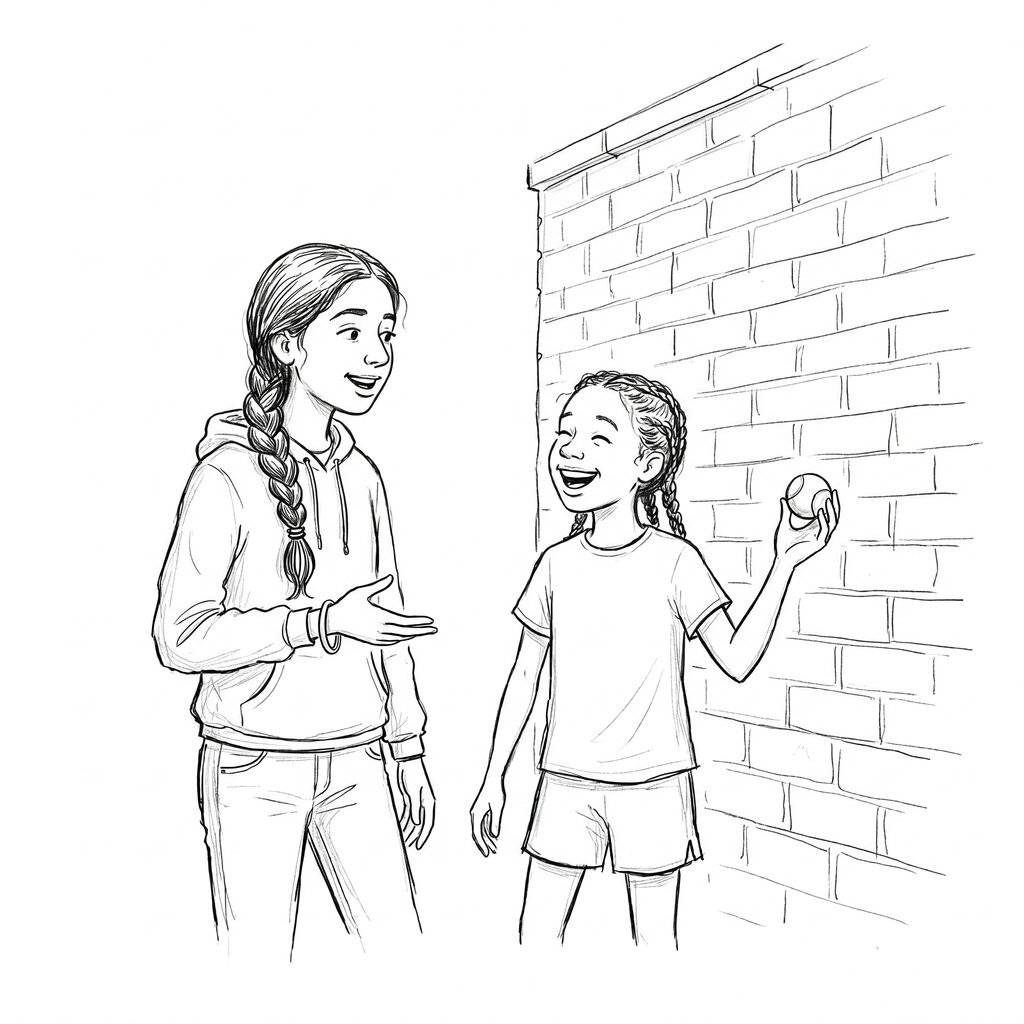
Tracy found her by the handball wall.
“Let me guess. Dylan.”
“He said girls aren’t strong enough.”
Tracy rolled her eyes so hard it looked like it hurt. “Dylan thinks a thesaurus is a dinosaur.” She bounced a tennis ball against the wall, caught it. “Anyway. The festival. You want to hear my thing?”
“Sure.”
“Fashion show. But like — my family’s fashion.” Tracy lit up the way she did when something mattered to her. “My grandma’s bringing her church dresses, the real old-school ones, from when she was young in Louisiana. And my auntie sews — she makes these dresses with African prints, like gorgeous, this gold and green pattern. I’m gonna model them and tell the stories. Where each one came from. What it means.”
“That’s so cool,” said Sehaj, and meant it.
“What are you doing?”
There it was. Sehaj watched the ball go thock against the wall.
“I don’t know. Probably nothing. I’ll just watch.”
Tracy caught the ball and held it. She gave Sehaj a look — the look she’d been giving her since about third grade, patient and a little bit sad. They had known each other a long time. Tracy knew all the ways Sehaj made herself small — the chair she slid down in, the answers she swallowed. She knew Sehaj had never once mentioned the gurdwara at school, even though her family went most weekends. She knew Sehaj said “nothing” the way some people say “I’m fine.”
“You’ve got a whole entire culture,” said Tracy gently. “You could do something amazing.”
“My family’s not really — we don’t do a thing,” said Sehaj. “Not like a show thing.”
“Mm,” said Tracy, which was the sound she made when she didn’t believe you but wasn’t going to argue. She bounced the ball again. “Okay. But you’ve got till the last week of school. Just saying.”
The Hill
Saturday morning, the whole family went up the hill.
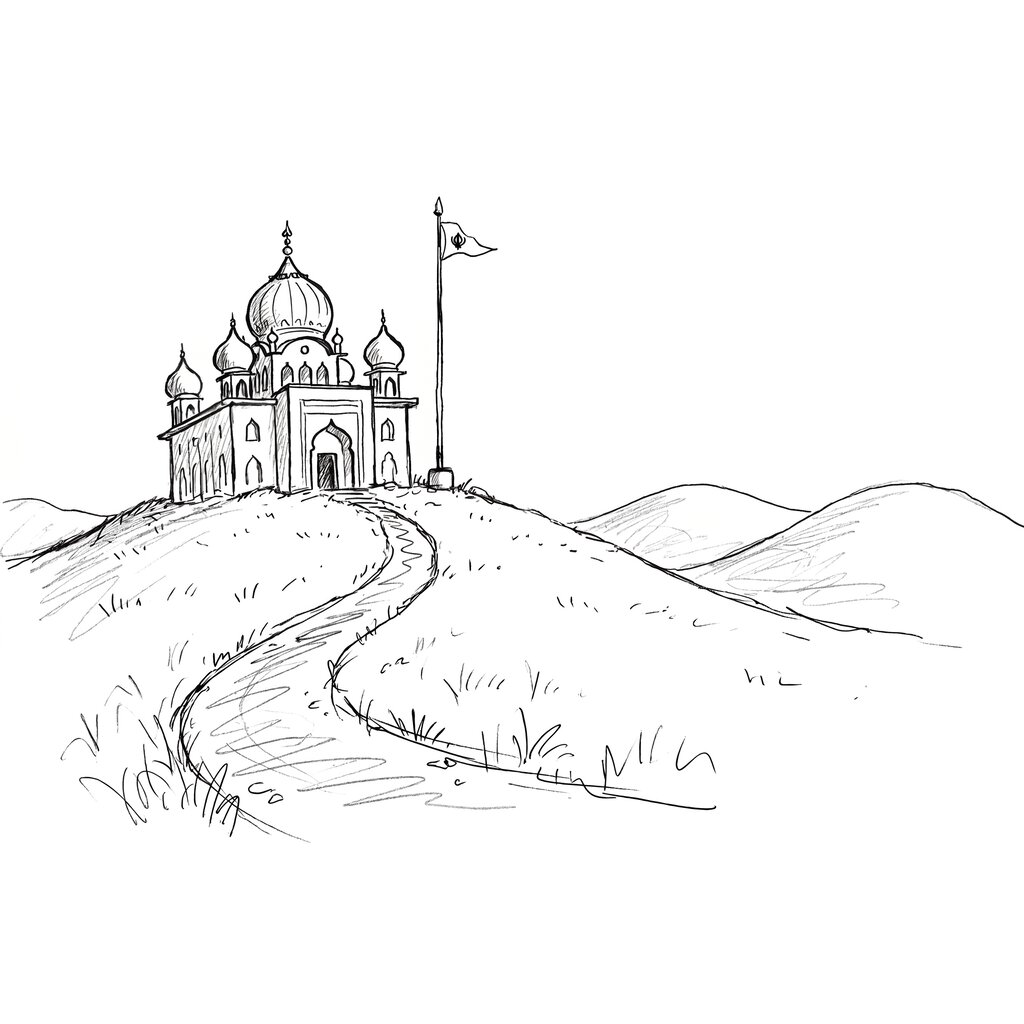
The gurdwara sat at the top of it — a big white building with golden domes that caught the early sun, the tallest thing for miles, so you could see it from the freeway. Dada ji and Dadi ji went almost every day. The rest of them went on weekends: Mom and Dad in the front of the van, Sehaj squashed in the back between her big sister Nimrit and her little brother Tej, who was six and had not stopped talking since the driveway.
“Why do the domes shine? Are they real gold? Are they gold like a ring? Sehaj, are they real gold?”
“Ask Dada ji.”
“Dada ji, are the domes real gold?”
“They are real shine,” said Dada ji, which was the kind of answer he gave.
Inside, it was cool and quiet and smelled of langar and warm parshad. They covered their heads, took off their shoes, and walked in. Sehaj watched Dada ji and Dadi ji bow at the front, slow and careful, the way you’d greet someone you loved very much. She liked it here, actually. She just never said so at school.
After the prayers, the grown-ups sat talking in the langar hall, plates of dal and parshada steaming, voices overlapping in Punjabi and English. Tej got bored in about four minutes.
“Sehaj. Sehaj. Look — there’s a kite stuck in the tree outside. Come help me get it. Come on.”
So she went, because someone had to keep an eye on him, and because the langar hall was full of aunties who wanted to know how tall she’d gotten.
Outside, the grounds opened into a wide green park, the grass still wet, the morning warming up. The kite was not in the tree — Tej had made that up, or imagined it — but the open grass was too much for a six-year-old to resist, and he took off across it, arms out like an airplane, shrieking with joy, and Sehaj had no choice but to run after Tej.
That was how she ended up at the far end of the park.
That was how she saw them.
A dozen kids, maybe more, spread out on the grass — jeans and sneakers and hoodies, regular Saturday clothes. In the middle of them stood a man with a grey beard and a blue turban, holding a long wooden stick. As Sehaj slowed to a stop, breathing hard, the man flicked his wrist — and the stick began to spin.
It spun so fast it blurred. It made a sound she would carry around in her head for weeks afterward: a low, smooth whirr, like the air itself was being cut into ribbons. He passed it from one hand to the other without dropping the spin, stepped in a circle, dipped, rose. The kids copied him, their own sticks whirring, some smooth, some wobbly, a girl about Sehaj’s age frowning with concentration as she turned.
Tej had run himself out and was flopped on the grass, catching his breath. Sehaj just stood there, watching.
What is that? she thought.
It was the most beautiful thing she had ever seen, and the most powerful, both at once, and she could not have told you which.
The grey-bearded man caught her eye and smiled and called out, “Want to try?”
“No,” said Sehaj, fast. “No, I’m just — my brother — ”
But she watched until Mom came to find them, and on the whole drive home, with Tej asleep against her shoulder, the whirr of the spinning stick went round and round inside her.
Mai Bhago
That evening she found Nimrit on the couch with her headphones half-in, doing homework that wasn’t due for a week. Nimrit was fifteen and seemed to understand everything — school, and people, and the two worlds the family lived in, the Punjabi one and the American one, and how to walk between them without tripping. When Sehaj had a question she couldn’t ask anyone else, she asked Nimrit.
“Those kids at the gurdwara today,” Sehaj said. “In the park. With the sticks. What was that?”
Nimrit pulled out an earbud. “That’s gatka. It’s our martial art. The Sikh one.”
“We have a martial art?”
“We have a whole one. It’s really old. Swords, shields, sticks, all of it. The spinning thing you saw, that’s chakkar — the warm-up moves.” Nimrit looked at her, amused. “Why? You want to do it?”
“No,” said Sehaj. Then, smaller: “Maybe. I don’t know. It looked… strong. And kind of beautiful. Both at once.”
“It is both,” came a voice from the armchair. “Beautiful — until somebody attacks you.”
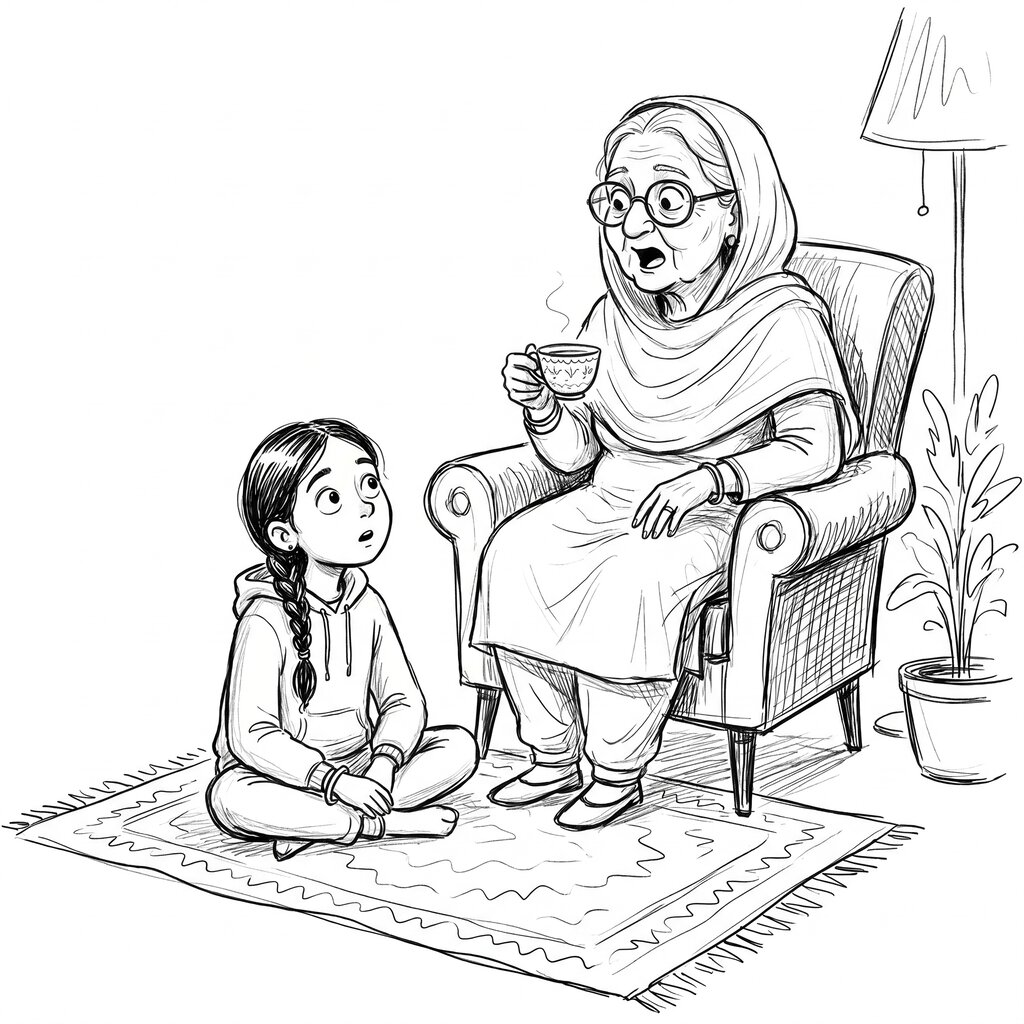
It was Dadi ji, with her tea and her reading glasses, settling in the way she did when a story had decided to arrive. Sehaj sat down on the rug.
“Do you know about Mai Bhago?” said Dadi ji.
Sehaj shook her head.
“Then I’ll tell you. This was a long time ago, in Punjab, in the time of Guru Gobind Singh Ji — the tenth Guru. There was hard fighting in those years. And there was a group of forty Sikhs, brave men, who had been fighting a long time and were tired and frightened and far from home. One day they decided they had had enough. They wrote a letter saying they no longer belonged to the Guru, and they went back to their villages.”
“They quit?” said Sehaj.
“They quit,” said Dadi ji. “And in one of those villages lived a woman named Bhago. When the men came home, she was ashamed of them. She told them, You took an oath. You don’t get to put it down because you’re afraid. And when they wouldn’t go back — she put on a soldier’s clothes herself. She took up a spear. She got on a horse, and she said, Then I will go, and the world can say the women fought while the men hid.”
Sehaj had stopped breathing a little.
“So the men went with her,” said Dadi ji. “She led them back. There was a great battle, at a place called Khidrana, near a pool of water in the desert. Mai Bhago fought at the front. She was wounded, but she did not stop. And those forty men — they fought to the very end, and they are remembered to this day as the Chali Mukte, the Forty Liberated Ones. The Guru honoured them.” Dadi ji sipped her tea. “And it was a woman who turned them around. A woman who would not run.”
The living room was very quiet. The TV was off. Somewhere upstairs Tej was thumping around being a dinosaur.
“A boy at school said girls aren’t strong enough to fight,” said Sehaj.
Dadi ji laughed — not unkindly, a real laugh. “Did he. You should have told him about Mai Bhago.” She set down her cup. “You know what your name means, Sehaj?”
“Calm. Or — peace. Easy.”
“Sehaj is the calm that comes from the inside. The steadiness. It doesn’t mean weak, beta. The strongest people are the calmest ones.” She reached over and tapped Sehaj on the forehead, gently. “And you carry another name. Kaur. All Sikh girls do. Do you know what it means?”
“No.”
“Princess. Sovereign. Your own person, bowing to no one.” Dadi ji smiled. “Peaceful and a princess and a warrior. That’s a lot to be. But it’s all in there.”
That night Sehaj lay in bed and heard the whirr of the spinning stick, and underneath it, like a drum, the thing Mai Bhago had said: I will go, and the world can say the women fought while the men hid.
She thought about the festival.
She thought about doing nothing, and watching from the side, the way she always did.
And for the first time, doing nothing felt worse than the other thing — worse than being seen.
The First Class
Asking turned out to be the hardest part.
“Dada ji,” she said the next Saturday, on the drive up the hill, the words coming out in a rush before she could swallow them. “The gatka. In the park. Can I — could I try it? Just once?”
In the front seat, Dada ji didn’t turn around. But she saw his eyes find her in the mirror, and saw them crinkle.
“I was wondering,” he said, “when you would ask.”
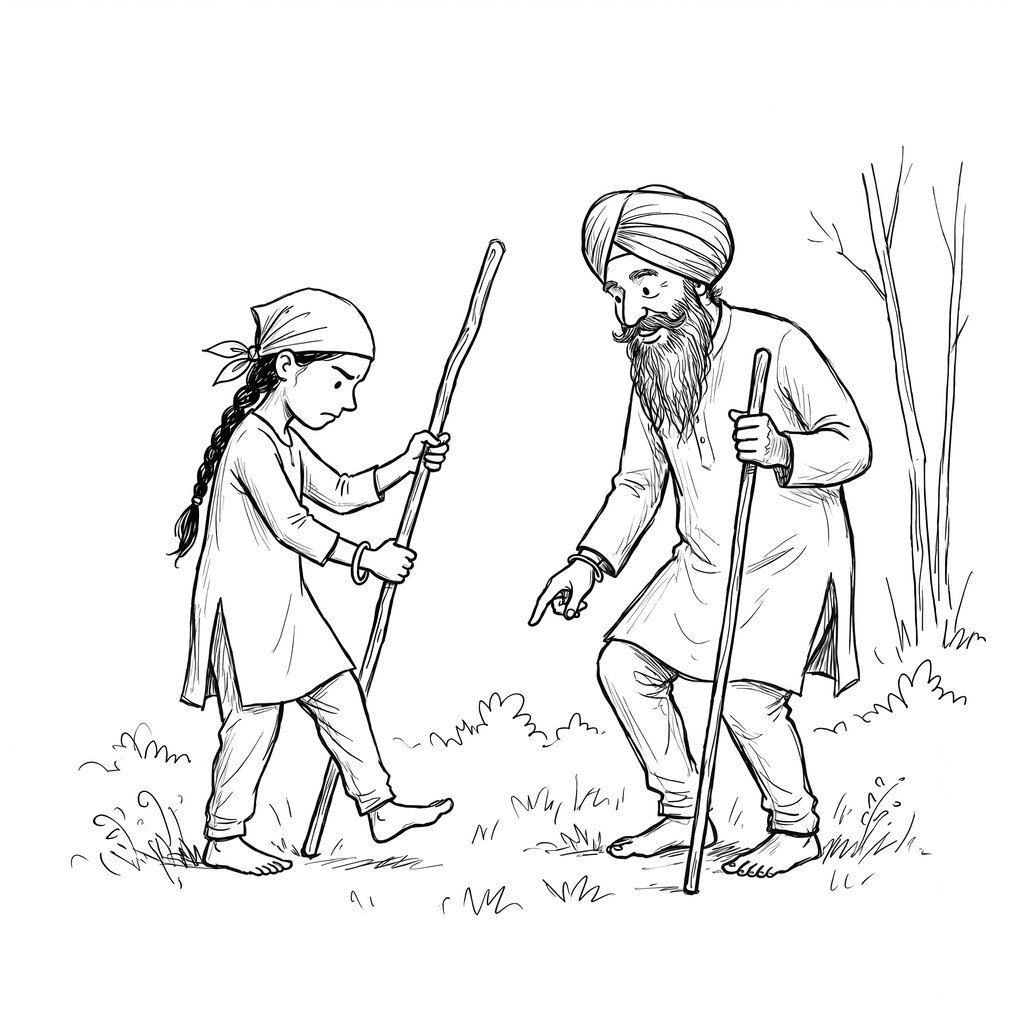
He had clearly already thought about it, because he knew the coach — everyone called him Veer ji — and by the end of langar it was arranged. Sehaj stood at the edge of the green park, holding a wooden stick that was lighter than it looked, surrounded by kids who all seemed to know exactly where to put their feet.
“First thing,” said Veer ji, “is the pentra. The footwork. Everything comes from the feet.” He showed her: a slow rocking step, weight shifting, heel and toe, like a figure-eight you walked instead of drew. “Don’t worry about the stick yet. The stick is the easy part. The feet are the whole thing.”
It was not the easy part.
Sehaj had thought karate would make this simple. It didn’t. Her feet wanted to do karate things, sharp and square; gatka wanted them round and flowing, like water moving downhill. She got tangled. She stepped on her own foot. When she finally tried the spin, the stick flew clean out of her hand and landed three feet away in the grass, and the girl her age — Harleen, it turned out — laughed, but it was a friendly laugh, the kind that pulls you in instead of pushing you out.
“Everybody does that,” said Harleen, fetching the stick. “I hit myself in the head my first day. Like, really hard.”
Sehaj picked up the stick and tried again.
This part she knew. This part was the same in any language — karate, gatka, anything. You did the thing badly. You did it badly again. You did it slightly less badly. Somewhere in all the badly-doing, your hands and feet quietly learned, without telling you, and one day the thing that was impossible was just hard, and then one day it wasn’t hard either.
By the end of the hour her arm ached and her feet hurt and she was grinning so wide it surprised her.
“Same time next week?” said Veer ji.
“Yeah,” said Sehaj. “Yeah. Definitely.”
On the drive home she didn’t tell anyone at school in her head. She didn’t even tell Tracy yet. She held it like a coal in her cupped hands, this new thing, warm and a little dangerous, and she wasn’t ready to open her hands and let the air at it.
Not yet.
The Spin
Two months is a long time when you are ten, and a short time to learn a thing that is hundreds of years old. Sehaj got both.
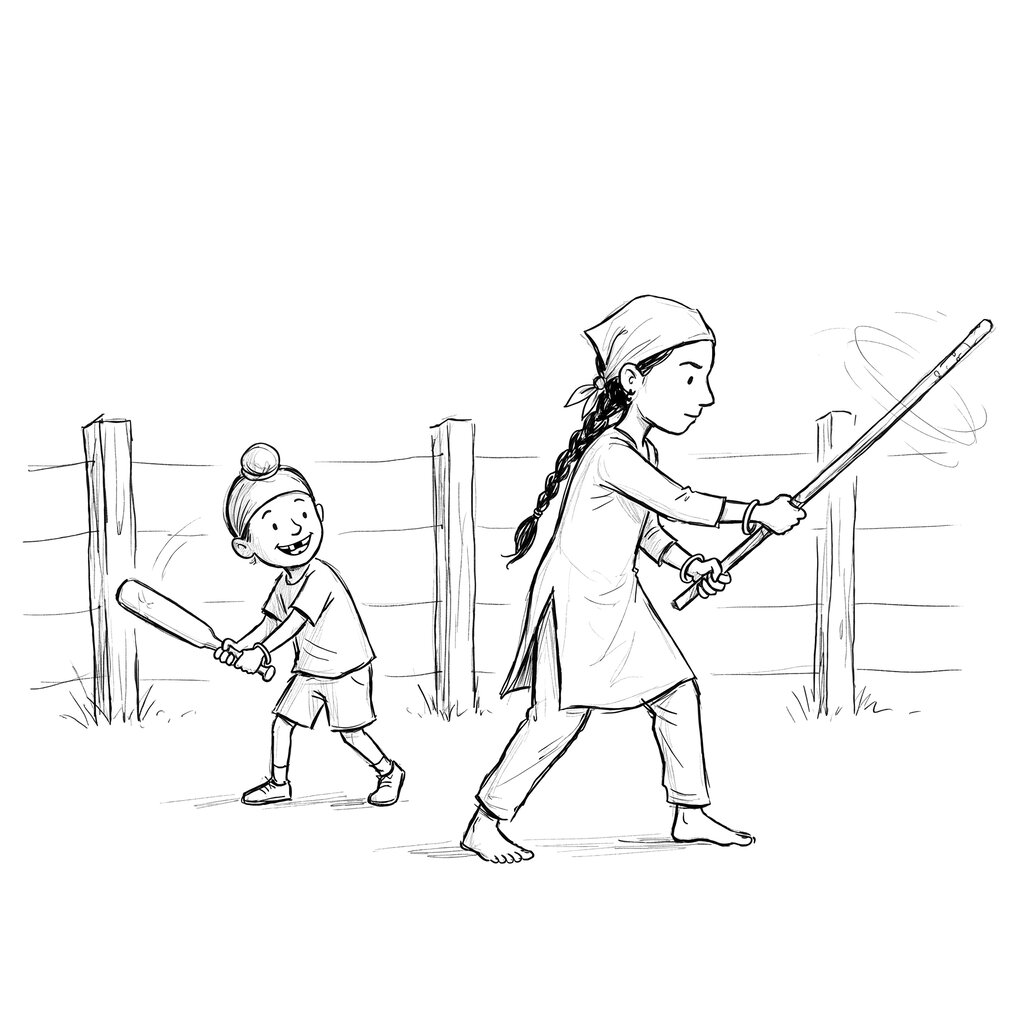
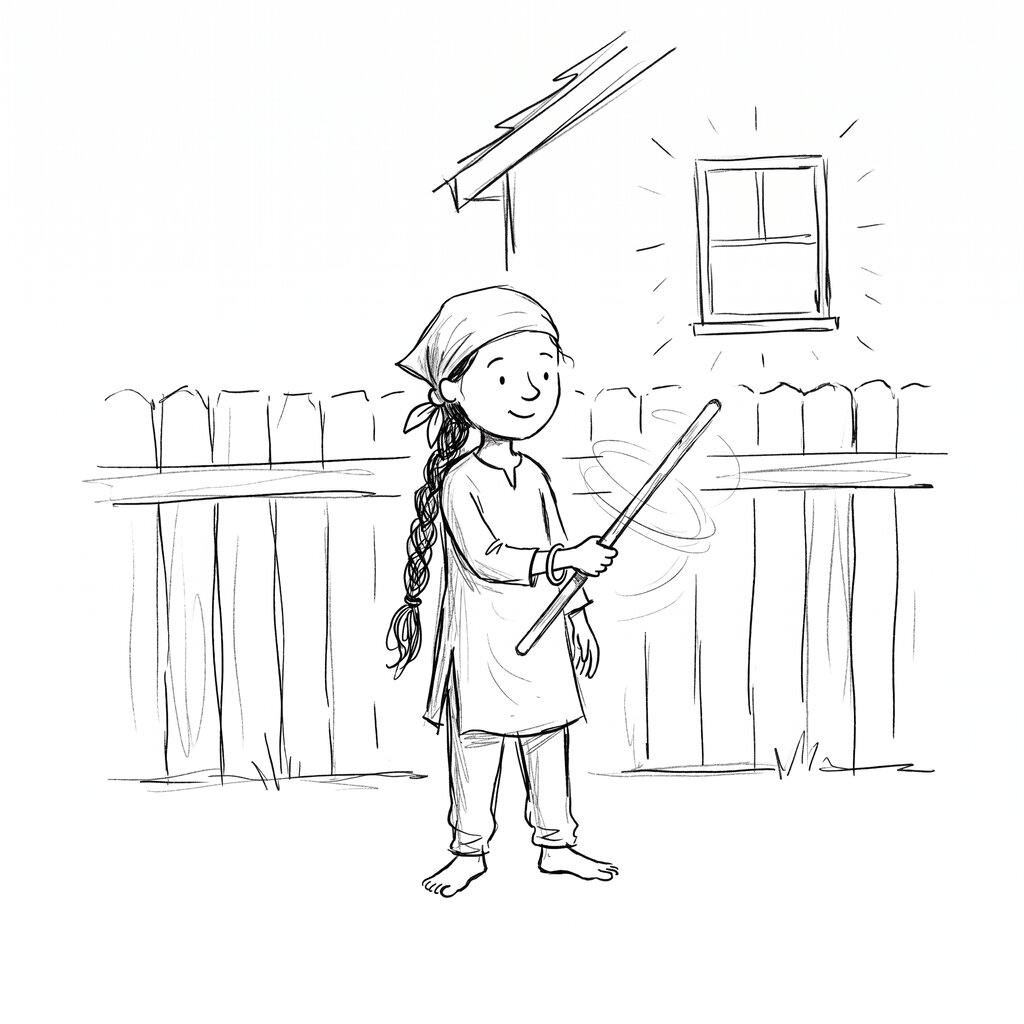
She practiced in the backyard every evening, in the long gold California light, the stick whirring and clacking against the fence when she misjudged it. Tej appeared with his plastic baseball bat and copied everything she did, badly, narrating his own greatness — “I’m the best warrior, I’m the strongest” — until he hit himself in the shin and went inside to find Mom. Nimrit came out sometimes with lemonade and filmed her on her phone so Sehaj could see what her feet were actually doing versus what she thought they were doing. They were never the same. They got closer.
“It’s not about hitting people,” Veer ji told the class one Saturday, when one of the smaller boys kept swinging his stick like a baseball bat. “A sant-sipahi — a saint-soldier — learns this so that the strong cannot bully the weak. You become strong so you can stand between. Not so you can push. Understand?”
Sehaj understood. She thought about Dylan, and the boxing video, and the boys who had laughed. She thought she understood it better than the smaller boy did.
She finally told Tracy on a Tuesday.
“I’m doing something for the festival,” she said. “I — I do this thing now. It’s called gatka. It’s a Sikh martial art.”
Tracy stopped walking. She turned around slowly, and her whole face opened up like a window.
“Shut. Up.” She grabbed Sehaj’s arm. “You have a martial art? From your culture? And you’ve been hiding it this whole — Sehaj. Sehaj, you have to do it at the festival. You have to.”
“That’s the plan.” Sehaj’s stomach did a small flip just saying it. “But what if — ” She made herself say the real thing. “What if they laugh? Like they laughed at my name?”
Tracy thought about that. She didn’t say they won’t, because Tracy didn’t lie to make people feel better.
“Maybe somebody will,” she said. “Dylan probably will, ‘cause Dylan’s Dylan.” She squeezed Sehaj’s arm. “But you’re not doing it for Dylan. You’re doing it ‘cause it’s yours. My grandma didn’t sew those dresses for anybody who’s gonna laugh. She made them for us. You get it?”
Sehaj got it.
That night she did the spin in the backyard until it was too dark to see, until the whirr of the stick was the only thing in the world, smooth and round and unbroken, the air parting cleanly in front of her, and for whole long seconds at a time she forgot to be afraid.
The Festival
The last week of school, the gym was strung with flags from forty countries and smelled of forty kinds of food.
There were dumplings and tamales and a tray of jollof rice steaming under foil. There was a girl playing a Vietnamese moon lute and two brothers doing a Mexican folk dance, the boy’s boots hammering the floor. There was Tracy, up on the little stage in her grandmother’s pale yellow church dress, turning slowly so everyone could see, telling the story of where it came from and who had worn it and why — and her grandmother in the front row with her hand pressed to her mouth, and the whole gym clapping, and Tracy bowing like she’d been born on a stage.
Backstage, behind a rolling rack of costumes, Sehaj could not feel her own hands.
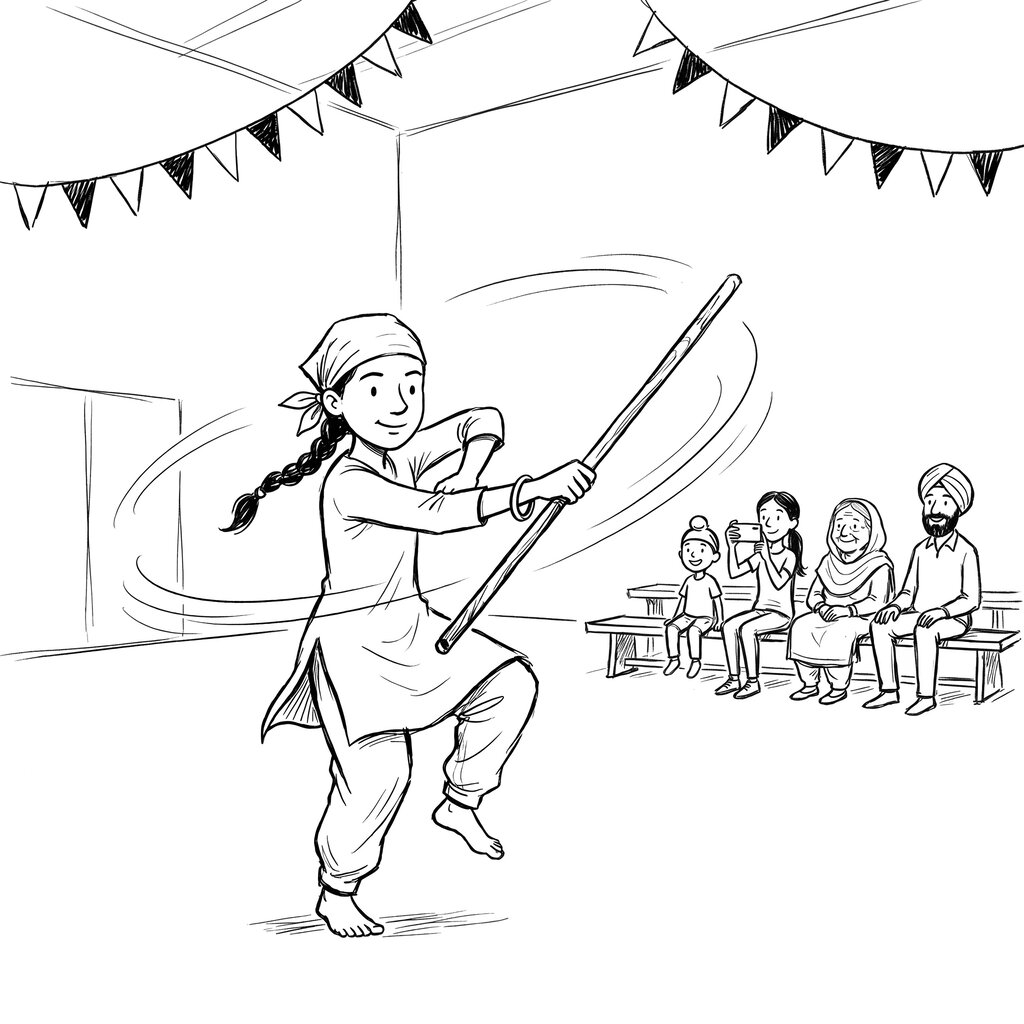
She was in a deep-blue bana — the dress Veer ji’s academy wore for demonstrations — a stick in her grip that suddenly felt like a stranger. Through a gap in the curtain she could see the audience. She could see Ms. Bradley. She could see Dylan, slouched in the bleachers. And she could see her family, all of them, taking up most of a row: Mom and Dad, Nimrit with her phone already up and recording, Tej bouncing, Dada ji sitting very straight — and Dadi ji, her dupatta gold in the gym lights, her hands folded in her lap, watching the curtain as though she already knew.
“Next,” said the announcer, “we have a Sikh martial art demonstration. Please welcome — ”
A pause. The sound of a sheet of paper.
”— Say-haj Kaur.”
Close enough. She would fix it later.
She walked out onto the floor.
The gym was enormous and silent and full of faces. For one terrible second she thought she might be sick, might drop the stick, might freeze and have to walk back off while everyone watched. The fear was right there, exactly the fear she had always known would be there.
Then she found her feet.
Everything comes from the feet, Veer ji had said, and it was true now the way true things are true — quietly, all at once. She rocked into the pentra, heel and toe, the figure-eight she’d walked a thousand times in the backyard. Her breathing slowed. The faces blurred into one warm blur, the way they did at karate, the way they did when you were busy meaning it.
She raised the stick.
She spun it.
The whirr filled the gym — that low, smooth, ribbon-cutting sound — and she heard the audience pull in a breath all at once. She passed the stick hand to hand. She stepped and turned and dipped and rose, the way the grey-bearded man had in the park on the very first morning, and she did not drop it, not once, and somewhere in the middle of it she stopped being afraid entirely and was just — doing the thing. Strong somewhere. Strong here, in the one place she’d never let herself be.
When she finished, stick still, feet planted, chest heaving, there was a half-second of total silence.
Then the gym came apart with noise.
Nobody laughed. Or — maybe somebody did, somewhere, but it was washed away under the clapping and the whooping and Tej standing on his seat yelling “THAT’S MY SISTER” until Mom pulled him down. Tracy was on her feet. Nimrit was filming and crying a little, both at once.
And afterward, the part Sehaj never forgot wasn’t the applause. It was the crowd of kids that swarmed her by the snack table.
“Was that a real sword — ”
“Can you teach me the spinny thing — ”
“What’s it called — gat-what — ”
Even Dylan drifted over, hands in his pockets, trying to look like he wasn’t impressed and failing completely. “That was kind of sick,” he muttered, and wandered off before she could answer, which from Dylan was basically a parade.
Coach Diaz, the PE teacher, crouched down to her level with his whistle still around his neck and an expression she’d never seen a teacher give her before — like she knew something he wanted to learn.
“Sehaj,” he said, and he got it right. “That was incredible. Where do you train? Is there any chance — could you come show some of the older kids? I’ve been teaching this unit on world martial arts and I have never seen that one. I’d love to learn more about it.”
“It’s at the gurdwara,” said Sehaj. “On Saturdays. My coach is Veer ji. I could — yeah. I could ask him.”
She found her family by the flags. Dadi ji took both of Sehaj’s hands in her papery ones and didn’t say anything for a moment, just looked at her, her eyes very bright.
“Mai Bhago,” said Dadi ji, “would be proud.”
Her Name
That night, Sehaj video-called her cousin Simran, who lived in Toronto and was sitting cross-legged on her bed, eating cereal at nine o’clock for no reason.
“I did a thing today,” said Sehaj. “At school. In front of everyone. I did gatka.”
Simran’s spoon stopped. “You did gatka? At your American school? In front of the kids who can’t even say your name?”
“They still can’t really say it,” Sehaj admitted. “The teacher said Say-haj.”
“And you went out there anyway.”
“I went out there anyway.”
Simran grinned through the screen. “Okay, that’s the bravest thing I’ve ever heard. Fateh’s gonna lose his mind when I tell him. He’ll probably want to interview you about it.” Their cousin Fateh lived all the way over in London and asked roughly nine hundred questions about everything. “Did you win?”
“It wasn’t a contest. It was just a show.” Sehaj thought about it. “But yeah. Kind of. I think I won.”
After they hung up she went out to the backyard. The light was nearly gone, just a band of orange behind the brown hills, the air finally cool. She picked up her stick from where it leaned against the fence.
She thought about the girl she’d been in September, sliding down in her chair so a substitute wouldn’t look at her. Angling her roti toward the wall. Saying nothing, I’ll just watch. She didn’t feel like that girl anymore, exactly. That girl was still in there — peace was still in there, the sehaj, the calm. But now there was something next to it. Something with its feet planted.
Peaceful and a princess and a warrior. It’s all in there.
She raised the stick into the last of the light and began to spin it — heel and toe, the figure-eight, the whirr rising smooth and round and unbroken into the dark, the same sound she’d carried home from the park all those weeks ago, except now it wasn’t somebody else’s.
It was hers.
From the kitchen window, warm light, and the smell of Dadi ji’s cooking, and her name — her real name, said right — calling her in for dinner.
Teaching Notes: What Is Chardi Kala?
Chardi Kala is the Sikh spirit of ever-rising courage and unshakable optimism — staying hopeful, steady, and strong even when life is hard. It isn’t loudness or aggression; it is the quiet, planted strength that lets a person stand tall in who they are. In this story, Sehaj already has sehaj — the calm her name means — and she discovers that calm and courage are not opposites. They live in the same person. That is the heart of the sant-sipahi, the saint-soldier: gentle in heart, brave in action.
The sakhi Dadi ji shares is one of the most loved accounts in Sikh history: Mai Bhago, who found forty soldiers who had given up, refused to let them quit, and led them back into battle at Khidrana, where they are remembered as the Chali Mukte — the Forty Liberated Ones. It is a true story about a woman whose courage turned an army around.
In a classroom, this story pairs naturally with conversations about heritage, identity, and belonging — what does it feel like to share where your family is from? — and about standing up to the idea that strength or courage belongs to only one kind of person. For a Friday school or Sikhi camp session, read the Mai Bhago scene aloud and ask: what is one thing about you that you’ve kept hidden, and what would it feel like to let it be seen?
Discussion Questions by Grade
Grades K–2
- Sehaj felt brave at karate but shy at school. Where do you feel brave? Where do you feel shy?
- A boy said girls aren’t strong enough. Was he right? How do you know?
- At the end, Sehaj spins her stick all by herself. How do you think she feels?
Grades 3–5
- Dadi ji says, “Sehaj doesn’t mean weak. The strongest people are the calmest ones.” What do you think she means? Can someone be calm and strong at the same time?
- Why was it easy for Sehaj to be strong at karate but hard to be Sikh at school? Have you ever felt strong in one place and small in another?
- Mai Bhago turned around forty grown men who had given up. What gave her that courage?
- Sehaj almost did “nothing” for the festival. What changed her mind? What did she risk by going on stage?
For Sikh Families
- Sehaj carries two names — Sehaj (calm) and Kaur (sovereign). What do your names mean, and what do you hope to live up to?
- This week, share one thing about your family or your faith with someone who doesn’t know about it — a food, a story, a word, a song. Afterward, talk about how it felt to be seen.
Curriculum link: Common Core ELA RL.3.3 (character motivation) and SL.3.1 (collaborative discussion); CASEL SEL — self-awareness and social awareness (identity, belonging, courage); social studies — heritage, community, and the immigrant experience.
Gurbani Verse
ਭੈ ਕਾਹੂ ਕਉ ਦੇਤ ਨਹਿ ਨਹਿ ਭੈ ਮਾਨਤ ਆਨ ॥ ਕਹੁ ਨਾਨਕ ਸੁਨਿ ਰੇ ਮਨਾ ਗਿਆਨੀ ਤਾਹਿ ਬਖਾਨਿ ॥
One who does not frighten anyone, and who is not afraid of anyone — says Nanak, listen, O my mind: call that one truly wise.
Guru Tegh Bahadur Ji — Ang 1427, Sri Guru Granth Sahib JiPunjabi Glossary
| Word | Meaning |
|---|---|
| Bana | The traditional Sikh dress, often deep blue, worn for gatka and on special occasions |
| Beta | An affectionate word for “child” |
| Chakkar | The spinning movements in gatka |
| Chali Mukte | The “Forty Liberated Ones” who fought at the Battle of Khidrana |
| Chardi Kala | A spirit of rising courage and unshakable optimism |
| Dada ji / Dadi ji | Paternal grandfather / paternal grandmother |
| Dupatta | A long scarf worn over the head and shoulders |
| Gatka | The traditional Sikh martial art, using sticks, swords, and shields |
| Gurdwara | Sikh place of worship — “the door to the Guru” |
| Guru Gobind Singh Ji | The tenth Sikh Guru |
| Kaur | The name shared by all Sikh women, meaning “princess” or “sovereign” |
| Langar | The free community kitchen and meal served at the gurdwara |
| Mai Bhago | A brave Sikh woman who led forty soldiers back into battle for Guru Gobind Singh Ji |
| Parshad | A sweet blessed food shared after prayers |
| Pentra | The footwork that all gatka begins from |
| Sakhi | A true incident from the life of the Sikh Gurus or Sikhs |
| Sant-sipahi | ”Saint-soldier” — one who is gentle in heart and brave in action |
| Sehaj | Inner calm, steadiness, intuitive peace |
| Veer ji | ”Respected brother” — a friendly, respectful name |
Author’s Note
This is the first story in the Sehaj Kaur series, set in San Jose, California — home to one of the largest Sikh communities in the United States. In this story, Chardi Kala — rising courage, and the strength to stand tall in who you are — is explored through a school heritage festival and a girl who discovers a warrior’s art in the park beside her gurdwara. The heart of the story is the sakhi of Mai Bhago, who would not let bravery be a thing only boys were allowed to have.
Sehaj Kaur is the cousin of Simran Kaur (Toronto) and Fateh Singh (London). Where Simran discovers her faith by feeling, and Fateh discovers his by asking, Sehaj discovers hers by standing — by finding the courage to be seen. Three children, three cities, three paths to the same place.
Explore More
- Kaurs Leading the Way: Sikh Women Making a Global Impact — Sikh women, from Mai Bhago to today, who stood tall and led
- The Five Kakars: Articles of Sikh Faith — What Sikhs wear, and why — the outward marks of the saint-soldier
- Meet Simran Kaur — Sehaj’s cousin in Toronto, who discovers her faith by feeling
- Meet Fateh Singh — Sehaj’s cousin in London, who discovers his faith by asking