

Bhai Amar Das Ji was sixty-two when He heard Bibi Amro singing Gurbani over the churn, and walked to Khadoor Sahib to serve Guru Angad Dev Ji. Guru Amar Das Ji opened a well to people of every caste and asked even Emperor Akbar to eat in the langar first. A Sikh story for ages 8–12.
The Pilgrimage Road

This is the story of the third Sikh Guru. The Light passed to Guru Amar Das Ji when He was seventy-three years old. Long before that, He had spent years searching earnestly for a path that brought real peace — and then devoted the rest of His life to serving and sharing what He had found.
His name was Amar Das.
He was born on 5 May 1479 in a village called Basarke, in what is now Amritsar district. His father, Sri Tej Bhan Ji, and His mother, Mata Sulakhni Ji, raised Him as a quiet, kind, hard-working boy. He grew up, married Mata Ram Ji, and they had four children — two sons, Baba Mohan Ji and Baba Mohri Ji, and two daughters, Bibi Daani and Bibi Bhani.
Amar Das was a deeply religious man. Every single year, He walked all the way to the river Ganges — hundreds of miles, on foot — to bathe in its sacred waters. He believed that washing in the Ganges would carry His sins away.
He did this not once. Not five times. Not ten.
He did it twenty times.
Twenty long journeys, on dusty roads, year after year. He prayed. He fasted. He gave alms. He did everything His tradition asked of Him. And yet — like a thirst that water somehow could not reach — something inside Him still longed for peace.
The Sadhu’s Question
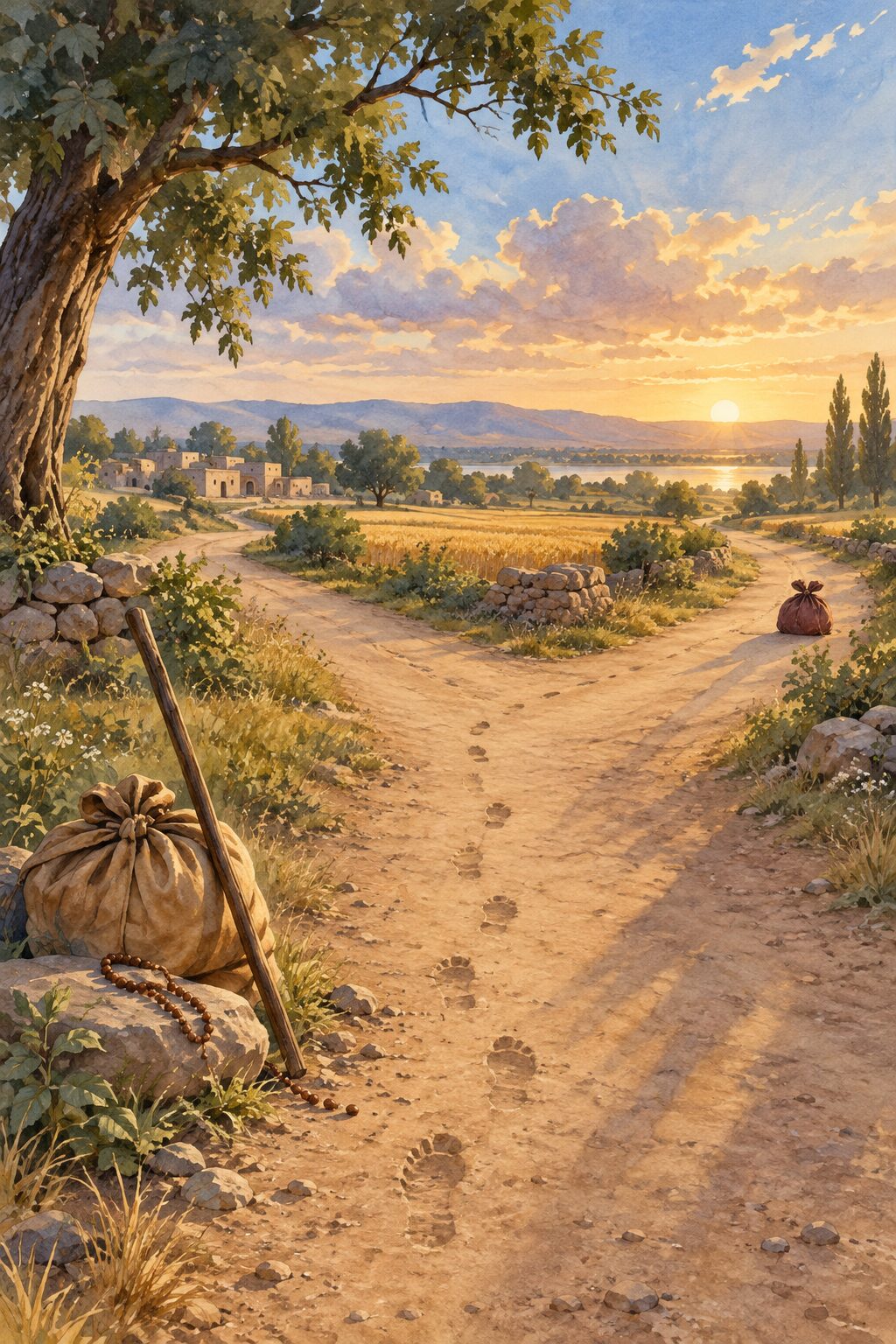
One year, returning home from one of His Ganges pilgrimages, Amar Das was walking with a Vaishnav Sadhu — a wandering holy man — for company. They shared meals. They shared the road. They spoke of God.
After several days, the Sadhu turned to Amar Das and asked, “Who is your Guru?”
Amar Das was quiet for a moment. He had never thought of the question in quite that way.
“I have no Guru,” He said at last. “I worship in the way of my fathers.”
The Sadhu stopped walking. His face turned hard.
“What? I have been eating beside a man with no Guru? All my fasts, all my bathings, all my prayers — wasted! Even to look at a person without a Guru is a sin.”
And with that, the Sadhu picked up his bundle and walked off, leaving Amar Das alone on the road.
Amar Das stood very still.
He had spent His life trying to do what He believed was right. Twenty pilgrimages. Years of devotion. The sadhu’s harsh words were not a measure of Amar Das’s worth, but the question beneath them — who would guide Him? — stayed with Him.
He did not know if He agreed with the Sadhu. But the question — who is your Guru? — would not leave Him.
When He reached home, He began to look. He visited holy men. He listened to many. He sat in temples. He came away each time with the same emptiness He had carried for years.
The years passed. He grew older. The search went on.
The Hymn at the Curd-Churn
Amar Das had a nephew named Bhai Jasoo, who was married to a young woman called Bibi Amro. Bibi Amro was the daughter of Guru Angad Dev Ji — the second Sikh Guru — and had grown up in Khadoor Sahib, hearing the hymns of Guru Nanak Dev Ji from the time she was small.
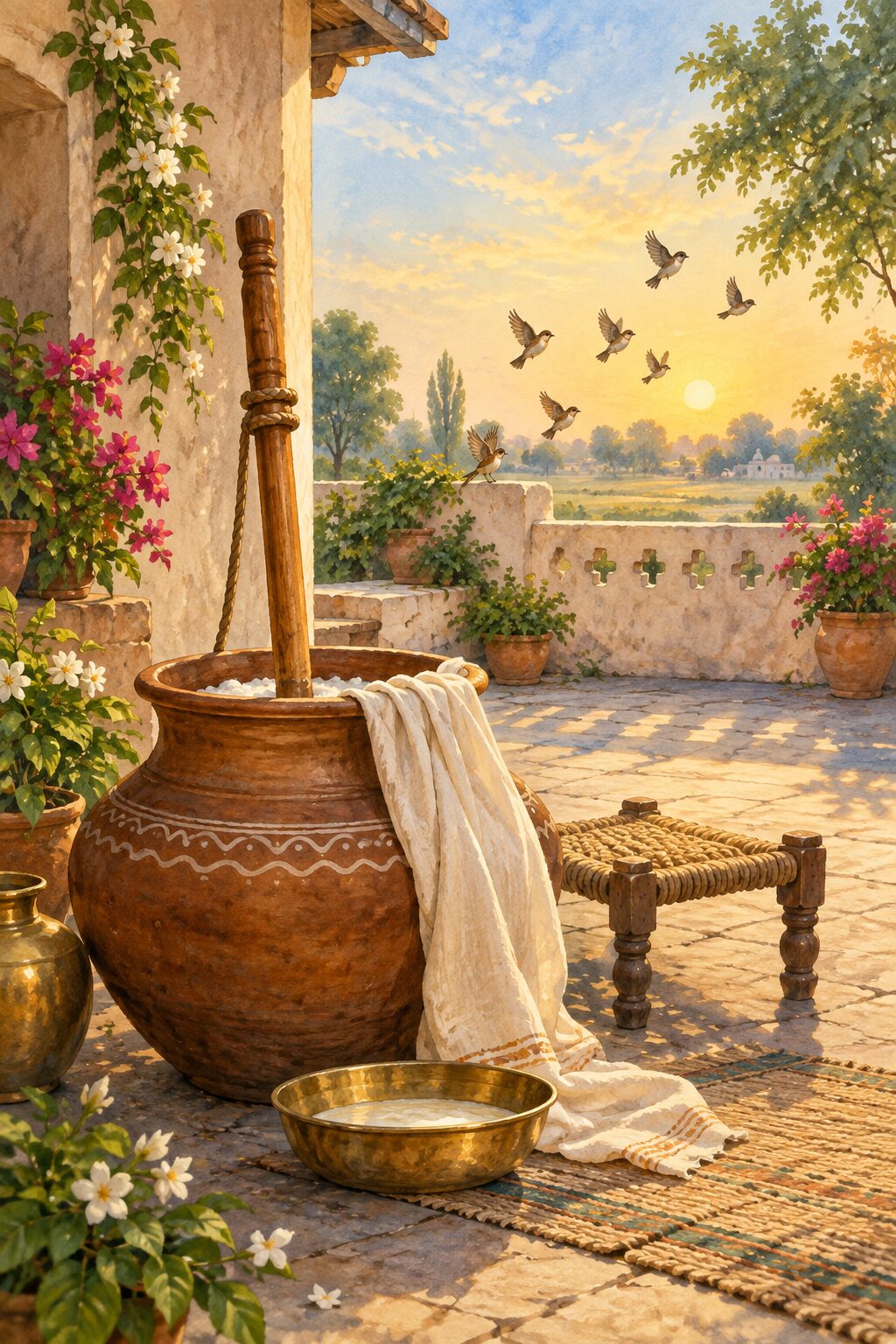
Now, in her new home, Bibi Amro began every morning the same way. Before the sun rose, while everyone else still slept, she would sit in the courtyard with her churn, working the long stick in the pot of curd to make butter. And as her arms moved in their steady rhythm, she would sing softly to herself the hymns she had learned as a child.
One morning, an old man in the next room was lying half-awake when her voice reached Him.
He stopped breathing for a moment.
He had never heard words like these. They spoke of One Creator who lived in every heart. They spoke of a Light that did not care for caste or wealth. They spoke of the inside being more important than the outside.
He sat up. He listened to the whole hymn. When she finished and started another, He listened to that one too. He did not move until she had set down the churn.
Then He came out into the courtyard.
“Daughter,” He said — His voice gentler than usual — “whose words are those?”
Bibi Amro looked up and explained that the hymns were composed by Guru Nanak Dev Ji, the first Sikh Guru. Her own father, Guru Angad Dev Ji, carried the same light and now lived in Khadoor Sahib.
Amar Das was quiet for a long time. The emptiness inside Him — the one that twenty pilgrimages had not filled — had finally heard something that fit.
“Bibi Amro,” He said, “will you take me there?”
The Walk to Khadoor
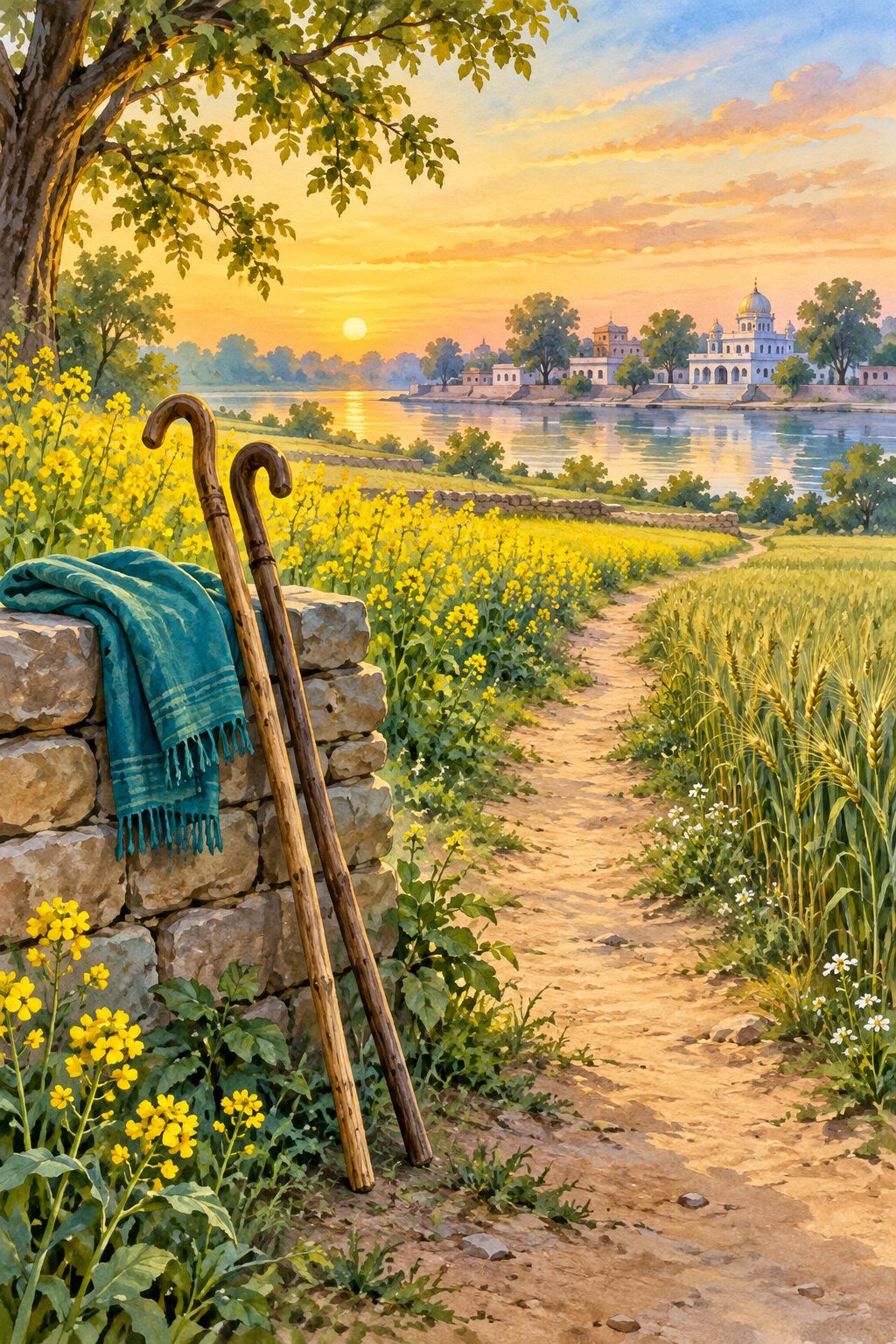
Bibi Amro walked with her elderly uncle to Khadoor Sahib.
Amar Das was sixty-two years old.
Many people assume that a person of sixty-two has finished beginning new things. To set out as a student at sixty-two — to bow before a Guru and ask to learn — took humility and courage.
When He saw Guru Angad Dev Ji for the first time, Amar Das knew. The thing He had been searching for, on dusty road after dusty road, was sitting calmly in front of Him.
He bowed all the way to the ground.
Guru Angad Dev Ji lifted Him up gently. He saw an old man, tired from years of looking, who had finally come home.
Amar Das did not go back to Basarke. He stayed at Khadoor Sahib. From that day on, He was Guru Angad Dev Ji’s disciple.
He was much older than Guru Angad Dev Ji. None of that mattered. He came as a student.
The Water Pot

Every morning, while the rest of Khadoor was still asleep, Amar Das Ji walked down to the river before dawn.
He filled a heavy clay pot with cold water. He balanced it on His head. He carried it all the way back, up the path, to the small room where Guru Angad Dev Ji bathed before the morning hymns.
He did this in summer when the river ran low and the path was hot and His feet hurt against the stones.
He did this in winter when the path was iced over and His old fingers ached around the pot and His breath made clouds in the dark.
He did this every single morning. For twelve years.
Twelve years of getting up in the cold black before dawn. Twelve years of walking the same path with the same heavy pot. He did not ask anyone else to do it. He did not complain when His back hurt. He did not ask for thanks.
One freezing night, walking home in the dark with the full pot, Amar Das Ji stumbled over a tent peg outside a weaver’s house. The pot crashed. The water spilled. He fell hard on the cold ground.
The weaver’s wife inside heard the noise and called out something unkind into the dark.
Amar Das Ji did not answer her.
He got up, slowly, His old bones aching. He found the broken pieces of the pot in the dark. He walked all the way back down to the river. He borrowed another pot. He filled it. He carried it home.
Guru Amar Das Ji’s bani uses the image of a water-carrier who draws not from an outside well, but from within:
ਅੰਤਰਿ ਖੂਹਟਾ ਅੰਮ੍ਰਿਤਿ ਭਰਿਆ ਸਬਦੇ ਕਾਢਿ ਪੀਐ ਪਨਿਹਾਰੀ ॥
Deep within your heart is a well filled with nectar. The water-carrier draws it up through the Shabad and drinks.
— Guru Amar Das Ji, Sri Guru Granth Sahib Ji, Ang 570 (Raag Wadhans)
The Light Passes to Guru Amar Das Ji
When Guru Angad Dev Ji grew old, He looked around the community at Khadoor Sahib. He looked at the disciples who had served the longest. He looked at His own family. And His eyes came to rest on the old man who, for twelve years, had carried water in the dark before sunrise without ever once asking for recognition.
One day, Guru Angad Dev Ji called the whole sangat together. Before everyone, He passed the Guruship to Amar Das Ji, who was now nearly seventy-three, and handed Him the pothi holding the Bani of Guru Nanak Dev Ji and His own.
A few days later, Guru Angad Dev Ji merged back into the Light.
Guru Amar Das Ji then began twenty-two years of remarkable service and leadership.
He made Goindwal Sahib, on the banks of the river Beas, the centre of the community. Work to develop the town had begun earlier under Guru Angad Dev Ji’s guidance.
The Patient Guru
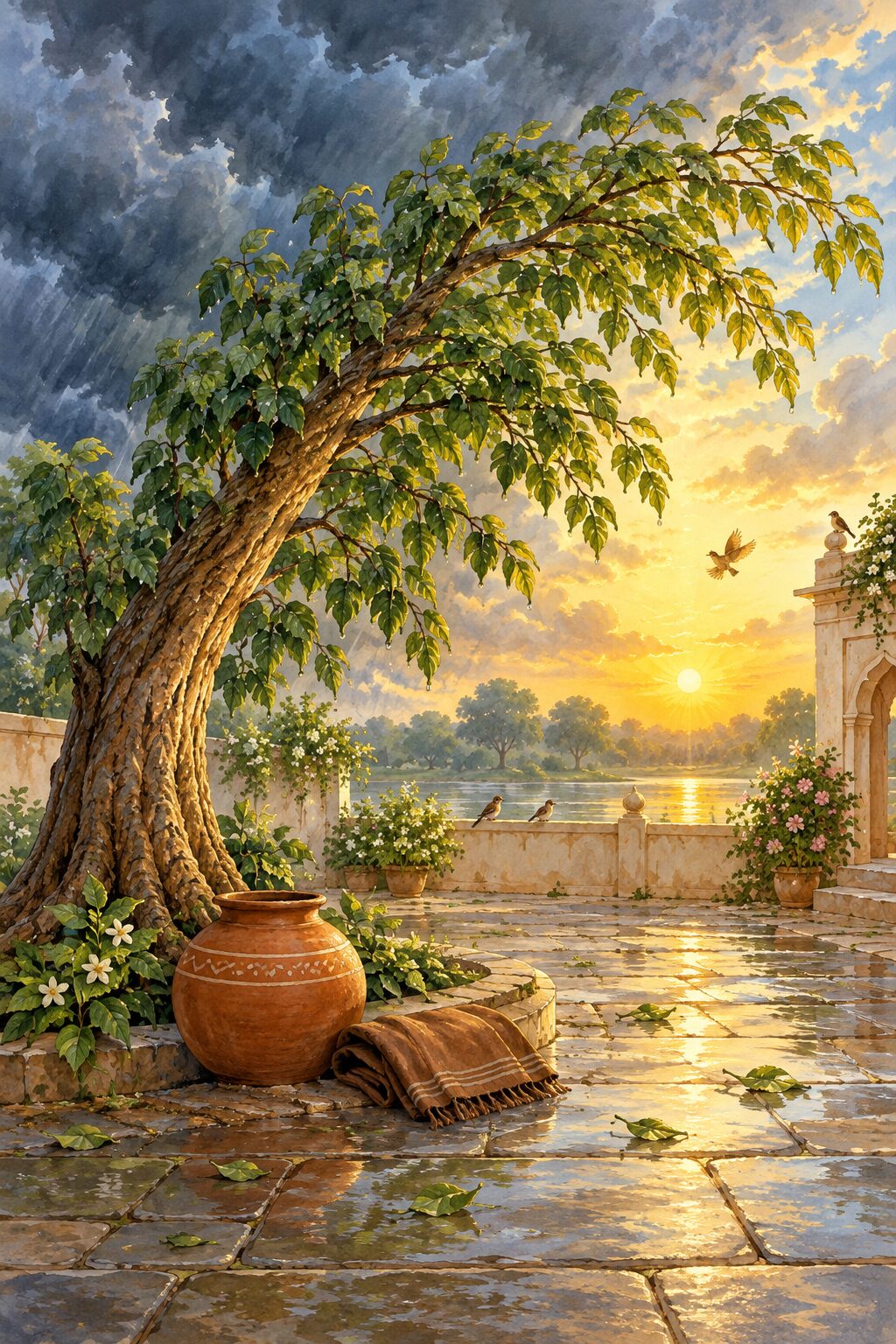
Not everyone welcomed the change. There were people who had expected the Guruship to come to someone else, and they did not accept the old man from Basarke stepping into their place. There were unkind words. There were small acts of meanness. Some days the new Guru was openly disrespected.
Guru Amar Das Ji bore it all with the same patience He had carried for twelve years before dawn, walking with water on His head. He answered anger with quiet. He answered insult with kindness. He never raised His voice.
Slowly, the storms passed. Those who had been angry grew quieter. The community at Goindwal settled into its work. And the years to come would belong to building, not defending.
The Well That Belongs to Everyone
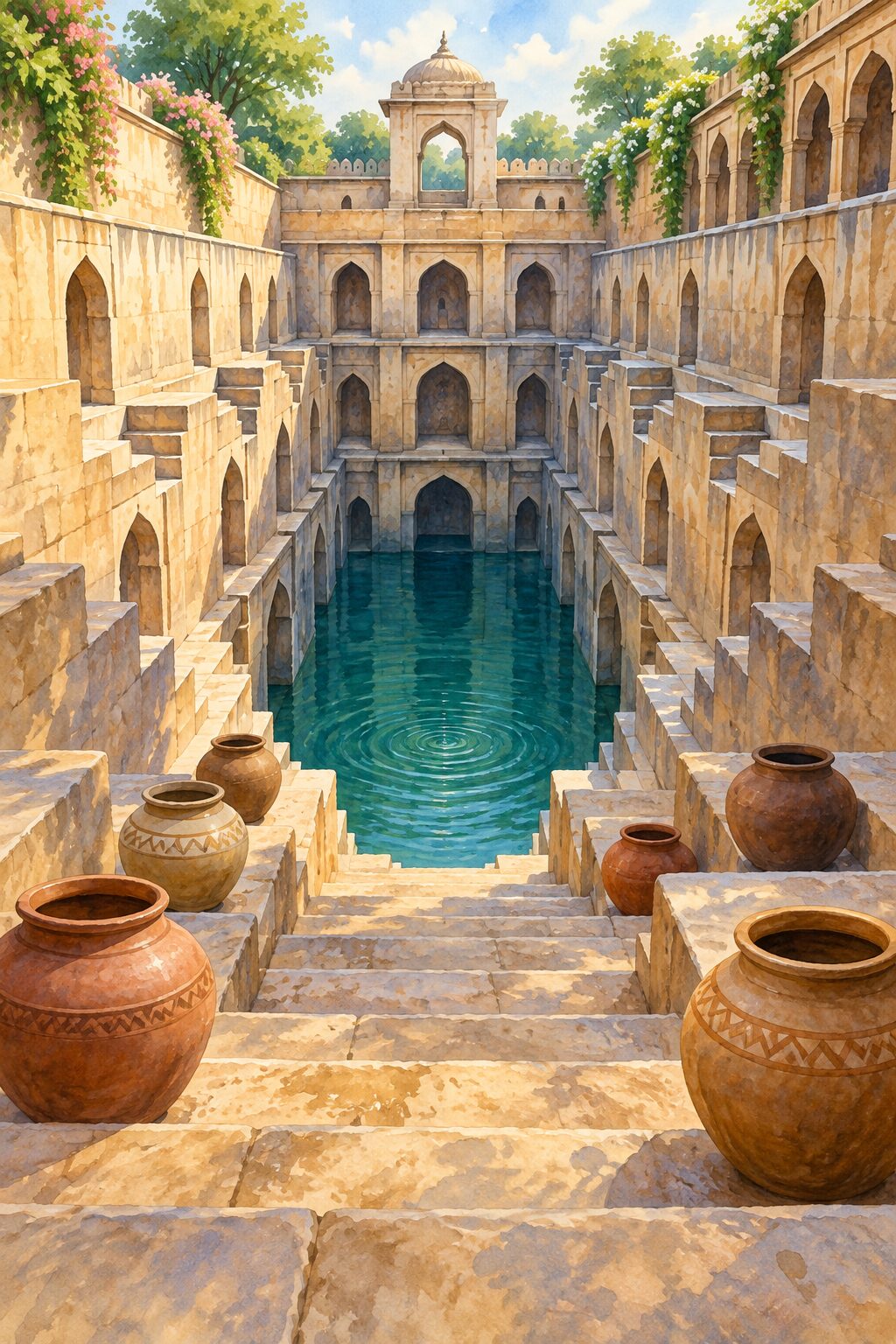
At Goindwal Sahib, Guru Amar Das Ji helped build a community where equality was put into daily practice.
He ordered a great, deep well to be dug in the centre of the town. Stone steps were built down into it — eighty-four steps, going all the way to the water at the bottom.
Wells were not for everyone. In village after village, people of different castes were not allowed to draw water from the same well. The so-called “high” castes had their wells. The “low” castes had to walk much further to other ones, or beg for water at the side gate.
Guru Amar Das Ji’s well was different. Its water was available across caste and religious divisions. People walked down the eighty-four steps, drew from the same source, and climbed back up. The well made a simple truth visible: no person’s birth or work made them less worthy of water, food, or respect.
This was a small, ordinary act — and it was also a revolution.
Eat First, Then See the Guru
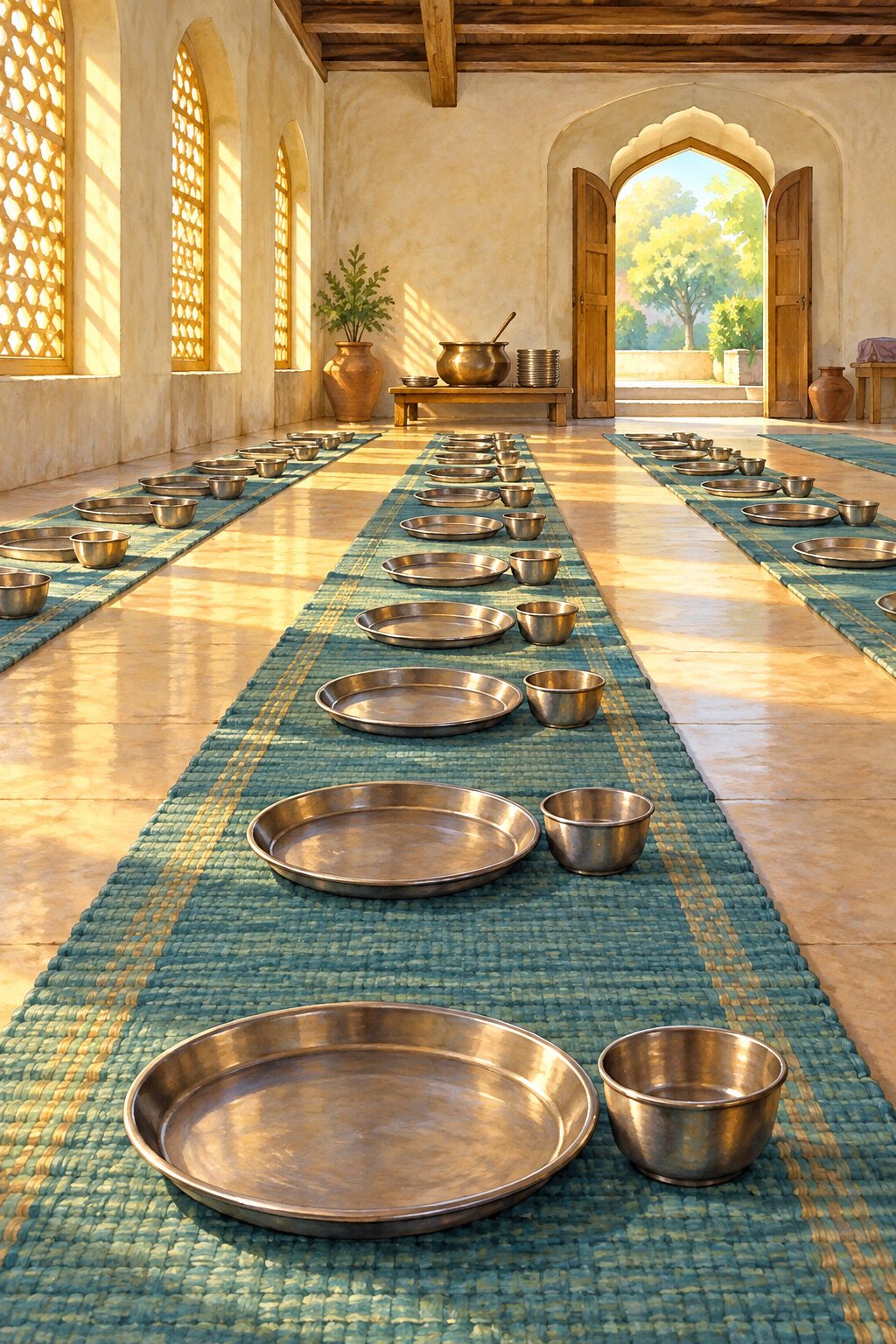
To anyone who came to Goindwal hoping to meet Guru Amar Das Ji, the message was simple:
“First, sit in the langar. Eat with whoever is there. Then you may see the Guru.”
This was not a casual request. It was a firm practice of the community, with no special treatment for wealth or rank.
Eating with people of “lower” caste was unthinkable for many wealthy and powerful visitors. They believed it would pollute them. They came to Goindwal expecting to be received with bows and special treatment.
Guru Amar Das Ji bowed to no one above anyone else.
Then one day, a visitor arrived who was used to being treated as above others. His name was Akbar, the Mughal emperor.
Akbar’s officers expected the rule would be waived for the Emperor. Surely the Guru would not ask the Emperor to sit on the floor with farmers and shoemakers.
Akbar himself, when he understood the rule, smiled.
He sat down in the pangat — the long row of seated diners. Beside him sat a Sikh farmer. Beside the farmer sat a poor washerman. The same food was served to all three. Akbar ate it with his hands like everyone else.
Then he stood up and went in to see the Guru.
Traditional accounts remember Akbar’s visit because he accepted the discipline of pangat before meeting Guru Amar Das Ji.
The Lighter Veil
Guru Amar Das Ji did not stop at the well and the langar. He looked at His society — and at the way it treated women, in particular — and He set out to change what He saw.
In those days, a terrible practice was widespread. When a man died, his widow was sometimes pressured — or even forced — to throw herself onto her husband’s burning funeral pyre. This was called sati. It was presented as a holy act. In truth, it was cruelty hiding behind religion.
Guru Amar Das Ji spoke clearly against sati. He challenged the idea that a widow’s life should end with her husband’s death, and He opposed customs that denied women dignity and freedom.
He also opposed the heavy veils that kept women hidden in religious gatherings. Women, too, belonged openly in the sangat — the community gathered to learn and sing Gurbani.
He encouraged widows to remarry, when in those days widows were expected to live the rest of their lives in mourning, often as servants in their late husband’s family.
As the Sikh community grew, He organised its work through twenty-two regions called Manjis. Women as well as men were entrusted with leadership and with sharing the Guru’s teaching.
These were meaningful changes: they made more room for women to live, learn, and lead with dignity.
The Boy Who Sold Boiled Grams
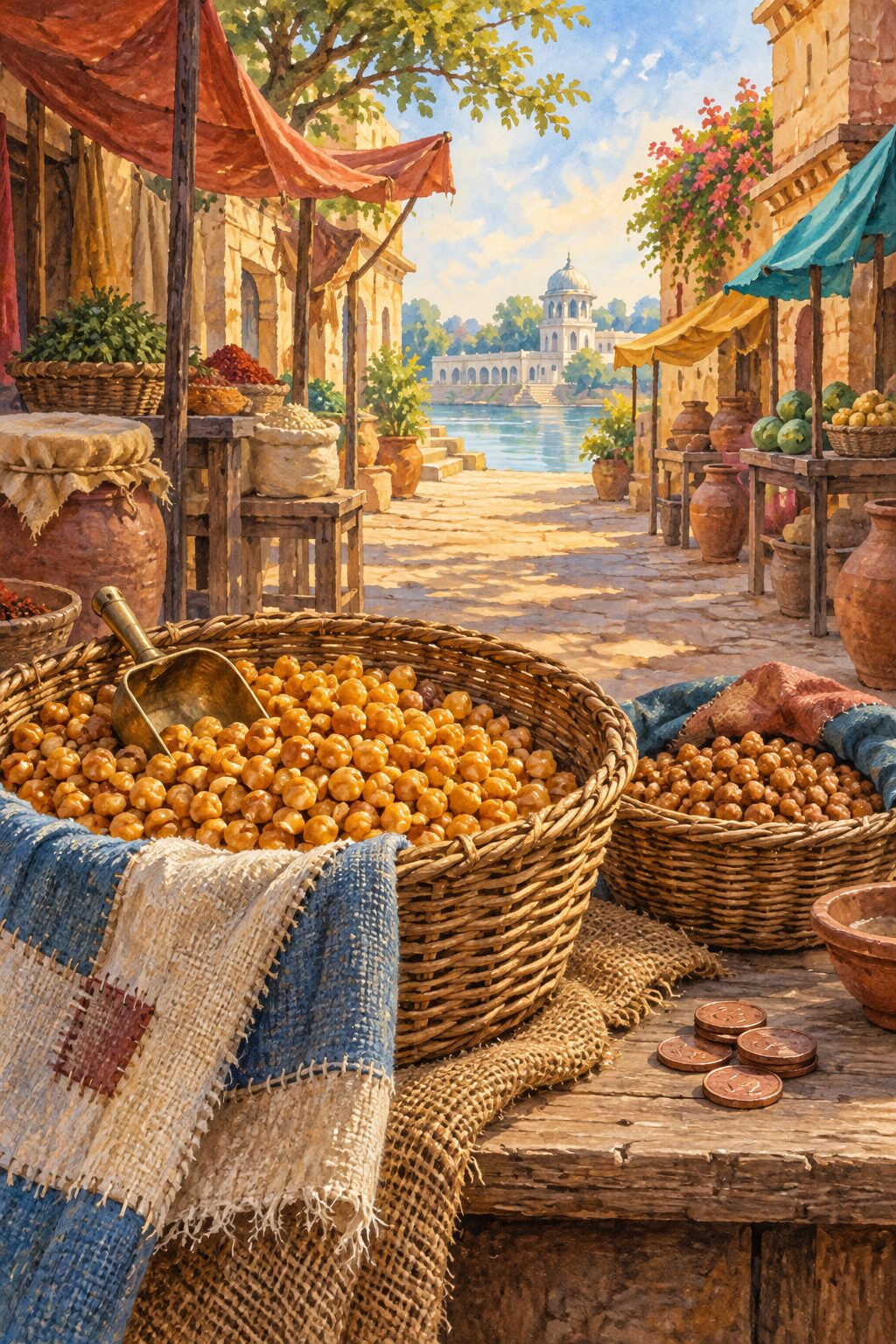
Guru Amar Das Ji had two daughters. The younger one, Bibi Bhani Ji, was about to be married. Her father was looking for the right young man for her.
One day, Guru Amar Das Ji was sitting near the langar when He watched a young man pass by carrying a small basket. The young man’s clothes were patched. His hands were marked with the burns and calluses of long, slow cooking. He was selling boiled grams in the market for a few coins a handful to support Himself — a humble trade, the kind nobody important would think twice about.
But Guru Amar Das Ji watched Him.
The young man’s name was Bhai Jetha. He was an orphan. He had come to Goindwal as a young boy and had stayed, serving in whatever way He was needed, never complaining, never asking for more.
Guru Amar Das Ji recognised Bhai Jetha Ji’s humility and seva. Bhai Jetha Ji married Bibi Bhani Ji and became part of the family.
In the years that followed, Bhai Jetha Ji served the Guru and the community with the same patient devotion that had marked Guru Amar Das Ji’s own twelve years of carrying water. Whatever was asked of Him, He did. Whatever needed doing, He did without being asked.
When Guru Amar Das Ji felt His time drawing near, He called the community together one more time. Before the whole sangat and His family, He seated Bhai Jetha Ji on a raised seat and bowed to Him.
The Light passed to Bhai Jetha Ji, who came to be known as Guru Ram Das Ji.
A few days later, on 1 September 1574, Guru Amar Das Ji merged back into the Light. He was ninety-five years old.
In those twenty-two years, Guru Amar Das Ji had strengthened Goindwal Sahib, supported a well open across caste divisions, stood against the cruelty of sati, organised the growing Sikh community, and recognised the next Guru in Bhai Jetha Ji, who had once sold boiled grams.
He had spent the first part of His life searching for water in distant rivers. He spent the rest of it pouring it back, freely, for anyone who came to drink.
Reflection
When you hear a story about Guru Amar Das Ji, remember the years before He was a Guru.
For much of His life, He searched with a true heart. He kept asking. He was sixty-two when one morning, in His nephew’s house, He heard a young woman singing hymns over a churn — and His search led Him to Guru Angad Dev Ji.
Most of us think important things happen when we are young. That is when we are supposed to find our calling, learn our work, become who we will be. After a certain age, we are told, the time for change is over.
Guru Amar Das Ji’s life shows us this is not true.
You can begin at sixty-two. You can begin at seventy. You can begin tomorrow morning. What matters is not when you start — it is whether you start at all, and whether, once you start, you keep going.
And the gifts that come from a late beginning can be larger than anyone expected:
- The water you draw can become a well for everyone.
- The patience you carry through unkind moments can become the patience that ends a cruel custom.
- The years you served quietly can become the wisdom you pour back into the world.
Inside every one of us is the well that Guru Amar Das Ji wrote about. Brimming with sacred water. Waiting to be drawn from. Waiting to be shared.
You don’t need to be old, or young, or special, to start drawing from it. You only need to listen — like an old man one quiet morning, in His nephew’s courtyard, as a young woman churned curd and sang.
Quick Facts
| Fact | Detail |
|---|---|
| Born | 5 May 1479 |
| Birthplace | Basarke, Amritsar district (Punjab) |
| Parents | Sri Tej Bhan Ji and Mata Sulakhni Ji |
| Wife | Mata Ram Ji |
| Children | Baba Mohan and Baba Mohri (sons); Bibi Daani and Bibi Bhani (daughters) |
| Age when He met Guru Angad Dev Ji | 62 years old |
| Years of service as a disciple | 12 years |
| Age when the Light passed to Him | 73 years old |
| Town of His Guruship | Goindwal Sahib, on the river Beas |
| Years as Guru | 22 years |
| Known for | The deep well at Goindwal Sahib open across caste divisions; speaking against sati and restrictive veiling; encouraging widow remarriage; entrusting women with leadership; and insisting that Emperor Akbar eat in langar before audience |
| Successor | Guru Ram Das Ji (Bhai Jetha Ji), husband of His daughter Bibi Bhani Ji |
| Passed away | 1 September 1574, at Goindwal Sahib |
| In Sri Guru Granth Sahib Ji | Over 900 of His hymns are preserved, including the Anand Sahib |
Discussion Questions
Let’s Talk About It: Guru Amar Das Ji was sixty-two when He first met His Guru — older than most people’s grandparents. Have you ever felt that you were too old or too young to start something new?
Let’s Talk About It: When Bibi Amro sang Gurbani over the churn, her uncle in the next room stopped to listen. What is something you have heard — a song, a story, a person — that made you stop and pay attention?
Let’s Think About It: When some people were unkind to Guru Amar Das Ji after the Light passed to Him, He answered them with patience and kindness instead of anger. Why is it so hard to respond to unkindness with patience? When have you tried?
Let’s Think About It: The well at Goindwal was open to anyone of any caste. Why do you think Guru Amar Das Ji thought this was so important? What kinds of “walls” do we still build around things today that should belong to everyone?
Let’s Think About It: Emperor Akbar — the most powerful man in India — had to sit on the floor and eat with everyone before he could see the Guru. Why did Guru Amar Das Ji make this a rule?
Let’s Try It: Guru Amar Das Ji believed every person, including every woman, should be free to learn, lead, and worship without being hidden behind a veil. This week, notice one place where someone is being kept out of something they should be a part of. What is one small thing you could do to include them?
Let’s Try It: For one whole day, do every chore you are asked to do without complaining, the way old Amar Das Ji carried water for twelve years. At the end of the day, see how you feel inside.
Word Meanings
| Word | Meaning |
|---|---|
| Akbar | The Mughal Emperor of India during Guru Amar Das Ji’s time. He visited Goindwal Sahib and ate in the langar before meeting the Guru. |
| Anand Sahib | A famous hymn composed by Guru Amar Das Ji. It is sung today on joyful occasions in Sikh homes and Gurdwaras. |
| Bibi | A respectful word for daughter or sister in Punjabi. |
| Goindwal Sahib | The town Guru Amar Das Ji built on the banks of the river Beas. It became the centre of the Sikh community during His Guruship. |
| Gurbani | The hymns and teachings of the Sikh Gurus, preserved in Sri Guru Granth Sahib Ji. |
| Gurdwara | A Sikh place of worship — “the door to the Guru”. |
| Guru | An enlightener who shows the way from darkness to Light. |
| Khadoor Sahib | The town where Guru Angad Dev Ji lived and taught — where Guru Amar Das Ji came to be His disciple. |
| Langar | The community kitchen at the Gurdwara where everyone sits together and eats the same food. |
| Manji | A region through which Guru Amar Das Ji organised the growing Sikh community. Women as well as men were entrusted with leadership. |
| Mata | A respectful word for mother in Punjabi, used for elder women of honour. |
| Pangat | Sitting together in a row, as everyone does in langar — a sign of equality. |
| Sadhu | A wandering Hindu holy man, often living by alms. |
| Sati | The cruel practice of pressuring widows to die on their husband’s funeral pyre. Guru Amar Das Ji spoke strongly against it. |
| Sri Guru Granth Sahib Ji | The sacred scripture of the Sikhs, containing the hymns of the Sikh Gurus and other devotional saints from many traditions. |
| Vaishnav | A follower of the Hindu god Vishnu. |
Explore More
- The Light of Truth: The Life of Guru Nanak Dev Ji — Book 1 in the series, on the founder of Sikhi
- The Letters That Belong to Everyone: The Life of Guru Angad Dev Ji — Book 2 in the series, the Guru who first welcomed Guru Amar Das Ji
- Why Do We Bow in Gurdwara? — A guide explaining what we are really bowing to