
Bhai Lehna Ji stopped in the road when He heard Gurbani sung in a courtyard, and His life turned towards Guru Nanak Dev Ji. Guru Angad Dev Ji helped bring the Gurmukhi letters to ordinary families so they could read Gurbani. A Sikh story for ages 8–12.
A Boy Named Lehna
This is the story of the second Sikh Guru — a man whose name, for most of His life, was simply Lehna.
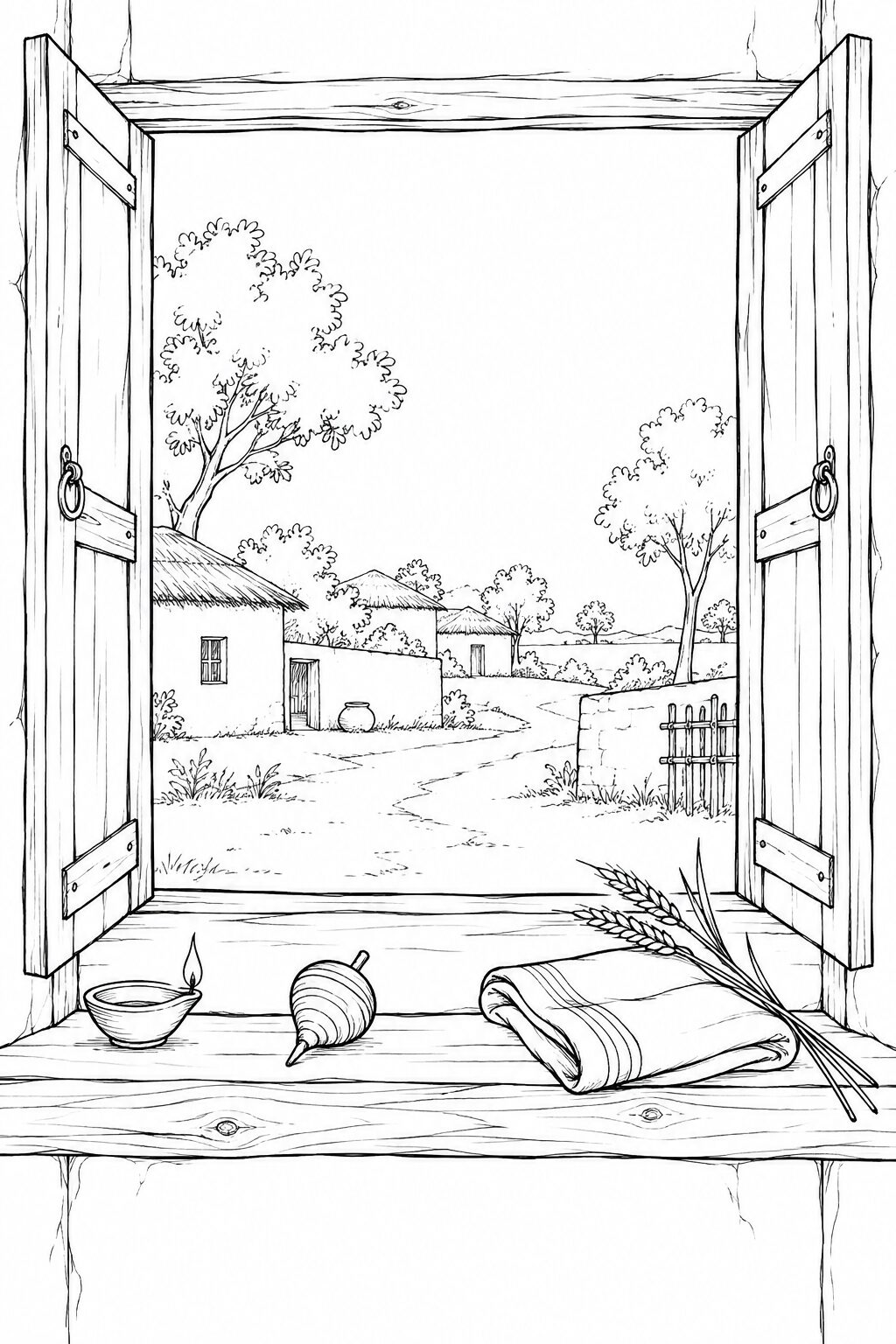
He spent His early years in a small village far from the towns where the Sikh community was beginning to take root. And yet, one day, the Light of Guru Nanak would shine in Him, in a line of Gurus that would shape millions of lives.
He was born on 31 March 1504, in a village called Matte Di Saran, in what is now Ferozepur district. His father, Pheru Mal Ji, was a trader who walked from village to village with his goods. His mother, Mata Daya Ji, kept the home and raised the children. They named the new baby Lehna — a word that means one who is to receive.
Years later, people would notice the beautiful meaning of that name. But as a child, Lehna was simply a much-loved son, growing up in a family that worked hard and cared for its neighbours.
The Pilgrimage to the Goddess
Lehna grew up tall and kind. He married Mata Kheevi Ji, the daughter of a respected family from a neighbouring town. Together they had four children — two sons, Dattu and Dasu, and two daughters, Bibi Amro and Bibi Anokhi.
Lehna was hardworking. He took care of His family. He helped His neighbours. People looked up to Him.
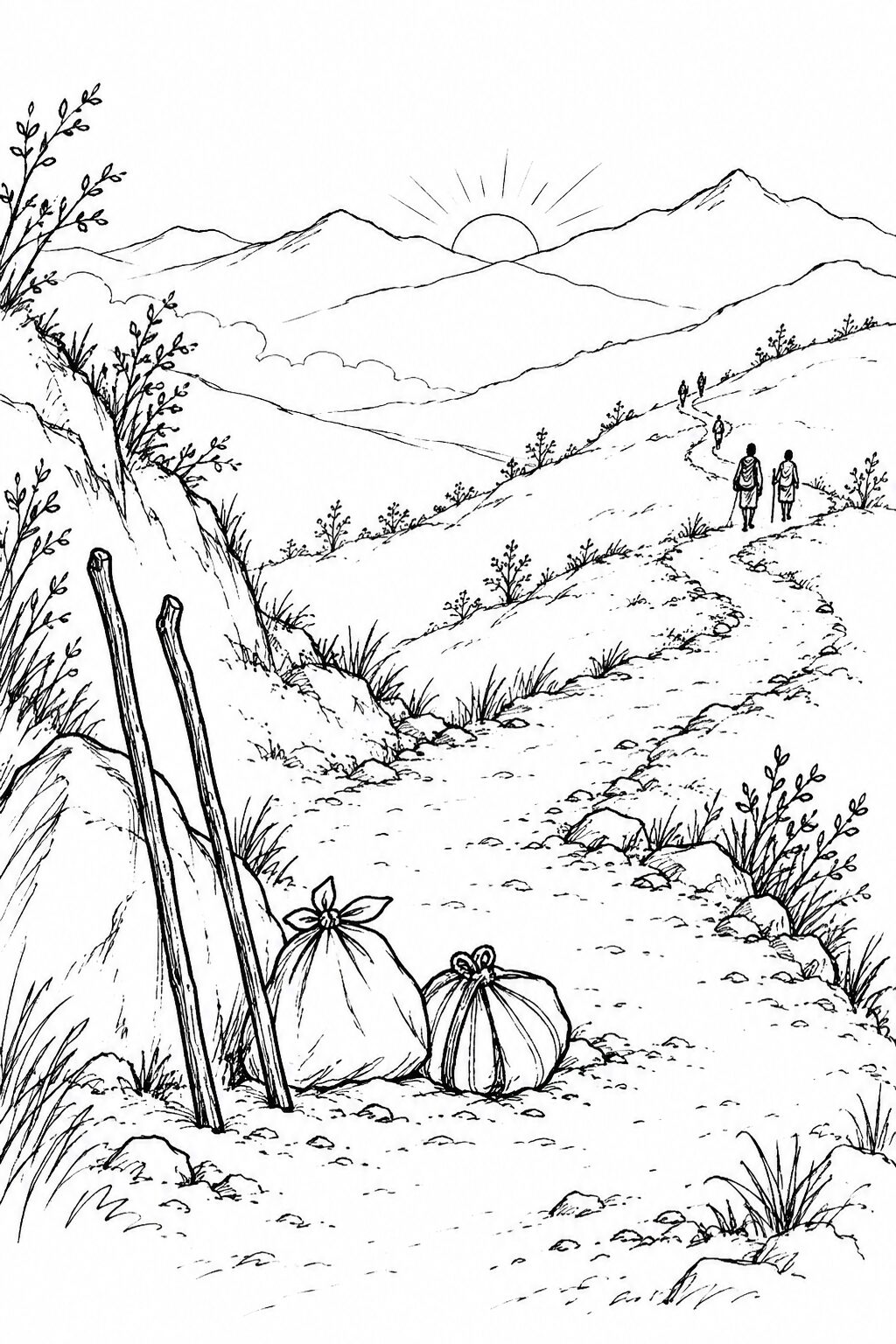
He was also a deeply religious man. In His community, many people worshipped the goddess Durga, and every year Lehna led a group of pilgrims on a long, difficult journey to her shrine in the hills. They would walk for many days. They would sing. They would bow in devotion. Then they would walk home again.
Lehna did this faithfully, year after year. He believed it was the right thing to do. He believed the goddess could hear Him.
But sometimes, walking home from the temple in the dust, Lehna would feel a small quietness inside. He could not have put it into words. He only knew that something in Him was still searching.
The Hymn from the Courtyard
One evening, Lehna was walking home through the village when He stopped in the middle of the road.
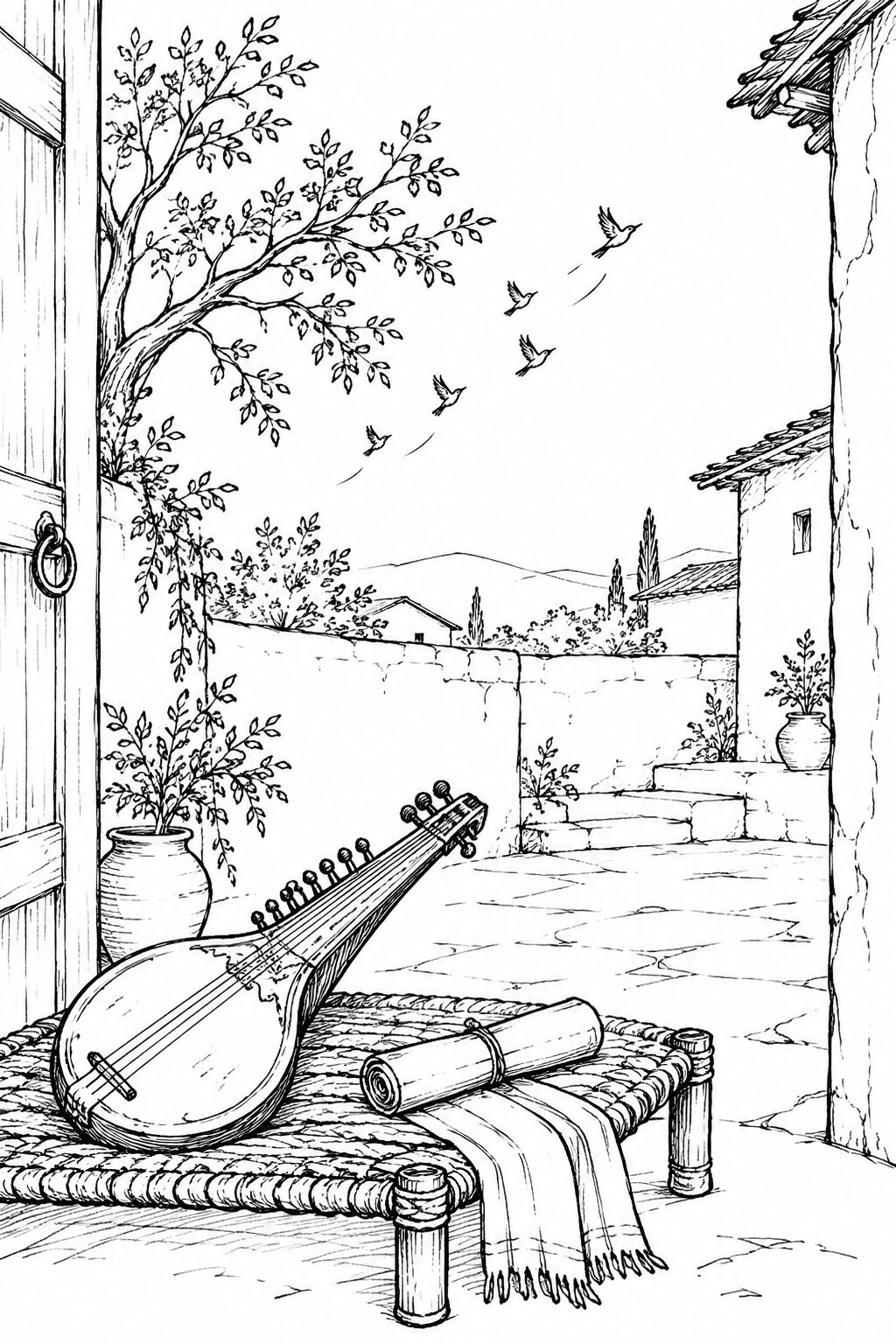
Singing was coming from a neighbour’s courtyard. Not the usual village singing. Something different. Something that pulled Him toward it.
He went closer.
Inside the courtyard, a man called Bhai Jodh was sitting with a few friends, singing a hymn in a voice that was steady and warm. The words were unlike anything Lehna had ever heard.
The hymn spoke of One Creator who lived in every heart. It spoke of a Light that did not care for caste or religion or wealth. It said that honest hands were worth more than holy robes.
Lehna stood very still outside the doorway. He did not want the hymn to end.
When Bhai Jodh finally set down his hand, Lehna stepped forward.
“Whose words are those?” He asked.
“They are the hymns of Guru Nanak Dev Ji,” Bhai Jodh said. “He lives in Kartarpur, on the river Ravi.”
That night Lehna lay awake, listening to the words again inside His head. The small quietness in Him had grown louder. It had a direction now.
The Stop on the Way
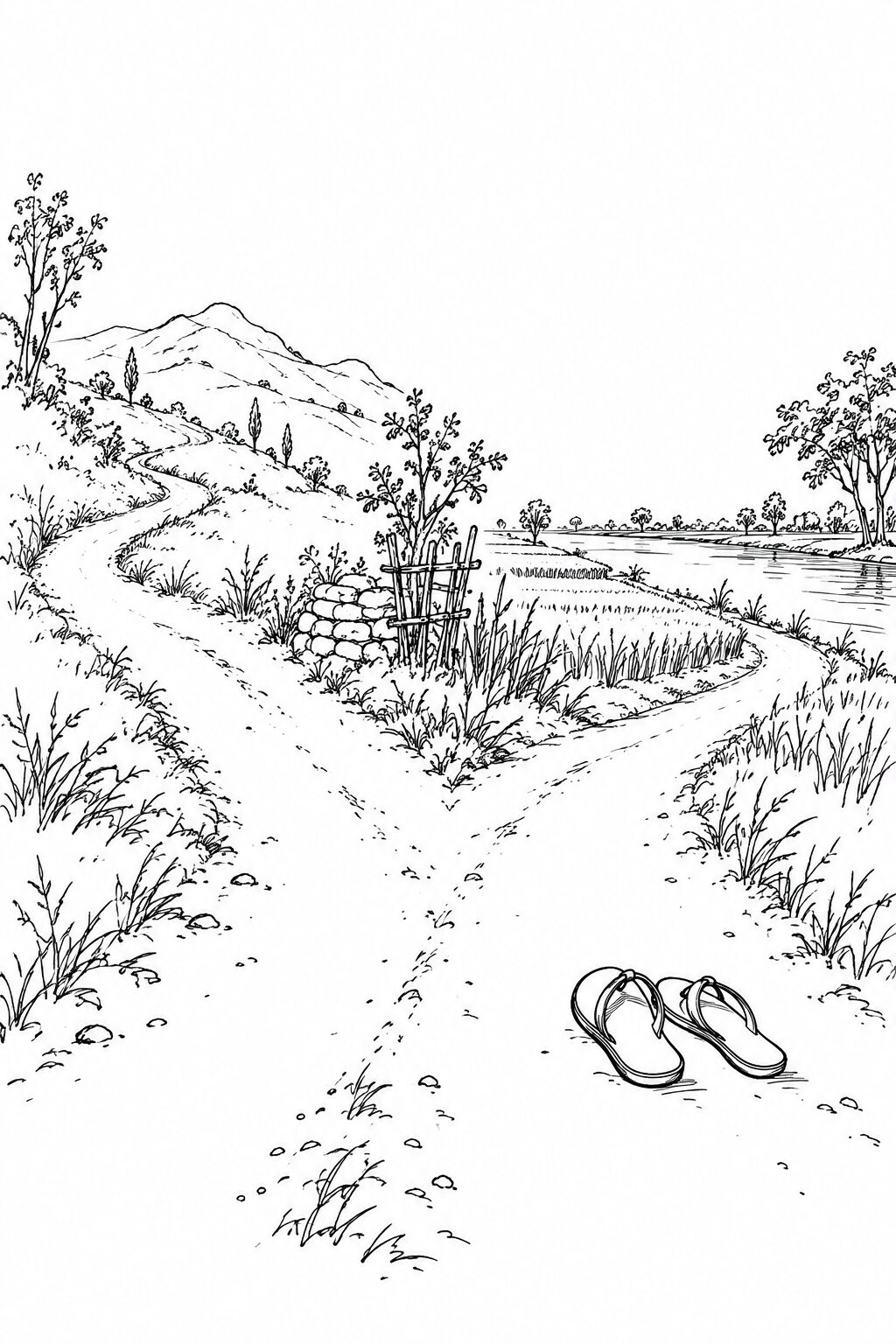
Soon it was time for the annual pilgrimage to the goddess. Lehna gathered His companions as always. They set out.
But this time, when they passed near Kartarpur, Lehna stopped.
“Walk on,” He said to His companions. “I will catch up. I want to see this town I have heard about.”
He turned aside.
When Lehna reached Kartarpur, He found a quiet place that looked nothing like a temple. People were working in the fields. People were sitting in rows, sharing food on the floor. People were singing the same kinds of hymns He had heard in the courtyard.
And under a tree, talking gently with a small group of listeners, was Guru Nanak Dev Ji.
Lehna walked closer. He did not need anyone to tell Him who it was.
Something in Him — something that had been searching the dusty hill-roads for years — found what it had been looking for. He knelt. He could not speak.
When He could finally find His voice, He said only one thing: “Please let me stay.”
Guru Nanak Dev Ji lifted Him up gently. He smiled. He said only one thing back: “You are welcome here, dear one.”
The pilgrims to the goddess walked on without Him. Lehna never went on that pilgrimage again.
The Muddy Bundle
The community at Kartarpur lived by the three teachings Guru Nanak Dev Ji had given them: remember the Creator, work honestly, share with others.
Bhai Lehna Ji folded Himself into the work without complaint. He cooked. He cleaned. He carried water. Whatever was needed, He did.
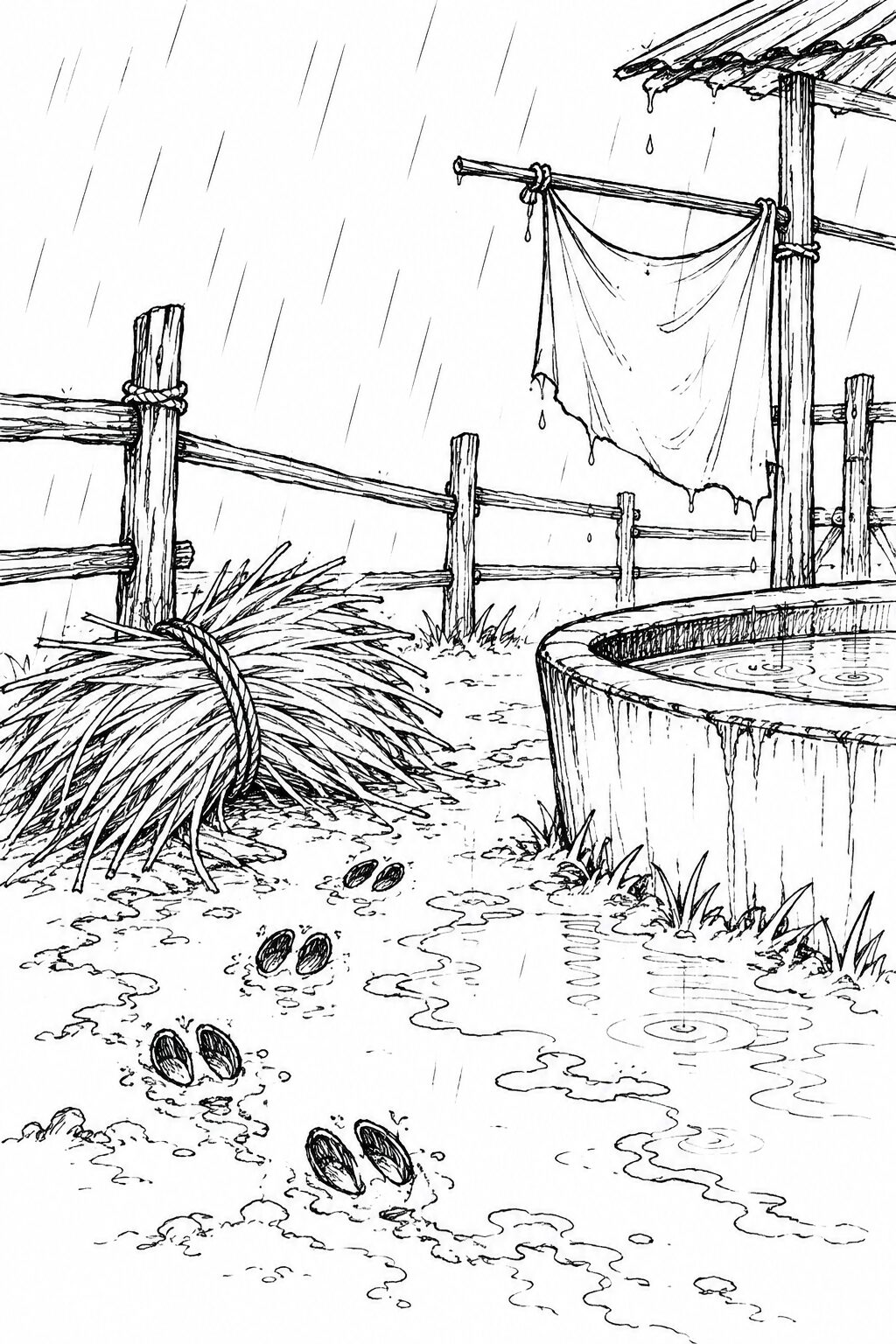
One morning, a bundle of fodder for the cattle needed to be brought up from a wet field. The fodder was soaked. The mud beneath it was thick. Whoever carried it would arrive at the dharamshala covered in muck.
A few of the men nearby looked at their clean clothes and stepped back. Others made faces and walked away.
Bhai Lehna Ji was wearing His good clothes that day. He had come from a respected family. In another life, He would not have touched this work with His hands.
He bent down and lifted the bundle onto His head.
The muddy water ran down His face and soaked His collar. The straw scratched His neck. He did not flinch. He walked steadily to the cattle pens and laid the bundle down where it needed to be.
He was not trying to be impressive. He was not even thinking about Himself. The cattle needed feeding. The bundle needed carrying. That was all.
When Guru Nanak Dev Ji saw Him later that day, mud streaked across His fine clothes, the Guru said nothing. He only watched. And the watching itself was a kind of blessing.
The Wall in the Rain
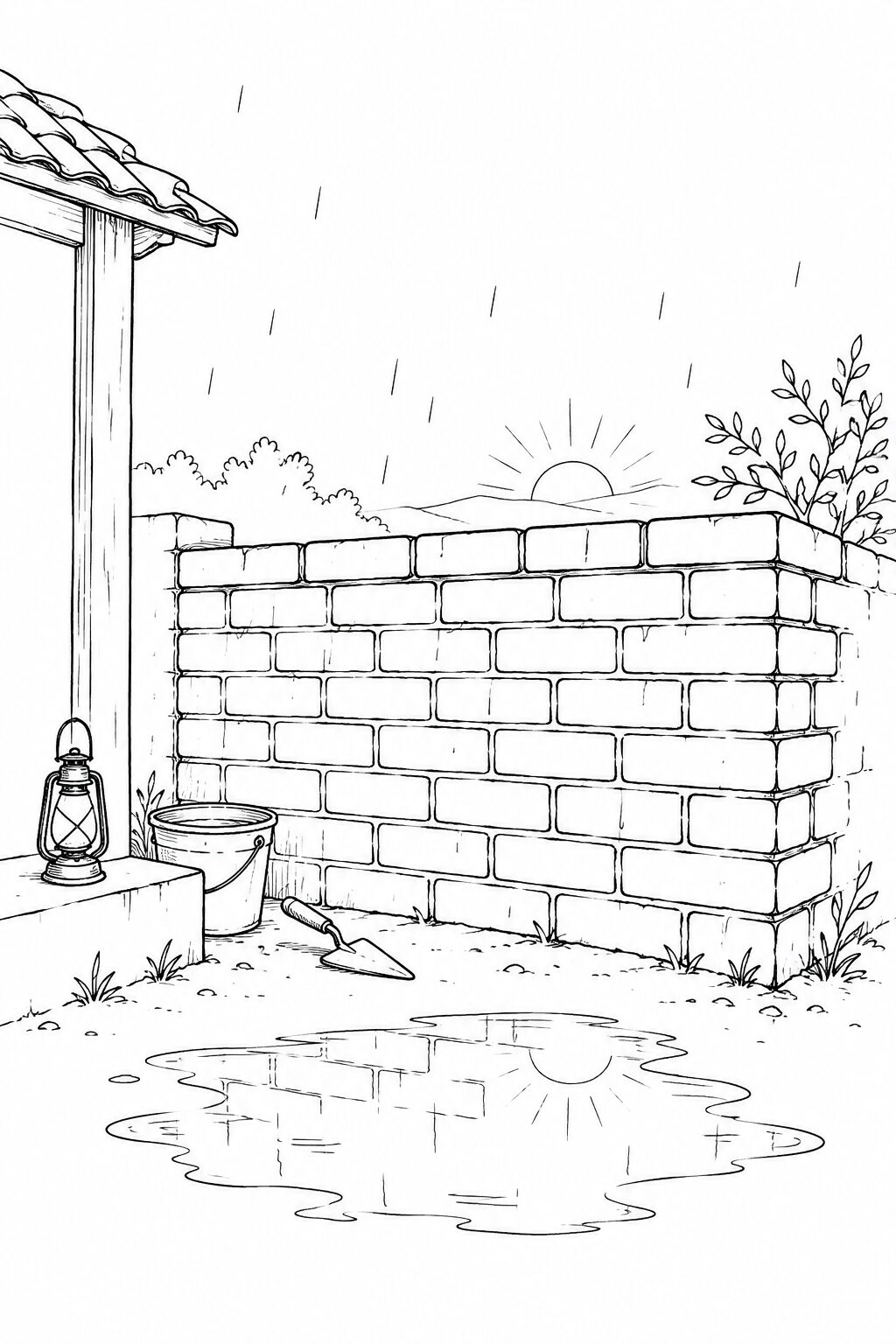
Some time later, on a cold winter night, the rain fell hard at Kartarpur. The wind dragged at the roofs. And in the dark, one of the walls of the dharamshala collapsed with a long, soft crash.
Guru Nanak Dev Ji called the community together. “The wall has fallen. Who will rebuild it?”
The men looked at the rain. They looked at the pile of cold, heavy bricks. They looked at their warm beds.
“It can wait until morning, Guru Ji,” one said. “The mortar will not set in this cold,” said another. “At first light,” said a third.
Bhai Lehna Ji did not answer. He went out into the rain.
All night, by the small light of a lantern, He laid the bricks one upon another. His hands grew numb. His clothes clung to Him. He did not stop.
When the others woke at dawn, the wall stood again.
This was not about the wall. The wall could have waited. It was about what Bhai Lehna Ji had inside Himself. There was no part of Him that wanted to look devoted while being something else underneath. The inside and the outside were the same.
This was the kind of devotion Guru Nanak Dev Ji had always taught mattered most — not robes or rituals, but compassion, contentment, self-control, and truth lived quietly through every small action. Bhai Lehna Ji was living all four, without anyone needing to ask Him to.
The Light Passes On
The years passed. Guru Nanak Dev Ji grew older. And He watched Bhai Lehna Ji.
He watched Him through hard work and through tiredness. He watched Him when He thought no one was looking. He watched Him be patient when others lost patience, generous when others were stingy, present when others were elsewhere.
One day, Guru Nanak Dev Ji called the whole community together. He embraced Bhai Lehna Ji. Then He did something that made the whole community gasp aloud. He bowed before Him.
The Guru. Bowing to His student.
Guru Nanak Dev Ji gave Him a new name: Angad, meaning a part of my own self. And He placed in His hands the pothi holding His hymns and the hymns of the Bhagats.
The community sat very still.
The Guruship did not pass by birth or family inheritance. Guru Nanak Dev Ji publicly revealed Guru Angad Dev Ji as the next Guru: the same Light continuing. Guru Angad Dev Ji sat looking at the ground, knowing the responsibility was far bigger than He had ever imagined.
Khadoor Sahib
After Guru Nanak Dev Ji merged back into the Light, Guru Angad Dev Ji returned to Khadoor Sahib, where His family had earlier settled.
He carried Guru Nanak Dev Ji’s teaching with Him exactly as He had received it. The same three lessons. The same morning singing. The same evening discourses. The same langar, where every visitor sat on the floor and ate the same food.
Nothing of what He had received was changed. Everything was continued.
But Guru Angad Dev Ji also added new strands to the rope. He saw needs that had not yet been met. And He set about meeting them, one by one, with His own hands.
The Letters That Belong to Everyone

In those days, few ordinary people had the chance to learn to read. Written learning was often controlled by people with wealth, privilege, or specialist training.
This troubled Guru Angad Dev Ji deeply. How can people hear the Guru’s Word in their own minds, He thought, if they cannot read it for themselves?
Guru Angad Dev Ji refined and promoted Gurmukhi — a script whose name means from the Guru’s mouth. He helped make its 35 letters easier to learn and had simple primers prepared so children could learn the alphabet one letter at a time.
He encouraged learning among Sikh communities, so that knowledge would not remain only with a privileged few.
He helped preserve Guru Nanak Dev Ji’s hymns in carefully written collections. These handwritten booklets travelled to Sikh communities, helping people learn and sing Gurbani together.
One shalok by Guru Angad Dev Ji, preserved in Sri Guru Granth Sahib Ji, speaks of the Light found through the Guru:
ਜੇ ਸਉ ਚੰਦਾ ਉਗਵਹਿ ਸੂਰਜ ਚੜਹਿ ਹਜਾਰ ॥ ਏਤੇ ਚਾਨਣ ਹੋਦਿਆਂ ਗੁਰ ਬਿਨੁ ਘੋਰ ਅੰਧਾਰ ॥
Even if a hundred moons rose into the sky, and a thousand suns shone all at once — with all that light gathered together, without the Guru there would still be pitch darkness.
— Guru Angad Dev Ji, Sri Guru Granth Sahib Ji, Ang 463
The letters can help us read. Guru Angad Dev Ji’s shalok reminds us that reading matters most when it helps us understand and live wisely.
His work helped Sikh communities learn to read and sing Gurbani for themselves. The letters that belong to everyone grew stronger in Khadoor Sahib, through a Guru who would not let knowledge be locked away.
Strong Bodies, Strong Hands
Guru Angad Dev Ji showed that spiritual life is not only about learning with the mind. Caring for the body matters too.
So He built a wrestling arena — a malla akhara — near the dharamshala at Khadoor. Young Sikhs would gather there in the mornings. They would wrestle. They would run. They would build their strength. He built playgrounds for the smaller children. He wanted them to play, and laugh, and grow up healthy.
Wrestling, running, and play helped young people become healthy, disciplined, and ready to serve others.
And then there was the work of His own hands.
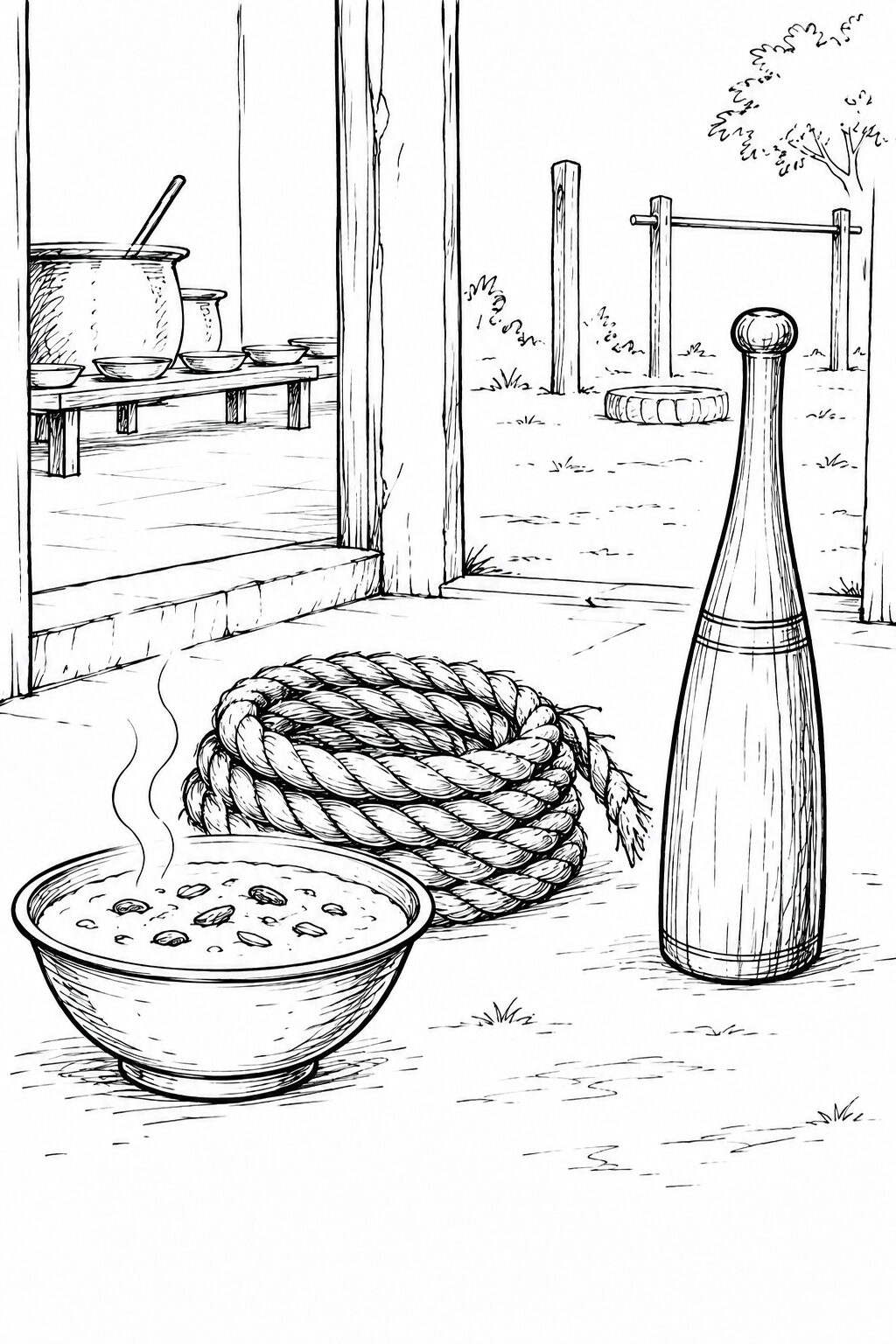
Traditional accounts remember Guru Angad Dev Ji sitting on the floor with bundles of straw in front of Him. Hour by hour, He twisted the dry strands together — thumb and forefinger, thumb and forefinger — until they became rope. Strong rope. The kind that could pull a bucket up from a well or tie down a load on a cart.
He sold the rope in the market for a small coin. And every coin went into the langar.
When people saw the second Guru of the Sikhs sitting on the ground twisting rope, they were embarrassed. “Surely someone else can do this, Guru Ji. It is not work for you.”
The story teaches a simple truth: no honest work is beneath a person when it helps feed someone who is hungry.
In the langar itself, Mata Kheevi Ji — the Guru’s wife — provided steady leadership. She helped organise the kitchen, cooked, and served. She was especially remembered for a sweet rice pudding called kheer, slow-cooked in milk and ghee, served warmly to every visitor regardless of who they were or where they came from.
The wrestling arena and the playgrounds. The schools and the gutkas. The rope on the floor and the kheer in the bowl. Different strands. One rope.
The Emperor’s Sword
One traditional account tells of a man who came to Khadoor Sahib and was not used to waiting for anyone.
His name was Humayun. He was the Emperor of the Mughals. Or at least, he had been until very recently. A warrior named Sher Shah Suri had just defeated him in battle and taken his throne. Humayun was now a ruler without a kingdom, running for safety, hoping the Guru could give him a blessing that might restore what he had lost.
When he arrived, Guru Angad Dev Ji was watching the young men wrestle. He did not look up immediately.
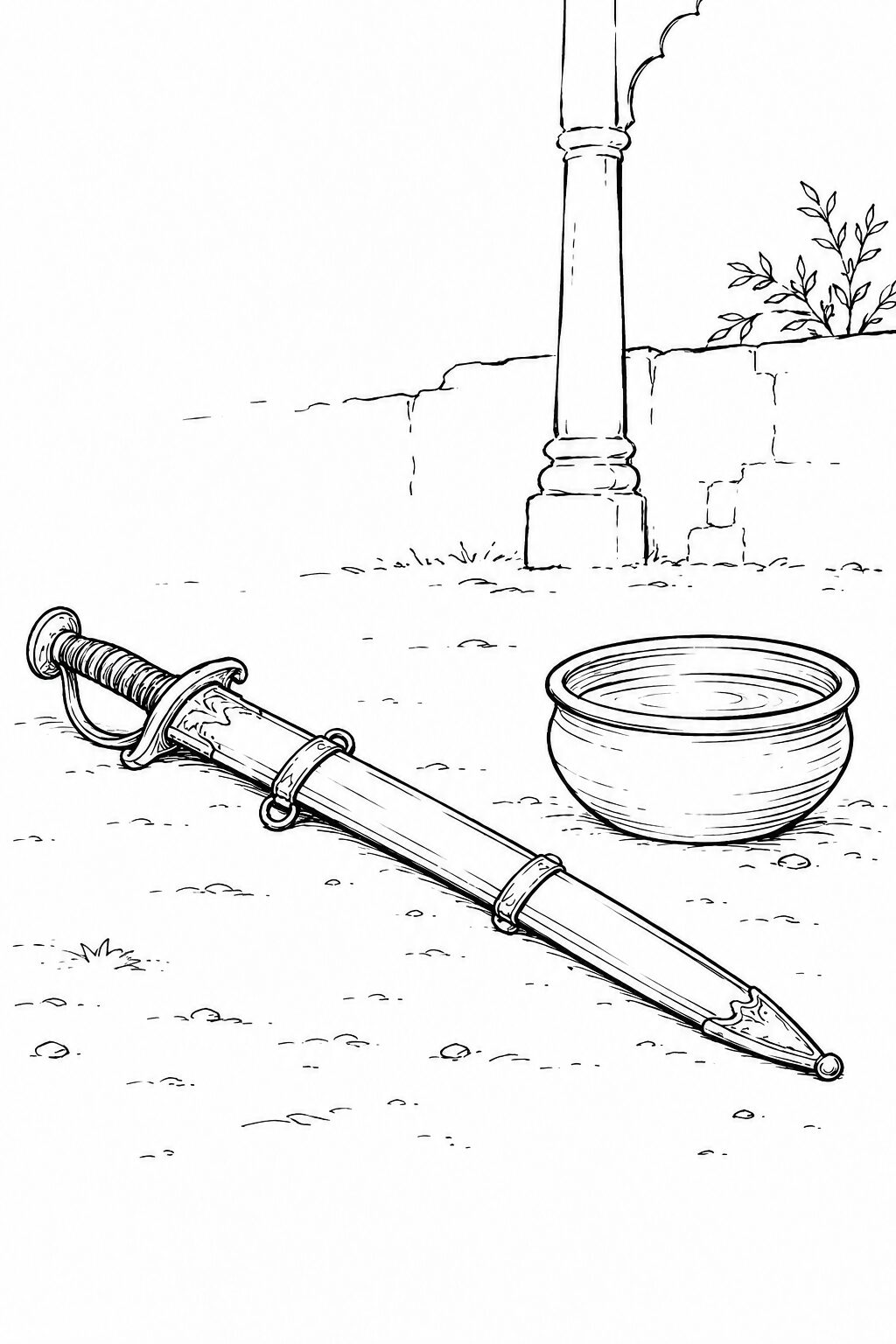
Humayun was used to people scrambling to their feet when he entered a room. He was used to bows and titles and trumpets. Standing here, ignored, in a dusty courtyard, his pride bristled. His hand moved to the hilt of his sword.
Guru Angad Dev Ji turned then, slowly, and looked at him with eyes that were neither afraid nor angry.
Guru Angad Dev Ji challenged Humayun to ask himself why he had not used the sword against Sher Shah Suri, yet reached for it in a peaceful courtyard where no one was harming him.
Humayun’s hand stopped. He looked at his own sword as if he had never seen it before. He thought of the battlefield. He thought of his fear. He thought of how easy it had been to draw the sword here, in this peaceful courtyard, against a man of peace and some wrestling boys.
He let the sword fall back into its sheath. He knelt down.
“Forgive me, Guru Ji.”
The account carries a clear lesson: strength is not the sword on a belt, but the steadiness a person carries inside.
Humayun left Khadoor Sahib a quieter man than he had arrived. Years later, he did regain his throne. Whether the visit changed him, only he could have said.
The Old Man with the Water Pot
In Khadoor, an older man had begun coming to the dharamshala every day. His name was Amar Das Ji. He was already over sixty years old when He first arrived.
Amar Das Ji came to serve.
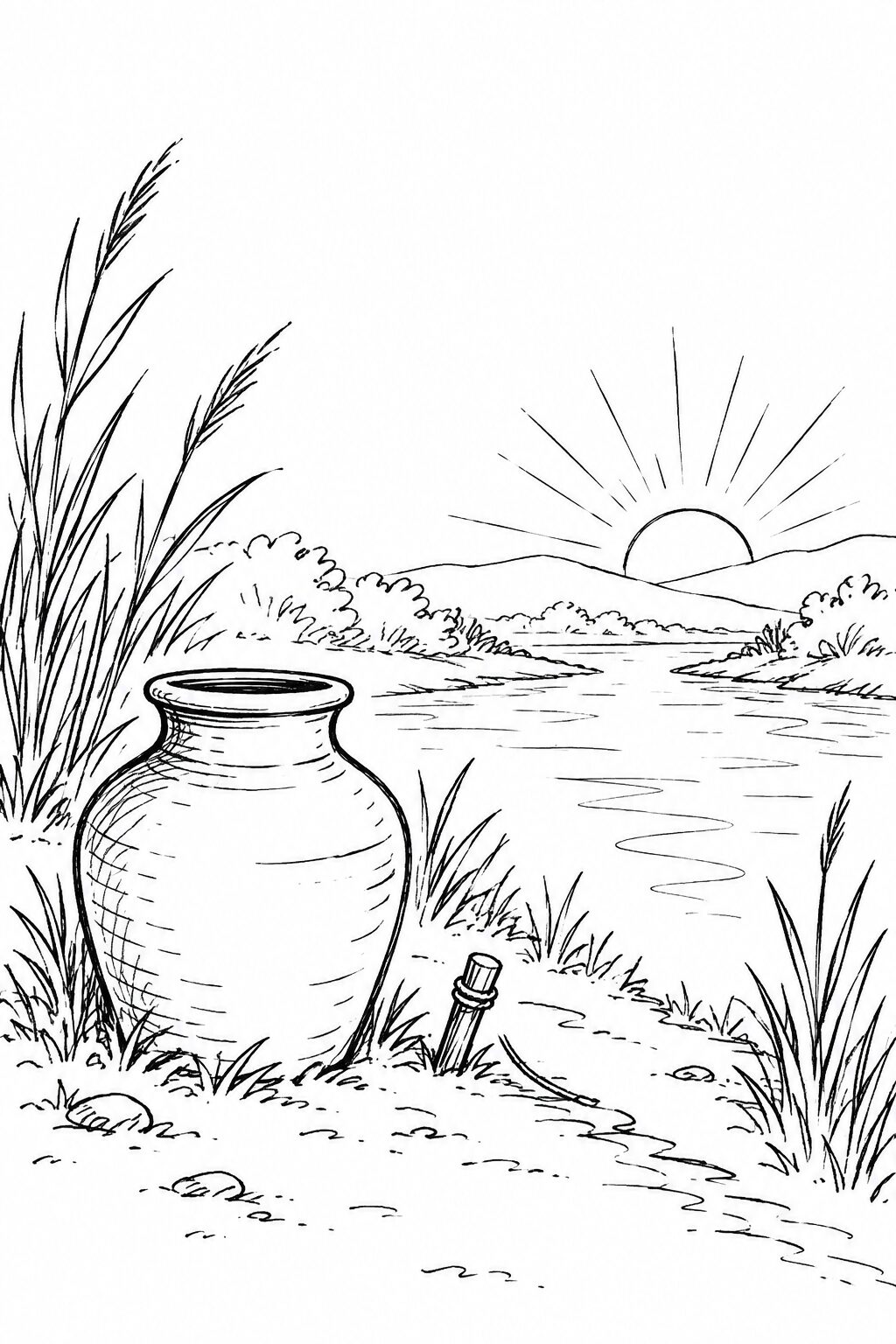
Every morning, long before sunrise, He walked down to the river, filled a heavy clay pot with water, and carried it back on His head so that Guru Angad Dev Ji could bathe. He did this in summer when the river was low and the path was hot. He did this in winter when the path was iced over and His fingers ached on the pot.
He did this every single morning. For twelve years.
One dark, freezing night, on His way back with the pot, Amar Das Ji stumbled over a tent peg outside a weaver’s house and fell heavily. The water spilled. The pot rolled away. The weaver’s wife inside heard the noise and called out something unkind into the dark.
Amar Das Ji did not answer her. He picked Himself up. He found the pot. He went back to the river. He filled it again. He carried it home.
When Guru Angad Dev Ji learned what had happened, He was very still for a long time.
Guru Angad Dev Ji saw in His service a profound steadiness and commitment.
Near the end of His life, Guru Angad Dev Ji called the community together. As Guru Nanak Dev Ji had once done for Him, He passed the Guruship to Amar Das Ji, and with it the pothi of Gurbani.
The Light passed on.
Guru Angad Dev Ji merged back into the Light on 29 March 1552, after nearly thirteen years as Guru. The work of His hands continued wherever children learned Gurmukhi and Sikh communities gathered to read and sing Gurbani. It continued in every wrestling arena and playground, every bowl of kheer, and every bundle of rope.
His whole life had been the same kind of work — taking what looked humble and ordinary, and twisting it patiently into something strong enough to carry the world.
Reflection
Think about Bhai Lehna Ji walking home from the goddess’s temple, year after year, with a small quietness inside.
Most of us carry a quietness like that somewhere. A feeling that something is missing, even when everything looks fine.
Guru Angad Dev Ji’s life shows us what to do when we hear something — a song, a story, a wise voice — that meets that quietness for the first time.
You walk toward it. You stop. You listen. You let yourself be changed.
And then — this is the harder part — you set down the things that no longer fit. The pilgrim group walks on without you. You stay.
That is how Bhai Lehna Ji, who once led pilgrims to Durga’s shrine, came to be publicly revealed as Guru Angad Dev Ji, the second Sikh Guru: the same Light continuing.
Every child who learns to read Gurmukhi today is part of His rope. Every cook who serves in langar is part of His rope. Every Sikh who serves with their own two hands is part of His rope.
You can take a single strand of that rope yourself. Pick something small. Do it kindly. Do it well. Do it again tomorrow.
That is how a Guru’s work continues — not through grand acts, but through millions of small ones, twisted together.
Quick Facts
| Fact | Detail |
|---|---|
| Born | 31 March 1504 |
| Birthplace | Matte Di Saran, Ferozepur district (Punjab) |
| Parents | Pheru Mal Ji and Mata Daya Ji |
| Original name | Bhai Lehna |
| Wife | Mata Kheevi Ji |
| Children | Dattu and Dasu (sons); Bibi Amro and Bibi Anokhi (daughters) |
| Light received from | Guru Nanak Dev Ji |
| Town of His Guruship | Khadoor Sahib, on the river Beas |
| Known for | Refining and spreading the Gurmukhi script; encouraging literacy; wrestling arenas and playgrounds; humble service; carrying Guru Nanak Dev Ji’s teaching forward |
| Successor | Guru Amar Das Ji |
| Passed away | 29 March 1552, at Khadoor Sahib |
| In Sri Guru Granth Sahib Ji | 63 shaloks composed by Him are preserved |
Discussion Questions
Let’s Talk About It: Before He met Guru Nanak Dev Ji, Bhai Lehna Ji felt a “small quietness” inside that His pilgrimages had not filled. Have you ever felt that something was missing, even when everything around you seemed fine?
Let’s Talk About It: When Bhai Lehna Ji heard the hymn from Bhai Jodh’s courtyard, He stopped in the middle of the road. What do you think made Him stop? What kinds of words or songs make you stop and listen?
Let’s Think About It: Bhai Lehna Ji turned aside from the goddess pilgrimage and never went back. Setting down something familiar to follow something new can be very hard. Why do you think He was able to do it?
Let’s Think About It: Guru Angad Dev Ji sat on the floor every day twisting rope from straw to fund the langar. Why do you think He chose to do this work Himself, instead of asking someone else?
Let’s Think About It: When Emperor Humayun drew his sword in anger, Guru Angad Dev Ji did not raise His voice or His hand. He asked a question instead. Why was the question stronger than a sword?
Let’s Try It: Guru Angad Dev Ji made it possible for ordinary children to learn to read. What is something you can teach someone smaller than you — a sibling, a cousin, a friend — even just one thing?
Let’s Try It: This week, do one small piece of seva at home or in your gurdwara without being asked, and without telling anyone about it afterwards. Notice how it feels.
Word Meanings
| Word | Meaning |
|---|---|
| Bibi | A respectful word for daughter or sister in Punjabi. |
| Dharamshala | A simple community hall where people gathered to sing, listen, and learn — the early form of today’s Gurdwara. |
| Durga | A Hindu goddess. Bhai Lehna Ji used to lead pilgrims to her temple every year before He met Guru Nanak Dev Ji. |
| Gurbani | The hymns and teachings of the Sikh Gurus, preserved in Sri Guru Granth Sahib Ji. |
| Gurdwara | A Sikh place of worship — “the door to the Guru”. |
| Gurmukhi | The script used to write the Punjabi language and Sri Guru Granth Sahib Ji. The word means from the Guru’s mouth. Guru Angad Dev Ji promoted it and had primers written so children could learn it. |
| Guru | An enlightener who shows the way from darkness to Light. |
| Gutka | A small book containing selected hymns for prayer and singing. In Guru Angad Dev Ji’s time, Gurbani was preserved in handwritten collections and booklets. |
| Kartarpur | The town Guru Nanak Dev Ji founded on the river Ravi — “the City of the Creator”. |
| Khadoor Sahib | The town where Guru Angad Dev Ji lived and taught after Guru Nanak Dev Ji’s passing. |
| Kheer | A slow-cooked sweet rice pudding made with milk and ghee. Mata Kheevi Ji was famous for serving it in the langar. |
| Langar | The community kitchen at the Gurdwara where everyone sits together and eats the same food. |
| Malla Akhara | A wrestling arena. Guru Angad Dev Ji built them so young Sikhs could train their bodies as well as their minds. |
| Mata | A respectful word for mother in Punjabi, used for elder women of honour. |
| Sangat | The community of people who gather to learn and sing the praises of the Creator together. |
| Seva | Selfless service — helping others without wanting anything in return. |
| Shalok | A short verse. Sixty-three of Guru Angad Dev Ji’s shaloks are preserved in Sri Guru Granth Sahib Ji. |
| Sri Guru Granth Sahib Ji | The sacred scripture of the Sikhs, containing the hymns of the Sikh Gurus and other devotional saints from many traditions. |
Explore More
- The Light of Truth: The Life of Guru Nanak Dev Ji — Book 1 in the series, on the founder of Sikhi and the Guru who first carried the Light
- The Gentle Healer: The Life of Guru Har Rai Sahib Ji — Another biography in the series, on the seventh Guru
- Why Do We Bow in Gurdwara? — A guide explaining what we are really bowing to