Char Sahibzade and Mata Gujri Ji: The Sakhi of Shaheedi Week
ਚਾਰ ਸਾਹਿਬਜ਼ਾਦੇ ਤੇ ਮਾਤਾ ਗੁਜਰੀ ਜੀ
Small in age, tall in spirit.
Every December, Sikhs remember the four sons of Guru Gobind Singh Ji, the Char Sahibzade, aged 18, 14, 8 and 6, and their grandmother, Mata Gujri Ji. This is their sakhi, for families to read together.
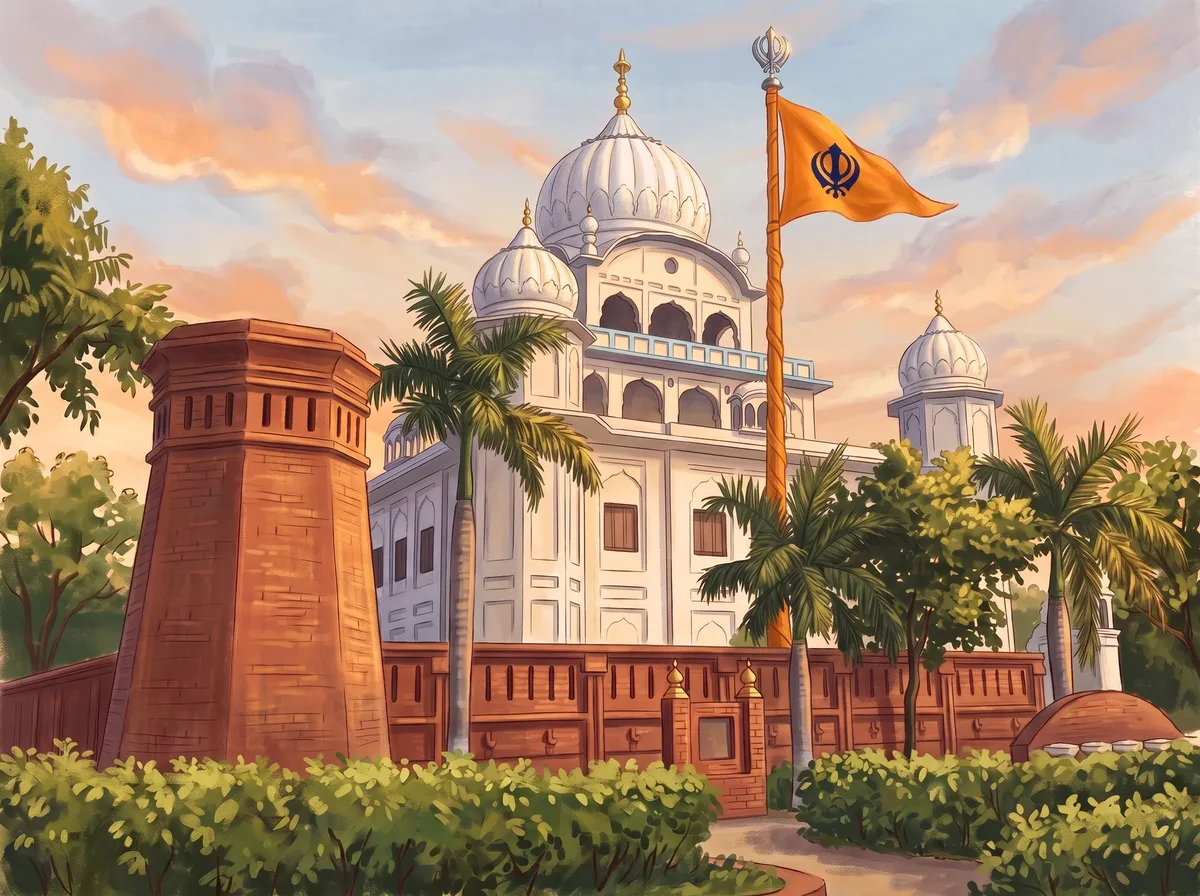
Gurdwara Sri Thanda Burj Sahib, Fatehgarh Sahib, stands today where the Cold Tower stood.
Meet the Char Sahibzade and Mata Gujri Ji
About 18
Baba Ajit Singh Ji
ਬਾਬਾ ਅਜੀਤ ਸਿੰਘ ਜੀ
Martyred at Chamkaur
The eldest. He held back the army at the Sarsa, and was the first of the brothers to ride out at Chamkaur.
14
Baba Jujhar Singh Ji
ਬਾਬਾ ਜੁਝਾਰ ਸਿੰਘ ਜੀ
Martyred at Chamkaur
He followed his brother at Chamkaur: "Ajit is calling me. Don't let our pair be broken."
8
Baba Zorawar Singh Ji
ਬਾਬਾ ਜ਼ੋਰਾਵਰ ਸਿੰਘ ਜੀ
Martyred at Sirhind
He stood before the governor's court for three days and would not give up Sikhi.
6
Baba Fateh Singh Ji
ਬਾਬਾ ਫ਼ਤਹਿ ਸਿੰਘ ਜੀ
Martyred at Sirhind
The youngest. He walked into the court calling out the Khalsa's Fateh, side by side with his brother.
Their grandmother
Mata Gujri Ji
ਮਾਤਾ ਗੁਜਰੀ ਜੀ
Martyred at Sirhind
Wife of Guru Tegh Bahadur Sahib Ji and mother of Guru Gobind Singh Ji. In the Thanda Burj she kept her grandsons steady in Sikhi.
The sakhi
Ten short chapters.
Chapter 1
Anandpur: growing up brave
Our sakhi begins in Anandpur Sahib, in the foothills of the Shivalik mountains: the city of Guru Gobind Singh Ji, where the Khalsa was born. Sikhs came here from far and wide, and here ordinary people learned to stand tall, bowing to no one but Waheguru.
The four Sahibzade grew up in the middle of it all. Little Baba Zorawar Singh Ji would sit in his father's lap, watching his eldest brother, Baba Ajit Singh Ji, practise with sword and shield. Baba Jujhar Singh Ji would run to collect the arrows after the archers had shot them. And their grandmother, Mata Gujri Ji, told them the sakhis of the Gurus again and again.
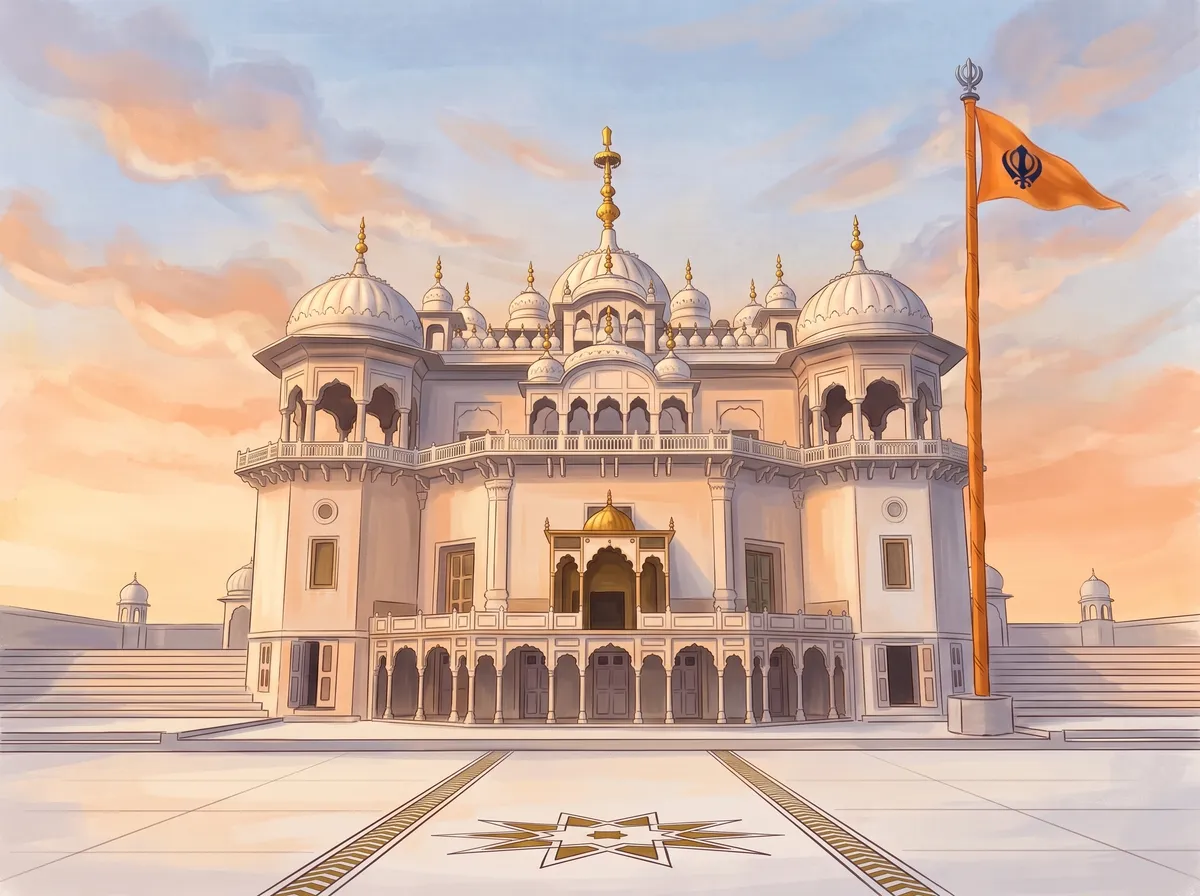
Takht Sri Keshgarh Sahib, Anandpur Sahib, as it stands today.
Chapter 2
A promise sworn, and broken
The emperor's armies and the kings of the hill states could not accept a free and sovereign Khalsa. Together they surrounded Anandpur Sahib and kept it under siege for seven long months. Food ran short, and the Sikhs inside were suffering. Still the city held.
So the armies tried another way. They swore on the things they held most holy that if Guru Ji left Anandpur, everyone could go in peace. On a freezing December night in 1704, for the sake of His Sikhs, Guru Ji left the city with His family and the Sangat.
The promise did not last the night. As soon as the Sikhs were out, the armies came after them.
Chapter 3
The night at the Sarsa
Ahead lay the river Sarsa, in flood and running fast and icy in the dark. While the Sikhs tried to cross, Baba Ajit Singh Ji, about eighteen, led a band of Sikhs holding the army back. Even there, at the riverbank, the Sikhs sang Asa Ki Var and stood together in Ardas.
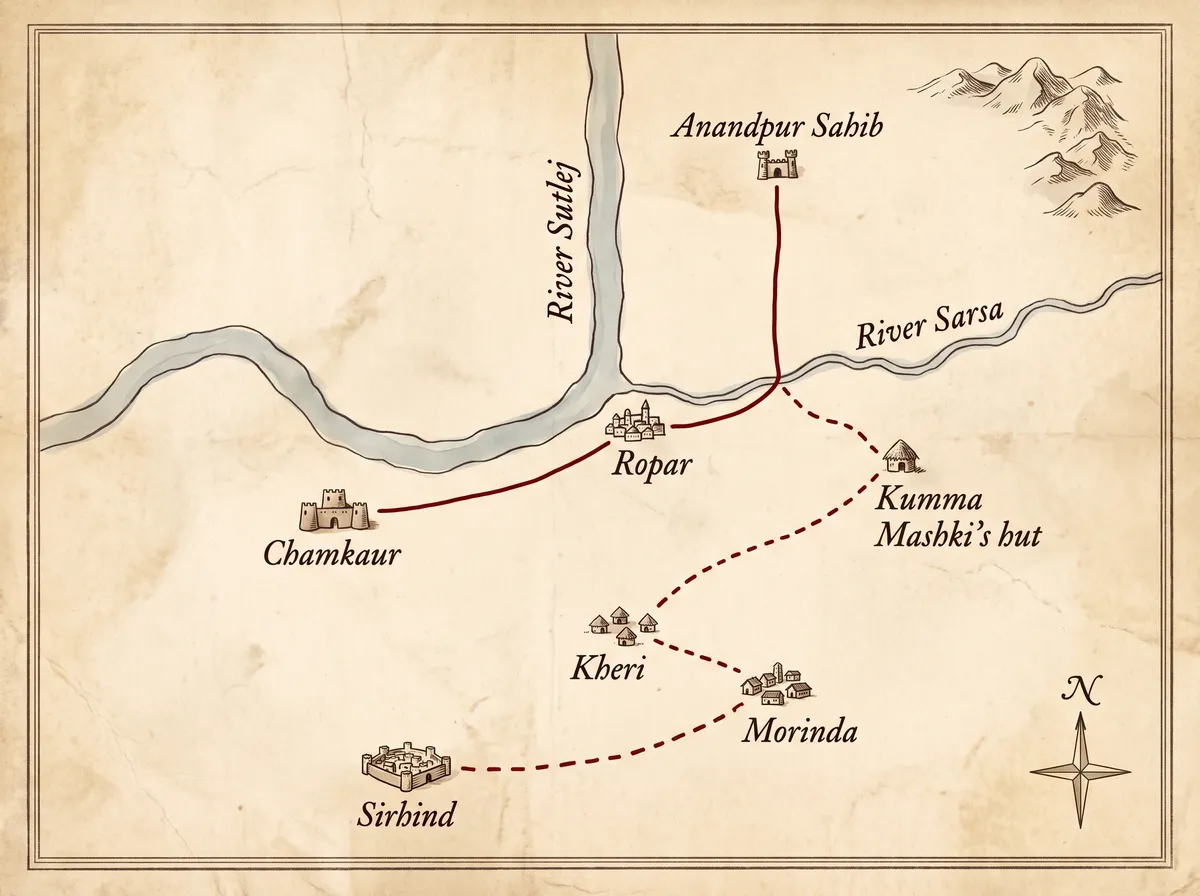
Many Sikhs were lost to the water that night. In the darkness and the rushing river, the Guru's family was separated. Guru Ji and the two elder Sahibzade crossed and went on towards Chamkaur. Mata Gujri Ji, with the two little ones, Baba Zorawar Singh Ji (8) and Baba Fateh Singh Ji (6), was carried along the other bank. They would never all be together again.
Guru Ji and the elder SahibzadeMata Gujri Ji and the younger SahibzadeNot to scale.
Chapter 4
Baba Kumma Mashki's hut
Cold, and far from everyone they knew, Mata Ji and the boys came to the hut of Baba Kumma Mashki. He was a mashki, a water-carrier: a poor Muslim man who lived in a hut of straw, and whose name people rarely said with respect.
That night he gave the Guru's family everything he had: a roof, and food to share. Sheltering them could have cost him his life. He did it anyway, with love. Sikhs remember him to this day: a poor man with the heart of a king.
Chapter 5
Chamkaur: forty Sikhs and two young lions
Guru Ji reached Chamkaur with His two elder sons and forty Sikhs, and took shelter in a small mud-walled house, the kacchi garhi. By morning a huge army surrounded it. Guru Ji told the Sikhs: "Today the work of ten generations of Gurus will be tested."
The Sikhs went out to face the army a few at a time, and each group fought bravely until all were martyred. Then Baba Ajit Singh Ji, about eighteen, stood before his father and asked to go. Guru Ji embraced him and said: "When I sent my father to Delhi, I did my duty as a son. Today I send you as a father."
A jewelled plume shone on his turban as he rode out, so bright that the army thought the Guru Himself had come. Baba Ajit Singh Ji fought with great courage, and was martyred on the field at Chamkaur.
Baba Jujhar Singh Ji, just fourteen, was next. "Father," he said, "Ajit is calling me. Don't let our pair be broken." Guru Ji kissed his forehead and sent him out with five Sikhs. He too fought bravely, and was martyred where his father could see. Guru Ji bowed to Waheguru's will in the words of Gurbani:
ਤੇਰਾ ਕੀਆ ਮੀਠਾ ਲਾਗੈ ॥
Your actions seem so sweet to me.
Sri Guru Granth Sahib Ji, Ang 394 · Guru Arjan Dev Ji
That night only a handful of Sikhs were left. They gathered as the Khalsa and gave Guru Ji an order: He must leave, to keep the Panth alive. Guru Ji answered that He could not disobey the Panth. But He would not slip away in secret. He clapped three times and called out that the Guru of the Sikhs was leaving. In the dark, the army fell into confusion, and Guru Ji went on His way. The Sikhs who stayed behind gave their lives at Chamkaur the next morning.
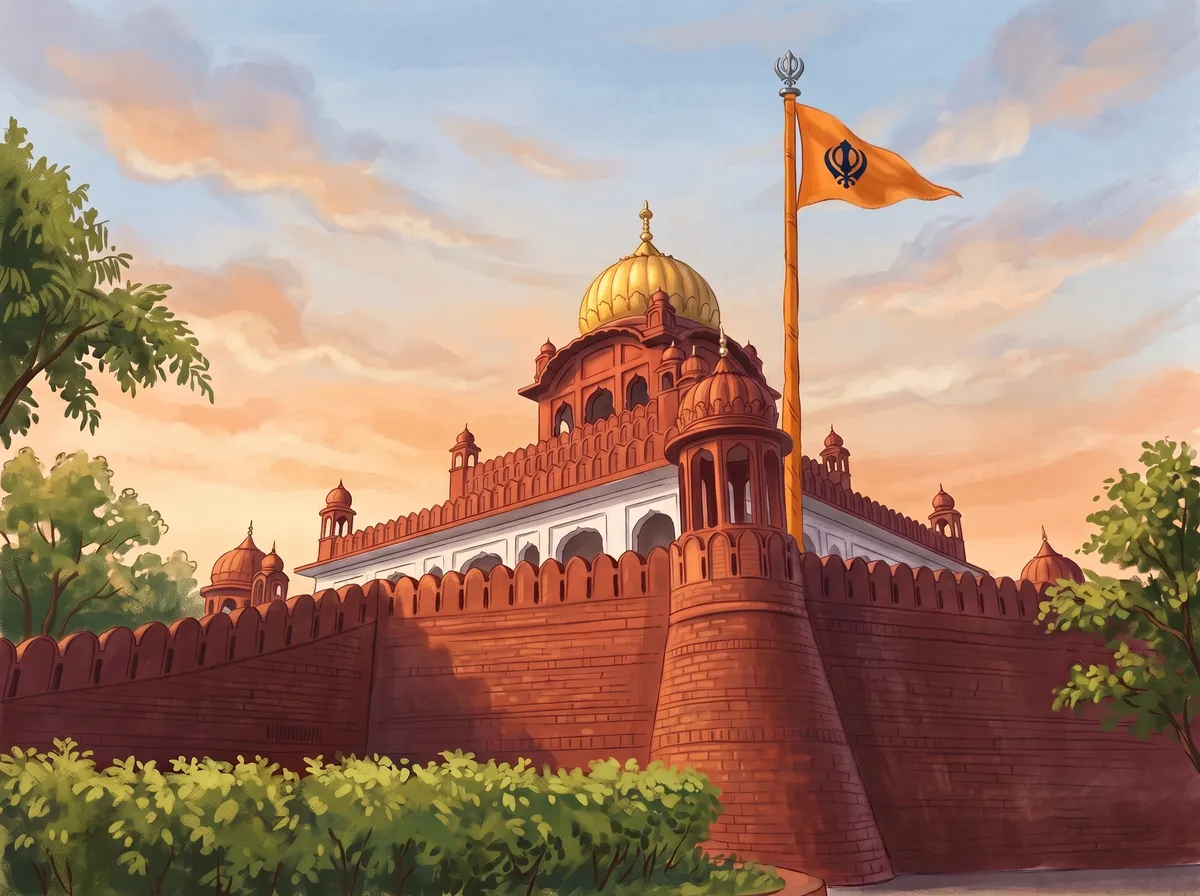
Gurdwara Sri Garhi Sahib, Chamkaur Sahib, stands today where the kacchi garhi stood.
Chapter 6
Gangu's betrayal
On the other side of the river, Mata Ji and the boys met Gangu, a man who had worked in the Guru's household for about twenty years. He begged them to come to his village, Kheri, and they trusted him.
That night, while they slept, Gangu took the bag of gold coins from under Mata Ji's pillow. When she asked about it in the morning, he made a great fuss, as if he had been insulted. Then he went to the authorities at Morinda and told them where the Guru's mother and sons were, hoping for a reward. A grandmother and two small boys were arrested and taken to Wazir Khan, the governor of Sirhind.
Chapter 7
Sirhind: the Thanda Burj
Wazir Khan had spent seven months trying to take Anandpur. Now he had the Guru's mother and youngest sons. He had them locked in the Thanda Burj, the Cold Tower: an open tower built to catch cool summer breezes. It was December, and the floor was stone.
All night Mata Gujri Ji held her grandsons close to keep them warm. At amrit vela, before dawn, she woke them and got them ready. "Remember whose children you are," she told them. "Your father has never bowed to a tyrant. Whatever you are offered, whatever you are threatened with, stay true to Sikhi." The boys promised they would never let her, or their father, down.
Chapter 8
Three days in the court
When the boys stepped into Wazir Khan's crowded court, they called out together: "Waheguru Ji Ka Khalsa, Waheguru Ji Ki Fateh!" A courtier named Sucha Nand snapped at them to bow to the Nawab. "We bow our heads only before Akal Purakh and the Guru," they said.
Wazir Khan tried to win them over. They could have palaces, fine food, silk clothes and servants, if only they would give up their faith. When that failed, he threatened them. The boys stood firm: "Sikhi is dearer to us than our breath. Our grandfather, Guru Tegh Bahadur Sahib Ji, gave His life rather than give up His faith. We are His grandsons."
Wazir Khan sent them back to the tower to think it over. Mata Ji held them close and said: "Well done, my children. Today you kept your father's and your grandfather's honour." The next day it all happened again: bigger offers, harsher threats, and the same answer.
On the third day, the Qazi declared that the boys should be bricked into a wall. One man in the court stood up: Nawab Sher Muhammad Khan of Malerkotla. "These children have done nothing wrong," he said. "They cannot be punished for what their father did." He was overruled. But he had spoken up for what was right.
Chapter 9
Standing tall to the end
The two brothers were stood side by side, and a wall was built up around them. They kept their minds on Waheguru and recited Gurbani, in Chardi Kala, high in spirit, the whole time. Even then they were offered a way out, and even then they said no.
And so Baba Zorawar Singh Ji, eight years old, and Baba Fateh Singh Ji, six, were martyred at Sirhind in December 1704.
That same day, in the Thanda Burj, Mata Gujri Ji was martyred. All her life she had accepted Waheguru's will, and she kept her grandsons steady in Sikhi to the very end.
Chapter 10
Remembered with love
No one in Sirhind dared to give the martyrs their last rites. Then Diwan Todar Mal's family stepped forward when no one else would, and paid dearly for the land to give Mata Ji and the Sahibzade their cremation.
When the news reached Guru Gobind Singh Ji, He gave thanks to Akal Purakh that His sons had kept their faith.
Four brothers, aged 6, 8, 14 and 18, and their grandmother. Small in age, tall in spirit. By giving their lives, they became eternal. Every December, Sikhs gather to remember them, and the many Sikhs who gave their lives alongside them. They stood in Chardi Kala, choosing their faith over palaces, gold and fear. Their sakhi reminds us that courage has no age.
Those who stood with them
Baba Kumma Mashki
ਬਾਬਾ ਕੁੰਮਾ ਮਾਸ਼ਕੀ
A poor Muslim water-carrier who opened his straw hut to Mata Gujri Ji and the boys after the Sarsa, when helping them could have cost him everything.
Nawab Sher Muhammad Khan of Malerkotla
ਨਵਾਬ ਸ਼ੇਰ ਮੁਹੰਮਦ ਖ਼ਾਂ, ਮਲੇਰਕੋਟਲਾ
He stood up in Wazir Khan's court and said that children cannot be punished for what their father did. He was overruled, but Sikhs remember his stand for justice.
Diwan Todar Mal's family
ਦੀਵਾਨ ਟੋਡਰ ਮੱਲ ਦਾ ਪਰਿਵਾਰ
They stepped forward when no one else would, and paid dearly for the land to give Mata Gujri Ji and the Sahibzade their cremation.
Three people from different walks of life. Each did what was right at the moment it was hardest to do.
Standing tall: ਚੜ੍ਹਦੀ ਕਲਾ
Chardi Kala means rising spirits: staying hopeful and strong, whatever happens. As the wall rose around them, the younger Sahibzade stayed in Chardi Kala. Their courage had three sides, and each one is something a child can carry today.
Sovereignty: bowing only to Waheguru
In the court they said: "We bow our heads only before Akal Purakh and the Guru."
Ask: What does it mean to bow only to Waheguru? What do people "bow" to today?
Freedom of faith
Palaces, silk and gold could not buy their faith. It was theirs to keep, and no one could make them change it.
Ask: Guru Tegh Bahadur Ji gave His life so people could follow their own faith. How did His grandsons carry that on?
Justice
At Chamkaur, forty Sikhs stood against a whole army. In Sirhind's court, the Nawab of Malerkotla stood up and said the children had done nothing wrong.
Ask: If someone at school is being teased or left out, what is one small thing you could say or do?
ਸਿਰ ਜਾਏ ਤਾਂ ਜਾਏ, ਮੇਰਾ ਸਿੱਖੀ ਸਿਦਕ ਨਾ ਜਾਏ।
Let my head go if it must, but never my faith in Sikhi.
A traditional Sikh saying
Shaheedi week at home
1
A chapter a night
The sakhi has ten short chapters. Read one or two aloud each evening of Shaheedi week, then let your children tell it back in their own words.
2
Talk it over
Pick one of the three questions above at dinner. There are no wrong answers; the point is to think about it together.
3
Go to the gurdwara
Many gurdwaras hold special diwans in Shaheedi week. Go together, and let your children hear the sakhi from the Sangat too.
4
Thank someone who stood by you
Baba Kumma Mashki gave what little he had. Ask: who has stood by our family? Make them a card, or tell them thank you.
Questions families ask
When is Shaheedi week 2026?
Sikhs remember the Char Sahibzade and Mata Gujri Ji in the last days of December. In 2026, Saka Chamkaur Sahib is remembered on Wednesday, 23 December 2026 (08 Poh), and Saka Sirhind is remembered on Monday, 28 December 2026 (13 Poh). These dates are from the Nanakshahi calendar published by the SGPC.
Who were the Char Sahibzade?
Char Sahibzade means "the four Sahibzade": the four sons of Guru Gobind Singh Ji, Baba Ajit Singh Ji, Baba Jujhar Singh Ji, Baba Zorawar Singh Ji and Baba Fateh Singh Ji. The two elder Sahibzade were martyred in battle at Chamkaur Sahib. The two younger Sahibzade were martyred at Sirhind, with their grandmother, Mata Gujri Ji.
How old were the Sahibzade?
Baba Ajit Singh Ji was about 18 and Baba Jujhar Singh Ji was 14 when they were martyred at Chamkaur. Baba Zorawar Singh Ji was 8 and Baba Fateh Singh Ji was 6 when they were martyred at Sirhind.
What was the Thanda Burj?
Thanda Burj means "the cold tower". It was an open tower at Sirhind, built to catch cool breezes in summer. In December it caught the winter wind instead. Wazir Khan, the governor of Sirhind, kept Mata Gujri Ji and the two younger Sahibzade there.
Why is Malerkotla remembered?
When the court sentenced the two younger Sahibzade, Nawab Sher Muhammad Khan of Malerkotla stood up and said it was wrong: the children had done nothing, and could not be punished for what their father did. He was overruled, but Sikhs have remembered his stand for justice ever since.
Why are the Sahibzade called "Baba" when they were so young?
Baba is a title of deep respect in Punjabi, usually given to elders and to people of great spiritual standing. Sikhs give it to all four Sahibzade, even six-year-old Fateh Singh Ji, because what they did made them great beyond their years.