
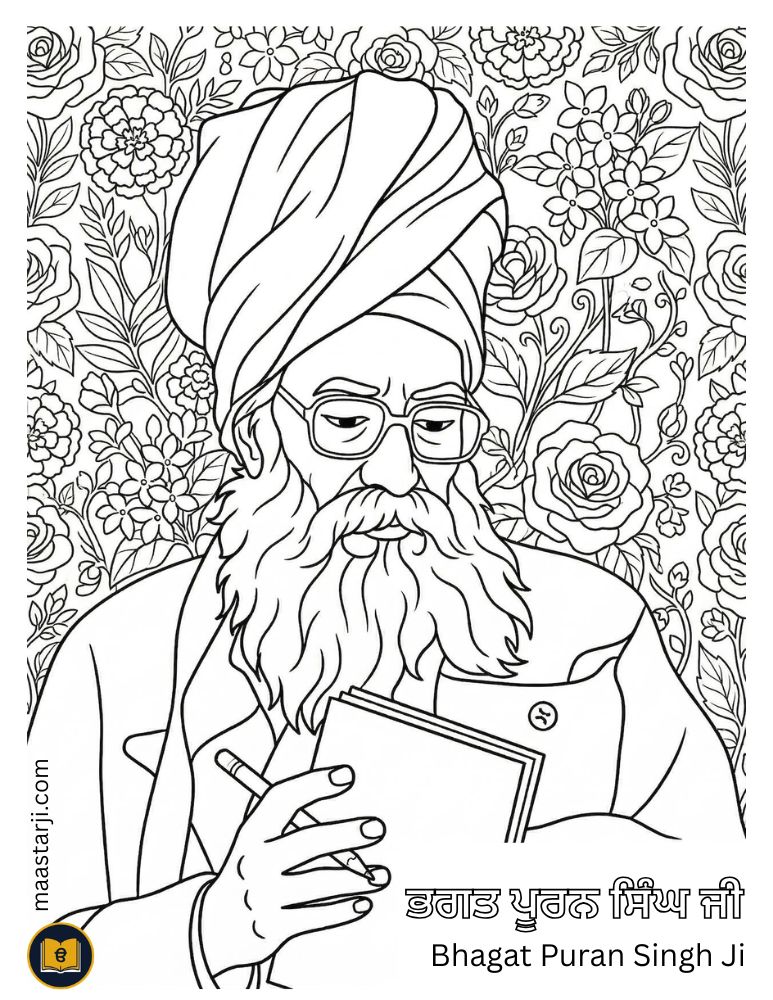
- Born
- 4 June 1904, Rajewal, Ludhiana
- Passed away
- 5 August 1992, Amritsar
- Known for
- Founding Pingalwara
- Honour
- Padma Shri (1981), returned in 1984
A promise to his mother
Bhagat Puran Singh was born on 4 June 1904 in the village of Rajewal, in the Ludhiana district of Punjab, to his mother Mehtab Kaur. He was named Ramji Das. His father passed away when he was young, leaving his mother to raise him largely on her own. She worked hard — cleaning and washing in households in different cities — to fund her son’s education.
On her deathbed, she extracted a promise: that he would dedicate his life to serving others. This promise defined everything that followed. Read the children’s story The Boy Who Picked Up Stones to share this chapter of his life with young readers.
Finding a home in the Gurdwara
Growing up, Ramji Das was exposed to both Hinduism and Sikhi, and the contrast he observed between the two shaped his worldview in a profound way. Where he experienced indifference and hierarchy in one place, the Gurdwara offered him food, warmth, and dignity — asking nothing in return. These experiences drew him toward Sikhi’s message of equality.
He began doing seva at a Gurdwara in Lahore — carrying water for visitors, helping with the cattle, cleaning, cooking in the Langar, and serving food. He embraced the Sikh faith and took the name Puran Singh. Over time, the community came to know him as “Bhagat” — a title reflecting the deep reverence they held for him.
His formal education was cut short by poverty. But the Gurdwara became his university.
Piara Singh — a garland around his neck
The event that defined Bhagat Puran Singh’s life came in 1934. A young child, afflicted with severe illness and disability, was left at the doorstep of a Gurdwara in Lahore. He was handed to Bhagat Puran Singh.
Rather than sending the boy away, Bhagat Puran Singh took him into his own care. He named him Piara Singh. The boy was unable to walk, speak, or control his body. Bhagat Puran Singh carried him on his back everywhere — through the streets of Lahore, through the chaos of Partition, and into his new life in Amritsar.
He carried Piara for fourteen years.
When asked about the burden, he answered simply: “He is like a garland around my neck.” This phrase became the title of his most well-known biography — a book worth reading for anyone who wants to understand the depth of this man’s character.
The act of carrying one abandoned child on his back became the metaphor for carrying all of society’s abandoned on his shoulders.
From Partition to Pingalwara
In 1947, Bhagat Puran Singh made the journey from Lahore to Amritsar during Partition — with Piara still on his back. In Amritsar, he worked in refugee camps, caring for the sick and displaced.
When the camps closed, those with no families — the sick, the disabled, the forgotten — were left behind. Bhagat Puran Singh refused to walk away from them. For years, he had no permanent building. He moved from one abandoned structure to another, always with a growing number of patients who had nowhere else to go.
He collected donations by standing outside Sri Darbar Sahib. Small coins from the Sangat sustained the operation. Slowly, with the support of the community, Pingalwara took root, and in 1957 it was formally registered as a charitable society.
The patients of Pingalwara were those rejected by everyone else: people with leprosy, severe mental illness, physical disabilities, and terminal conditions — many abandoned by their own families. By the time of Bhagat Puran Singh’s death, Pingalwara had grown into a network of buildings, all funded by small donations from ordinary people.
Caring for the earth
Bhagat Puran Singh was an environmentalist decades before the term became mainstream. He wrote extensively about pollution, deforestation, soil erosion, and the dangers of unchecked population growth. He published many books and pamphlets through Pingalwara’s own printing press — all of them rooted in a Sikhi that saw the care of creation as inseparable from the care of humanity.
He organised tree-planting drives and gave lectures on environmental topics at schools and community gatherings. Protecting the earth, for him, was part of protecting Waheguru’s creation.
”Faith, or vanity?” — his message to the young
One of his best-known pamphlets was written when Marxist and Leninist ideas were spreading through Punjab. Young men in the colleges had begun growing a “Lenin-cut” beard as a fashion and dismissing faith as an “opium of the people.” Bhagat Puran Singh answered them with a tract he titled ਧਰਮ ਪਿਆਰਾ ਕਿ ਸ਼ੁਕੀਨੀ — “Faith, or Vanity?” Its heart was a single, plain sentence:
ਜਿਊਣ ਲਈ ਖਾਣਾ ਚਾਹੀਦਾ ਹੈ ਨਾ ਕਿ ਖਾਣ ਲਈ ਜਿਊਣਾ ਚਾਹੀਦਾ ਹੈ, ਕੱਪੜਾ ਤਨ ਕੱਜਣ ਲਈ ਹੈ ਨਾ ਕਿ ਅਜਿਹਾ ਸ਼ਿੰਗਾਰ ਕਰਨ ਲਈ ਜਿਸ ਨੂੰ ਕਰਕੇ ਆਦਮੀ ਕੋਈ ਸੇਵਾ ਦਾ ਕੰਮ ਹੀ ਨਾ ਕਰ ਸਕੇ ਕਿ ਮੇਰੇ ਕੀਮਤੀ ਕੱਪੜੇ ਖ਼ਰਾਬ ਹੋ ਜਾਣਗੇ।“We should eat in order to live, not live in order to eat. Clothing is meant to cover the body — not to dress a person up so finely that he can no longer do a single act of seva, for fear that his costly clothes will be spoiled.”
The pamphlet turned that idea into a way of living. Earn honestly with your own hands, he urged, keep santokh — contentment — and set aside your dasvandh, a tenth of what you earn, for the service of others, even if it means going without small comforts yourself. Fine clothes and display, he warned, too often become the very reason a person holds back from getting their hands dirty in seva. He framed dasvandh almost as an insurance premium a person pays into society — a fund kept alive for the helpless, and for the day one might be helpless oneself. Drawing on a scheme of five widening circles of duty — family, village, region, country, and the whole world — he argued that a real human being answers to all of them, not just their own household.
And he pointed to Pingalwara as the living answer to his own question: money spent on the sick, the disabled and the abandoned rather than on ego and show. Faith, in his telling, was never about looking a certain way — it was about being free enough to serve.
Honours and legacy
The Government of India recognised Bhagat Puran Singh with its Padma Shri award in 1981 for his exceptional service. But in June 1984, the Indian Army attacked Sri Darbar Sahib in Amritsar in what became known as Operation Blue Star. Sri Akal Takht Sahib was severely damaged, and the Sikh Reference Library was destroyed.
Later that year, Bhagat Puran Singh returned the Padma Shri. He wrote to the Government explaining that he could not hold an honour from a state that had attacked the most sacred site of his faith. His decision carried particular moral weight — this was a man whose life of service was beyond question, and yet he made no room for compromise on matters of faith and dignity.
He was nominated for the Nobel Peace Prize in 1991. Bhagat Puran Singh passed away on 5 August 1992, in Amritsar, in his late eighties.
He nominated Dr. Bibi Inderjit Kaur as his successor. Under her leadership, Pingalwara has expanded significantly, with branches across India and in countries including Canada, the United States, and Australia. Thousands of patients continue to receive daily care.
His story has been told through books, films, and commemorative honours. But the most meaningful testament to his life is Pingalwara itself — still running, still caring, still refusing to turn anyone away.
Frequently asked questions
- Who was Bhagat Puran Singh?
- Bhagat Puran Singh (1904–1992) was a Sikh who devoted his life to caring for the sick, disabled and abandoned. He founded Pingalwara in Amritsar, a home for people no one else would look after, and was also one of India's earliest environmentalists.
- What is Pingalwara?
- Pingalwara is a charitable home in Amritsar that Bhagat Puran Singh founded, formally registered as a society in 1957. It cares for people with disabilities, illness and no family to support them — welcoming those turned away everywhere else. It continues today with branches across India and abroad.
- What can children learn from Bhagat Puran Singh?
- His life teaches seva — selfless service — and that no person is unwanted. He carried a disabled boy named Piara Singh on his back for fourteen years, calling him 'a garland around my neck,' and reminds children that caring for others is at the heart of Sikhi.