ਦੋ ਤਲਵਾਰਾਂ
Two Swords
Bilingual Punjabi + English From Sikh history: Guru Hargobind Sahib Ji and Baba Buddha Ji All ages
ਅੰਮ੍ਰਿਤਸਰ ਦੇ ਨੇੜੇ ਖੁੱਲ੍ਹੇ ਖੇਤਾਂ ਵਿੱਚ ਇੱਕ ਘੋੜਾ ਘਾਹ ਉੱਤੋਂ ਦੌੜਦਾ ਆ ਰਿਹਾ ਸੀ। ਉਸ ਉੱਤੇ ਗੁਰੂ ਹਰਿਗੋਬਿੰਦ ਸਾਹਿਬ ਜੀ ਸਵਾਰ ਸਨ। ਉਹ ਅਜੇ ਛੋਟੀ ਉਮਰ ਦੇ ਸਨ।
In the open fields near Amritsar, a horse came galloping across the grass. On its back rode Guru Hargobind Sahib Ji. He was still young.
ਗੁਰੂ ਜੀ ਨੇ ਗੁਰਬਾਣੀ ਪੜ੍ਹੀ, ਅਤੇ ਪਹਿਲੇ ਗੁਰੂ ਸਾਹਿਬਾਨ ਦੀਆਂ ਸਾਖੀਆਂ ਸੁਣੀਆਂ। ਤੇ ਇੱਥੇ ਖੇਤਾਂ ਵਿੱਚ ਬਾਬਾ ਬੁੱਢਾ ਜੀ ਨੇ, ਜਿਨ੍ਹਾਂ ਨੇ ਸਾਰੀ ਲੰਮੀ ਉਮਰ ਗੁਰੂ-ਘਰ ਦੀ ਸੇਵਾ ਕੀਤੀ ਸੀ, ਉਹਨਾਂ ਨੂੰ ਘੋੜ-ਸਵਾਰੀ, ਕੁਸ਼ਤੀ ਅਤੇ ਸ਼ਸਤਰ ਚਲਾਉਣੇ ਸਿਖਾਏ।
Guru Ji learned Gurbani, and heard the sakhis of the Gurus who came before Him. And out here in the fields, Baba Buddha Ji, a Gursikh who had served the Guru's house all his long life, taught Him to ride, to wrestle and to use weapons.
ਉਹ ਔਖੇ ਸਮੇਂ ਸਨ। ਦੇਸ਼ ਦੇ ਹਾਕਮ ਸਖ਼ਤ ਹੋ ਗਏ ਸਨ, ਅਤੇ ਕਮਜ਼ੋਰ ਲੋਕ ਸੁਰੱਖਿਅਤ ਨਹੀਂ ਸਨ। ਗੁਰੂ ਜੀ ਦੇ ਪਿਤਾ, ਗੁਰੂ ਅਰਜਨ ਦੇਵ ਜੀ, ਵੇਖ ਰਹੇ ਸਨ ਕਿ ਸਿੱਖਾਂ ਨੂੰ ਮਨੋਂ ਵੀ ਤੇ ਤਨੋਂ ਵੀ ਤਿਆਰ ਰਹਿਣਾ ਪਵੇਗਾ।
Those were hard times. The rulers of the land had grown harsh, and the weak were not safe. Guru Ji's father, Guru Arjan Dev Ji, could see that the Sikhs would need to be ready, in heart and in strength.
ਇੱਕ ਦਿਨ ਉਹਨਾਂ ਨੇ ਸ੍ਰੀ ਹਰਿਮੰਦਰ ਸਾਹਿਬ ਵਿਖੇ ਦੀਵਾਨ ਸਜਾਇਆ। ਭਰੀ ਸੰਗਤ ਵਿੱਚ ਉਹਨਾਂ ਨੇ ਗੁਰਗੱਦੀ ਗੁਰੂ ਹਰਿਗੋਬਿੰਦ ਸਾਹਿਬ ਜੀ ਨੂੰ ਸੌਂਪੀ, ਅਤੇ ਉਹਨਾਂ ਅੱਗੇ ਮੱਥਾ ਟੇਕਿਆ। ਸਾਰੀ ਸੰਗਤ ਨੇ ਵੀ ਮੱਥਾ ਟੇਕਿਆ।
One day He gathered the sangat at Sri Harmandir Sahib. Before them all, He gave the Gurgaddi to Guru Hargobind Sahib Ji, and bowed His head before Him. The whole sangat bowed too.
ਗੁਰਗੱਦੀ ਦੀ ਰਸਮ ਬਾਬਾ ਬੁੱਢਾ ਜੀ ਨੇ ਨਿਭਾਈ। ਫਿਰ, ਜਿਵੇਂ ਉਹਨਾਂ ਨੂੰ ਹੁਕਮ ਸੀ, ਉਹਨਾਂ ਨੇ ਗੁਰੂ ਜੀ ਨੂੰ ਇੱਕ ਨਹੀਂ, ਦੋ ਤਲਵਾਰਾਂ ਪਹਿਨਾਈਆਂ।
Baba Buddha Ji performed the Gurgaddi ceremony. Then, as he had been asked, he put not one sword on Guru Ji, but two.
ਇੱਕ ਤਲਵਾਰ ਪੀਰੀ ਦੀ ਸੀ: ਨਾਮ ਲਈ, ਗੁਰਬਾਣੀ ਲਈ, ਗੁਰੂ ਦੇ ਰਾਹ ਲਈ। ਦੂਜੀ ਤਲਵਾਰ ਮੀਰੀ ਦੀ ਸੀ: ਲੋਕਾਂ ਦੀ ਸੰਭਾਲ ਲਈ, ਅਤੇ ਸੱਚ ਤੇ ਹੱਕ ਦੇ ਪੱਖ ਵਿੱਚ ਖੜ੍ਹਨ ਲਈ।
One sword was for Piri: for Naam, for Gurbani, for the Guru's path. The other was for Miri, for the world: for looking after people, and for standing up for what is true and right.
ਸਮਾਂ ਬੀਤਣ ਨਾਲ ਗੁਰੂ ਜੀ ਨੇ ਸਿੱਖਾਂ ਨੂੰ ਸਮਝਾਇਆ ਕਿ ਮੁਲਕ ਦੇ ਹਾਕਮਾਂ ਦੇ ਦਰਬਾਰ ਵਿੱਚੋਂ ਇਨਸਾਫ਼ ਖੰਭ ਲਾ ਕੇ ਉੱਡ ਗਿਆ ਹੈ, ਅਤੇ ਉਹਨਾਂ ਨੇ ਕਮਜ਼ੋਰਾਂ ਨੂੰ ਬਚਾਉਣਾ ਹੈ ਤੇ ਸੱਚ ਦੀ ਆਵਾਜ਼ ਬੁਲੰਦ ਕਰਨੀ ਹੈ। ਗੁਰੂ ਜੀ ਨੇ ਮਸੰਦਾਂ ਰਾਹੀਂ ਦੂਰ-ਨੇੜੇ ਦੀਆਂ ਸੰਗਤਾਂ ਨੂੰ ਹੁਕਮਨਾਮੇ ਭੇਜੇ। ਹੁਕਮਨਾਮਿਆਂ ਵਿੱਚ ਲਿਖਿਆ ਸੀ ਕਿ ਗੁਰੂ-ਦਰਬਾਰ ਵਿੱਚ ਆਉਣ ਵੇਲੇ ਸਿੱਖ ਨਕਦ ਭੇਟਾ ਦੀ ਥਾਂ ਵਧੀਆ ਘੋੜੇ ਤੇ ਵਧੀਆ ਹਥਿਆਰ ਲੈ ਕੇ ਆਉਣ, ਅਤੇ ਹਥਿਆਰ ਚਲਾਉਣ ਵਿੱਚ ਮੁਹਾਰਤ ਹਾਸਲ ਕਰਨ।
As time went on, Guru Ji told the Sikhs that justice had grown wings and flown away from the rulers' courts, and that they must protect the weak and make the voice of truth heard. Through the masands, He sent hukamnamas to the sangats near and far. The hukamnamas said that when Sikhs came to the Guru's darbar, they should not bring money, but good horses and good weapons, and learn to use them well.
ਤੇ ਸਿੱਖ ਆਏ। ਦੂਰ-ਨੇੜੇ ਦੇ ਪਿੰਡਾਂ ਤੋਂ ਗੱਭਰੂ ਆਏ, ਹਰ ਤਰ੍ਹਾਂ ਦੇ ਘਰਾਂ ਤੋਂ। ਕਈ ਏਨੇ ਗਰੀਬ ਸਨ ਕਿ ਭੇਟਾ ਕਰਨ ਲਈ ਉਹਨਾਂ ਕੋਲ ਪੈਸਾ ਨਹੀਂ ਸੀ। ਉਹਨਾਂ ਨੇ ਕੋਈ ਤਨਖ਼ਾਹ ਨਹੀਂ ਮੰਗੀ, ਬੱਸ ਦੋ ਡੰਗ ਦਾ ਪ੍ਰਸ਼ਾਦਾ ਅਤੇ ਛੇ ਮਹੀਨਿਆਂ ਬਾਅਦ ਇੱਕ ਨਵਾਂ ਕੁੜਤਾ।
And they came. Young men came from villages near and far, from every kind of home. Many were so poor they had no money to offer. They asked for no pay, only two meals a day and a new kurta every six months.
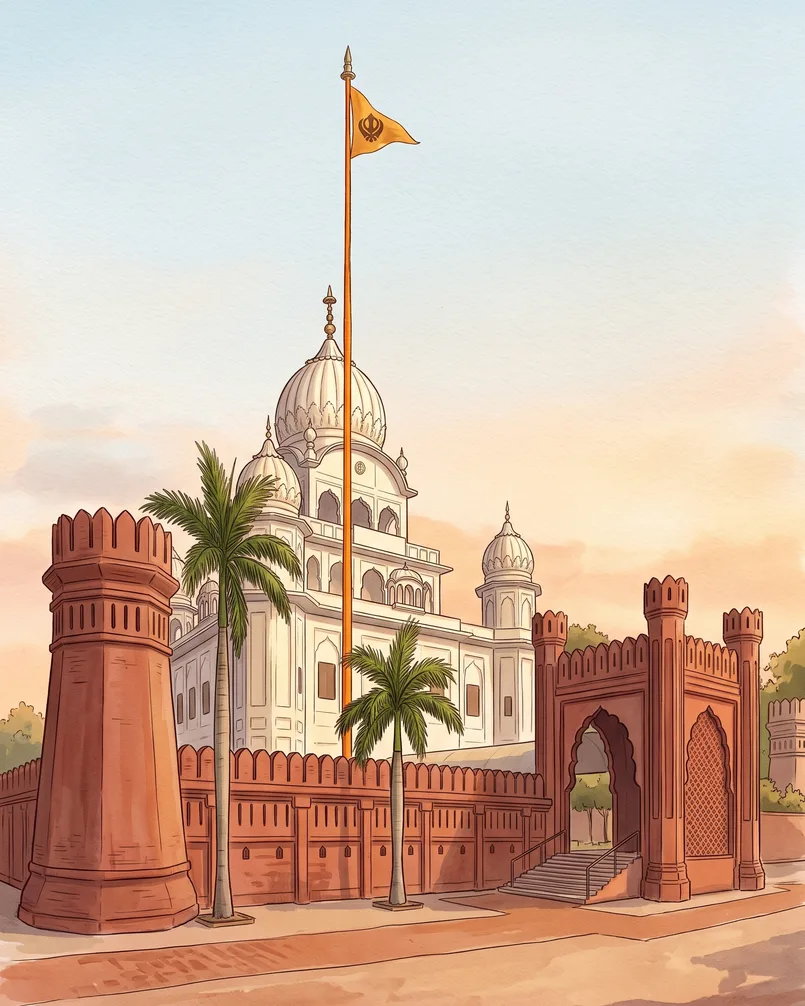
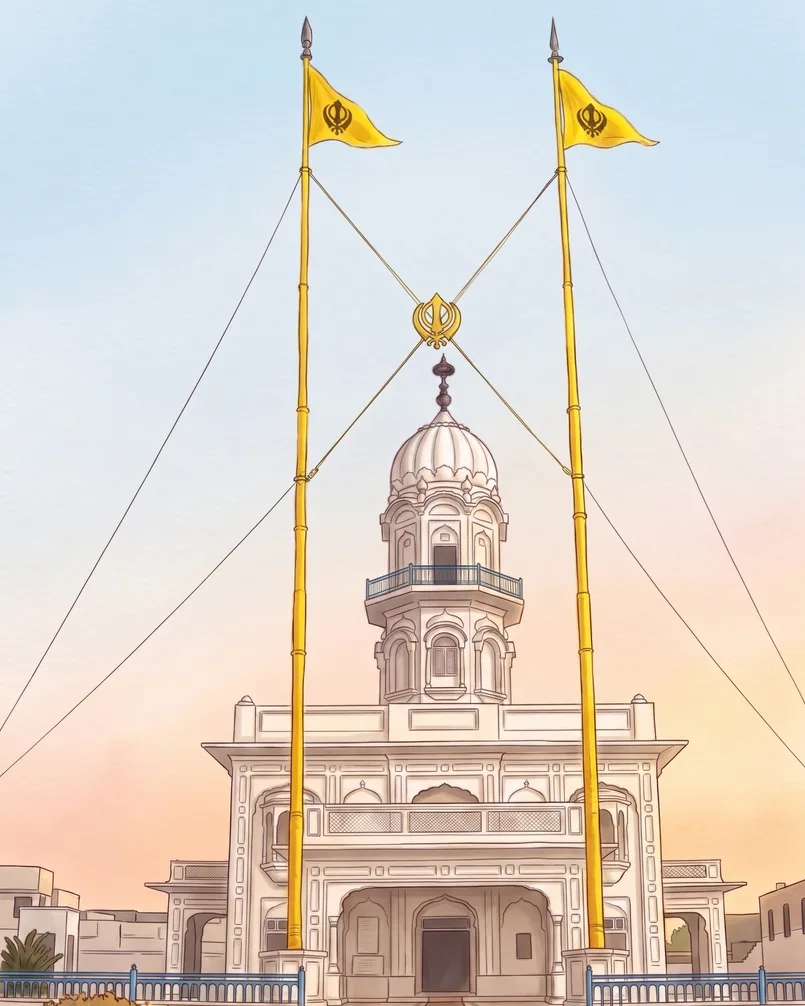
ਫਿਰ ਗੁਰੂ ਜੀ ਨੇ ਕੁਝ ਨਵਾਂ ਸਿਰਜਿਆ। ਸ੍ਰੀ ਹਰਿਮੰਦਰ ਸਾਹਿਬ ਦੇ ਸਾਹਮਣੇ ਉਹਨਾਂ ਨੇ ਆਪਣੇ ਹੱਥੀਂ ਇੱਕ ਉੱਚੇ ਥੜ੍ਹੇ ਦੀ ਨੀਂਹ ਰੱਖੀ। ਇਸ ਦਾ ਨਾਂ ਅਕਾਲ ਤਖ਼ਤ ਰੱਖਿਆ ਗਿਆ: ਅਕਾਲ ਦਾ, ਸਮੇਂ ਤੋਂ ਪਰੇ ਵਾਹਿਗੁਰੂ ਦਾ ਤਖ਼ਤ। ਇਸ ਦਾ ਭਾਵ ਸੀ ਕਿ ਸਿੱਖ ਦੇਸ਼ ਦੇ ਹਰ ਹਾਕਮ ਤੋਂ ਉੱਪਰ ਸਿਰਫ਼ ਵਾਹਿਗੁਰੂ ਅੱਗੇ ਸਿਰ ਝੁਕਾਉਂਦਾ ਹੈ। ਇਸ ਦੇ ਅੱਗੇ ਦੋ ਨਿਸ਼ਾਨ ਸਾਹਿਬ ਝੁਲਾਏ ਗਏ, ਇੱਕ ਮੀਰੀ ਦਾ ਅਤੇ ਇੱਕ ਪੀਰੀ ਦਾ।
Then Guru Ji made something new. Facing Sri Harmandir Sahib, He laid the foundation of a raised platform with His own hands. It was named the Akal Takht: the throne of Akal, Waheguru who is beyond time. It meant that a Sikh bows to Waheguru above every ruler of the land. In front of it, two Nishan Sahibs were raised, one for Miri and one for Piri.
ਉੱਥੇ ਗੁਰੂ ਜੀ ਦੋਵੇਂ ਤਲਵਾਰਾਂ ਪਹਿਨ ਕੇ ਬਿਰਾਜਦੇ। ਉਹ ਸੰਗਤ ਨੂੰ ਉਪਦੇਸ਼ ਦਿੰਦੇ, ਹੁਕਮਨਾਮੇ ਭੇਜਦੇ, ਅਤੇ ਸਿੱਖਾਂ ਦੇ ਮਸਲਿਆਂ ਦੇ ਫ਼ੈਸਲੇ ਕਰਦੇ। ਸਿੱਖ ਉਹਨਾਂ ਨੂੰ ਸੱਚਾ ਪਾਤਸ਼ਾਹ ਕਹਿੰਦੇ। ਤੇ ਢਾਡੀ ਗਾਉਂਦੇ:
There Guru Ji sat, wearing both swords. He taught the sangat, sent out hukamnamas, and settled the Sikhs' disputes. The Sikhs called Him the Sacha Patshah, the True King. And the dhadis sang:
"ਦੋ ਤਲਵਾਰਾਂ ਬੱਧੀਆਂ, ਇਕ ਮੀਰੀ ਦੀ ਇਕ ਪੀਰੀ ਦੀ!"
"Two swords He has tied on, one of Miri, one of Piri!"
ਸ੍ਰੀ ਹਰਿਮੰਦਰ ਸਾਹਿਬ ਅਤੇ ਸ੍ਰੀ ਅਕਾਲ ਤਖ਼ਤ ਸਾਹਿਬ ਦੇ ਵਿਚਕਾਰ ਖੁੱਲ੍ਹੇ ਮੈਦਾਨ ਵਿੱਚ ਗੱਭਰੂ ਕੁਸ਼ਤੀਆਂ ਘੁਲਦੇ ਤੇ ਕਬੱਡੀ ਖੇਡਦੇ। ਉਹ ਤਲਵਾਰ, ਨੇਜ਼ੇ ਅਤੇ ਤੀਰ-ਕਮਾਨ ਦਾ ਅਭਿਆਸ ਕਰਦੇ, ਅਤੇ ਘੋੜ-ਸਵਾਰੀ ਦੇ ਮੁਕਾਬਲੇ ਹੁੰਦੇ। ਗੁਰੂ ਜੀ ਸ੍ਰੀ ਅਕਾਲ ਤਖ਼ਤ ਸਾਹਿਬ ਉੱਤੇ ਬੈਠ ਕੇ ਵੇਖਦੇ, ਗੱਭਰੂਆਂ ਦਾ ਹੌਸਲਾ ਵਧਾਉਂਦੇ, ਅਤੇ ਉਹਨਾਂ ਨੂੰ ਇਨਾਮ ਦਿੰਦੇ।
In the open ground between Sri Harmandir Sahib and Sri Akal Takht Sahib, the young men wrestled and played kabaddi. They practised with the sword, the spear and the bow, and held riding contests. Guru Ji watched from Sri Akal Takht Sahib, cheered them on and gave them prizes.
ਕਈ ਸਾਲਾਂ ਬਾਅਦ, ਪਹਾੜਾਂ ਵਿੱਚ ਗੜ੍ਹਵਾਲ ਦੇ ਸ੍ਰੀਨਗਰ ਵਿਖੇ, ਇੱਕ ਪ੍ਰਸਿੱਧ ਸੰਤ ਗੁਰੂ ਜੀ ਨੂੰ ਮਿਲਣ ਆਏ। ਉਹਨਾਂ ਨੇ ਗੁਰੂ ਜੀ ਨੂੰ ਰਾਜੇ ਵਰਗੇ ਸਰੂਪ ਵਿੱਚ, ਸ਼ਸਤਰਾਂ, ਘੋੜਿਆਂ ਅਤੇ ਤਿਆਰ-ਬਰ-ਤਿਆਰ ਸਿੱਖਾਂ ਨਾਲ ਵੇਖਿਆ ਤਾਂ ਸੋਚਣ ਲੱਗੇ: ਗੁਰੂ ਨਾਨਕ ਦੇਵ ਜੀ ਤਾਂ ਬਹੁਤ ਸਾਦਾ ਜੀਵਨ ਜੀਉਂਦੇ ਸਨ, ਫਿਰ ਗੁਰੂ ਜੀ ਸ਼ਸਤਰ ਅਤੇ ਫ਼ੌਜ ਕਿਉਂ ਰੱਖਦੇ ਹਨ? ਗੁਰੂ ਜੀ ਮੁਸਕਰਾਏ ਅਤੇ ਸਮਝਾਇਆ ਕਿ ਸ਼ਸਤਰ ਗ਼ਰੀਬਾਂ ਦੀ ਰੱਖਿਆ ਲਈ ਹਨ, ਅਤੇ ਗੁਰੂ ਨਾਨਕ ਦੇਵ ਜੀ ਨੇ ਸੰਸਾਰ ਨੂੰ ਕਦੇ ਨਹੀਂ ਤਿਆਗਿਆ ਸੀ। ਸੰਤ ਜੀ ਦਾ ਮਨ ਖ਼ੁਸ਼ ਹੋ ਗਿਆ।
Many years later, in the hills at Srinagar in Garhwal, a well-known saint came to meet Guru Ji. He saw Guru Ji dressed like a king, with weapons, horses and Sikhs ready beside Him, and he wondered: Guru Nanak Dev Ji had lived so simply, so why did Guru Ji keep weapons and an army? Guru Ji smiled and explained that the weapons were there to protect the poor, and that Guru Nanak Dev Ji had never given up the world. The saint's heart was glad.
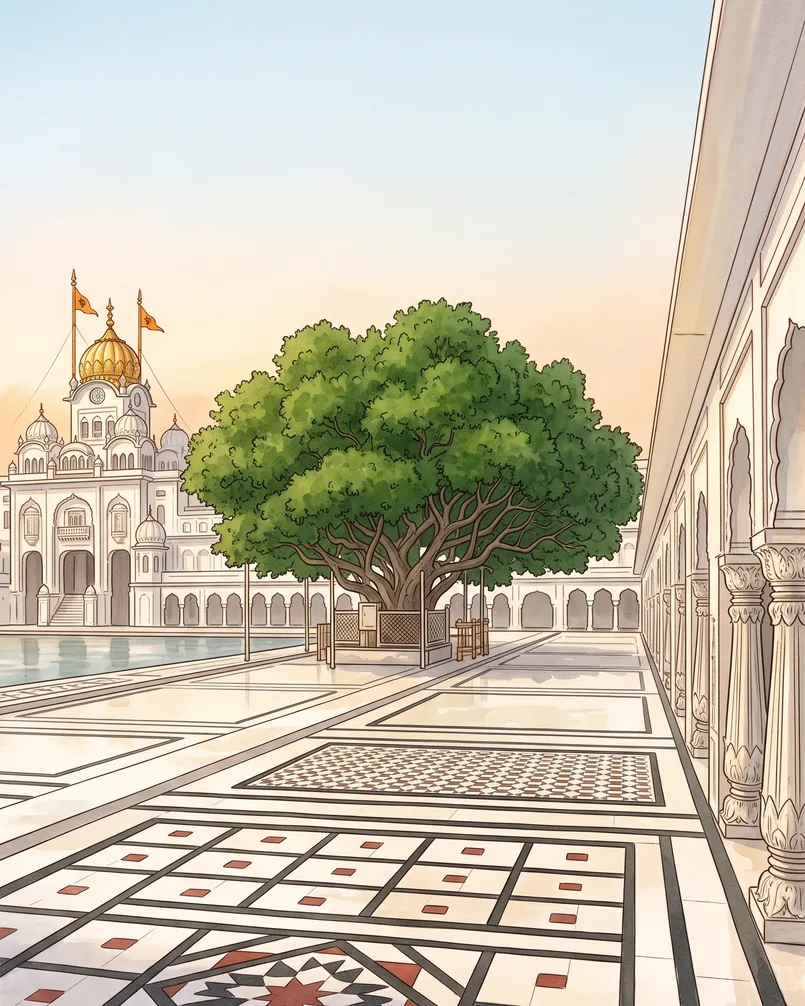
ਅੰਮ੍ਰਿਤਸਰ ਵਿੱਚ ਸ੍ਰੀ ਹਰਿਮੰਦਰ ਸਾਹਿਬ ਤੋਂ ਸਾਰਾ ਦਿਨ ਕੀਰਤਨ ਦੀ ਆਵਾਜ਼ ਆਉਂਦੀ। ਉਸ ਦੇ ਸਾਹਮਣੇ, ਸ੍ਰੀ ਅਕਾਲ ਤਖ਼ਤ ਸਾਹਿਬ ਦੇ ਅੱਗੇ, ਦੋਵੇਂ ਨਿਸ਼ਾਨ ਸਾਹਿਬ ਹਵਾ ਵਿੱਚ ਝੂਲਦੇ: ਇੱਕ ਪੀਰੀ ਦਾ, ਇੱਕ ਮੀਰੀ ਦਾ, ਨਾਲ-ਨਾਲ, ਬਿਲਕੁਲ ਗੁਰੂ ਜੀ ਦੀਆਂ ਦੋ ਤਲਵਾਰਾਂ ਵਾਂਗ।
In Amritsar, kirtan rose from Sri Harmandir Sahib all day long. Just across from it, before Sri Akal Takht Sahib, the two Nishan Sahibs moved in the breeze: one for Piri, one for Miri, side by side, just like Guru Ji's two swords.
ਸ਼ਬਦ-ਅਰਥ · Glossary
- ਸਾਖੀ sakhi
- A true story from the lives of the Gurus and Gursikhs, told to teach and inspire.
- ਮੀਰੀ Miri
- Leadership in the world: looking after people and standing up for what is right. From mir, a ruler.
- ਪੀਰੀ Piri
- Leadership of the spirit: Naam, Gurbani and the Guru's path. From pir, a spiritual guide.
- ਗੁਰਗੱਦੀ Gurgaddi
- The Guruship, when the Light passes from one Guru to the next.
- ਗੱਦੀ gaddi
- The seat of the Guru; here, the Guruship of Guru Nanak Dev Ji.
- ਗੁਰੂ-ਘਰ Guru-ghar
- "The Guru's house": the Guru, the Guru's family and the Sikh way they lead.
- ਦੀਵਾਨ diwan
- A gathering of the sangat before the Guru, for kirtan and teaching.
- ਪ੍ਰਸ਼ਾਦਾ parshada
- A meal; food from the Guru's kitchen.
- ਗੁਰਸਿੱਖ Gursikh
- A Sikh of the Guru, who lives by the Guru's teaching.
- ਗੁਰਬਾਣੀ Gurbani
- The Gurus' own words, the shabads now in Sri Guru Granth Sahib Ji.
- ਨਾਮ Naam
- Remembering Waheguru, the Creator, in the heart.
- ਵਾਹਿਗੁਰੂ Waheguru
- The Sikh name for the Creator.
- ਅਕਾਲ Akal
- Beyond time; a name for Waheguru, who never began and never ends.
- ਸ੍ਰੀ ਹਰਿਮੰਦਰ ਸਾਹਿਬ Sri Harmandir Sahib
- The gurdwara in the middle of the sarovar at Amritsar, also called Sri Darbar Sahib.
- ਸ੍ਰੀ ਅਕਾਲ ਤਖ਼ਤ ਸਾਹਿਬ Sri Akal Takht Sahib
- The throne of Akal, facing Sri Harmandir Sahib, begun by Guru Hargobind Sahib Ji as a raised platform.
- ਨਿਸ਼ਾਨ ਸਾਹਿਬ Nishan Sahib
- The Sikh flag on a tall pole, flown at a gurdwara.
- ਸੱਚਾ ਪਾਤਸ਼ਾਹ Sacha Patshah
- "The True King": what the Sikhs called the Guru.
- ਸੰਗਤ sangat
- The company of the Guru's Sikhs, who come together to remember Waheguru, listen to kirtan and serve.
- ਗੁਰੂ-ਦਰਬਾਰ Guru's darbar
- The Guru's court, where the sangat gathered before Guru Ji.
- ਹੁਕਮਨਾਮਾ hukamnama
- A letter of instruction from the Guru to the sangat.
- ਮਸੰਦ masand
- A Sikh who looked after a far-away sangat for the Guru and carried the Guru's word to it.
- ਢਾਡੀ dhadi
- A singer of vars, ballads of brave deeds, played on the small dhadd drum and the sarangi.
- ਕੀਰਤਨ kirtan
- Singing Gurbani with music.
- ਕਬੱਡੀ kabaddi
- A running and tagging game of strength and breath, played in teams.
- ਕੁੜਤਾ kurta
- A long, loose shirt.
- ਸੰਤ saint (sant)
- A saint; a person who gives their life to remembering the Creator.
ਗੁਰਗੱਦੀ ਵੇਲੇ ਬਾਬਾ ਬੁੱਢਾ ਜੀ ਨੇ ਗੁਰੂ ਹਰਿਗੋਬਿੰਦ ਸਾਹਿਬ ਜੀ ਨੂੰ ਦੋ ਤਲਵਾਰਾਂ ਪਹਿਨਾਈਆਂ: ਇੱਕ ਪੀਰੀ ਦੀ, ਇੱਕ ਮੀਰੀ ਦੀ। ਗੁਰੂ ਜੀ ਨੇ ਕਮਜ਼ੋਰਾਂ ਦੀ ਰਾਖੀ ਲਈ ਸਿੱਖਾਂ ਤੋਂ ਘੋੜੇ ਤੇ ਹਥਿਆਰ ਮੰਗੇ, ਅਤੇ ਸ੍ਰੀ ਹਰਿਮੰਦਰ ਸਾਹਿਬ ਦੇ ਸਾਹਮਣੇ ਸ੍ਰੀ ਅਕਾਲ ਤਖ਼ਤ ਸਾਹਿਬ ਸਿਰਜਿਆ।
At the Gurgaddi, Baba Buddha Ji put two swords on Guru Hargobind Sahib Ji: one for Piri, one for Miri. Guru Ji asked the Sikhs for horses and weapons to protect the weak, and built Sri Akal Takht Sahib facing Sri Harmandir Sahib.
Free, always. If this helped, you can help make the next one. Support the work →
Frequently asked questions
- What do Miri and Piri mean?
- Piri is leadership of the spirit: Naam, Gurbani and the Guru's path. Miri is leadership in the world: looking after people and standing up for what is right. Guru Hargobind Sahib Ji wore one sword for each, to show that a Sikh keeps both together.
- What is Sri Akal Takht Sahib?
- It is the throne of Akal, Waheguru who is beyond time. Guru Hargobind Sahib Ji laid its foundation Himself as a raised platform facing Sri Harmandir Sahib, with two Nishan Sahibs before it, one for Miri and one for Piri. There He taught the sangat and sent out hukamnamas.
- Why did Guru Hargobind Sahib Ji ask the Sikhs to bring horses and weapons?
- The rulers of the time had grown harsh and the weak were not safe. Guru Ji asked the Sikhs to bring good horses and weapons instead of money, and to learn to use them well, so that they could protect the poor and the weak.