
Your first five minutes
Start with ਸਵੇਰ (Morning)
Play the recording while your child keeps a finger under each word. Then open the story and let them read it back to you.
Four skills in this level · tap to jump · every level is open
Read
Whole stories, no romanization. Each one is a little longer than the last.
How to read a story here
- Listen and follow Play the recording. Your child keeps a finger under the words.
- Read along Play it again. This time your child reads out loud with it.
- Read alone No recording. Your child reads the story to a grown-up.
Two helps or fewer? Move on to the next story.
The little words
These hold every sentence together. Know them by sight and every story gets easier.
First stories
Short lines in the present tense. Start here.
First story ਸਵੇਰ Morning
Hear it read aloud
Each word lights up as it is read. Tap a word to hear it from there.
Dotted words come again in Japji Sahib.
ਸਵੇਰ ਦਾ ਵੇਲਾ ਹੈ ।
ਬਾਹਰ ਅਜੇ ਹਨੇਰਾ ਹੈ ।
ਮੈਂ ਜਲਦੀ ਉੱਠਦਾ ਹਾਂ ।
ਮੈਂ ਠੰਢੇ ਪਾਣੀ ਨਾਲ ਨਹਾਉਂਦਾ ਹਾਂ ।
ਮਾਂ ਜੀ ਜਲਦੀ ਉੱਠਦੇ ਹਨ ।
ਮਾਂ ਜੀ ਪਾਠ ਕਰਦੇ ਹਨ ।
ਮੈਂ ਉਹਨਾਂ ਕੋਲ ਬੈਠਦਾ ਹਾਂ ।
ਮੈਂ ਵਾਹਿਗੁਰੂ ਦਾ ਨਾਮ ਲੈਂਦਾ ਹਾਂ ।
ਮੇਰਾ ਮਨ ਖ਼ੁਸ਼ ਹੈ ।
What it means — show →
It is early morning. Outside it is still dark. I get up early. I bathe with cold water. Mother gets up early. Mother is doing paath. I sit beside her. I say Waheguru's Name. My heart is happy.
Ask your child
-
Is it light or dark outside? — answer →
Still dark
-
What is Mother doing? — answer →
Paath
-
Why do you think the boy sits next to Mother? — answer →
Any answer is fine: to listen with her, to be close to her.
First story ਜੋੜਿਆਂ ਦੀ ਸੇਵਾ Shoe Seva
Hear it read aloud
Each word lights up as it is read. Tap a word to hear it from there.
Dotted words come again in Japji Sahib.
ਅਸੀਂ ਗੁਰਦੁਆਰੇ ਜਾਂਦੇ ਹਾਂ ।
ਇਹ ਗੁਰੂ ਦਾ ਘਰ ਹੈ ।
ਜੋੜਾ ਘਰ ਅੰਦਰ ਬਹੁਤ ਜੋੜੇ ਹਨ ।
ਮੈਂ ਇੱਥੇ ਸੇਵਾ ਕਰਦੀ ਹਾਂ ।
ਮੈਂ ਜੋੜੇ ਸਾਫ਼ ਕਰਦੀ ਹਾਂ ।
ਮੈਂ ਜੋੜੇ ਸਿੱਧੇ ਰੱਖਦੀ ਹਾਂ ।
ਇੱਕ ਬਾਬਾ ਜੀ ਆਉਂਦੇ ਹਨ ।
ਬਾਬਾ ਜੀ ਆਖਦੇ ਹਨ , " ਸ਼ਾਬਾਸ਼ !"
ਮੈਨੂੰ ਸੇਵਾ ਚੰਗੀ ਲੱਗਦੀ ਹੈ ।
What it means — show →
We go to the gurdwara. This is the Guru's house. There are lots of shoes in the joda ghar. I do seva here. I clean the shoes. I set the shoes straight. An old Sikh man comes. Baba ji says, "Well done!" I like doing seva.
Ask your child
-
Where are the shoes? — answer →
In the joda ghar (the shoe room)
-
What does the girl do with the shoes? — answer →
Cleans them and sets them straight
-
Why do you think Baba ji says "Well done"? — answer →
Any answer is fine: she helped, she did seva.
First story ਮੀਂਹ Rain
Hear it read aloud
Each word lights up as it is read. Tap a word to hear it from there.
Dotted words come again in Japji Sahib.
ਅੱਜ ਮੀਂਹ ਪੈ ਰਿਹਾ ਹੈ ।
ਅਸਮਾਨ ਵਿੱਚ ਕਾਲੇ ਬੱਦਲ ਹਨ ।
ਮੈਂ ਖਿੜਕੀ ਕੋਲ ਖੜ੍ਹਾ ਹਾਂ ।
ਮੈਂ ਹੱਥ ਬਾਹਰ ਕੱਢਦਾ ਹਾਂ ।
ਮੇਰਾ ਹੱਥ ਗਿੱਲਾ ਹੋ ਜਾਂਦਾ ਹੈ ।
ਪਾਣੀ ਧਰਤੀ ਉੱਤੇ ਡਿੱਗਦਾ ਹੈ ।
ਧਰਤੀ ਪਾਣੀ ਪੀਂਦੀ ਹੈ ।
ਪਾਣੀ ਵਾਹਿਗੁਰੂ ਦੀ ਦਾਤ ਹੈ ।
What it means — show →
It is raining today. There are dark clouds in the sky. I am standing by the window. I put my hand outside. My hand gets wet. The water falls on the earth. The earth drinks the water. Water is a gift from Waheguru.
Ask your child
-
What is in the sky? — answer →
Dark clouds
-
What happens to the boy's hand? — answer →
It gets wet
-
Why do you think water is called a gift? — answer →
Any answer is fine: the earth needs it, we all need it, Waheguru gives it.
First story ਸੱਚ The Truth
Hear it read aloud
Each word lights up as it is read. Tap a word to hear it from there.
Dotted words come again in Japji Sahib.
ਮੇਰਾ ਦੁੱਧ ਡੁੱਲ੍ਹ ਜਾਂਦਾ ਹੈ ।
ਫ਼ਰਸ਼ ਗਿੱਲਾ ਹੈ ।
ਮੈਨੂੰ ਡਰ ਲੱਗਦਾ ਹੈ ।
ਮਾਂ ਜੀ ਫ਼ਰਸ਼ ਦੇਖਦੇ ਹਨ ।
ਮੈਂ ਸੱਚ ਬੋਲਦੀ ਹਾਂ ।
" ਮਾਂ ਜੀ , ਇਹ ਮੇਰੀ ਗ਼ਲਤੀ ਹੈ ।"
ਮਾਂ ਜੀ ਮੈਨੂੰ ਜੱਫੀ ਪਾਉਂਦੇ ਹਨ ।
ਅਸੀਂ ਫ਼ਰਸ਼ ਸਾਫ਼ ਕਰਦੇ ਹਾਂ ।
ਹੁਣ ਮੇਰਾ ਮਨ ਖ਼ੁਸ਼ ਹੈ ।
What it means — show →
My milk spills. The floor is wet. I feel scared. Mother looks at the floor. I tell the truth. "Mother, it is my mistake." Mother gives me a hug. We clean the floor. Now my heart is happy.
Ask your child
-
What spills? — answer →
Milk
-
What does the girl tell Mother? — answer →
The truth: it is her mistake
-
Why is she happy at the end? — answer →
Any answer is fine: she told the truth, Mother hugged her.
Longer stories
Longer stories, and now they happen in the past.
Longer story ਨਾਨੀ ਜੀ ਆਏ Nani Ji Came
Hear it read aloud
Each word lights up as it is read. Tap a word to hear it from there.
Dotted words come again in Japji Sahib.
ਨਾਨੀ ਜੀ ਸਾਡੇ ਘਰ ਆਏ ।
ਉਹ ਪੰਜਾਬ ਤੋਂ ਆਏ ਹਨ ।
ਮੈਂ ਨਾਨੀ ਜੀ ਨੂੰ ਜੱਫੀ ਪਾਈ ।
ਅੱਜ ਸਵੇਰੇ ਨਾਨੀ ਜੀ ਜਲਦੀ ਉੱਠੇ ।
ਉਹਨਾਂ ਨੇ ਜਪੁਜੀ ਸਾਹਿਬ ਦਾ ਪਾਠ ਕੀਤਾ ।
ਨਾਨੀ ਜੀ ਦੀ ਆਵਾਜ਼ ਬਹੁਤ ਮਿੱਠੀ ਹੈ ।
ਮੈਂ ਚੁੱਪ - ਚਾਪ ਉਹਨਾਂ ਕੋਲ ਬੈਠਾ ।
ਮੈਂ ਪਾਠ ਧਿਆਨ ਨਾਲ ਸੁਣਿਆ ।
ਕੁਝ ਸ਼ਬਦ ਮੈਨੂੰ ਆਉਂਦੇ ਸਨ ।
ਮੈਂ ਉਹ ਸ਼ਬਦ ਨਾਲ - ਨਾਲ ਬੋਲਿਆ ।
ਨਾਨੀ ਜੀ ਨੇ ਮੇਰੇ ਸਿਰ ਉੱਤੇ ਹੱਥ ਰੱਖਿਆ ।
ਉਹਨਾਂ ਨੇ ਆਖਿਆ , " ਸ਼ਾਬਾਸ਼ , ਮੇਰੇ ਪੁੱਤ !"
ਮੈਂ ਰੋਜ਼ ਨਾਨੀ ਜੀ ਕੋਲ ਬੈਠਦਾ ਹਾਂ ।
ਮੈਂ ਰੋਜ਼ ਉਹਨਾਂ ਕੋਲੋਂ ਪਾਠ ਸੁਣਦਾ ਹਾਂ ।
What it means — show →
Nani ji came to our house. She has come from Punjab. I gave Nani ji a hug. This morning Nani ji got up early. She did the paath of Japji Sahib. Nani ji's voice is very sweet. I sat quietly beside her. I listened carefully to the paath. I knew some of the words. I said those words along with her. Nani ji put her hand on my head. She said, "Well done, my son!" Every day I sit beside Nani ji. Every day I listen to paath from her.
Ask your child
-
Where did Nani ji come from? — answer →
Punjab
-
Which paath did Nani ji do? — answer →
Japji Sahib
-
Why did Nani ji say "Well done"? — answer →
He listened carefully and said the words with her.
Longer story ਲੰਗਰ ਦੀ ਸੇਵਾ Langar Seva
Hear it read aloud
Each word lights up as it is read. Tap a word to hear it from there.
Dotted words come again in Japji Sahib.
ਐਤਵਾਰ ਨੂੰ ਅਸੀਂ ਗੁਰਦੁਆਰੇ ਗਏ ।
ਅਸੀਂ ਲੰਗਰ ਦੀ ਸੇਵਾ ਕੀਤੀ ।
ਲੰਗਰ ਹਾਲ ਵਿੱਚ ਬਹੁਤ ਸੰਗਤ ਸੀ ।
ਇੱਕ ਬੀਬੀ ਜੀ ਨੇ ਮੈਨੂੰ ਪੇੜਾ ਦਿੱਤਾ ।
ਮੈਂ ਵੇਲਣੇ ਨਾਲ ਰੋਟੀ ਵੇਲੀ ।
ਮੇਰੀ ਰੋਟੀ ਗੋਲ ਨਹੀਂ ਬਣੀ ।
ਮੈਂ ਹੱਸ ਪਈ ।
ਬੀਬੀ ਜੀ ਨੇ ਆਖਿਆ , " ਕੋਈ ਗੱਲ ਨਹੀਂ ।"
" ਸੇਵਾ ਪਿਆਰ ਨਾਲ ਹੁੰਦੀ ਹੈ ।"
ਫਿਰ ਮੈਂ ਸੰਗਤ ਨੂੰ ਪਾਣੀ ਵਰਤਾਇਆ ।
ਸਭ ਲੋਕ ਇਕੱਠੇ ਪੰਗਤ ਵਿੱਚ ਬੈਠੇ ।
ਕੋਈ ਵੱਡਾ ਨਹੀਂ ਸੀ , ਕੋਈ ਛੋਟਾ ਨਹੀਂ ਸੀ ।
ਬੀਬੀ ਜੀ ਬੋਲੇ , " ਸਭ ਦਾ ਦਾਤਾ ਇੱਕ ਹੈ ।"
ਉਸ ਦਿਨ ਮੈਂ ਬਹੁਤ ਖ਼ੁਸ਼ ਸੀ ।
What it means — show →
On Sunday we went to the gurdwara. We did langar seva. There was a big sangat in the langar hall. A bibi ji gave me a ball of dough. I rolled a roti with the rolling pin. My roti did not come out round. I laughed. Bibi ji said, "Never mind. Seva is done with love." Then I served water to the sangat. Everyone sat together in a row. Nobody was big and nobody was small. Bibi ji said, "There is one Giver for all." That day I was very happy.
Ask your child
-
When did they go to the gurdwara? — answer →
On Sunday
-
What did the girl serve to the sangat? — answer →
Water
-
Why does it not matter that the roti was not round? — answer →
Seva is done with love.
Longer story ਰਾਤ ਨੂੰ ਸੋਹਿਲਾ ਸਾਹਿਬ ਦਾ ਪਾਠ Sohila at Night
Hear it read aloud
Each word lights up as it is read. Tap a word to hear it from there.
Dotted words come again in Japji Sahib.
ਰਾਤ ਹੋ ਗਈ ਸੀ ।
ਮੈਂ ਬਿਸਤਰੇ ਉੱਤੇ ਲੇਟ ਗਿਆ ।
ਕਮਰੇ ਵਿੱਚ ਹਨੇਰਾ ਸੀ ।
ਬਾਹਰ ਹਵਾ ਚੱਲ ਰਹੀ ਸੀ ।
ਮੈਨੂੰ ਥੋੜ੍ਹਾ ਡਰ ਲੱਗਾ ।
ਪਿਤਾ ਜੀ ਮੇਰੇ ਕੋਲ ਆਏ ।
ਉਹ ਮੇਰੇ ਬਿਸਤਰੇ ਉੱਤੇ ਬੈਠ ਗਏ ।
ਉਹਨਾਂ ਨੇ ਸੋਹਿਲਾ ਸਾਹਿਬ ਦਾ ਪਾਠ ਕੀਤਾ ।
ਸੋਹਿਲਾ ਰਾਤ ਦੀ ਬਾਣੀ ਹੈ ।
ਉਹਨਾਂ ਦੀ ਆਵਾਜ਼ ਹੌਲੀ ਸੀ ।
ਮੈਂ ਅੱਖਾਂ ਮੀਟ ਕੇ ਸੁਣਿਆ ।
ਹਵਾ ਹੁਣ ਵੀ ਚੱਲ ਰਹੀ ਸੀ ।
ਪਰ ਹੁਣ ਮੈਨੂੰ ਡਰ ਨਹੀਂ ਸੀ ।
ਪਿਤਾ ਜੀ ਨੇ ਆਖਿਆ , " ਵਾਹਿਗੁਰੂ ਸਾਡੇ ਕੋਲ ਹੈ ।"
ਮੈਂ ਮੁਸਕਰਾਇਆ ਅਤੇ ਸੌਂ ਗਿਆ ।
What it means — show →
It was night. I lay down on my bed. The room was dark. Outside the wind was blowing. I felt a little scared. Father came to me. He sat down on my bed. He did the paath of Sohila Sahib. Sohila is the bani for night. His voice was soft. I closed my eyes and listened. The wind was still blowing. But now I was not scared. Father said, "Waheguru is with us." I smiled and fell asleep.
Ask your child
-
What was blowing outside? — answer →
The wind
-
Which bani did Father read? — answer →
Sohila Sahib (Kirtan Sohila)
-
The wind was still blowing. Why was the boy not scared any more? — answer →
Any answer is fine: Father was there, he listened to Sohila, Waheguru is with us.
Longer story ਸ਼ੁਕਰਾਨਾ Thank You
Hear it read aloud
Each word lights up as it is read. Tap a word to hear it from there.
Dotted words come again in Japji Sahib.
ਅੱਜ ਦਾ ਦਿਨ ਬਹੁਤ ਚੰਗਾ ਸੀ ।
ਸਵੇਰੇ ਧੁੱਪ ਨਿਕਲੀ ।
ਸਕੂਲ ਵਿੱਚ ਮੈਂ ਨਵੀਂ ਸਹੇਲੀ ਬਣਾਈ ।
ਅਸੀਂ ਸਕੂਲ ਵਿੱਚ ਬਹੁਤ ਖੇਡੇ ।
ਸ਼ਾਮ ਨੂੰ ਮੀਂਹ ਪੈ ਗਿਆ ।
ਸਾਡੀ ਪਿਕਨਿਕ ਰੱਦ ਹੋ ਗਈ ।
ਮੈਂ ਥੋੜ੍ਹੀ ਉਦਾਸ ਹੋ ਗਈ ।
ਮਾਂ ਜੀ ਨੇ ਸਮਝਾਇਆ ।
" ਮੀਂਹ ਵੀ ਵਾਹਿਗੁਰੂ ਦਾ ਹੁਕਮ ਹੈ ।"
" ਮੀਂਹ ਨਾਲ ਖੇਤ ਹਰੇ ਹੁੰਦੇ ਹਨ ।"
ਫਿਰ ਅਸੀਂ ਘਰ ਵਿੱਚ ਹੀ ਖੇਡੇ ।
ਰਾਤ ਨੂੰ ਮੈਂ ਹੱਥ ਜੋੜੇ ।
ਮੈਂ ਆਖਿਆ , " ਸ਼ੁਕਰ ਹੈ , ਵਾਹਿਗੁਰੂ ਜੀ !"
" ਧੁੱਪ ਲਈ , ਸਹੇਲੀ ਲਈ , ਮੀਂਹ ਲਈ ਵੀ ।"
" ਇਹ ਸਭ ਤੇਰੀਆਂ ਦਾਤਾਂ ਹਨ ।"
What it means — show →
Today was a very good day. In the morning the sun came out. At school I made a new friend. We played a lot at school. In the evening it started to rain. Our picnic was cancelled. I felt a little sad. Mother explained: "The rain is also Waheguru's hukam. Rain makes the fields green." Then we played at home. At night I folded my hands. I said, "Thank you, Waheguru ji! For the sunshine, for my friend, and for the rain too. These are all Your gifts."
Ask your child
-
What did the girl make at school? — answer →
A new friend
-
Why was the picnic cancelled? — answer →
It rained
-
Why does she say thank you for the rain too? — answer →
Any answer is fine: rain makes the fields green, it is Waheguru's hukam, it is a gift.
Shabad Stories, retold
Our picture books, retold in shorter sentences, chapter by chapter, with the same pictures.
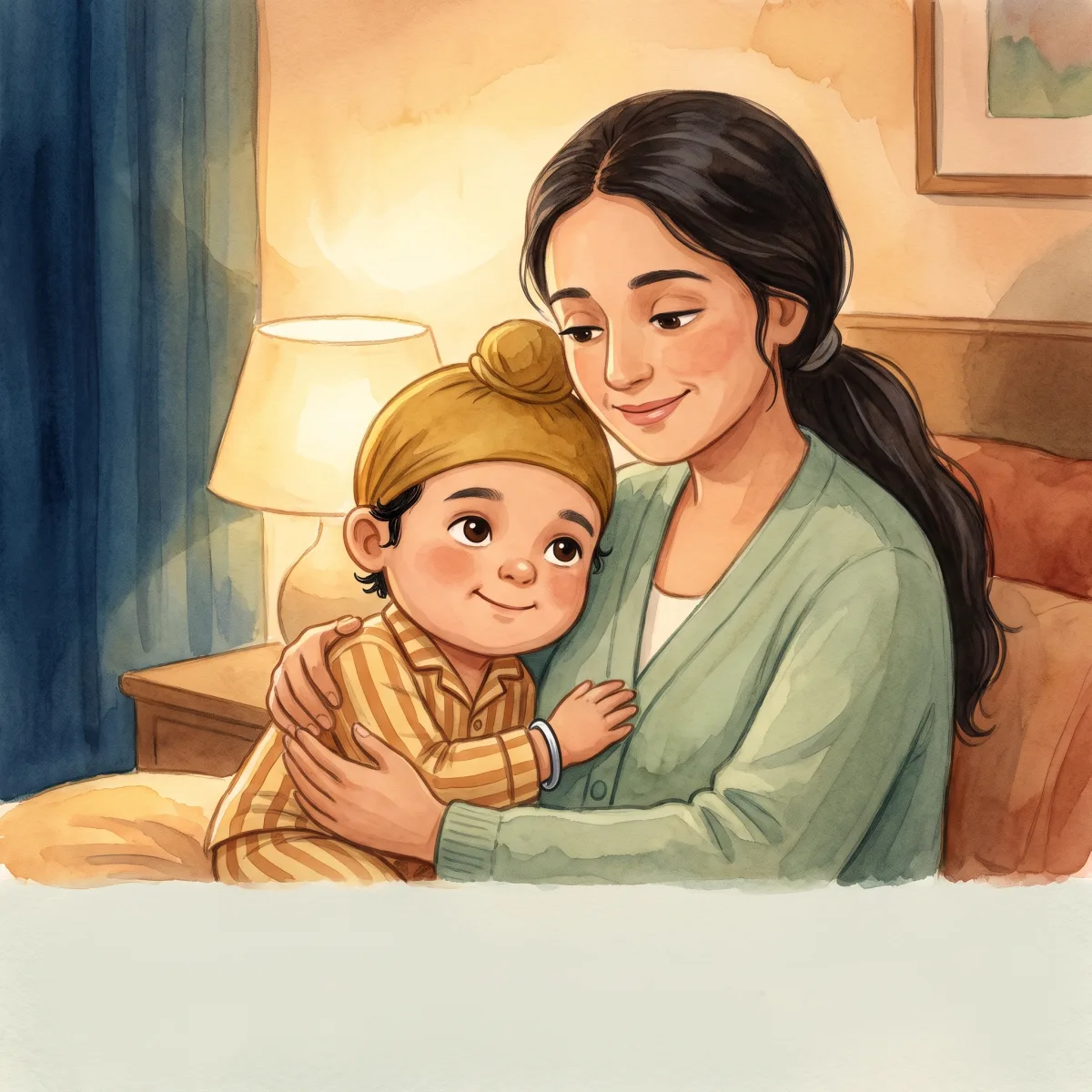 Shabad Story, retold ਜੋ ਹਮੇਸ਼ਾ ਗਲ ਨਾਲ ਲਾਈ ਰੱਖਦਾ ਹੈ The One Who Holds On
Hear it read aloud
Each word lights up as it is read. Tap a word to hear it from there.
Dotted words come again in Japji Sahib.
Chapter 1
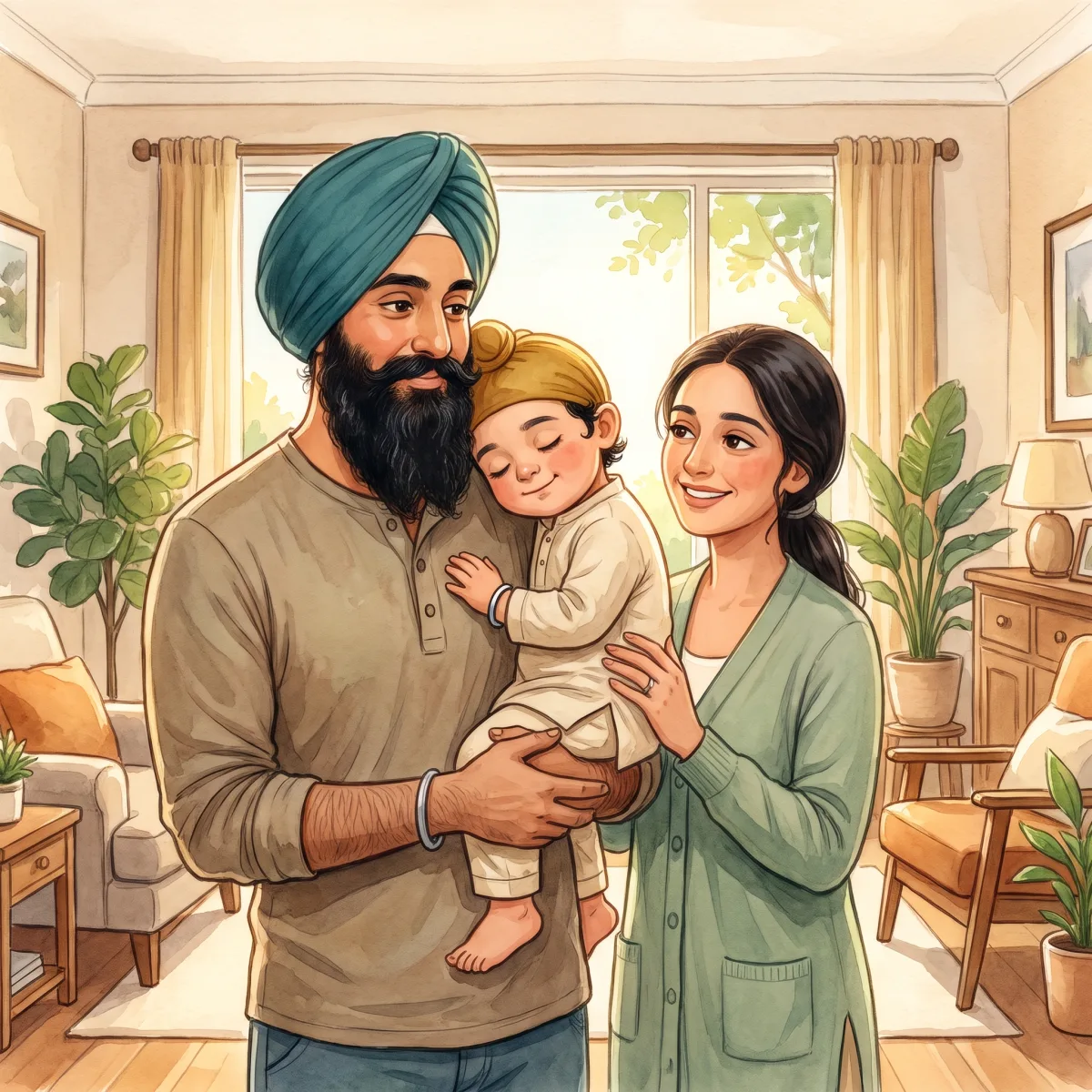
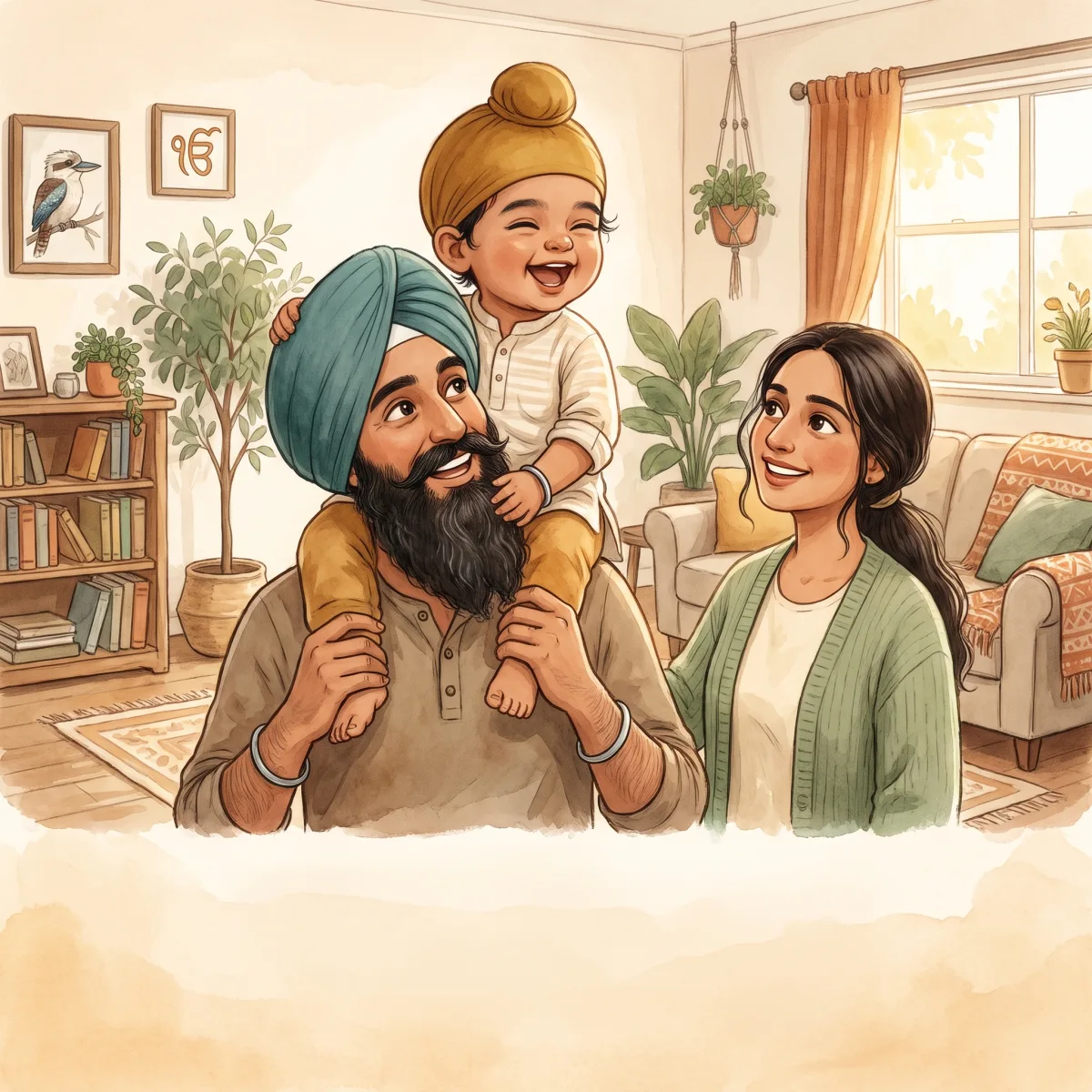
ਵੀਰ ਬਹੁਤ ਛੋਟਾ ਸੀ ।
ਉਸ ਨੇ ਮਾਤਾ ਜੀ ਦੀ ਉਂਗਲ ਫੜੀ ।
ਉਸ ਨੇ ਪਿਤਾ ਜੀ ਦੇ ਮੋਢੇ ਉੱਤੇ ਸਿਰ ਰੱਖਿਆ ।
ਮਾਤਾ ਜੀ ਅਤੇ ਪਿਤਾ ਜੀ ਕੋਲ ਸਨ ।
Chapter 2
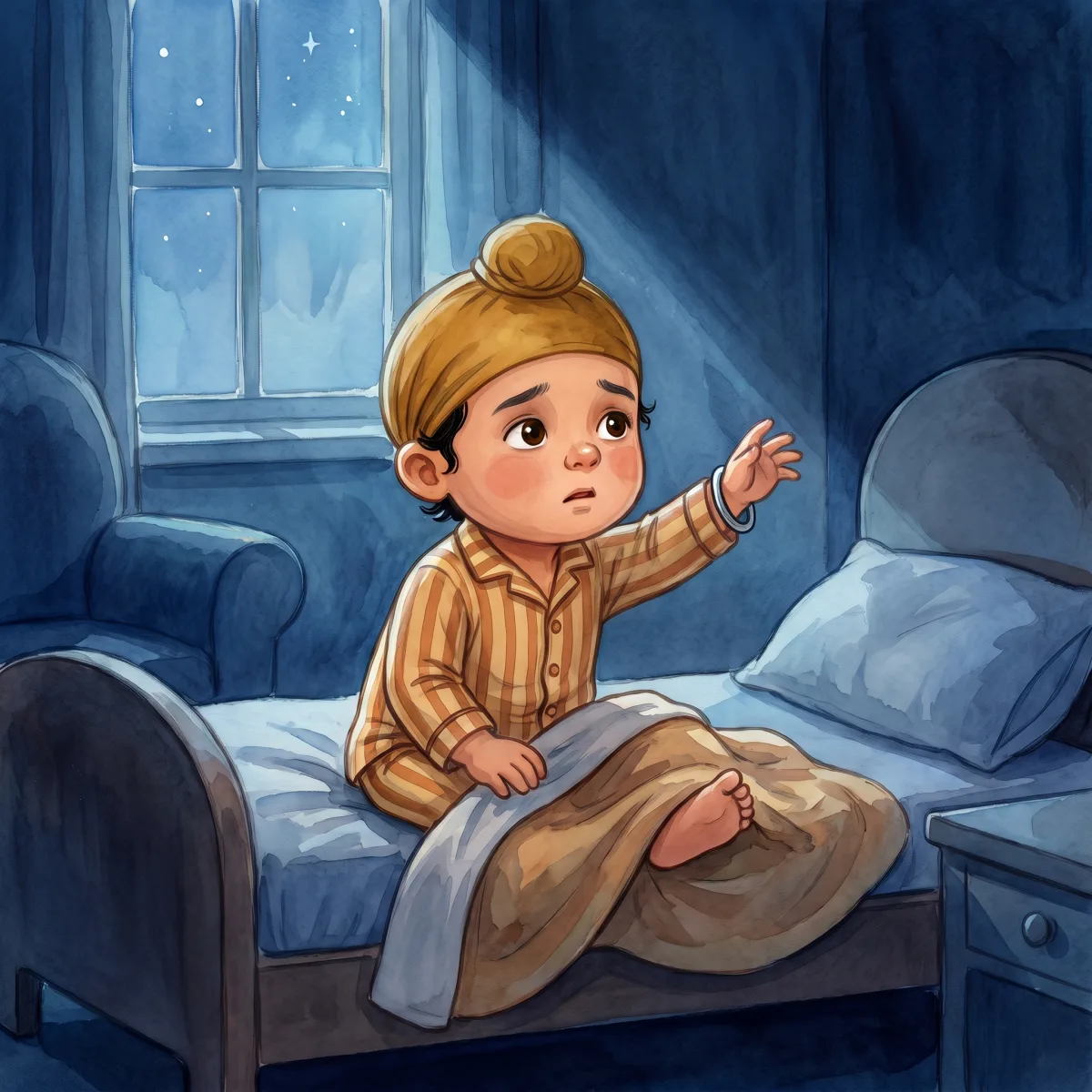
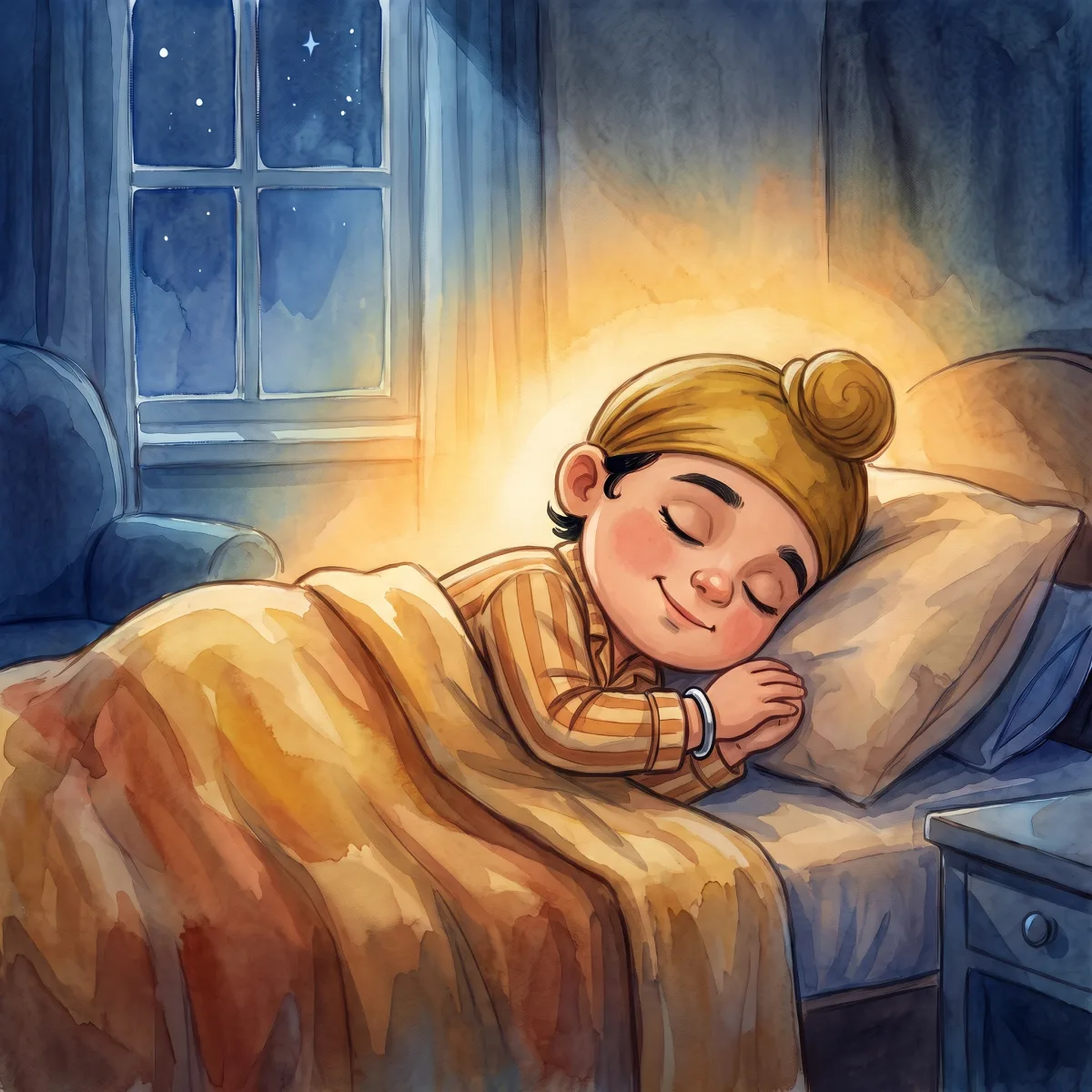
ਇੱਕ ਰਾਤ ਵੀਰ ਜਾਗ ਪਿਆ ।
ਬਹੁਤ ਹਨੇਰਾ ਸੀ ।
ਕੋਈ ਉਸ ਦੇ ਕੋਲ ਨਹੀਂ ਸੀ ।
ਵੀਰ ਨੂੰ ਡਰ ਲੱਗਾ ।
ਵੀਰ ਨੇ ਆਖਿਆ , " ਮੈਨੂੰ ਗਲ ਨਾਲ ਲਾ ਲਓ ।"
Chapter 3
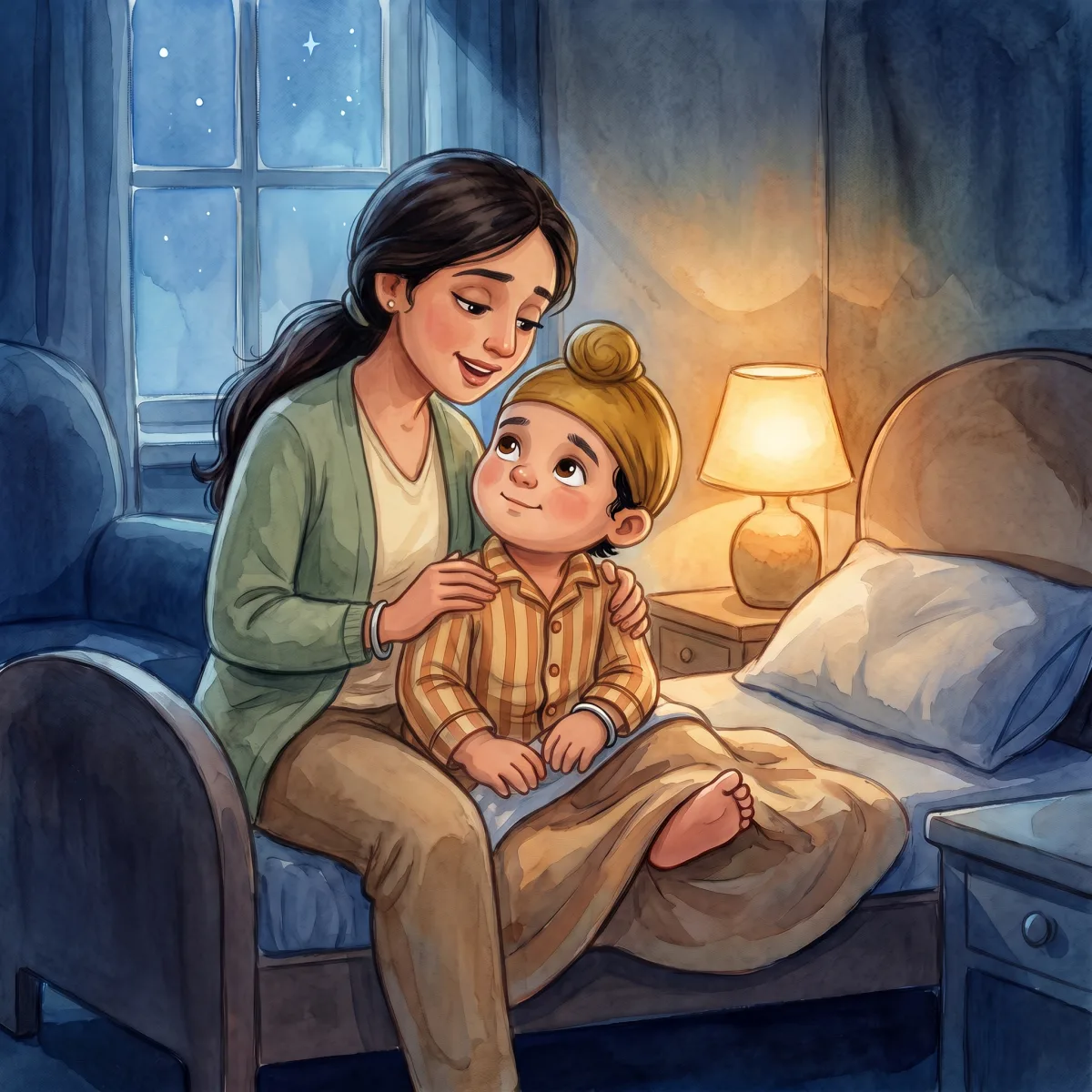
ਮਾਤਾ ਜੀ ਵੀਰ ਦੇ ਕੋਲ ਆਏ ।
" ਵੀਰ , ਵਾਹਿਗੁਰੂ ਸਾਨੂੰ ਹਮੇਸ਼ਾ ਗਲ ਨਾਲ ਲਾਈ ਰੱਖਦਾ ਹੈ ।"
" ਹਨੇਰੇ ਵਿੱਚ ਵੀ , ਜਦੋਂ ਕੋਈ ਕੋਲ ਨਹੀਂ ਹੁੰਦਾ ।"
" ਉਹ ਸਾਡੀ ਮਾਤਾ ਹੈ , ਉਹ ਸਾਡਾ ਪਿਤਾ ਹੈ ।"
ਮਾਤਾ ਜੀ ਨੇ ਸ਼ਬਦ ਗਾਇਆ ।
ਮਾਤ ਪਿਤਾ ਬੰਧਪ ਤੂਹੈ ਤੂ ਸਰਬ ਨਿਵਾਸੁ ॥
Chapter 4
ਵੀਰ ਨੇ ਅੱਖਾਂ ਮੀਟ ਲਈਆਂ ।
ਉਸ ਨੇ ਮਨ ਵਿੱਚ ਆਖਿਆ , " ਵਾਹਿਗੁਰੂ ਜੀ !"
" ਮੈਨੂੰ ਗਲ ਨਾਲ ਲਾ ਲਓ ।"
ਹੁਣ ਉਸ ਨੂੰ ਡਰ ਨਹੀਂ ਸੀ ।
ਵੀਰ ਸਾਰੀ ਰਾਤ ਆਰਾਮ ਨਾਲ ਸੁੱਤਾ ।
What it means — show →
Veer was very little. He held Mummy's finger. He rested his head on Daddy's shoulder. Mummy and Daddy were close by. One night Veer woke up. It was very dark. No one was near him. Veer felt scared. Veer said, "Hold me close." Mummy came to Veer. "Veer, Waheguru always holds us close. Even in the dark, when no one is near. Waheguru is our mother, Waheguru is our father." Mummy sang the shabad. Veer closed his eyes. In his heart he said, "Waheguru ji! Hold me close." Now he was not scared. Veer slept peacefully all night.
Ask your child
-
Whose finger did Veer hold? — answer →
Mummy's (Mata ji's)
-
Why was Veer scared at night? — answer →
It was dark and no one was there to hold him
-
Why was Veer not scared at the end? — answer →
Any answer is fine: Mummy came, he asked Waheguru, Waheguru always holds us close.
 Shabad Story, retold ਜਿਸ ਕੋਲੋਂ ਅਸੀਂ ਹਮੇਸ਼ਾ ਮੰਗ ਸਕਦੇ ਹਾਂ The One We Can Always Ask
Hear it read aloud
Each word lights up as it is read. Tap a word to hear it from there.
Dotted words come again in Japji Sahib.
Chapter 1
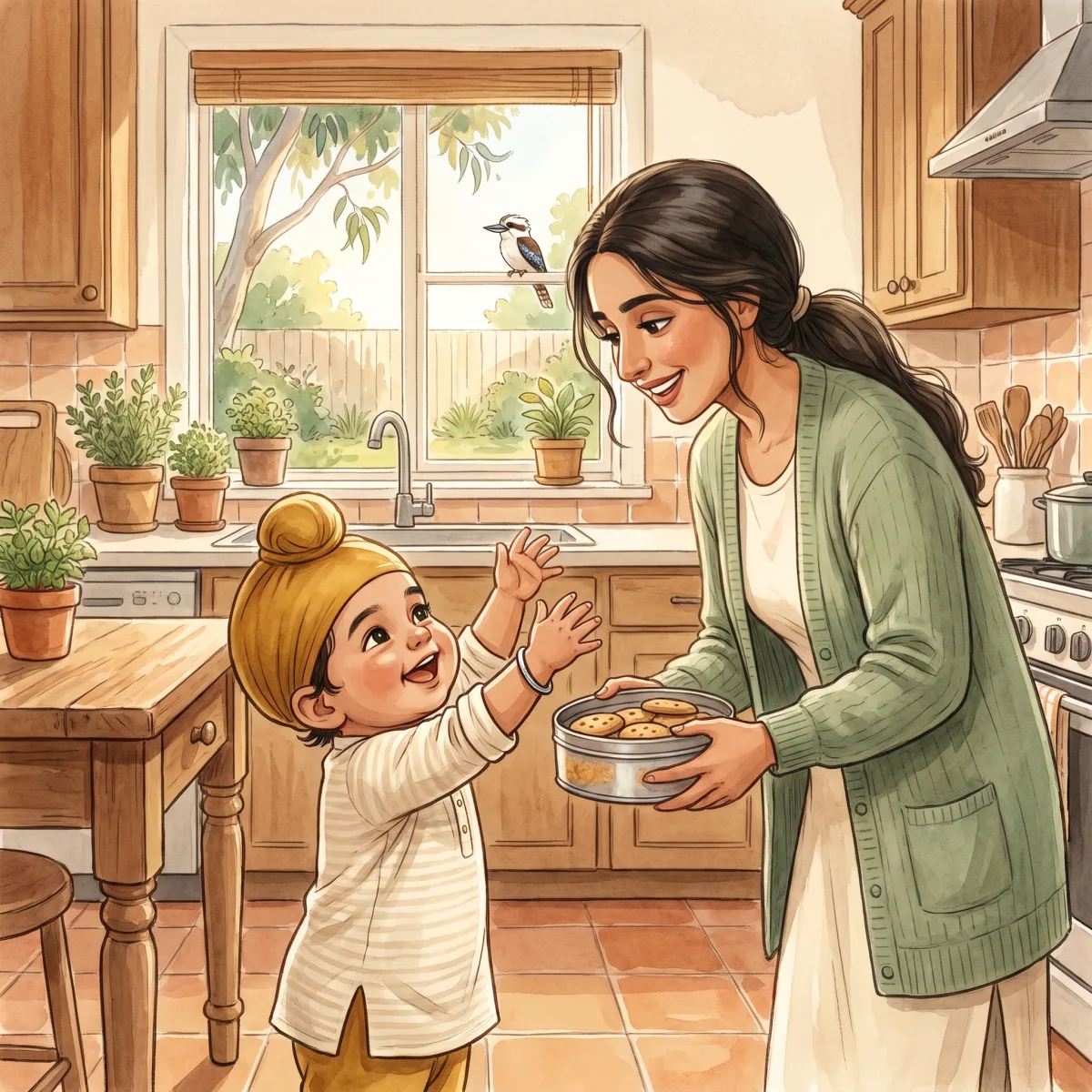
ਇੱਕ ਦਿਨ ਵੀਰ ਨੇ ਬਹੁਤ ਕੁਝ ਮੰਗਿਆ ।
" ਮਾਤਾ ਜੀ , ਮੈਨੂੰ ਬਿਸਕੁਟ ਦਿਓ !"
" ਪਿਤਾ ਜੀ , ਮੈਨੂੰ ਕਹਾਣੀ ਸੁਣਾਓ !"
ਜੋ ਵੀਰ ਨੇ ਮੰਗਿਆ , ਉਸ ਨੂੰ ਮਿਲ ਗਿਆ ।
Chapter 2
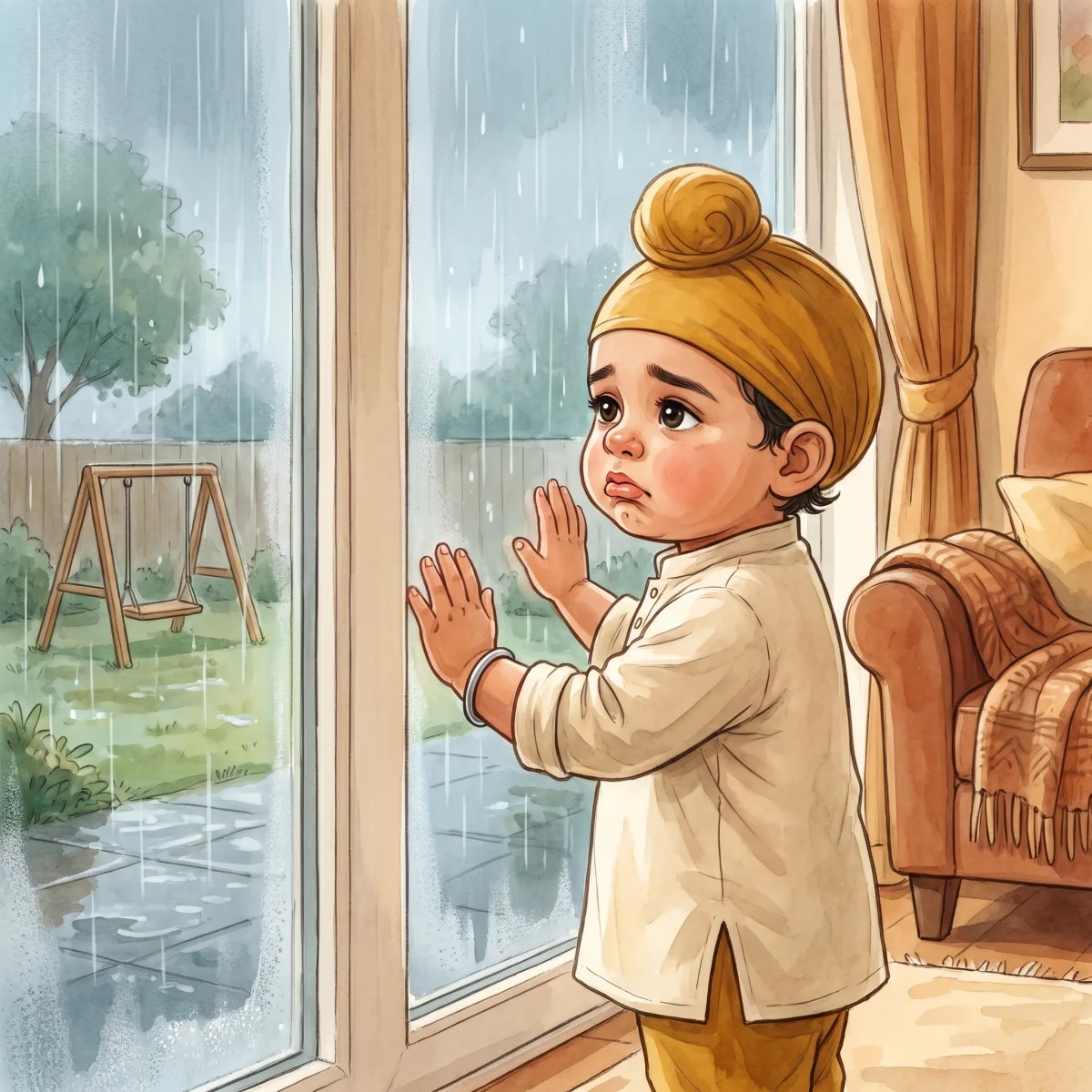
ਫਿਰ ਵੀਰ ਨੇ ਮੰਗਿਆ , " ਪਾਰਕ ਚੱਲੀਏ !"
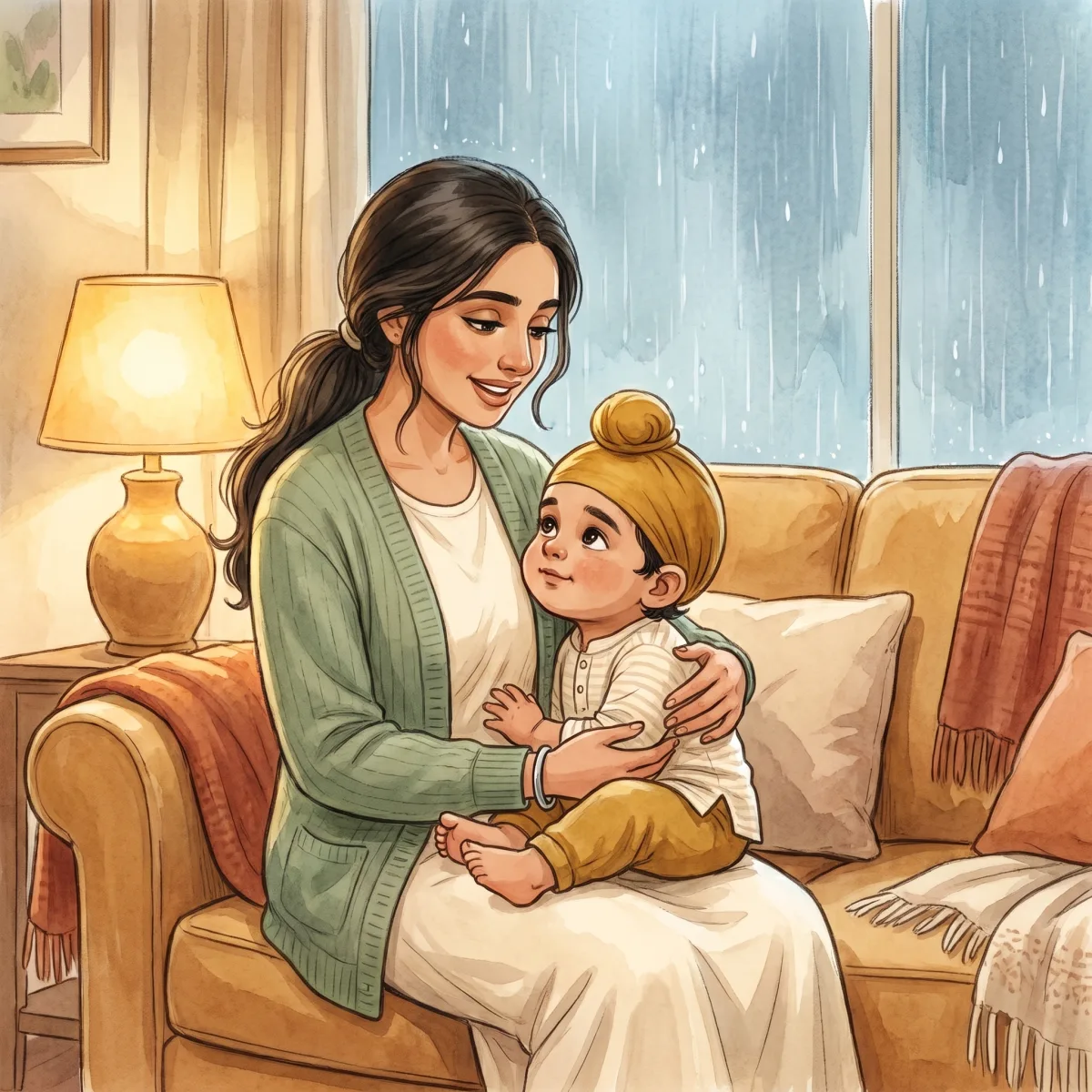
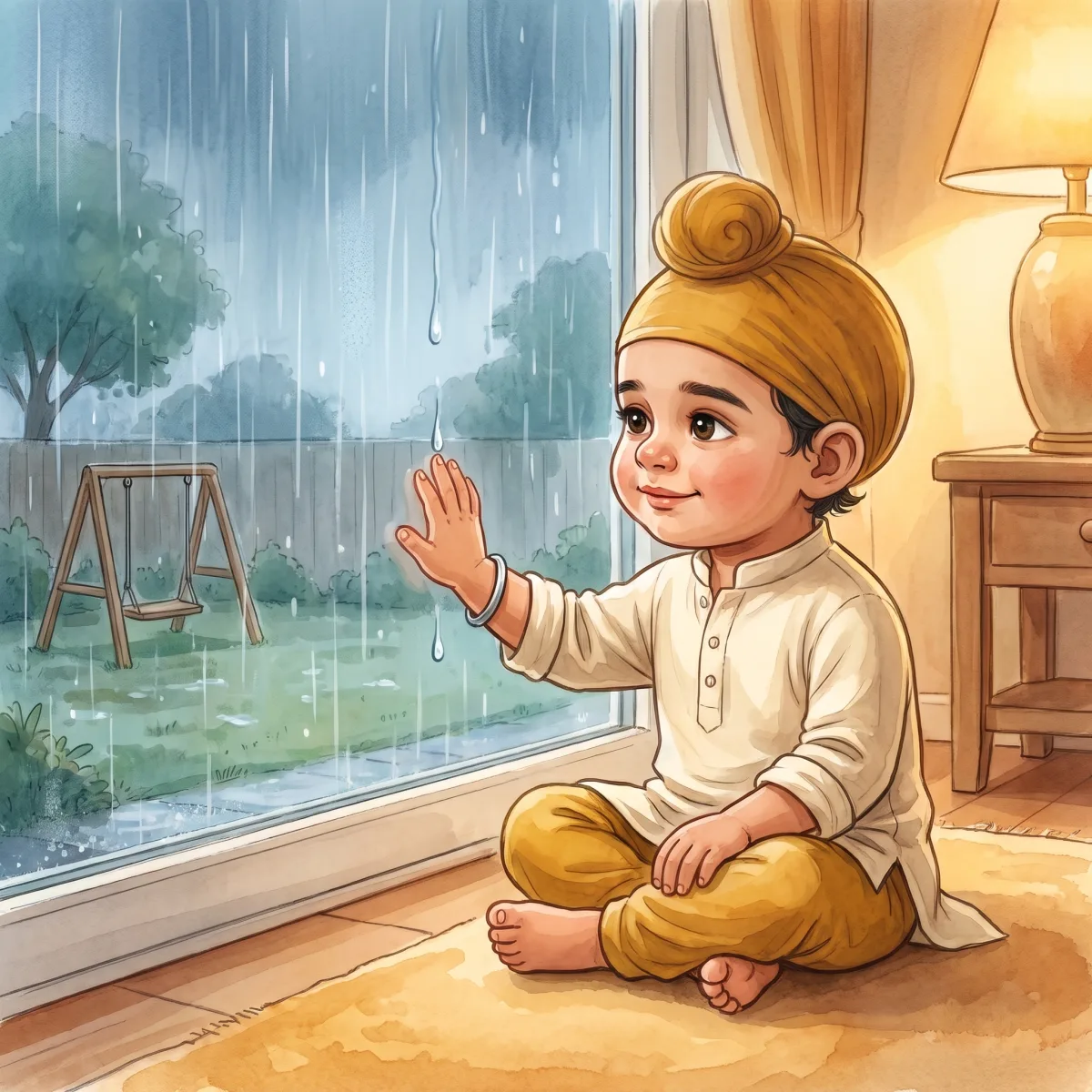
ਪਰ ਬਾਹਰ ਬਹੁਤ ਮੀਂਹ ਪੈ ਰਿਹਾ ਸੀ ।
ਮਾਤਾ ਜੀ ਨੇ ਆਖਿਆ , " ਅੱਜ ਨਹੀਂ ।"
ਵੀਰ ਨੇ ਫਿਰ ਮੰਗਿਆ , ਪਰ ਮੀਂਹ ਨਹੀਂ ਰੁਕਿਆ ।
ਵੀਰ ਉਦਾਸ ਹੋ ਗਿਆ ।
Chapter 3
ਮਾਤਾ ਜੀ ਨੇ ਵੀਰ ਨੂੰ ਗੋਦੀ ਵਿੱਚ ਬਿਠਾਇਆ ।
" ਵੀਰ , ਅਸੀਂ ਵਾਹਿਗੁਰੂ ਕੋਲੋਂ ਹਮੇਸ਼ਾ ਮੰਗ ਸਕਦੇ ਹਾਂ ।"
" ਜੋ ਅਸੀਂ ਮੰਗਦੇ ਹਾਂ , ਉਹ ਦਿੰਦਾ ਹੈ ।"
" ਸਭ ਤੋਂ ਚੰਗੀ ਦਾਤ ਸ਼ਾਂਤ ਮਨ ਹੈ ।"
ਮਾਤਾ ਜੀ ਨੇ ਸ਼ਬਦ ਗਾਇਆ ।
ਜੋ ਮਾਗਹਿ ਠਾਕੁਰ ਅਪੁਨੇ ਤੇ ਸੋਈ ਸੋਈ ਦੇਵੈ ॥
Chapter 4
ਵੀਰ ਨੇ ਮਨ ਵਿੱਚ ਵਾਹਿਗੁਰੂ ਕੋਲੋਂ ਮੰਗਿਆ ।
" ਮੇਰਾ ਮਨ ਸ਼ਾਂਤ ਕਰ ਦਿਓ ।"
ਬਾਹਰ ਮੀਂਹ ਨਹੀਂ ਰੁਕਿਆ ।
ਪਰ ਹੁਣ ਵੀਰ ਉਦਾਸ ਨਹੀਂ ਸੀ ।
ਵੀਰ ਨੂੰ ਸ਼ਾਂਤ ਮਨ ਮਿਲ ਗਿਆ ।
What it means — show →
One day Veer asked for lots of things. "Mummy, give me a biscuit!" "Daddy, tell me a story!" What Veer asked for, he got. Then Veer asked, "Let's go to the park!" But outside it was raining hard. Mummy said, "Not today." Veer asked again, but the rain did not stop. Veer became sad. Mummy sat Veer in her lap. "Veer, we can always ask Waheguru. What we ask for, He gives. The best gift is a calm heart." Mummy sang the shabad. In his heart Veer asked Waheguru, "Make my heart calm." Outside the rain did not stop. But now Veer was not sad. Veer got a calm heart.
Ask your child
-
Where did Veer want to go? — answer →
To the park
-
What did Veer ask Waheguru for? — answer →
A calm heart
-
The rain did not stop. Why was Veer happy at the end? — answer →
Any answer is fine: he asked Waheguru, his heart became calm.
 Shabad Story, retold ਜੋ ਸਾਡੀ ਰਾਖੀ ਕਰਦਾ ਹੈ The One Who Keeps Us Safe
Hear it read aloud
Each word lights up as it is read. Tap a word to hear it from there.
Dotted words come again in Japji Sahib.
Chapter 1
ਇੱਕ ਦਿਨ ਬਹੁਤ ਗਰਮੀ ਸੀ ।
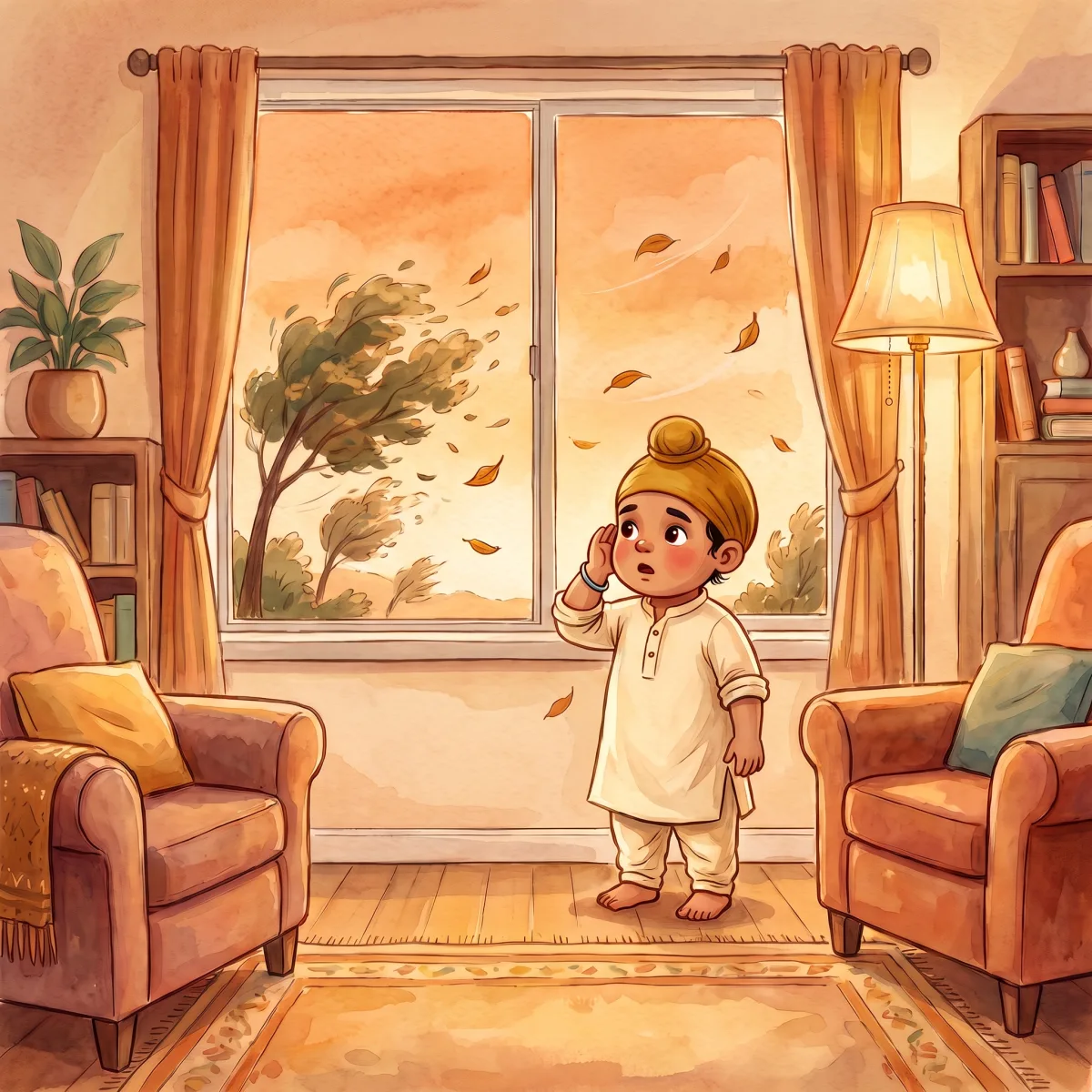
ਸ਼ਾਮ ਨੂੰ ਤੇਜ਼ ਹਨੇਰੀ ਆਈ ।
ਬਾਹਰ ਰੁੱਖ ਹਿੱਲ ਰਹੇ ਸਨ ।
ਵੀਰ ਨੇ ਕੰਨਾਂ ਉੱਤੇ ਹੱਥ ਰੱਖੇ ।
Chapter 2
" ਪਿਤਾ ਜੀ , ਹਨੇਰੀ ਬਹੁਤ ਤੇਜ਼ ਹੈ !"
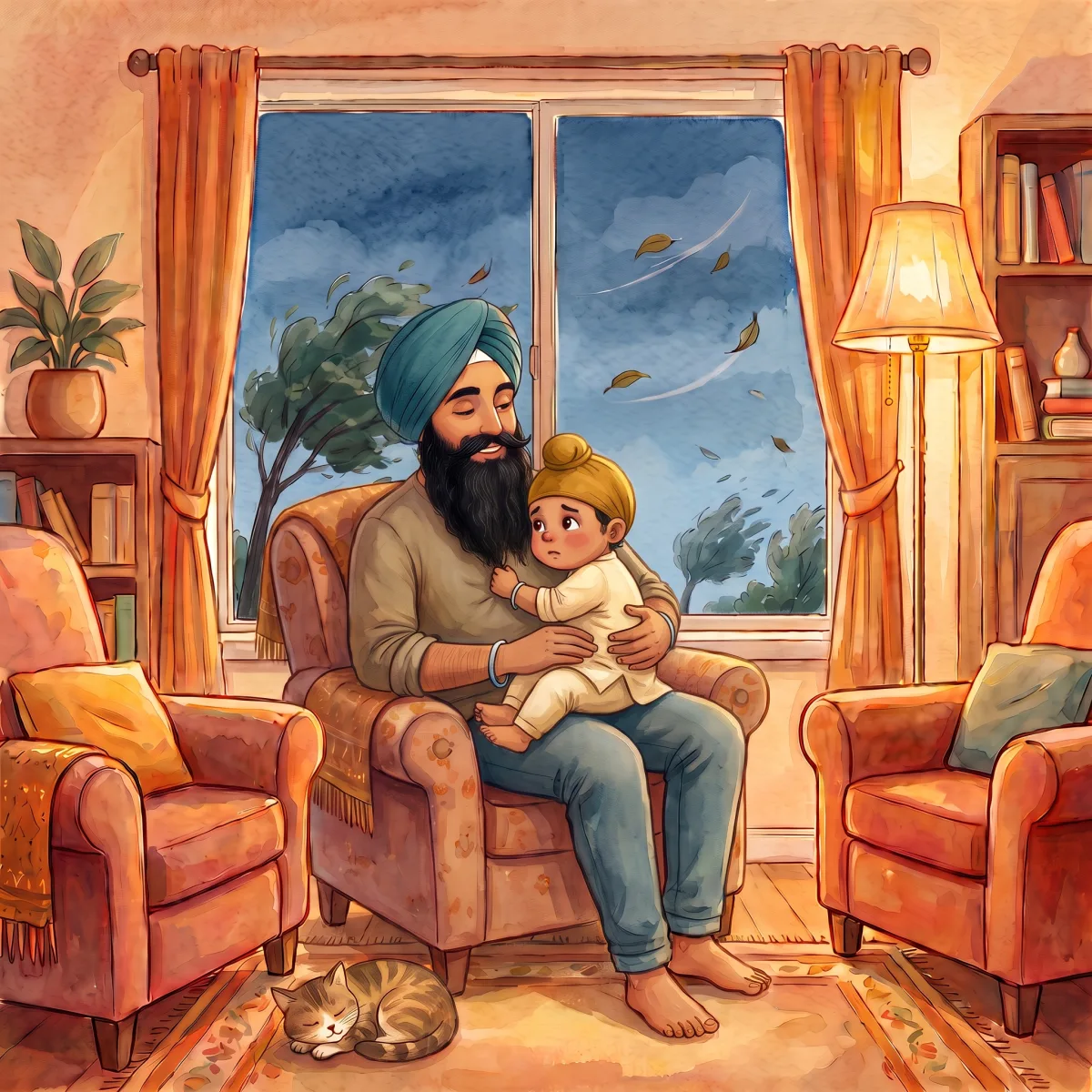
ਵੀਰ ਪਿਤਾ ਜੀ ਦੀ ਗੋਦੀ ਵਿੱਚ ਬੈਠ ਗਿਆ ।
" ਮੈਨੂੰ ਡਰ ਲੱਗ ਰਿਹਾ ਹੈ ।"
Chapter 3
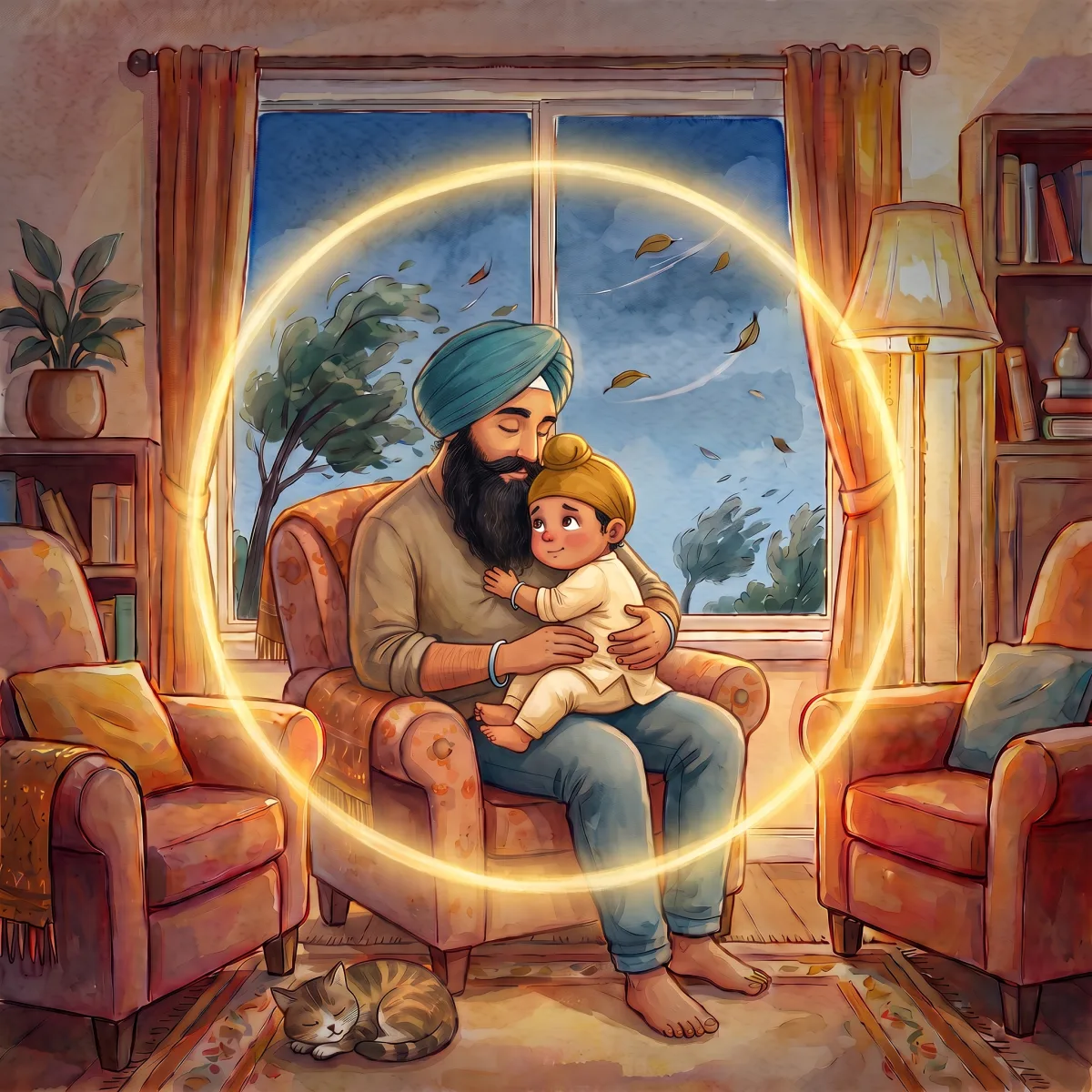
ਪਿਤਾ ਜੀ ਨੇ ਵੀਰ ਨੂੰ ਗਲ ਨਾਲ ਲਾਇਆ ।
" ਵੀਰ , ਵਾਹਿਗੁਰੂ ਜੀ ਸਾਡੇ ਰਾਖੇ ਹਨ ।"
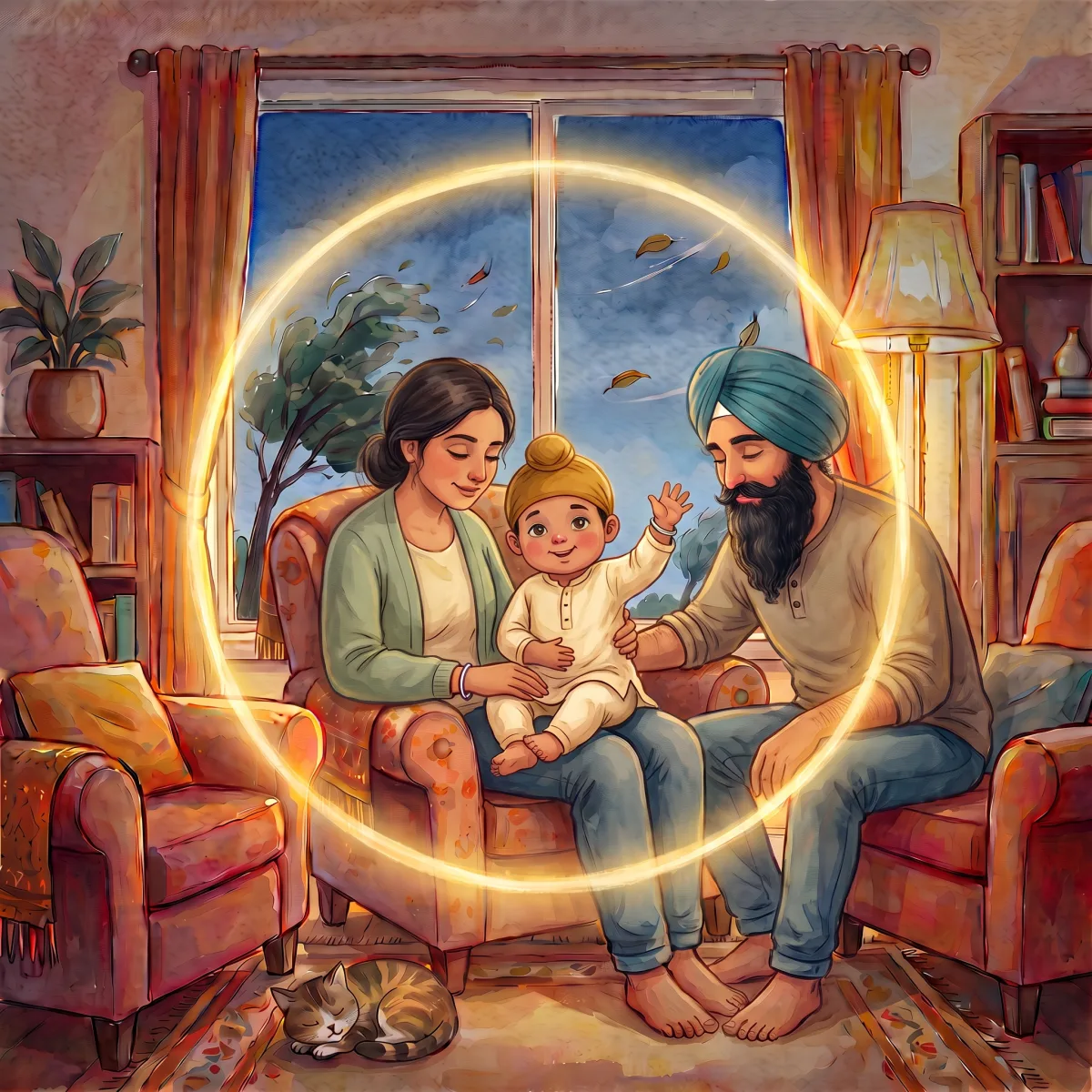
" ਉਹ ਸਾਡੇ ਦੁਆਲੇ ਇੱਕ ਘੇਰਾ ਬਣਾਉਂਦੇ ਹਨ ।"
" ਘੇਰੇ ਅੰਦਰ ਹਨੇਰੀ ਸਾਨੂੰ ਛੂਹ ਨਹੀਂ ਸਕਦੀ ।"
ਪਿਤਾ ਜੀ ਨੇ ਸ਼ਬਦ ਗਾਇਆ ।
ਤਾਤੀ ਵਾਉ ਨ ਲਗਈ ਪਾਰਬ੍ਰਹਮ ਸਰਣਾਈ ॥
Chapter 4
ਵੀਰ ਨੇ ਅੱਖਾਂ ਮੀਟ ਲਈਆਂ ।
ਉਸ ਨੇ ਉਂਗਲ ਨਾਲ ਹਵਾ ਵਿੱਚ ਘੇਰਾ ਬਣਾਇਆ ।
ਬਾਹਰ ਹਨੇਰੀ ਬਹੁਤ ਤੇਜ਼ ਸੀ ।
ਪਰ ਅੰਦਰ ਵੀਰ ਆਰਾਮ ਨਾਲ ਬੈਠਾ ਸੀ ।
ਵੀਰ ਨੇ ਆਖਿਆ , " ਵਾਹਿਗੁਰੂ ਜੀ ਸਾਡੇ ਰਾਖੇ ਹਨ ।"
What it means — show →
One day it was very hot. In the evening a strong wind came. Outside the trees were shaking. Veer put his hands over his ears. "Daddy, the wind is so strong!" Veer sat in Daddy's lap. "I feel scared." Daddy held Veer close. "Veer, Waheguru is our Protector. He makes a circle around us. Inside the circle the wind cannot touch us." Daddy sang the shabad. Veer closed his eyes. With his finger he drew a circle in the air. Outside the wind was very strong. But inside, Veer sat calm and safe. Veer said, "Waheguru is our Protector."
Ask your child
-
What came in the evening? — answer →
A strong wind (a storm)
-
What did Veer draw in the air? — answer →
A circle
-
The wind was still blowing. Why was Veer calm? — answer →
Any answer is fine: Waheguru is our Protector, he was inside the circle, Daddy held him.
 Shabad Story, retold ਜੋ ਸਭ ਨੂੰ ਦਿੰਦਾ ਹੈ The One Who Gives to All
Hear it read aloud
Each word lights up as it is read. Tap a word to hear it from there.
Dotted words come again in Japji Sahib.
Chapter 1
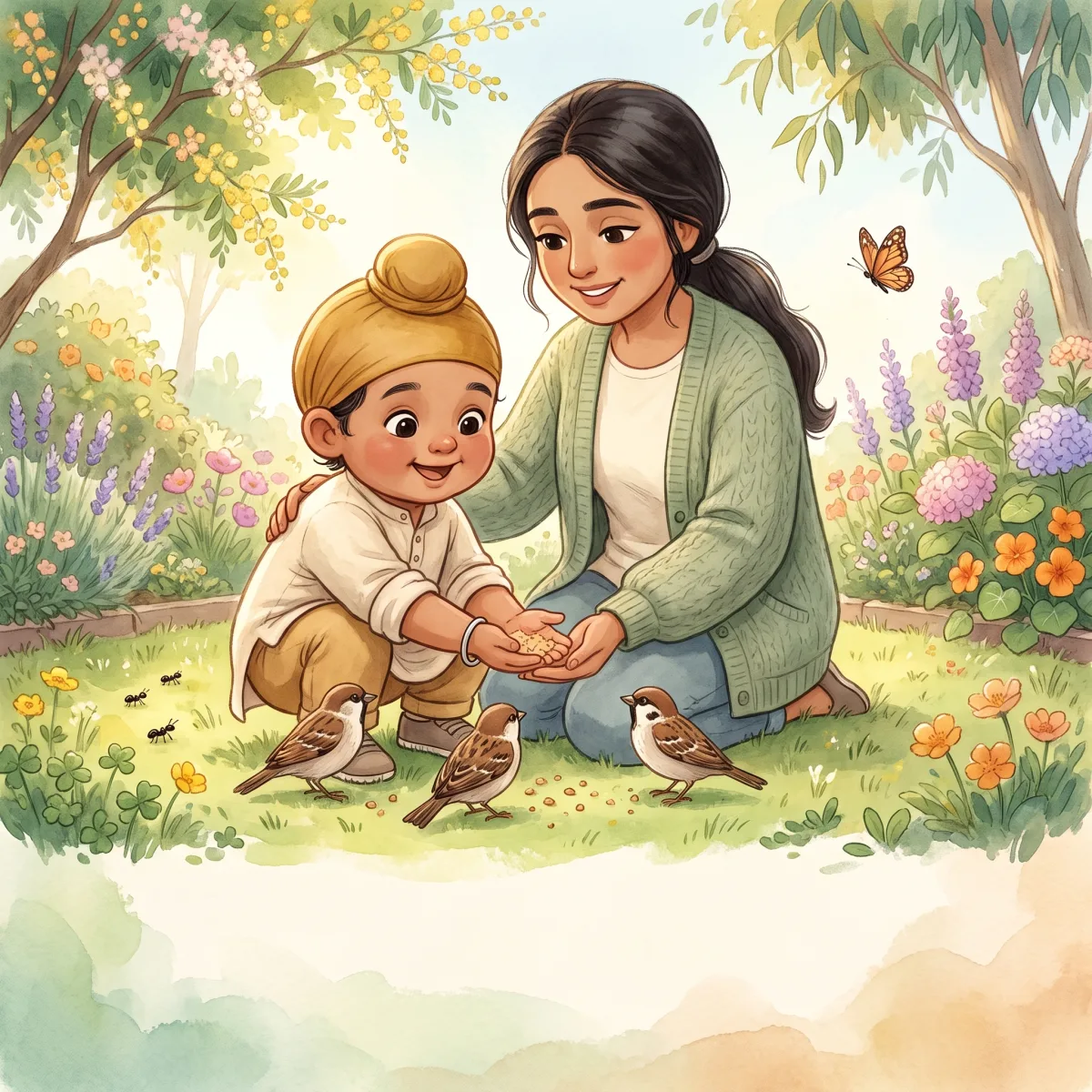
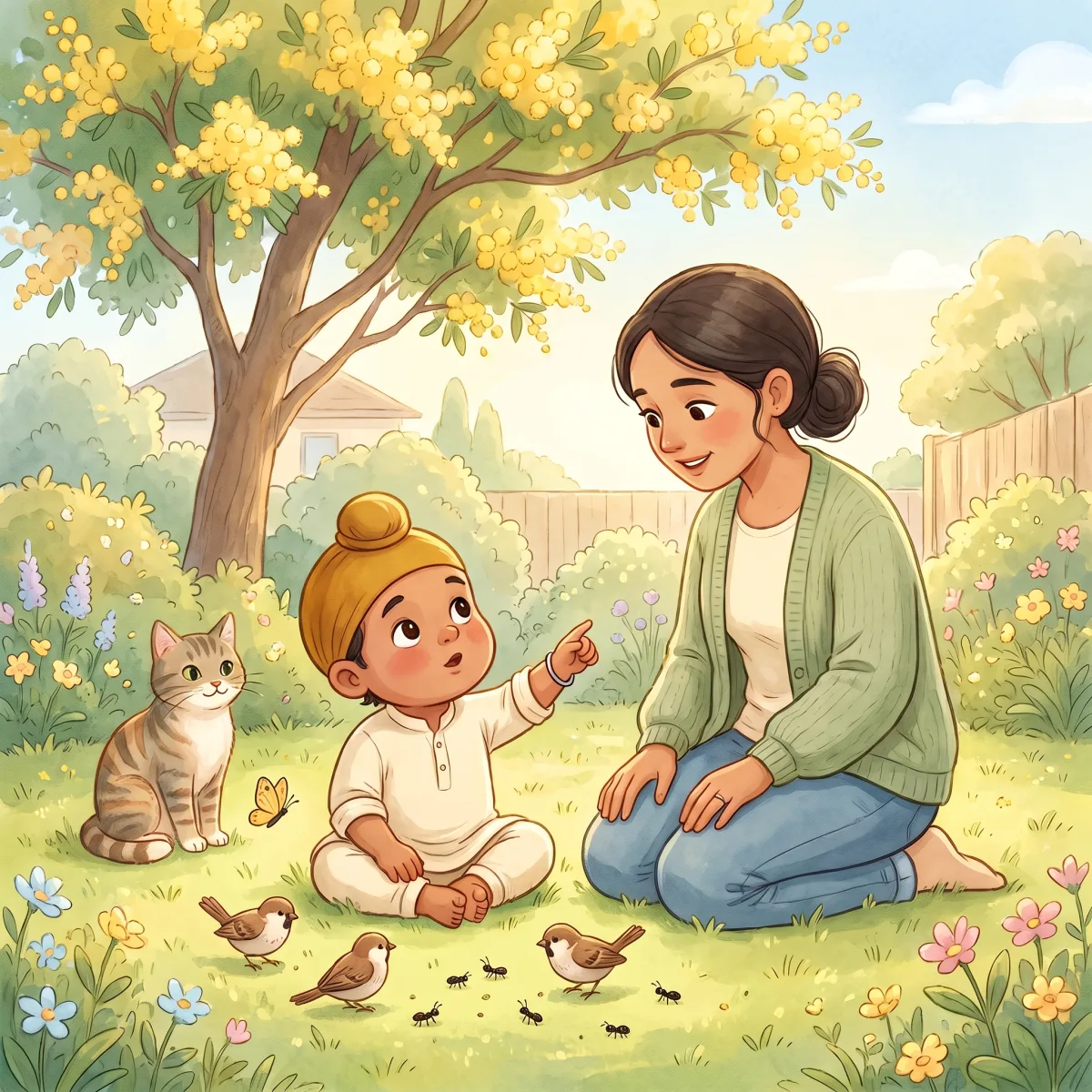
ਇੱਕ ਸਵੇਰ ਵੀਰ ਮਾਤਾ ਜੀ ਨਾਲ ਬਗੀਚੇ ਵਿੱਚ ਸੀ ।
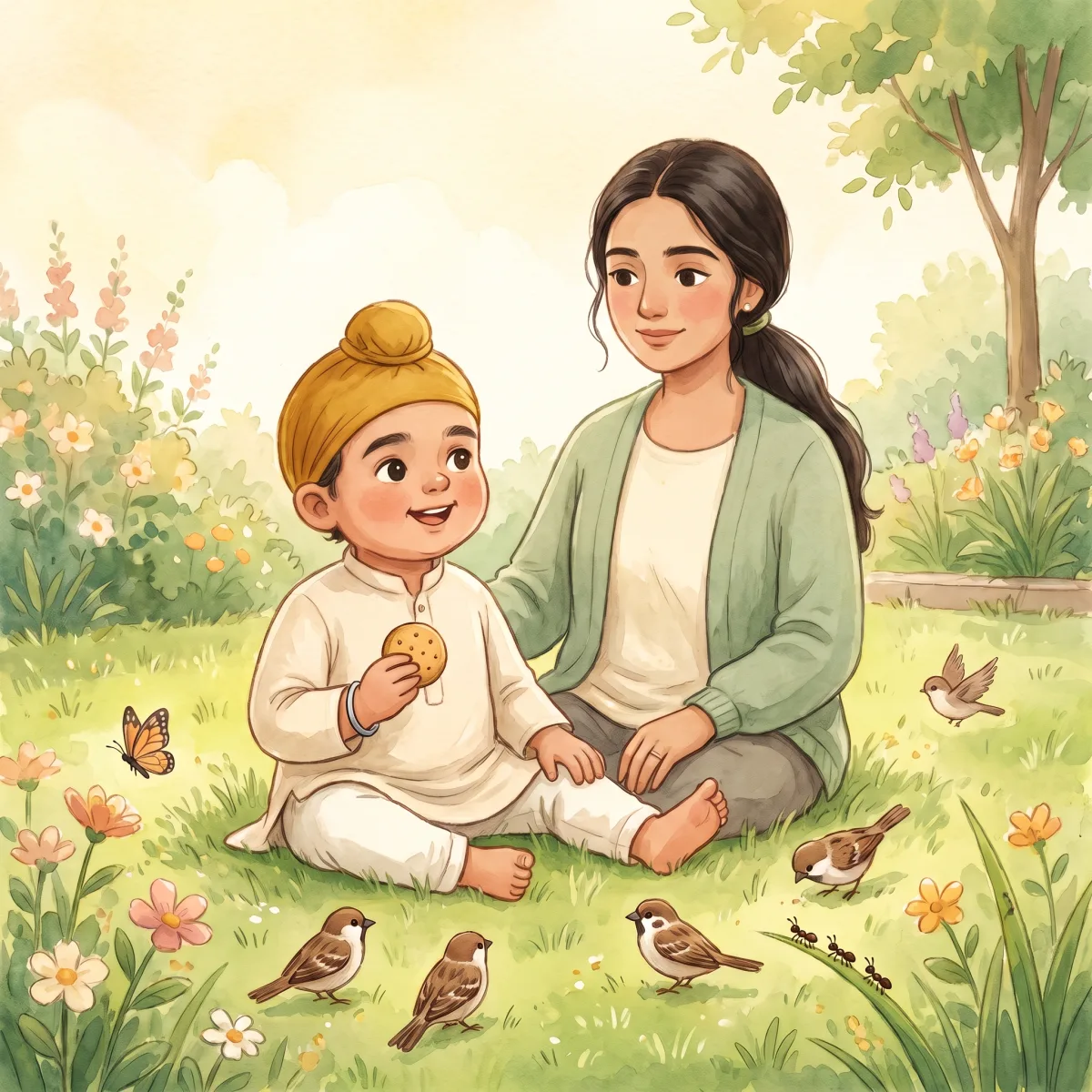
ਉਸ ਦੇ ਹੱਥ ਵਿੱਚ ਇੱਕ ਬਿਸਕੁਟ ਸੀ ।
ਬਗੀਚੇ ਵਿੱਚ ਬਹੁਤ ਨਿੱਕੇ ਜੀਅ ਸਨ ।
ਚਿੜੀਆਂ ਦਾਣੇ ਚੁਗ ਰਹੀਆਂ ਸਨ ।
ਕੀੜੀਆਂ ਦਾਣੇ ਚੁੱਕ ਰਹੀਆਂ ਸਨ ।
ਇੱਕ ਤਿਤਲੀ ਫੁੱਲਾਂ ਉੱਤੇ ਉੱਡ ਰਹੀ ਸੀ ।
Chapter 2
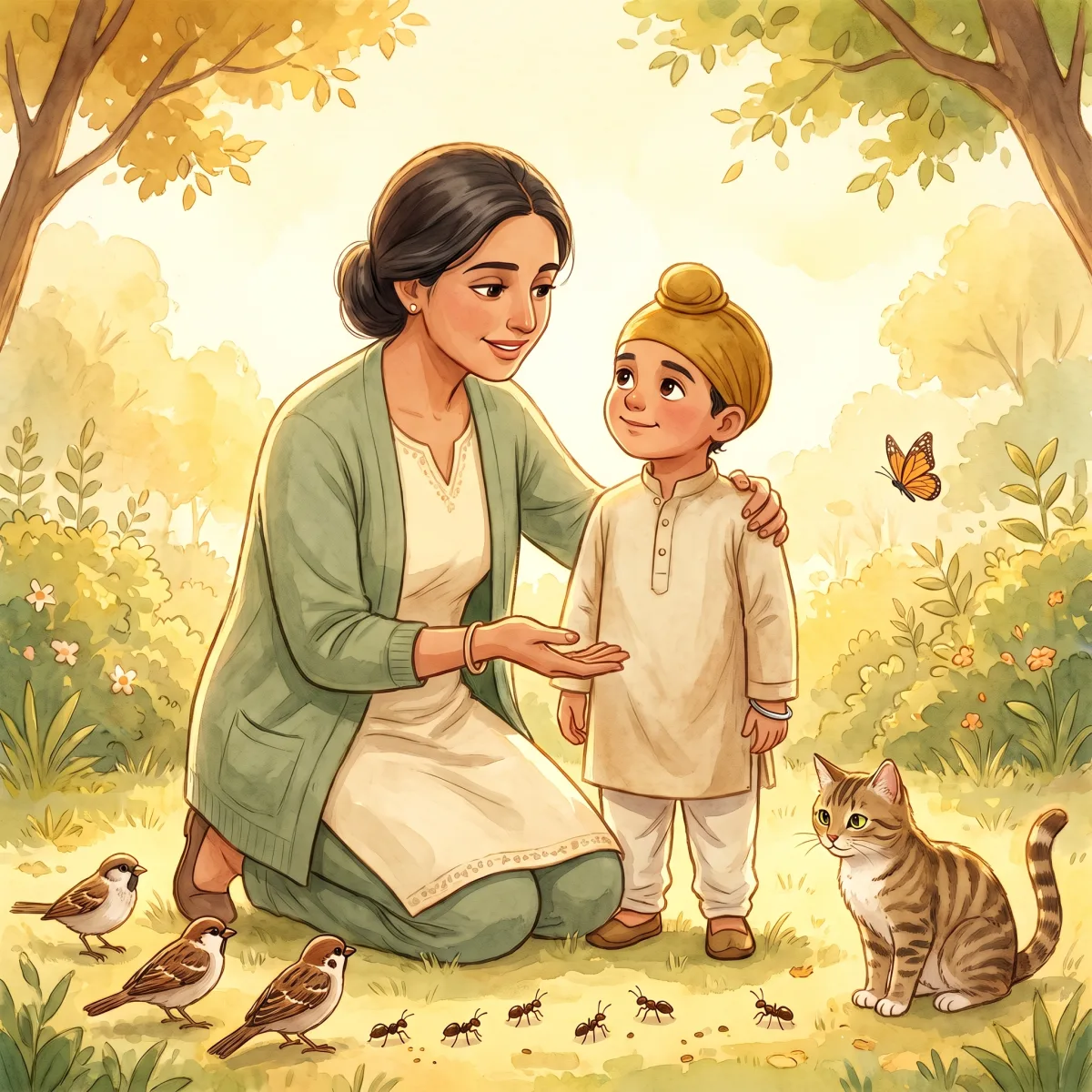
ਵੀਰ ਨੇ ਪੁੱਛਿਆ , " ਚਿੜੀਆਂ ਨੂੰ ਖਾਣਾ ਕੌਣ ਦਿੰਦਾ ਹੈ ?"
" ਕੀੜੀਆਂ ਨੂੰ ਅਤੇ ਮੈਨੂੰ ਕੌਣ ਦਿੰਦਾ ਹੈ ?"
ਮਾਤਾ ਜੀ ਪਿਆਰ ਨਾਲ ਮੁਸਕਰਾਏ ।
Chapter 3
" ਵੀਰ , ਵਾਹਿਗੁਰੂ ਹਰ ਜੀਅ ਨੂੰ ਦਿੰਦਾ ਹੈ ।"
" ਚਿੜੀ ਨੂੰ ਵੀ , ਕੀੜੀ ਨੂੰ ਵੀ , ਸਾਨੂੰ ਵੀ ।"
" ਵਾਹਿਗੁਰੂ ਸਭ ਦਾ ਦਾਤਾ ਹੈ ।"
ਮਾਤਾ ਜੀ ਨੇ ਸ਼ਬਦ ਗਾਇਆ ।
ਤੂੰ ਦਾਤਾ ਜੀਆ ਸਭਨਾ ਕਾ ਬਸਹੁ ਮੇਰੇ ਮਨ ਮਾਹੀ ॥
Chapter 4
ਵੀਰ ਦਾ ਮਨ ਖ਼ੁਸ਼ ਹੋ ਗਿਆ ।
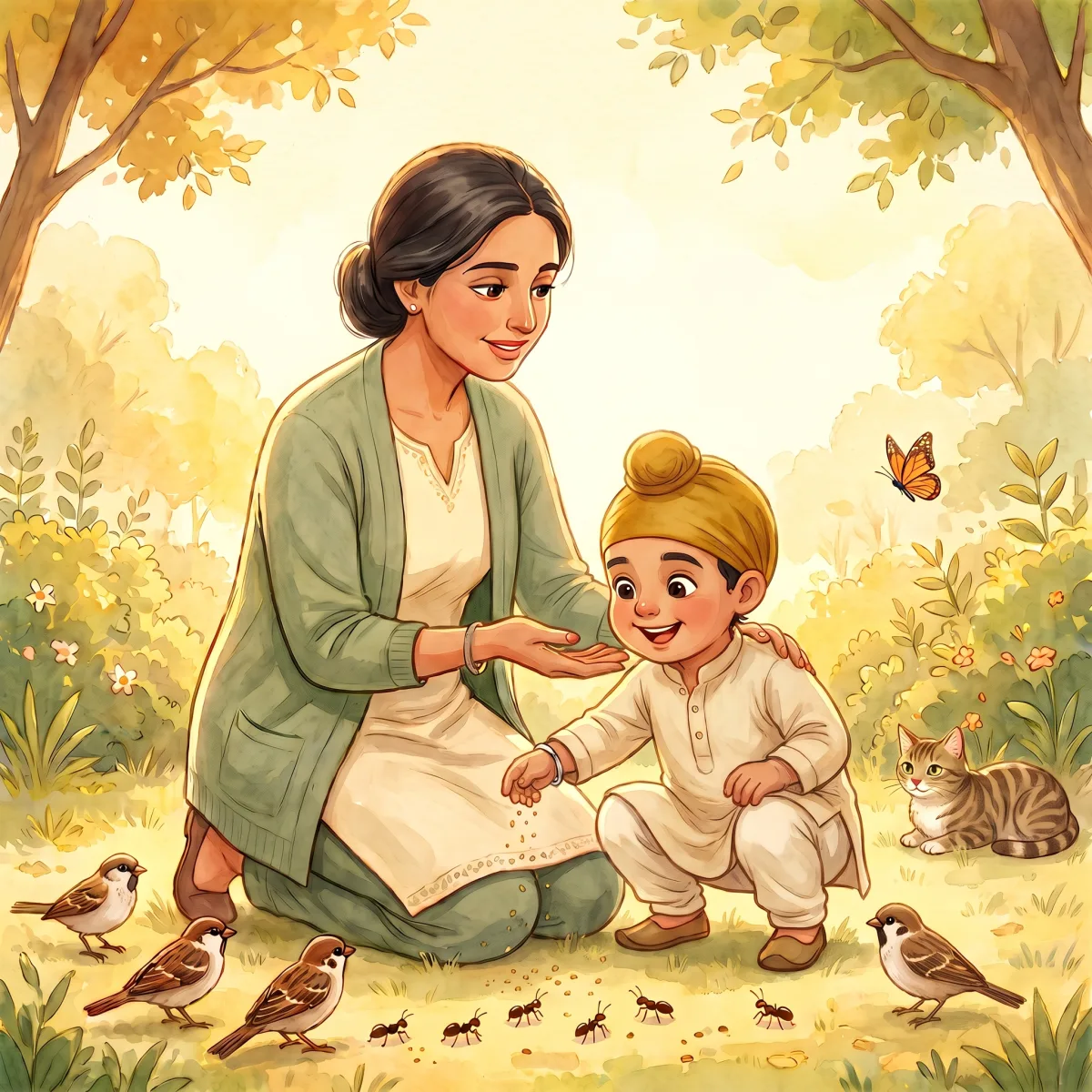
ਉਸ ਨੇ ਬਿਸਕੁਟ ਦੇ ਨਿੱਕੇ ਟੁਕੜੇ ਕੀਤੇ ।
ਉਸ ਨੇ ਟੁਕੜੇ ਚਿੜੀਆਂ ਅੱਗੇ ਪਾਏ ।
ਚਿੜੀਆਂ ਨੇ ਟੁਕੜੇ ਖਾਧੇ ।
ਵੀਰ ਬੋਲਿਆ , " ਮੈਂ ਵੀ ਵੰਡ ਸਕਦਾ ਹਾਂ !"
What it means — show →
One morning Veer was in the garden with Mummy. In his hand was a biscuit. In the garden were many little creatures. The sparrows were pecking at seeds. The ants were carrying grains. A butterfly was flying over the flowers. Veer asked, "Who gives the sparrows their food? Who gives to the ants and to me?" Mummy smiled lovingly. "Veer, Waheguru gives to every living being. To the sparrow, to the ant, and to us. Waheguru is the Giver of all." Mummy sang the shabad. Veer's heart was happy. He broke his biscuit into little pieces. He put the pieces in front of the sparrows. The sparrows ate the pieces. Veer said, "I can share too!"
Ask your child
-
What was in Veer's hand? — answer →
A biscuit
-
Who gives to every living being? — answer →
Waheguru
-
Why did Veer share his biscuit? — answer →
Any answer is fine: Waheguru gives to all, he wanted to give too, the sparrows were hungry.
 Shabad Story, retold ਇਹ ਵੀ ਇੱਕ ਦਾਤ ਹੈ Even This Is a Gift
Hear it read aloud
Each word lights up as it is read. Tap a word to hear it from there.
Dotted words come again in Japji Sahib.
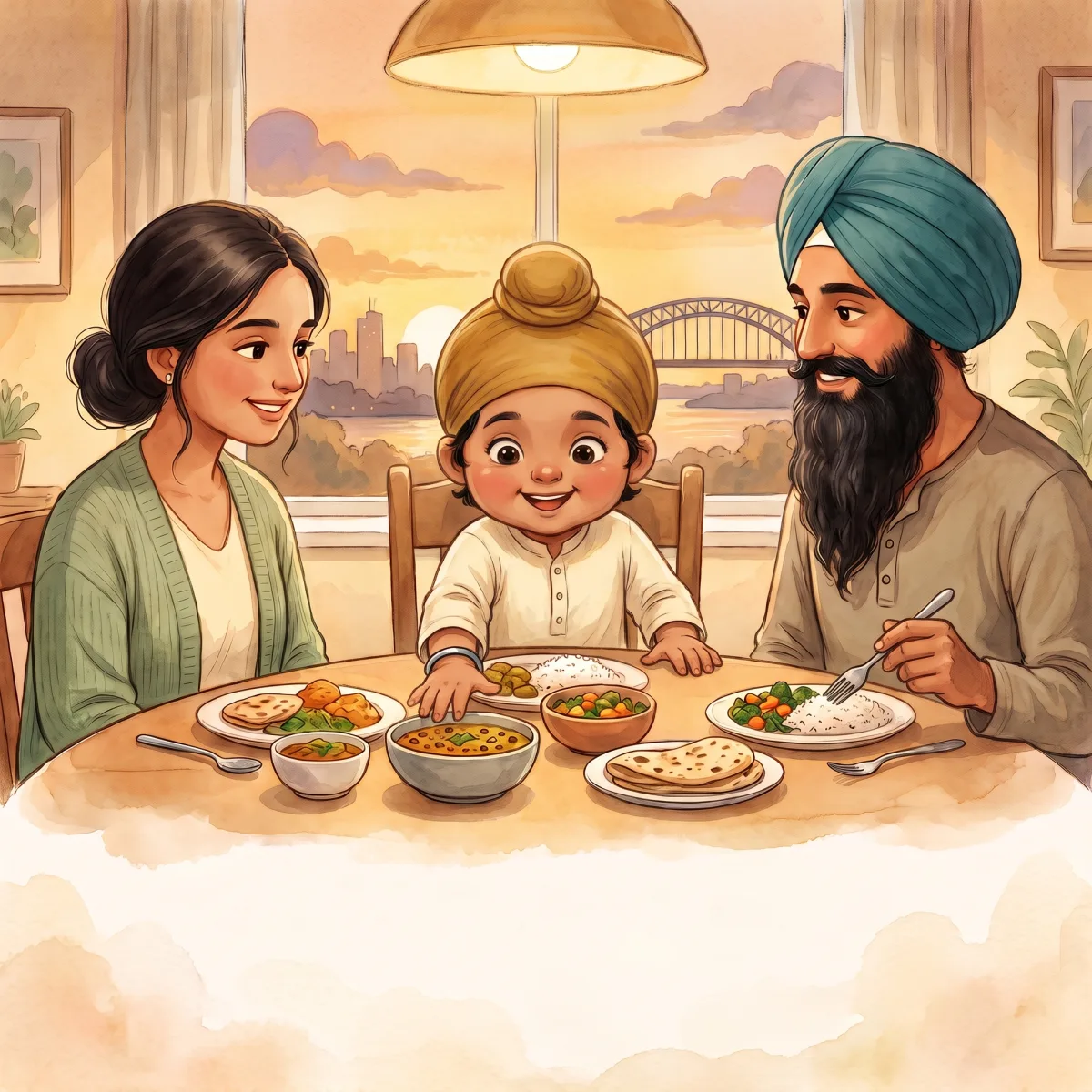
Chapter 1
ਸ਼ਾਮ ਹੋ ਗਈ ਸੀ ।
ਵੀਰ ਨੂੰ ਬਹੁਤ ਭੁੱਖ ਲੱਗੀ ਸੀ ।
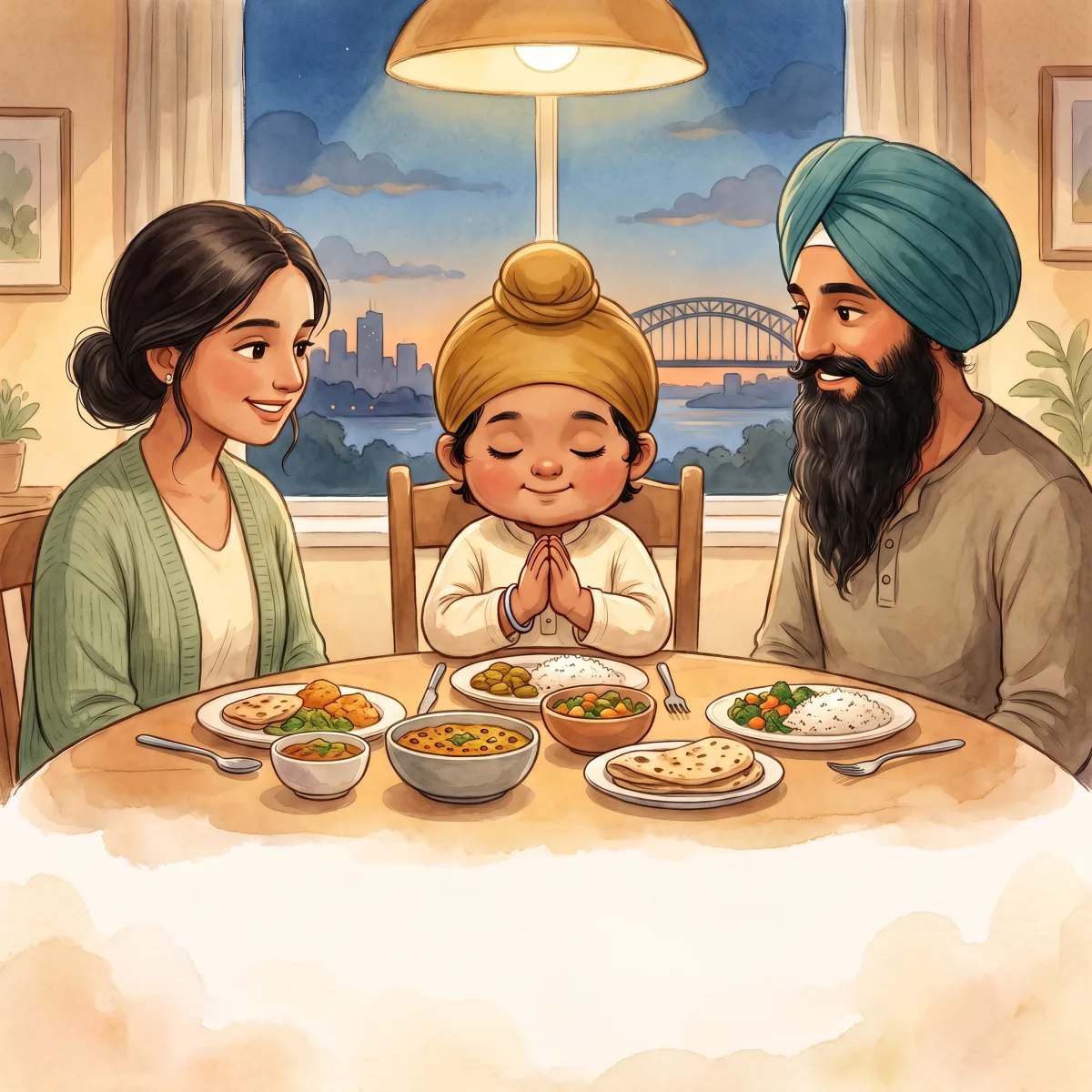
ਮੇਜ਼ ਉੱਤੇ ਖਾਣਾ ਤਿਆਰ ਸੀ ।
ਵੀਰ ਨੇ ਜਲਦੀ ਨਾਲ ਹੱਥ ਵਧਾਇਆ ।
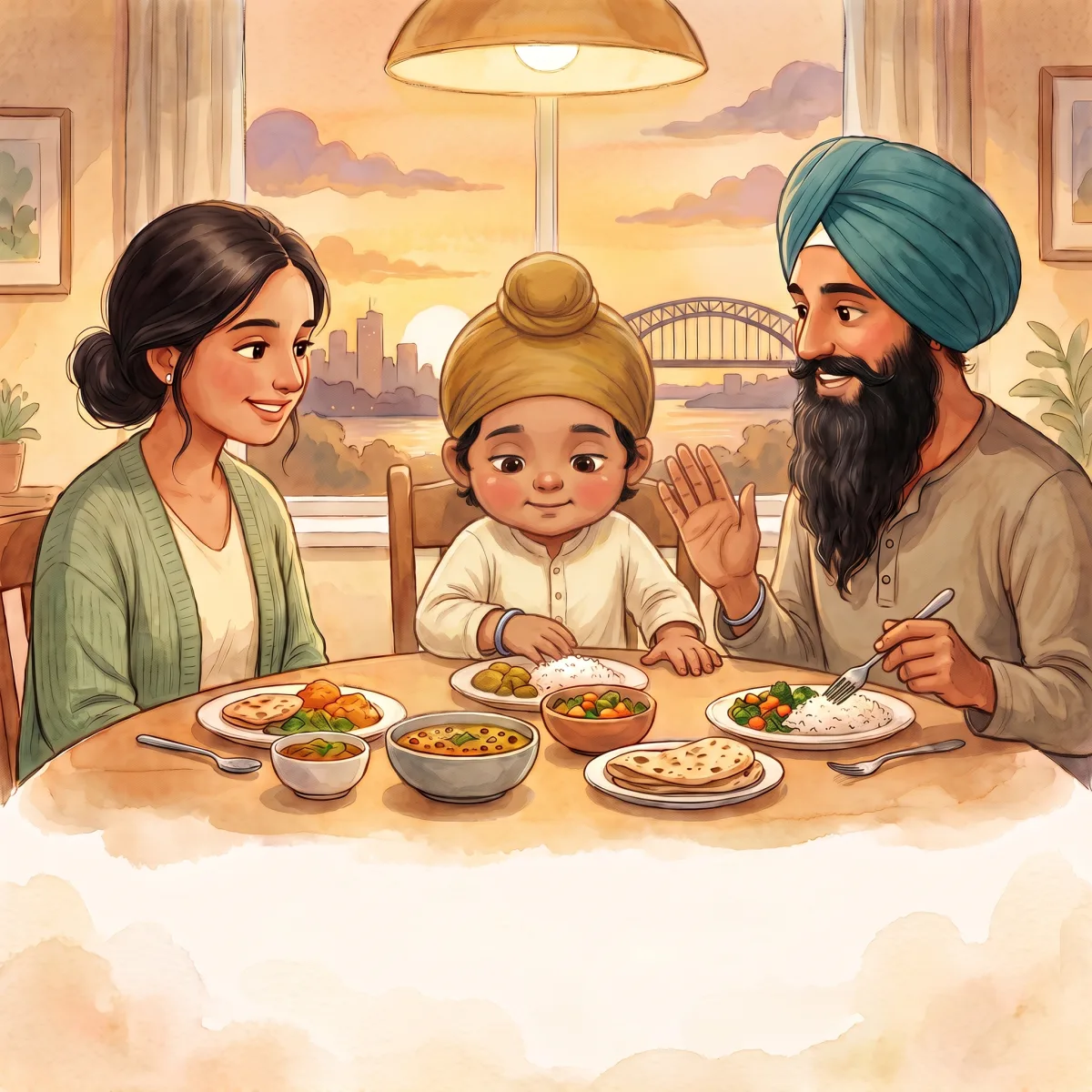
Chapter 2
ਪਿਤਾ ਜੀ ਪਿਆਰ ਨਾਲ ਬੋਲੇ , " ਵੀਰ , ਜ਼ਰਾ ਰੁਕ ।"
" ਇਹ ਖਾਣਾ ਕਿੱਥੋਂ ਆਇਆ ਹੈ ?"
ਵੀਰ ਰੁਕ ਗਿਆ ।
ਉਸ ਨੇ ਆਪਣੇ ਖਾਣੇ ਵੱਲ ਦੇਖਿਆ ।
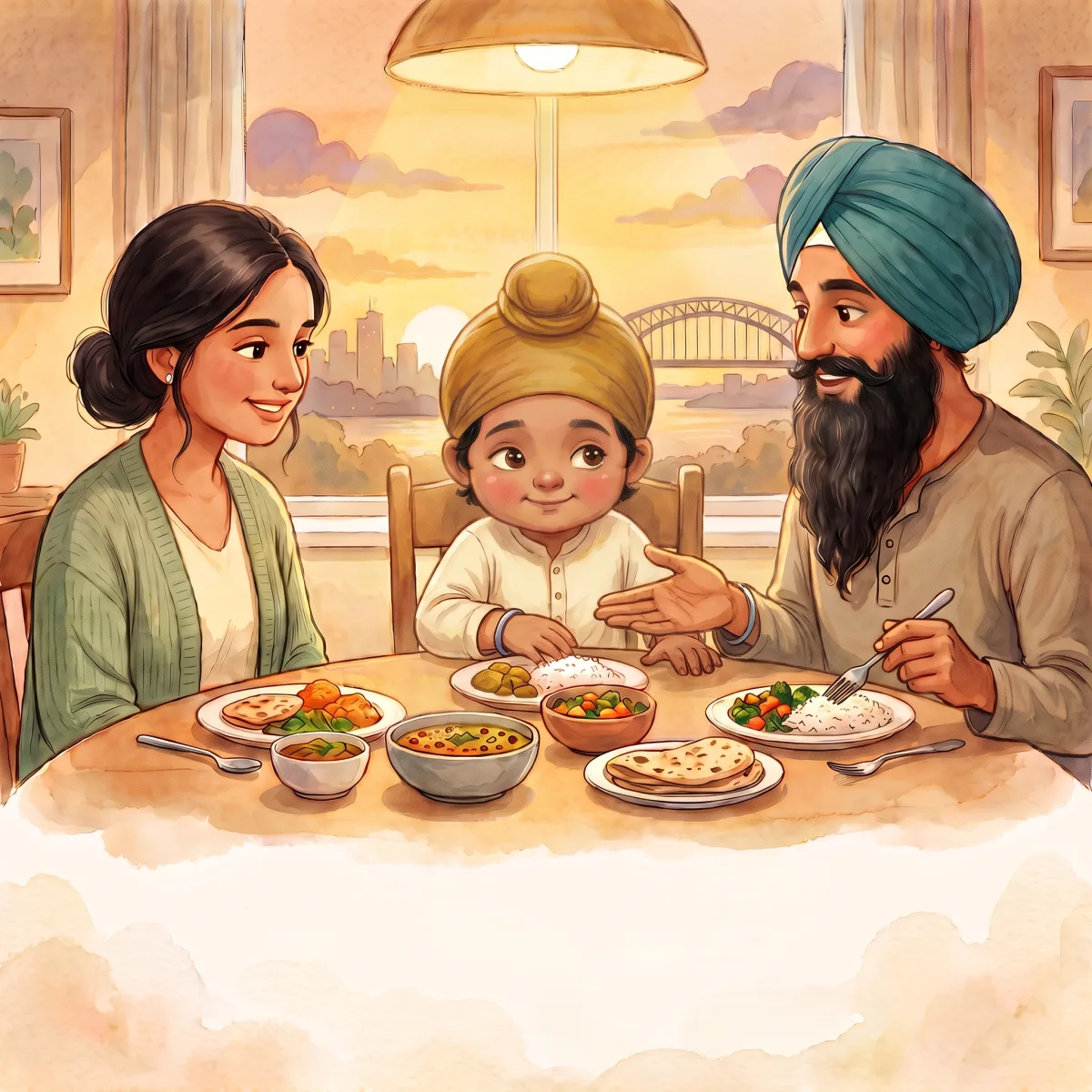
Chapter 3
" ਇਸ ਖਾਣੇ ਵਿੱਚ ਸੂਰਜ ਦੀ ਧੁੱਪ ਹੈ ।"
" ਇਸ ਵਿੱਚ ਮੀਂਹ ਦਾ ਪਾਣੀ ਹੈ ।"
" ਇਸ ਵਿੱਚ ਧਰਤੀ ਦੀ ਮਿੱਟੀ ਹੈ ।"
" ਬਹੁਤ ਹੱਥਾਂ ਨੇ ਇਹ ਖਾਣਾ ਬਣਾਇਆ ।"
" ਇਹ ਸਭ ਵਾਹਿਗੁਰੂ ਦੀ ਦਾਤ ਹੈ ।"
ਪਿਤਾ ਜੀ ਨੇ ਸ਼ਬਦ ਗਾਇਆ ।
ਤੂ ਦਾਤਾ ਦਾਤਾਰੁ ਤੇਰਾ ਦਿਤਾ ਖਾਵਣਾ ॥
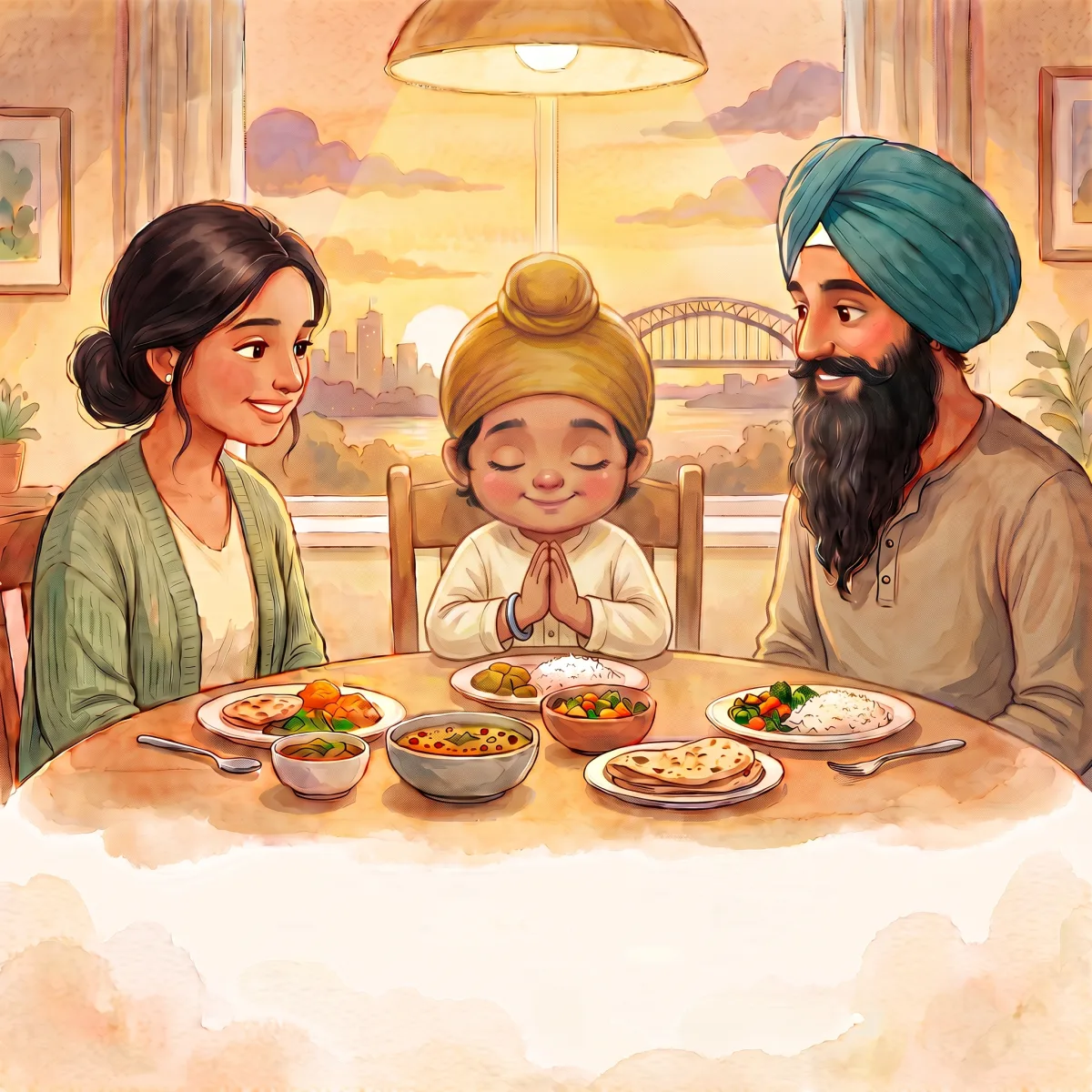
Chapter 4
ਵੀਰ ਨੇ ਹੱਥ ਜੋੜੇ ।
" ਸ਼ੁਕਰ ਹੈ , ਵਾਹਿਗੁਰੂ ਜੀ , ਇਸ ਖਾਣੇ ਲਈ ।"
ਫਿਰ ਉਸ ਨੇ ਖਾਣਾ ਖਾਧਾ ।
ਅੱਜ ਖਾਣਾ ਹੋਰ ਵੀ ਸੁਆਦ ਲੱਗਾ ।
What it means — show →
It was evening. Veer was very hungry. The food was ready on the table. Veer quickly reached out. Daddy said lovingly, "Veer, wait a moment. Where did this food come from?" Veer stopped. He looked at his food. "In this food is the sunshine. In it is the rain's water. In it is the earth's soil. Many hands made this food. All of this is Waheguru's gift." Daddy sang the shabad. Veer folded his hands. "Thank you, Waheguru ji, for this food." Then he ate his food. Today the food tasted even better.
Ask your child
-
What did Daddy ask Veer? — answer →
Where did this food come from?
-
Name one thing that is in the food. — answer →
Sunshine, rain water, the earth's soil, or many hands
-
Why did the food taste even better today? — answer →
Any answer is fine: he said thank you, he knew it was Waheguru's gift.
 Shabad Story, retold ਤੇਗ ਤੇ ਤੋਹਫ਼ਾ Tegh and the Gift
Hear it read aloud
Each word lights up as it is read. Tap a word to hear it from there.
Dotted words come again in Japji Sahib.
Chapter 1
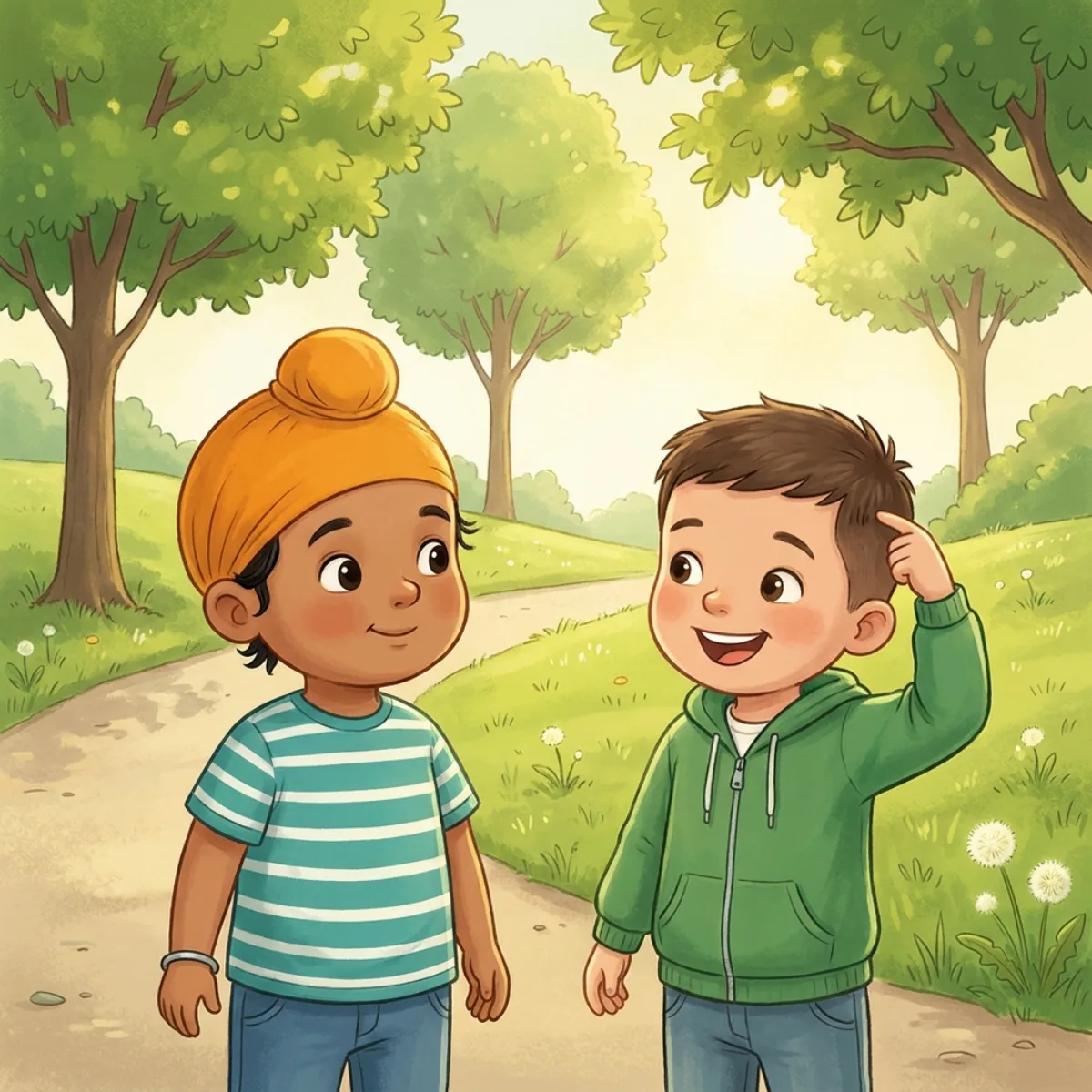
ਤੇਗ ਆਪਣੇ ਡੈਡੀ ਨਾਲ ਪਾਰਕ ਗਿਆ ।
ਪਾਰਕ ਵਿੱਚ ਉਸ ਦਾ ਦੋਸਤ ਸੈਮ ਸੀ ।
ਸੈਮ ਦੇ ਵਾਲ ਛੋਟੇ ਸਨ ।
" ਮੇਰੇ ਨਵੇਂ ਵਾਲ !" ਸੈਮ ਬੋਲਿਆ ।
Chapter 2
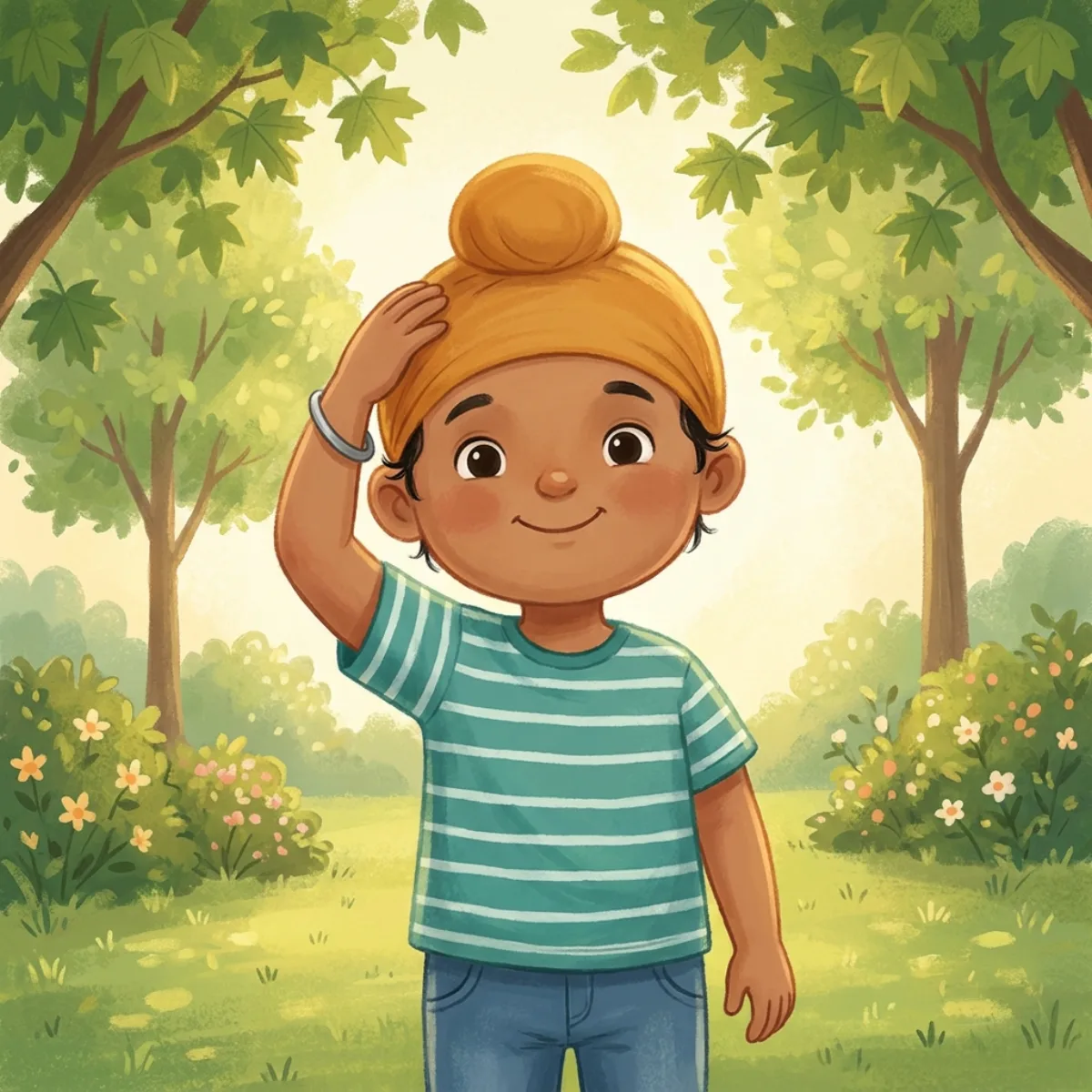
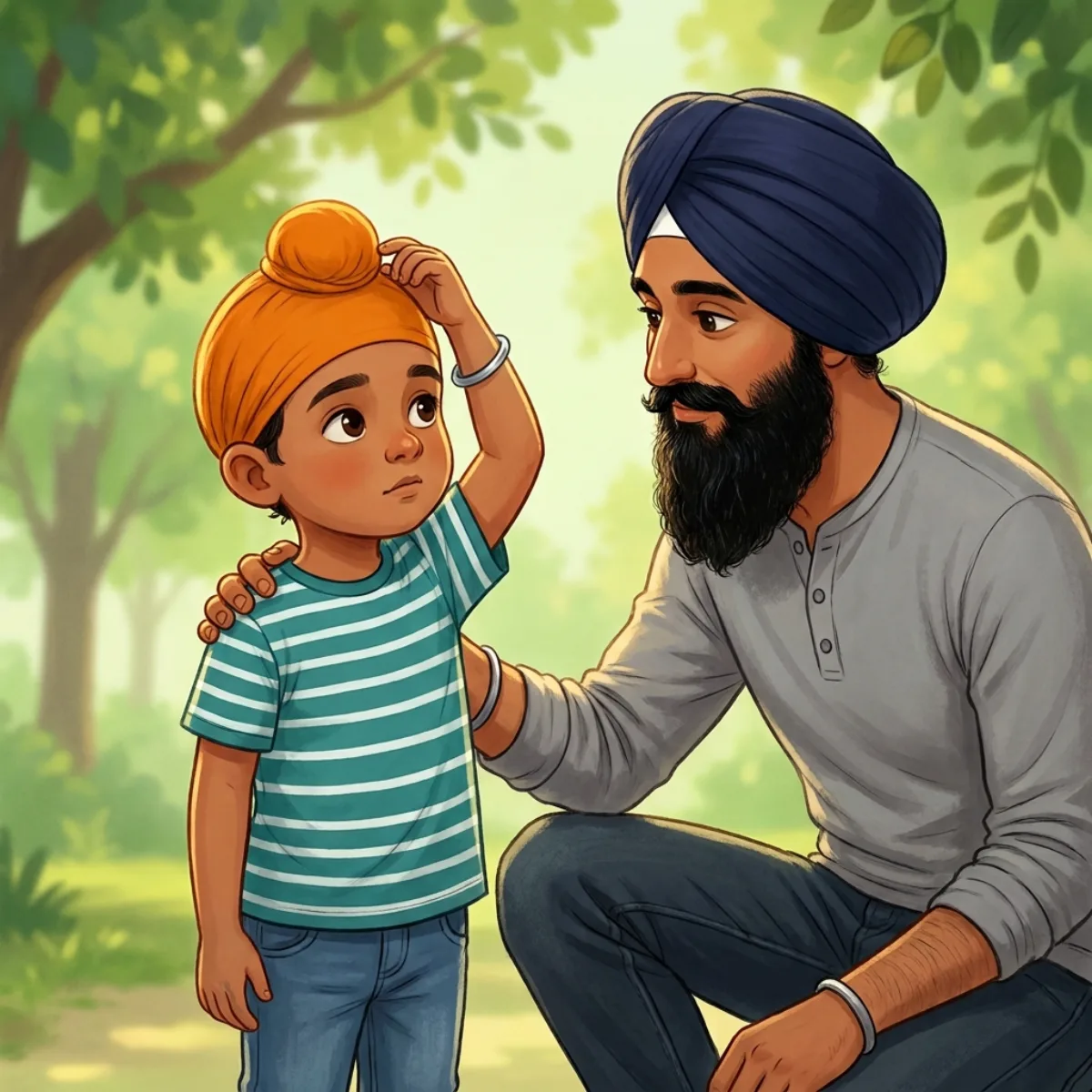
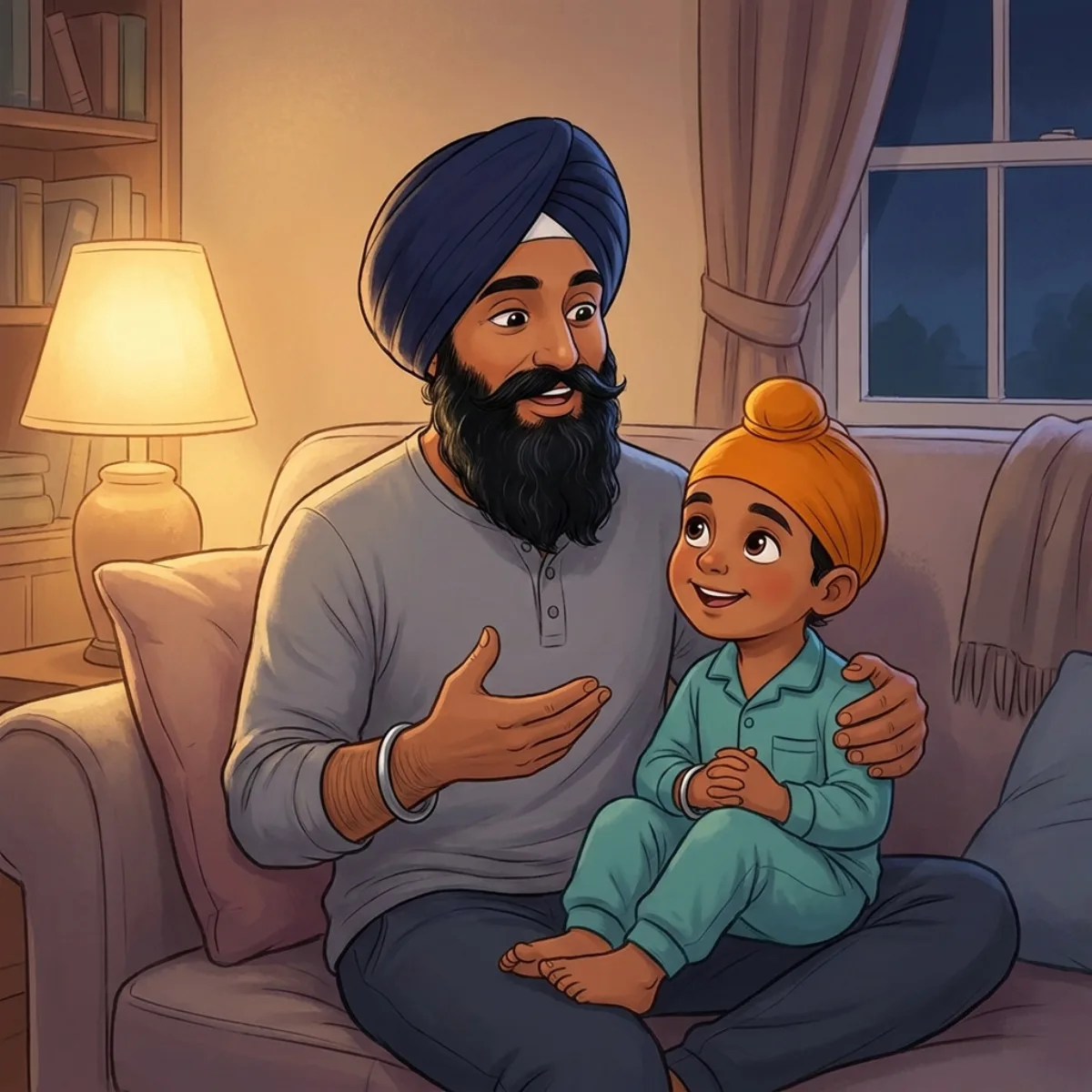
ਤੇਗ ਨੇ ਆਪਣੇ ਪਟਕੇ ਨੂੰ ਹੱਥ ਲਾਇਆ ।
ਪਟਕੇ ਹੇਠਾਂ ਉਸ ਦਾ ਜੂੜਾ ਸੀ ।
" ਡੈਡੀ , ਕੀ ਮੈਂ ਵੀ ਛੋਟੇ ਵਾਲ ਕਰਾ ਲਵਾਂ ?"
ਡੈਡੀ ਕੋਲ ਬੈਠ ਗਏ ।
Chapter 3
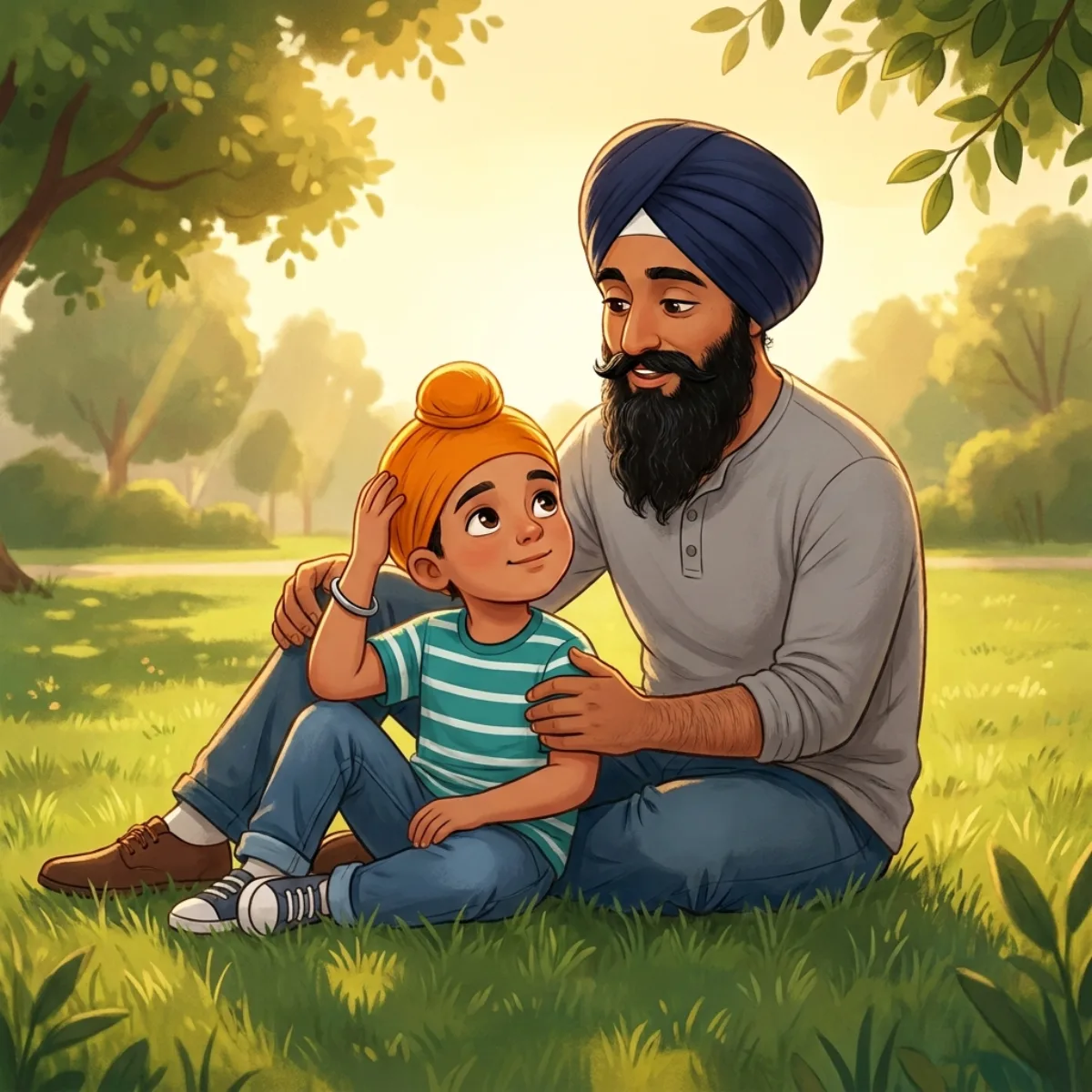
" ਤੇਗ , ਤੇਰੇ ਵਾਲ ਇੱਕ ਤੋਹਫ਼ਾ ਹਨ ।"
" ਕਿਸ ਨੇ ਦਿੱਤਾ , ਡੈਡੀ ?"
" ਵਾਹਿਗੁਰੂ ਨੇ ਦਿੱਤਾ ।"
" ਇਹ ਤੋਹਫ਼ਾ ਅਸੀਂ ਪਿਆਰ ਨਾਲ ਸੰਭਾਲਦੇ ਹਾਂ ।"
Chapter 4
" ਇਹ ਤੋਹਫ਼ਾ ਗੁਰੂ ਗੋਬਿੰਦ ਸਿੰਘ ਜੀ ਨੇ ਵੀ ਦਿੱਤਾ ।"
" ਕੇਸ ਅਤੇ ਦਸਤਾਰ , ਭੈਣਾਂ ਅਤੇ ਭਰਾਵਾਂ ਨੂੰ ।"
" ਮੇਰਾ ਵੀ ਜੂੜਾ ਹੈ , ਦਾਦਾ ਜੀ ਦਾ ਵੀ ।"
" ਹੁਣ ਇਹ ਤੋਹਫ਼ਾ ਤੇਰਾ ਹੈ ।"
Chapter 5
ਤੇਗ ਸੈਮ ਦੇ ਕੋਲ ਗਿਆ ।
" ਮੇਰੇ ਵਾਲ ਗੁਰੂ ਜੀ ਦਾ ਤੋਹਫ਼ਾ ਹਨ ।"
" ਮੈਂ ਇਹ ਤੋਹਫ਼ਾ ਪਿਆਰ ਨਾਲ ਸੰਭਾਲਦਾ ਹਾਂ ।"
ਸੈਮ ਬੋਲਿਆ , " ਵਾਹ !"
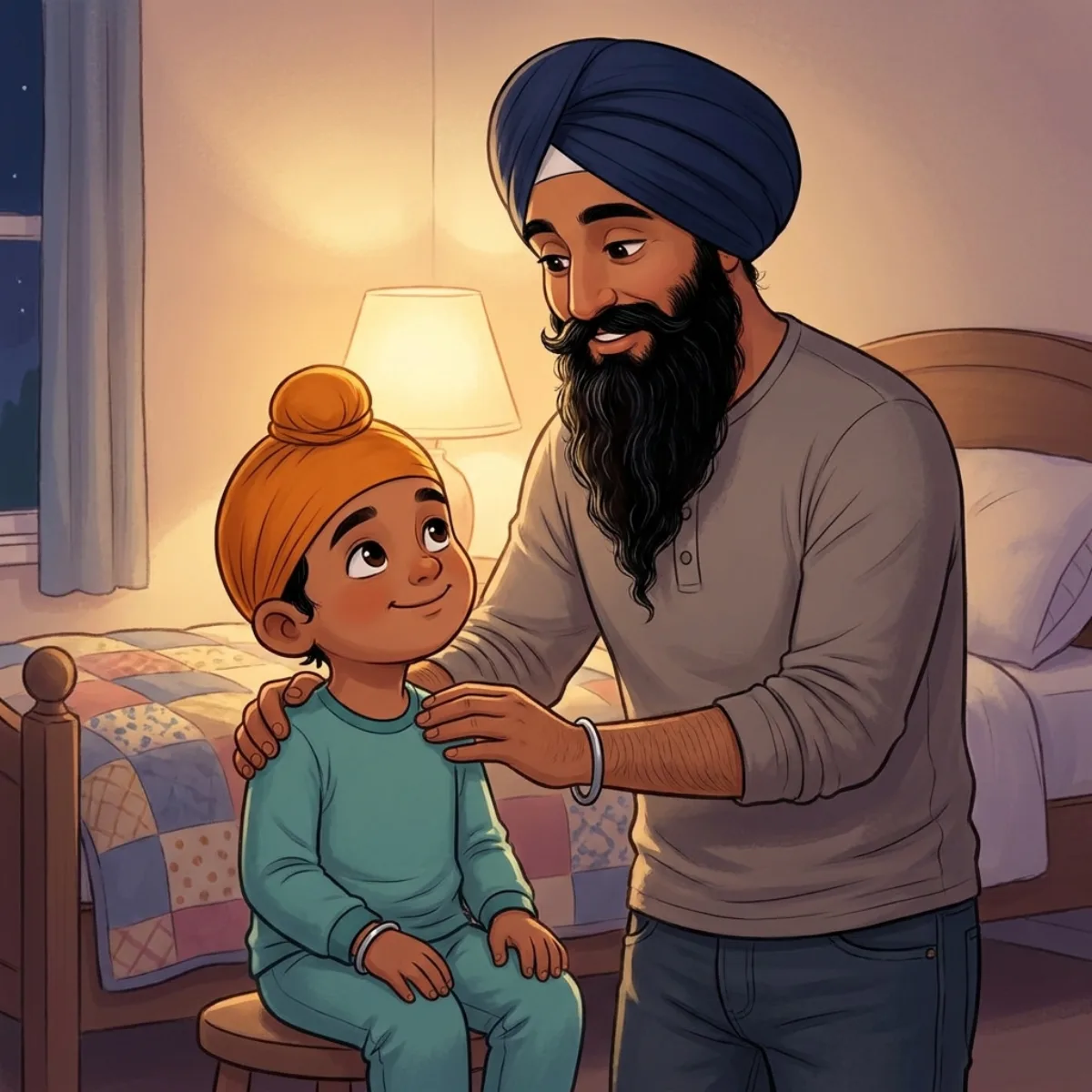
ਰਾਤ ਨੂੰ ਡੈਡੀ ਨੇ ਤੇਗ ਦਾ ਜੂੜਾ ਬੰਨ੍ਹਿਆ ।
ਤੇਗ ਮੁਸਕਰਾਇਆ ।
What it means — show →
Tegh went to the park with his Daddy. In the park was his friend Sam. Sam's hair was short. "My new hair!" said Sam. Tegh touched his patka. Under the patka was his joora. "Daddy, can I have short hair too?" Daddy sat down beside him. "Tegh, your hair is a gift." "Who gave it, Daddy?" "Waheguru gave it. We keep this gift with love. Guru Gobind Singh Ji gave this gift too: kesh and dastar, to sisters and brothers. I have a joora too, and so does Dada ji. Now this gift is yours." Tegh went to Sam. "My hair is Guru Ji's gift. I keep this gift with love." Sam said, "Wow!" At night Daddy tied Tegh's joora. Tegh smiled.
Ask your child
-
Where did Tegh go with Daddy? — answer →
To the park
-
Who gave the gift of kesh and dastar? — answer →
Guru Gobind Singh Ji
-
Why did Tegh smile at the end? — answer →
Any answer is fine: his hair is a gift, it is his to keep, Sam liked it too.
The real books
You have read each of these retold. Now read the book itself: longer sentences, and for the Shabad Stories the whole shabad.
The real book ਜੋ ਹਮੇਸ਼ਾ ਗਲ ਨਾਲ ਲਾਈ ਰੱਖਦਾ ਹੈ The One Who Holds On Longer sentences. Read it with a grown-up → The real book ਜਿਸ ਕੋਲੋਂ ਅਸੀਂ ਹਮੇਸ਼ਾ ਮੰਗ ਸਕਦੇ ਹਾਂ The One We Can Always Ask Longer sentences. Read it with a grown-up → The real book ਜੋ ਸਾਡੀ ਰਾਖੀ ਕਰਦਾ ਹੈ The One Who Keeps Us Safe Longer sentences. Read it with a grown-up → The real book ਜੋ ਸਭ ਨੂੰ ਦਿੰਦਾ ਹੈ The One Who Gives to All Longer sentences. Read it with a grown-up → The real book ਇਹ ਵੀ ਇੱਕ ਦਾਤ ਹੈ Even This Is a Gift Longer sentences. Read it with a grown-up → The real book ਤੇਗ ਤੇ ਤੋਹਫ਼ਾ Tegh and the Gift Longer sentences. Read it with a grown-up → Finish Level 4
Your child reads one real book aloud to a grown-up. Two helps or fewer, and Level 4 is done.
Listen
Hear a story with the book closed, then answer.
Every story in Read has three questions under "Ask your child". Try them a new way: play the recording with the story closed, so your child only hears it, then ask. The last question on each card is a "why" question, and any sensible answer counts.
Speak
Tell a story back, then talk about yesterday and tomorrow.
Talk mission 1
Ready nowTell it back
For the grown-up
After any story on this page, ask this. Your child answers in three sentences: what happened first, then, and at the end. Any three true sentences count, in any words.
Who to say it to
- A Punjabi-speaking parent
- Grandparents — in person or on a video call
- Someone at the gurdwara
- Or repeat after our recording
Talk mission 2
Ready nowWhat did you do yesterday?
For the grown-up
Your child answers with ਮੈਂ… and a past verb, the way the Band B stories are told: ਮੈਂ ਪਾਰਕ ਗਿਆ / ਗਈ. Three things they did, and you are done.
Who to say it to
- A Punjabi-speaking parent
- Grandparents — in person or on a video call
- Someone at the gurdwara
- Or repeat after our recording
Talk mission 3
Ready nowWhat will you do tomorrow?
For the grown-up
The same ਕੱਲ੍ਹ, but now it means tomorrow: only the verb tells you. Ask both questions back to back and let your child hear the difference. Answers start ਮੈਂ… ਕਰਾਂਗਾ / ਕਰਾਂਗੀ.
Who to say it to
- A Punjabi-speaking parent
- Grandparents — in person or on a video call
- Someone at the gurdwara
- Or repeat after our recording
Write
Write a card to Nani ji, then a five-sentence note.
A printable is on its way: a card to Nani ji, then a five-sentence note with a model to copy, writing lines and a word bank from the stories on this page.
Where this meets Gurbani
Every story here plants a few words from Japji Sahib, and four of the retold Shabad Stories carry a line of Gurbani. Level 6 is Japji Sahib itself.
What your child will be able to do
-
Read Ready now
"…read a short story aloud on my own — without romanization."
-
Listen Ready now
"…follow a story read aloud and answer questions about it."
-
Speak Ready now
"…say what I did yesterday and what I'll do tomorrow, and retell a story."
-
Write Coming soon
"…write a card or a 5-sentence note by myself."
Use these any time
Questions parents ask
- Why is there no romanization in the stories?
- Because this is the level where your child stops needing it. Levels 1 to 3 taught every letter and mark, so every word here can be sounded out from the Gurmukhi alone. Romanization next to the text pulls the eye away from it. The English meaning is still there, behind "What it means", for you.
- Which story should we start with?
- The first one, then in order: the stories get longer and move from the present tense to the past. The order is only a suggestion. If a story is easy, skip ahead; if it is hard, go back one.
- What counts as a "help"?
- Any time you have to say a word for your child, or they stop and ask. Sounding a word out slowly on their own is not a help. Two helps or fewer in a story means they are ready for the next one.
- Why are some words underlined with dots?
- Those are words your child will meet again in Japji Sahib, here in their everyday form. Knowing them already makes the first reading of Japji Sahib feel familiar. You do not need to teach them separately.
- How does my child finish Level 4?
- By reading one of the real Shabad Story books aloud to a grown-up, with two helps or fewer. The retold versions on this page use the same pictures and the same story in shorter sentences, so they are the practice for the real book.